


Blair’s ID cards failed in the 2000s – could Starmer’s version fare better?
Tim Holmes, Senior Lecturer in Criminology and Policing, Bangor University
The UK government is once again looking at the possibility of introducing identity cards, with the prime minister Keir Starmer announcing plans for a new scheme for all UK citizens.
The argument is familiar. With tougher ID systems, illegal immigration would be harder and the UK less appealing. But it also raises a familiar set of questions. How would such a scheme work? And what lessons are there to be learned from the last time the UK had ID cards?
Identity cards were compulsory during the second world war, but the system was scrapped in 1952 after growing unease about police powers and civil liberties.
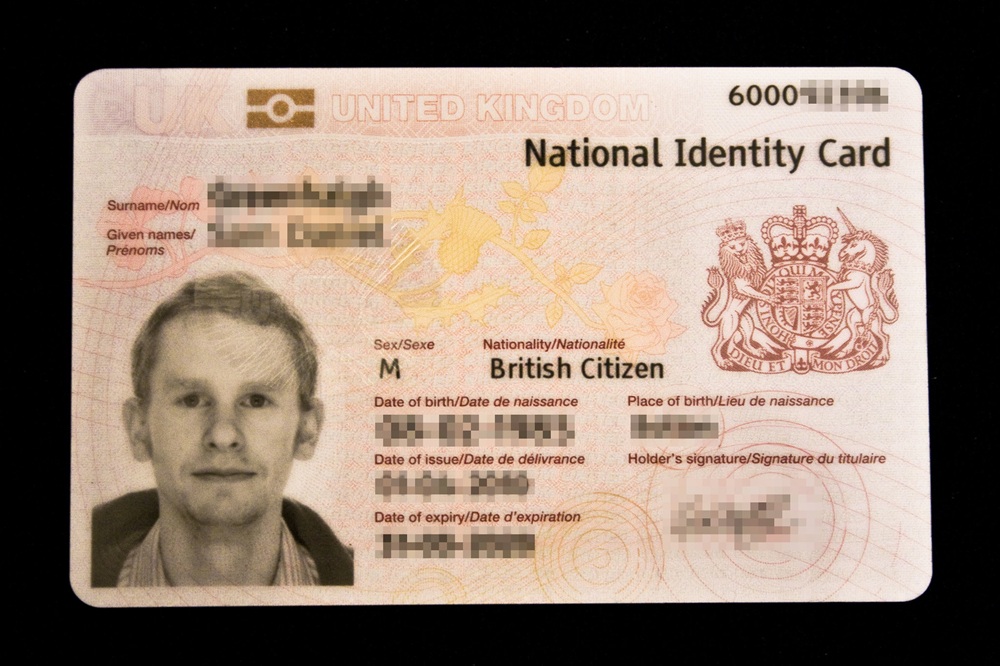
Fifty years later, Tony Blair’s Labour government proposed new biometric ID cards backed by a national database. Ministers claimed they would help tackle terrorism, illegal immigration and identity theft while giving people secure access to public services.
At the time, terrorism, illegal immigration and identity theft were major concerns. The 9/11 bombers had avoided detection in the US, 23 illegal immigrants had died while cockle picking in Morecambe Bay in 2004 and people were increasingly falling victim to online fraud and identity theft.
Biometric security features
In 2006 the Identity Cards Act was introduced. The scheme would introduce cards for citizens with new biometric security features and data stored on a national database. Eventually, whether you wanted a card or not, you could not function in UK society without one.
Some argued it would lead the UK to becoming a surveillance society. Protest groups warned of the risks, while Liberal Democrat MP Simon Hughes vowed to go to prison rather than accept the card and the power it gave the state.
In the end, the cards were never tested. The scheme collapsed in 2010, undone not by principle but by cost and a change of government.
2025 proposals
Rising public concern over illegal immigration has once again led to calls for solutions.
The UK government’s latest proposals follow a home affairs committee inquiry into digital IDs and electronic visas in June. It examined whether migrants should be required to use them to prove their status when applying for jobs. The argument being that with a tougher ID system, illegal immigrants would be deterred from attempting to enter the country.
The UK is already far more digitally monitored than it was 20 years ago. Biometric passports, digital driving licences and online identity checks are used as a matter of course.
In 2010, when the last ID card scheme was scrapped, public attitudes towards surveillance were generally favourable when used in public spaces. But monitoring in private spaces was not.
In 2025, attitudes towards surveillance vary depending on the type. There is now more concern around the mass surveillance of people’s online activities, for example.
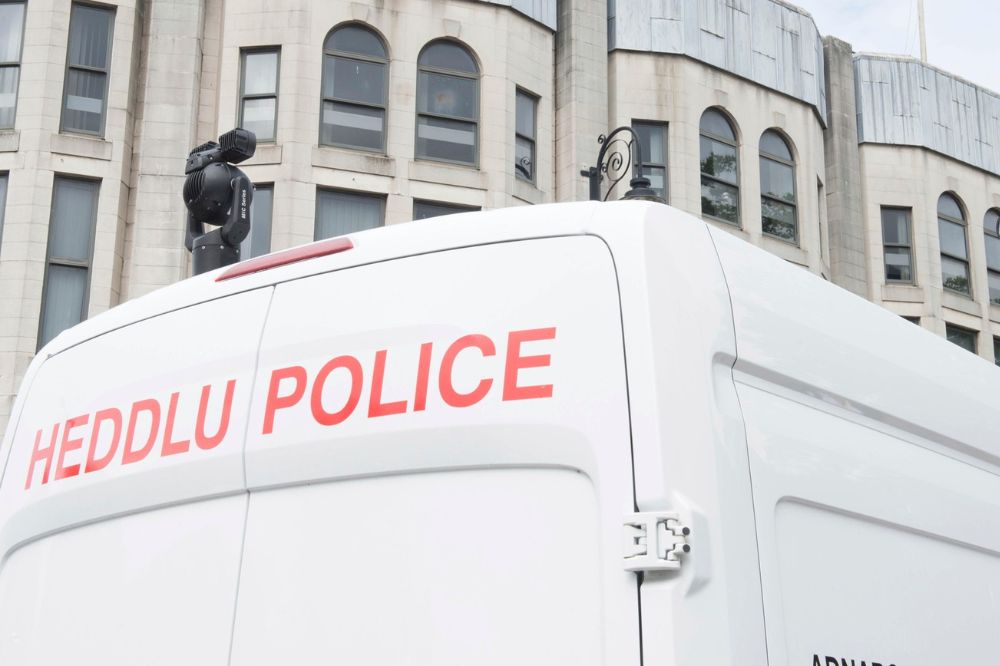
Identity schemes are used in 142 countries around the world, 70 with electronic ID. Biometric technology has improved considerably over the past 20 years. More than 120 countries now use facial recognition in passport systems, while UK police forces have integrated the technology into their work.
The question is not whether cards can verify identity – they can. It’s whether they reduce crime or illegal immigration. That depends on how essential they become to everyday life. If an ID check is required for employment, housing and access to services, people without documents may be pushed into the margins, rather than required to leave the country.
In 2005, writer Arun Kundnani argued that ID cards risked becoming “exclusion cards”, creating a new underclass of people unable to access services legally but still present in the shadow economy. That would give organised crime networks even greater power over undocumented migrants, offering illegal routes into housing and work.
Another unresolved question is cost. The last scheme collapsed under the financial weight of setting up the infrastructure and issuing cards nationwide. With public finances tight, the government could find itself facing the same problem again.
Surveillance
There are also broader questions about trust. Academic Clive Norris, who has studied mass surveillance, has warned that constant monitoring encourages the view that ordinary citizens cannot be trusted: “If we are gathering data on people all the time on the basis that they may do something wrong, this is promoting a view that as citizens we cannot be trusted.”
Digital identity cards could bring benefits. For those entitled to live and work in the UK, they might make access to services simpler and faster. But the debate is about more than efficiency. It goes to the heart of how much oversight the state should have over everyday life, and whether a costly system would achieve its stated aims.
The last attempt at ID cards was sunk before it could be tested. Two decades on, the UK is more accustomed to digital surveillance and more anxious about immigration. The question is whether that makes this the right time for a second attempt – or whether the country risks repeating old mistakes.
This article was first published on The Conversation

Support our Nation today
For the price of a cup of coffee a month you can help us create an independent, not-for-profit, national news service for the people of Wales, by the people of Wales.



We cannot and do not trust the current government, especially with not how it has been abusing the draconian anti-terrorism laws (that … tbf… Labour implemented). Nor how the police have been harvesting the data of completely innocent people and instead of destroying it as ordered have only added to it. I barely trust the government to regulate driving licenses appropriately or passports. If anything, this system would just open up new avenues for criminals to exploit and instead act as a way to curtail the freedoms of British citizens. Maybe it should be an English only thing. Where, if… Read more »
‘Blair’s ID cards failed in the 2000s – could Starmer’s version fare better?’ My sense is that now it just might. When this idea was first trailed back in 2006 in the Blair era, I was on balance opposed to it, and said so. I’m instinctively inclined to resist any bureaucratization which seems to be without obvious point, and at that time I couldn’t really see the necessity. I’d lived sixty years without ID cards and back then there seemed no particular reason for suddenly having them imposed on us. But that was then and this is now. In the… Read more »
We’d definitely need a 2% wealth tax to fund this scheme. So that will rule it out. Garage and his gang will most likely use fracking to offset these costs in the future.
The only way they would have an effect on migration is if they are used to catch migrants – how do you think that will happen? Migrants who already work ‘off the books’ aren’t going to be effected, are they, as they already won’t be showing ID cards etc to get work and they won’t be being paid via bank accounts etc. The only way this works is if everyone has to have everything paid into the bank account, and if it is actively monitored to check that someone isn’t getting unexpected money into it and the next, and this… Read more »
I don’t for a moment believe that ID cards could be any sort of ‘silver bullet’ – they clearly wouldn’t. First, because one prime reason for migrants opting for the UK being the degree to which English has become the predominant universal language in so many parts of the world. Many more people from Asia and Africa have at least some basic grasp of English than of any other European language. That’s just a fact – nothing that can be done about it. French is probably second in line in this respect, and migrants from former French and Belgian colonies… Read more »
The pretext back then was terrorism. They won’t stop terrorism any more than illegal immigration. They keep popping up as a solution in search of a problem. We need enforcement against illegal immigration not mandatory ID for everyone. A sledgehammer for a very small nut. They’re more about gathering our information for money-makers, state-surveillance and control, which is maybe why Tony and whomever currently supports him keep mentioning them. The ability to index all our ID transactions like banking, shopping, healthcare, travel, criminal record and build up a picture on all of us. A bit like a government owned facebook,… Read more »
Your position is rather too Trumpian for my taste.
“We need enforcement against illegal immigration”
How? You need an easy way for employers to validate their staff are legit, then government can crack down on rogue employers.
Illegal immigration isn’t small boats but people hiding in lorries or overstaying tourist or student visas.
Your privacy and government overreach concerns are valid but you need to have an alternative proposal.
Actually de-anonymising the cess pits that call themselkves “sociaL media” sounds like a good idea to me. We used to have that wonderful phrase printed on letters, particulary on good rants, “name and address supplied”. The problems with state run id for me is that it will not help with identifying black economy operators and their “slave workers” and will be misused as a state information gathering exercise to attack opposition to whatever the establishment wants…..
Its a driving Licence!
How much or our money will it cost?
Another government database will be another IT disaster that enriches billionaires. Just bring back the National Insurance card with a photo.