
Yr Hen Iaith part sixty-eight: Singing and selling: the rise of the baled in the eighteenth century
Jerry Hunter
Interestingly enough, what was perhaps the most popular Welsh-language literary form in the eighteenth century is also one of the most difficult to define.
It is often said that a baled (‘ballad’) is a free-metre song or poem which tells a story or focusses on one event. However, the subject matter of eighteenth-century baledi can vary widely, and there are plenty of examples which are not narrative poems.
One of the best ways to understand this lively tradition is to focus on the ways in which these ballads were produced, disseminated and consumed.
The Welsh ballad boom went hand-in-hand with the bourgeoning Welsh printing industry. Legal restrictions on printing were relaxed at the end of the seventeenth century, and thus by the dawn of the eighteenth century it was possible to establish printing presses in Wales.
This meant that, among other things, Welsh printed material could be produced more easily than in the days when authors had to travel far into England and work with a London-based printer in order to publish work.
Eighteenth-century ballads can be viewed as printed ephemera, things produced quickly and cheaply which were aimed at immediate consumption. Baledi were printed as single broadsheets or in short pamphlets containing two or more compositions.
More than 750 Welsh ballad pamphlets and booklets survive in archives today; this is surely a small fraction of the numbers printed, but it gives an indication as to the lively nature of the ballad market.
Songs
While often read as poems, baledi were also songs, and the tune to which the words were meant to be sung is almost always noted on the printed page.
A baledwr (‘balladeer’) would occupy a prominent place during a fair, market or gwylmabsant festival and sing the new composition in order to attract a crowd of potential customers.
There were three distinct roles involved the process: the poet who composed the baled, the printer who printed it, and the hawker who sold it.
While some people took on two or even three of these roles, they were often fulfilled by different people.
At many junctures during this series, we’ve talked about the relationships between the development of Welsh literature and three different media – oral performance, writing and print.
One of the interesting things about the baled from a socio-historical perspective is the way in which it spanned the oral medium and the world of literacy; people could enjoy hearing a baled being sung and then, after purchasing a copy, pore over it with family at home, reading it as well as singing it.
Given the great number of surviving texts and the great variety of subject material, it is impossible to provide a complete survey of baledi contents. As already noted, it is safe to say that many of them tell a story or describe an event.
Tragic events
These are usually recent events, most of them tragic in nature. Fatal accidents, natural disasters and murders were favourite topics, and baledwyr, like modern tabloid journalists, had market experience informing them that shocking stories helped to sell material.
This was before the advent of Welsh newspapers, and these kinds of baledi can be seen as printed material which augmented the word-of-mouth dissemination of news.
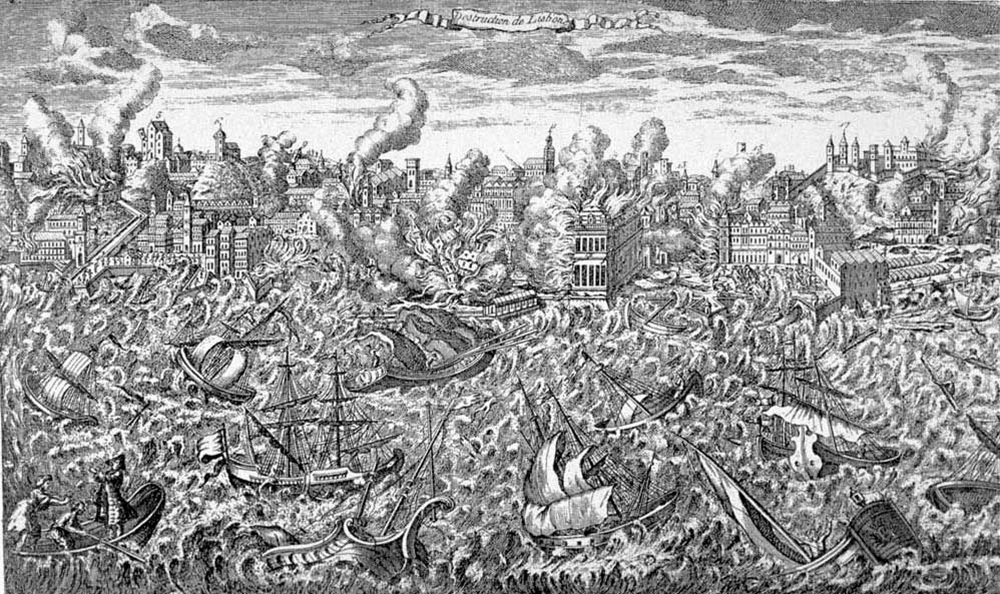
One example is the ballad Daeargryn Lisbon by Huw Jones of Llangwm (c.1700-1782), which, as its title proclaims, is about ‘the Lisbon Earthquake’.
On the morning of November 1st, 1755, an earthquake and the associated tsunami destroyed most of the Portuguese city, killing at least 30,000 people. It’s not known when or how the news reached Huw Jones, but he must have composed the ballad soon after the disaster, as these words suggest: Mi glywsom yn ddiweddar fod crio ac wylo a galar . . ./ Mewn tref a’i henw Lisbon (‘We heard recently that there is crying and weeping and grief . . . in a town by the name of Lisbon’).
Dramatically portraying the reaction of the city’s inhabitants during the seconds before their death, he has them ‘screaming’ (gweiddi) in the face of both fire and flood. Lisbon’s total destruction is depicted in several memorable lines:
Nid ydoedd fawr ddiddanwch pan ddarfu ei harddwch hi;
I’r llawr, er gwyched oedd ei gwawr, fe ymollynge’r holl sylfaene,
Dim hwy ni safe ei chaere a’i murie mawr,
A phawb yn colli eu bywyd mewn munud ennyd awr.
‘There was no joy when its beauty ended;
Down it went, despite how splendid it’s beauty had been; all of the foundations gave way,
No longer did its great towers and walls stand,
And everybody lost their lives in an instant.’
The poet intended for this composition to be sung to a melody known as Gwêl yr Adeilad, which translates as ‘See the Building’.
Destruction
It’s true that many Welsh compositions were set to this popular tune, but Huw Jones might have chosen Gwêl yr Adeilad for another reason; after all, the ballad invites those singing, hearing or reading it to imagine ‘seeing’ the destruction of Lisbon’s once-beautiful buildings.
The fact that great beauty and splendour did not save the doomed city is part of a moralising strain running through the ballad.
The subtitle of the printed text stresses that, in addition to describing the destruction of Lisbon, the song carries ‘a warning for us, unless we repent, lest we all be destroyed in the same way’ (rhybudd i nine, ond edifarhawn, y difethir ni oll yr un modd).
It is common for ballads focussing on tragic events to present them as the wages of sin and/or warnings to those who are currently living ungodly lives.
One could ask cynically to what extent the moral lesson really drives the composition and perhaps suggest that this kind of interpretive layer was added in order to excuse the blatant attempt at cashing in on tragedy.
However it’s worth noting that Huw Jones was not above turning his own misfortunes into ballad material, as the title of another composition makes clear: Huw Jones siopwr Llangwm yn sir Ddinbych, yr hwn oedd yn Jêl Rhuthun am ddyled ac a wnaeth gerdd iddo ei hun (‘Huw Jones, a shopkeeper of Llangwm in Denbighshire, who was in the Rhuthin Jail for debt and who made a poem to himself’).
Cerdd Dduwiol
As shown by Siwan M. Roser in a fascinating study, women also composed, sold, and, in at least one case, printed baledi. A ballad by Als (or Alse) Williams was printed in 1723, making it one of the earliest examples of a printed Welsh-language text which was composed by a woman.
It is called simply Cerdd Dduwiol (‘A Godly Poem’ or ‘Song’), and, rather than relating a story, it focusses entirely on religious lessons, including a warning that Dydd y Farn (‘Judgement Day’) is near. The poet works her name into the final stanza (a relatively uncommon feature in Welsh poetry from the period):
Os gofyn neb o unfan pwy luniodd hyn o gân,
Gwraig sy yn chwennych rhoddi rhybuddion mawr a mân [:]
Alse Williams ydyw ei henw, hi rodiodd lawer lle,
Sy’n deisyf cydgyfarfod yng nghanol teyrnas ne’.
‘If somebody asks who fashioned this song,
[It was] a woman who desires to provide warnings great and small:
Alse Williams is her name, she wandered many a place,
[She is one] who desires to meet with you in the middle of heaven’s kingdom.’
The verb rhodio, ‘to wander’, might indicate that she also travelled around in order to sell her work.
Welsh women had been barred from being professional poets during the centuries when bards could make a living by singing the praises of wealthy patrons.
The growing Welsh printing trade in the eighteenth century and the associated appetite for ballads provided a new literary niche which women could inhabit and perhaps achieve some measure of economic independence.
Further Reading:
Siwan Roser, Y Ferch ym Myd y Faled [:] Delweddau o’r Ferch ym Maledi’r Ddeunawfed Ganrif (Cardiff, 2005).
G. Millward (ed.), Blodeugerdd Barddas o Gerddi Rhydd y Ddeunawfed Ganrif (Llandybïe, 1991).
Cathryn Charnell-White (ed.), Beirdd Ceridwen [:] Blodeugerdd Barddas o Ganu Menywod hyd tua 1800 (Llandybïe, 2005).
The ballads of Huw Jones of Langwm, edited by A. Cynfael Lake, on Swansea University’s website: baledihuwjones.swan.ac.uk.
Support our Nation today
For the price of a cup of coffee a month you can help us create an independent, not-for-profit, national news service for the people of Wales, by the people of Wales.


