


Business leaders call for urgent improvement to public transport after hearing about nightmare four-hour commute
Business leaders have called for urgent action to improve public transport after hearing about a employee who faces a nightmare four-hour daily commute to travel just eight miles from home.
Her case was highlighted at a meeting of the Wrexham Business Professionals group who were told that improvements to public transport links are needed urgently to attract new companies to the city.
Rachel Clacher, co-founder of Wrexham-based Moneypenny, the UK’s leading provider of telephone and web-based communications for businesses, told the meeting that she had come across numerous examples of public transport failing to meet the needs of employers and employees.
She highlighted the situation of a young woman who spent four hours travelling the eight miles to and from work each day.
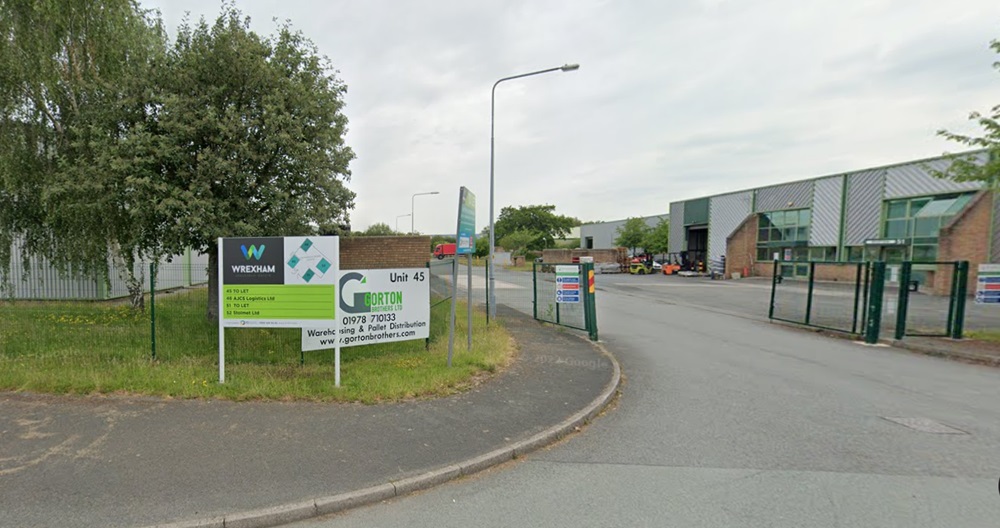
Ms Clacher said: “She has to first travel by bus from Gwersyllt to Wrexham bus station where she has to wait 45 minutes for a second bus to take her to Wrexham Industrial Estate, in all it’s a two hour commute.
“If you add in the return journey that is four hours of this young woman’s time spent travelling, every day. The fact is that the service is not good enough.
“These are the sort of issues we need to address if Wrexham is to benefit from the opportunities which are coming its way over the next few years.”
International spotlight
She said Wrexham’s newfound city status and its place in the international spotlight as a result of Wrexham AFC’s success were key drivers which could pull in more investment to help boost the local economy.
But she stressed that businesses and local authorities need to work together to overcome any ongoing obstacles which may deter investors.
The group also heard from the vice chancellor of the nearby Wrexham University, Professor Maria Hinfelaar, and her colleague, Dr Paul Hildreth, an international advisor on cities, regions and local economies.
The pair are the joint authors of an in-depth new study looking at the business make-up of the Mersey Dee Valley area – which includes Wrexham, Flintshire and Chester – both before and after Brexit and Covid 19 disruption.
Study
Nearly 50 companies across the region took part in the study to assess how the make-up of the area affects the potential for economic growth, including how small and large companies engage with surrounding communities, business networks and local authorities.
It went on to investigate how significantly the aftermath of Brexit and Covid impacted on the approach of local companies as the local economy cranked up again.
The report included two case studies involving Wrexham-based companies, cereals producer Kellogg’s and Unimaq, one of only three firms in the world manufacturing machines used by the aluminium can industry.
Dr Hildreth said: “Unlike cities such as neighbouring Liverpool or Manchester where everything is more cohesively integrated, Wrexham, Flintshire and Chester all have their own identities and strive to independently maintain those identities while also working inter-dependently to try to support each other.
“From a trading and growth perspective it faces a more unusual set of circumstances and challenges than most big cities. One of the main problems for employers and employees can be simply getting from A to B.”
The point was echoed by Professor Hinfelaar. She said: “Certainly in both the case studies of Kellogg’s and Unimaq this was mentioned as being a hindrance to recruitment with many areas, including Wrexham Industrial Estate proving virtually inaccessible for anyone who does not have a car.”
Support our Nation today
For the price of a cup of coffee a month you can help us create an independent, not-for-profit, national news service for the people of Wales, by the people of Wales.



We know that public transport isn’t good enough. And hasn’t been since the UK Government decimated it with Austerity. They cut money for public transport directly and indirectly (via cutting funding to local authorities so they don’t have the money for subsidies). All of which are passed onto the Wales via match funding.
https://www.independent.co.uk/news/uk/politics/map-bus-routes-cut-labour-b2388980.html
The rot started much earlier in 1986 with the deregulation of buses under Thatcher that actually ludicrously made it unlawful to integrate bus and train timetables and also sought to privatise bus companies. This of course led to cherry picking and only profitable routes being run, though a few routes received local authority subsidy as they were socially important. Prior to deregulationk the Natioal Bus Company operated on a cross-subsidy basis, which meant that the company could serve routes that were not commercially viable. This ensured that there was at least regular services to many communities that since deregulation have… Read more »