


Cladding campaigners win right to go to Appeal Court in compensation battle
Martin Shipton
Campaigners who have fought for years to be compensated for defective cladding and other structural faults on homes they bought have been granted leave to appeal against a High Court ruling that went against them.
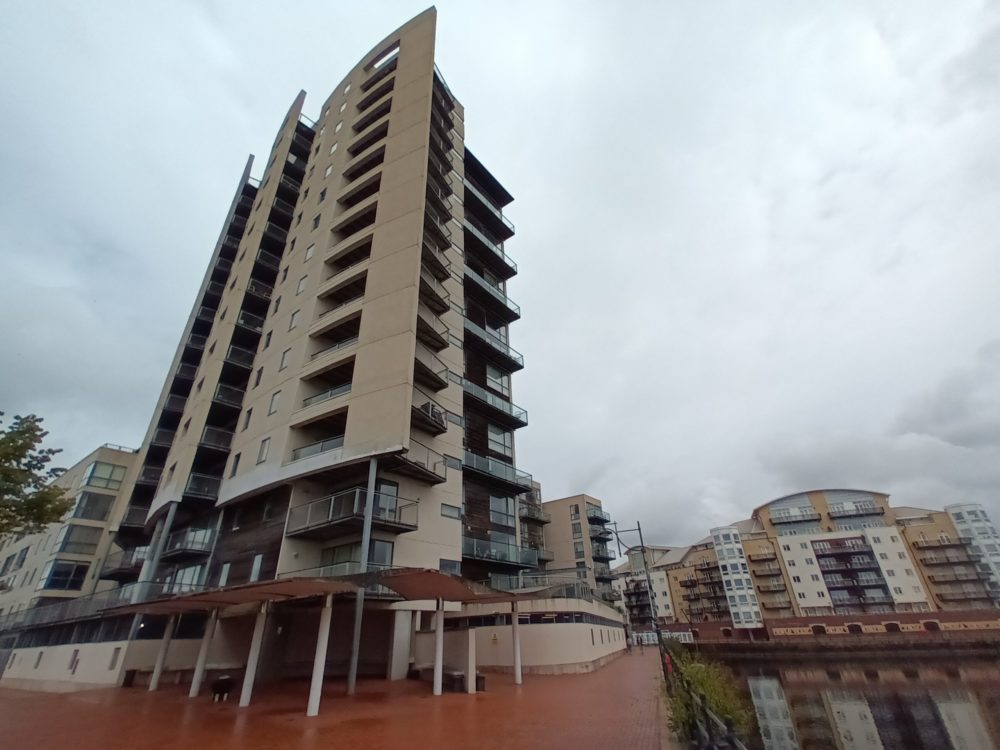
In April 2024 housing developer Redrow finally agreed to fund major repairs at the Celestia apartment complex in Cardiff Bay following tests five years before that found faults including “very poor or non-existent” fire barriers between flats and cladding, and insulation that did not meet standards.
But leaseholders – who call themselves cladiators (sic) – remain aggrieved that they have not been compensated for the loss in the value of their properties.
Test case
Gareth and Sheila Wilson brought a test case against the building contractors responsible for the poor workmanship, saying the value of their two flats had depreciated in value and their ability to earn rent from letting them out had been diminished.
But in a High Court judgment released on May 30 2025, Judge Keyser KC ruled against the Wilsons, saying their losses had been notional rather than actual. He struck out most of their claims.
After the judgement was handed down, Mr Wilson, a retired solicitor who represented himself and his wife, released a statement that said: “We are shocked and very disappointed.
“Regardless of the strict legal position the decision reflects an immorality that is endemic in the industry. There is not the slightest indication that Redrow are ‘stepping up to the plate’ or doing anything other than to discourage claimants, scaring them away with their aggression and spending power.
“Far from doing anything that might be over and above their strict legal obligations, Barratt Redrow [as they now are] are doing their utmost to defeat leaseholder claims, using their £300m provision not to compensate leaseholders, but to wear them down.”
Supreme Court
However, Mr Wilson pointed out that the result of another case that went to the Supreme Court was potentially beneficial to residents who were seeking compensation.
He said: “On May 21 2025 in URS Corporation Ltd v BDW Trading Ltd,, in which ironically Barratt Redrow were the successful party, a Supreme Court super panel gave a unanimous judgment confirming that the definition of those who could sue under the Defective Premises Act ‘would embrace a major property company which acquires the building as an investment or a bank which acquires an interest in a dwelling when lending on the security of a mortgage’.
“The extraordinary thing about this URS judgment is that it means Barratt Redrow and others like them will not even have to bear the cost of repairs and other damages arising from their defective developments. In many instances, including Celestia where Barratt Redrow is claiming a 100% indemnity from Laing O’Rourke [the building contractor], they will be able to claim indemnities from others.”
Mr Wilson added: “The judge quotes no authority for the proposition that losses were not sustained by the Wilsons, because the flats were not sold. Nor do any of the cases referred to by the judge support the proposition. On the contrary, the cases are authority for the proposition that claimants need not have sold in order to claim diminution of value, nor (unlike the Wilsons) indicate any present or future intention to sell. This is no more than the application of ordinary principles of English law under which damages are claimed: you do not have to sell your car in order to claim damages from another driver who has crashed into it.”
Now the Wilsons have been granted leave to appeal against the High Court judgment.
‘Chance of success’
Lord Justice Coulson issued an order in the Court of Appeal that said: “The judge may well have been right to strike out so many of the Wilsons’ claims. However, I consider that their arguments to the contrary have a real, as opposed to a fanciful, prospect of success. Furthermore, this is a developing area of the law and the Supreme Court’s decision in U/RS was handed down after judgment. For all those reasons it is appropriate to grant permission to appeal.”
Mr Wilson said: “We are obviously very pleased that the Appeal Court has granted us leave to appeal. The court only grants leave when there is a real prospect of success. That is, at least, some vindication.
“However, we are more exposed to risk and costs than ever. Between the date of the original judgment and today, Barratt Redrow and the solicitors representing the other claimant leaseholders arranged a secret mediation. We were prevented from attending that mediation. Since the mediation, which we understand was attended by the solicitors and some of the directors of the management company, we have been told by other leaseholders that they are not allowed to speak to us. Frankly, we ae bemused and feel betrayed.
“Despite this, we intend to pursue the appeal because of its importance not just to us, but to hundreds of other leaseholders at Celestia, in other developments Cardiff, Swansea and other developments across Wales. It is particularly important in Wales because leaseholders here do not have the same remedies available to them as leaseholders in England. But it is also important to tens of thousands of leaseholders across England.
“We will, hopefully, be able to obtain some financial and other support from others. We should all be in this together.”
Support our Nation today
For the price of a cup of coffee a month you can help us create an independent, not-for-profit, national news service for the people of Wales, by the people of Wales.


