


Councillors to sample school food for themselves
Richard Youle, local democracy reporter
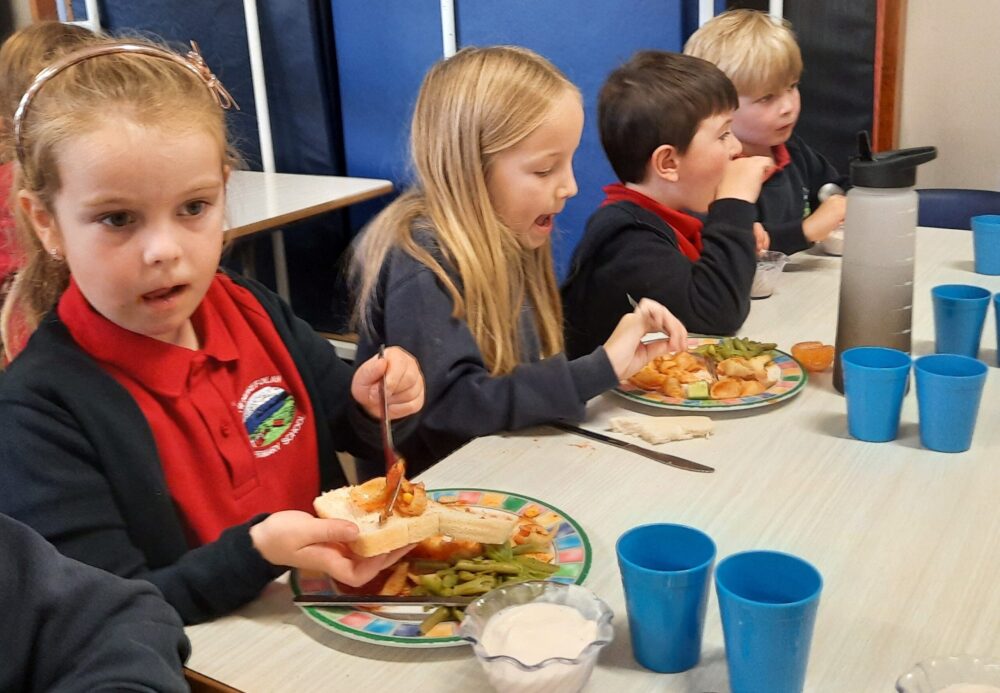
Councillors will roll back the years and sit down to a school meal as Welsh ministers consult on plans to reduce fried food, processed meat and cakes served to primary pupils.
The group of Swansea councillors want to see and taste for themselves what’s on the menu, having heard from education and school catering staff at a committee meeting.
The meeting heard the catering service provides more than 12,000 meals a day in primary schools and nearly 7,000 in secondary schools, as well as a breakfast or mid-morning option in many secondary schools and a free breakfast club in all primary schools. Around 550 cooks and kitchen assistants are employed.
Kelly Small, the council’s head of education planning and resources service, said what was currently offered was “nice and balanced” but changes would be required if the Welsh Government’s proposals are implemented.
Fruit and vegetables
There would be more fruit and vegetables and fewer cakes, cheese and foods high in salt, the meeting heard. Ministers have also proposed banning sugary drinks.
Alison Cosker, team manager for education, catering and cleaning in Swansea, said some things would be harder to deliver than others.
“We’d have to reduce our cakes as a dessert which is often something that entices children to eat a school meal, so that could be quite challenging,” she said.
She added fruit juices, which can have a lot of sugar, weren’t currently offered and a bread containing 50% wholemeal had recently been introduced to replace white and brown options.
Primary school children in Swansea are offered one meat and one vegetarian option for lunch, and meal production has increased by a third with the roll-out of the Wales-wide universal free school meal policy.
Some schools have pre-prepared meals brought in, and Cllr Beverley Hopkins said the potato product at one school she was aware of didn’t go down well with pupils.
Potatoes
Ms Cokser said trying to get children to eat different types of cooked potatoes was always a big conversation with school cooks.
She added: “It is important that we put a meal in place that children want to eat as well as meeting the regulations.”
Cllr Yvonne Jardine said she “didn’t think much” of the food on offer at one comprehensive school, which she didn’t name. She said the explanation was that set meals were brought in every day.
In terms of encouraging healthy habits, Cllr Jardine said there was only so much schools could do.
Cllr Lyndon Jones, who recalled with distaste the beetroot, potato, gravy and meat lunch of his school days, said the more people learned how to cook rather than buying prepared meals, the better.
He also asked about portion sizes, citing a report by the Children’s Commissioner for Wales last year which said many older primary school children were still hungry after their lunch.
Ms Cosker said five-year-olds received similar-sized portions to 11-year-olds and this was due to change under the Welsh Government plans.
“It will be interesting to see if that goes forward,” she said.
Members of the education and skills service transformation committee heard that only two schools – Olchfa School and Morriston Comprehensive School – didn’t buy into the council’s school catering service.
Consultation
The Welsh Government consultation on healthy eating in schools said the aim was to promote healthier food, while maintaining school favourites. Good nutrition, it said, helped children perform better and reach their full potential.
As well as sampling school food next term, the committee is backing the establishment of a waste monitoring system for school kitchens and a survey on the current food provision.
Committee chairman, Cllr Mike Durke, admitted having a school meal would be a first for him.
“I’ve got to make a declaration here – I never had a school meal,” he said. “I was such a fussy kid, honestly. I used to take sandwiches, I used to take packed lunches all the time.”
An example of a weekly primary school lunch menu in Swansea
Monday: Meatballs or tomato pasta bake and accompaniments of the day, plus jam split and fruit wedge/fresh fruit; halal meatballs, gluten-free and dairy-free meatballs also available
Tuesday: Chicken curry or margherita pizza and accompaniments of the day, plus fruit yoghurt pot/fresh fruit; halal chicken curry, gluten-free and dairy-free chicken curry also available
Wednesday: Cheese and tomato calzone or breaded chicken steak and accompaniments of the day, plus jelly and mandarins/fresh fruit; halal breaded chicken steak, gluten-free and dairy-free chicken steak also available
Thursday: Roast turkey or macaroni cheese and accompaniments of day, plus chocolate cookie/fresh fruit; halal roast chicken, gluten-free and dairy-free roast turkey also available
Friday: Baked fish or cheese wrap and accompaniments of the day, plus fruit muffin/fresh fruit; halal baked fish, gluten-free and dairy-free fish fingers also available
Support our Nation today
For the price of a cup of coffee a month you can help us create an independent, not-for-profit, national news service for the people of Wales, by the people of Wales.



School dinners in basically cafe food every day. Processed food thrown in the oven. But the problem is – that’s what the majority of kids get at home. Plus how much of this food is sourced in Wales – and if it can’t be sourced in Wales – what provisions are being made to change that? What if schools had their own chefs, and children were part of making lunches? Maybe that would break the cycle of processed food Britain and the resulting health epidemic.
Proposals need to consider tight budgets and other priorities. A school chef might come at the expense of a teacher. Locally sourced produce that cost more than those sourced from elsewhere means less available for other ingredients. Perhaps seasonal local produce can be bought at scale and prepared by chefs in central kitchens before rapid distribution to schools. There is a middle ground between frozen ready meals and a personal chef for every child.
So the very best food will be served today.