

Decision on fixing collapsed riverside wall expected this week
Elgan Hearn, local democracy reporter
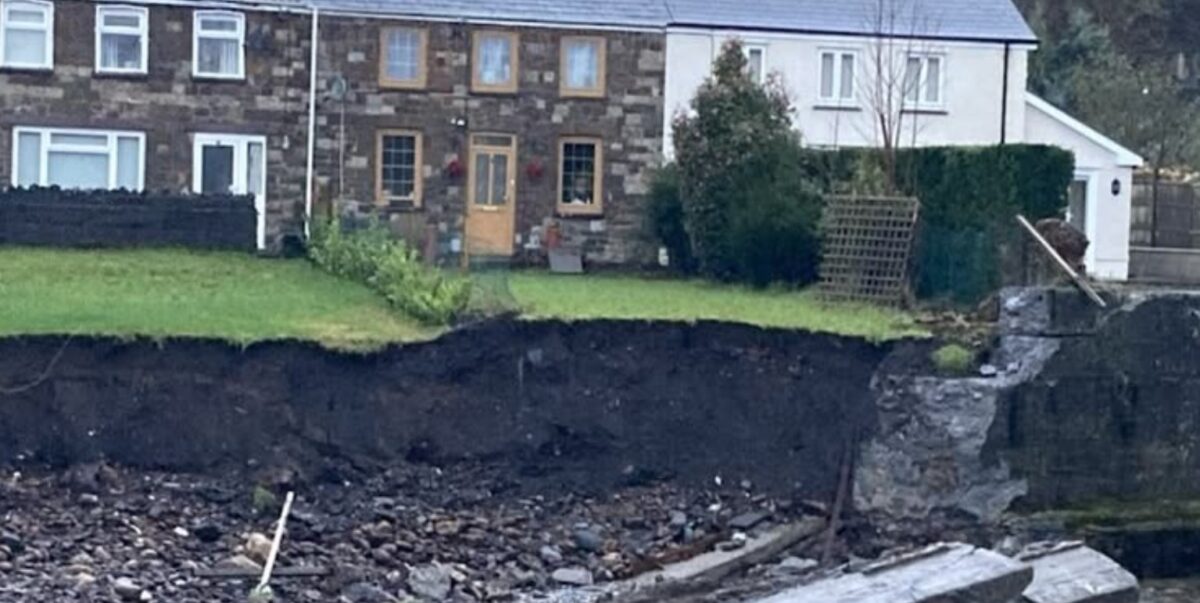
A decision on replacing or fixing a riverside wall that partially collapsed 18 months ago will be made by senior councillors later this week.
The wall is located at the back of four homes at Llys Tawel on the west bank of the River Tawe as it flows through Ystradgynlais.
On Friday (August 15) Powys councils cabinet member for highways, transport and recycling (HTR), Cllr Jackie Charlton will received four options and decide the “most appropriate” way forward that “best meets” Powys County Council’s legal obligations in respect of the Llys Tawel river wall in the town.
A report report on the damage explains that the wall is 100 metres in length, and 30 metres of the structure collapsed on February 1, 2024.
According to the report the remaining structure shows visible signs of “scour” – this means that its foundations could be affected by soil erosion.
Legal wrangling
There has been some legal wrangling over the ownership of the wall with Powys council eventually conceding that they own it.
Options for repair are estimated to cost from £382,000 to £1 million.
Option Four which is also supported by residents emerges as the best option in the report.
This would be the direct replacement of the retaining wall, providing riverbank protection which would cost £1 million
However, the recommended preferred option from council officers is Option Three.
Blockstone
According to the report it would provide: “blockstone at a lower level with an embankment above it.
“This is a tried and tested form of erosion control offering bank protection but would not be reinstated to the original wall level.”
This would cost the council £850,000.
Funding for the repairs would come from the HTR department’s own capital budget.
Grateful
Local Powys councillor Susan McNicholas (Ynyscedwyn – Labour) said: “I am very grateful to Powys council for their decision to rebuild the river wall at Llys Tawel.
“It has taken a long time to get to the stage we are now at.
“The residents will rest a lot more easily once the work has been completed.”
Under the council’s protocol the decision will come into force five full working days later -this is to allow for it to be called in by councillors for scrutiny should they wish to do so.
The wall was built by Brecknockshire County Council in 1912 and the report states that there is no evidence that the structure’s ownership has been passed on to another owner.
Following the last local government reorganisation in Wales during 1995/1996 the ownership of the wall fell to Powys council as a successor local authority.
But the council’s Highways Service refused to take responsibility for the wall and believed that either National Resources Wales (NRW), as the lead authority for main rivers, or the riverbank landowner was responsible for it.
After the wall partial collapse the residents of Llys Tawel engaged lawyers that argued the council as owner of the wall is responsible for it and have a duty of care to: “take reasonable steps to prevent natural occurrences on its land from causing damage to neighbouring properties.”
After taking their own legal advice, Powys council “concluded” that it owns the wall.
Support our Nation today
For the price of a cup of coffee a month you can help us create an independent, not-for-profit, national news service for the people of Wales, by the people of Wales.



Where do councils get their estimates from? Nothing costs less than a million these days where councils are concerned. Probably most of that figure has been spent just talking about it.