


Health board chief executive apologises for maternity services failings
Richard Youle, local democracy reporter
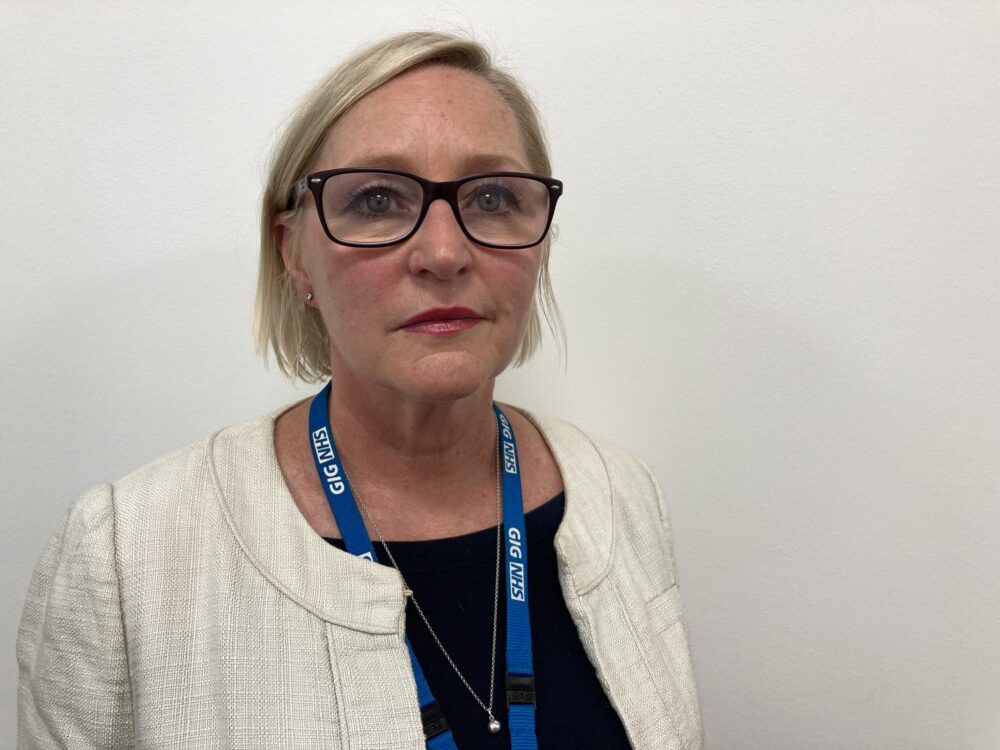
The chief executive of Swansea Bay University Health Board held back tears as she said sorry to women who were let down before, during and after they gave birth.
Abigail Harris said the health board was very grateful to the 1,000-plus women and families who had taken part in an independent review of maternity and neonatal services.
Ms Harris said the power of their words was “really humbling” and she apologised to those affected, some of whom, she said, had undergone traumatic and life-changing experiences. “We are so very sorry for this,” she said.
She was speaking at a specially convened health board meeting just after the publication of the final report of the independent review, led by chairwoman Dr Denise Chaffer.
It found that while many women reported a mostly positive experience of pregnancy and birth, some had and continue to have a poor experience.
Some went further and described examples of severe birth trauma. Although some of these examples pre-dated 2024-2025, the review said there were some recent instances of similar concerns.
Mothers-to-be and new mums reported trauma and fear, feeling ignored and that compassion was lacking. The review team heard from around 1,180 mothers and families.
‘Difficult’
Dr Chaffer presented the main findings around clinical care, governance, and leadership and staffing at the July 15 meeting. “This is a really difficult report for us,” she said. “It’s very, very important to us that this (review) is the voice of the families. My absolute wish is that their voices matter.”
The review had been commissioned by the health board in response to concerns raised by Welsh Government health inspectors, by families and by benchmarking data which showed it was an outlier for stillbirths and neonatal deaths in 2019, 2020 and 2021 and then again in 2023.
It identified a significant number of inconsistencies in the quality and effectiveness of the care provided across both maternity and neonatal services.
Between 2021 and 2024 staffing levels – predominantly midwifery staff – were low and inconsistent, and compliance with mandatory training was described as low. The review said during this period there were also “significant weaknesses” in governance such as a lack of scrutiny and “poor visibility” of the issues at hand.
Dr Chaffer said the maternity triage system needed improving to better support expectant mums, and that there had been a “lack of rigour” in incident reviews.
She acknowledged efforts taken by the health board to improve staffing levels – albeit that many were junior – and noted that a new chief executive, chairwoman, chief nurse and directory of midwifery had been appointed in 2024-25.
She said meetings that had been held between Ms Harris, chairwoman Jan Williams and a small number of affected families were to be recommended and should continue.
Pressure
Board member Anne-Louise Ferguson said she was concerned about pressure on staff, and said incident reviews were time and resource-consuming for senior staff to deal with. “That worries me,” she said.
Dr Chaffer said she knew staff were busy and that what families wanted was a compassionate response. Not getting this right, she said, compounded matters and led to a formal and adversarial process.
Elizabeth Rix, director of nursing and patient experience, set out a number of measures the health board had or would implement in response to the review’s recommendations, such as a maternity early warning system for all areas where pregnant women were cared for and a dedicated maternity triage service staffed by experienced midwives. Independent reviews of serious incidents, she said, already took place.
Further work will take place ahead of an update to board members in September.
Professor Medwin Hughes, chairman of regional patient group Llais, said there had been an acknowledgement of things going “terribly wrong” and that while the past was important what mattered to Llais was that it led to measurable change.
He said it was a fundamental right of everyone who gave birth in Wales to do so in “a safe, respectful and compassionate context”. Llais published a separate maternity and neonatal services report in May which heard of failings in safety, quality of care and respect at almost every stage.
Ms Harris said the health board would continue to support staff and acknowledged that the best environment had not always been provided for them. “I know and believe our staff come to work to do the best job they can for patients,” she said.
‘Harrowing’
Chairwoman Ms Williams gave an unreserved and whole-hearted apology on behalf of the health board and described the last year as harrowing and very difficult, especially for the families who had shared their experiences.
“We give you our word as a health board that we will not let you down again,” she said.
Also present was Sian Channon, whose son Gethin suffered severe brain damage following his birth at the maternity unit of Swansea’s Singleton Hospital in 2019.
Invited to ask questions or say a few words if she wished, Mrs Channon said the unreserved apology was pleasing.
She said she had been quite vocal about feeling not listened to. “That is all we wanted from the beginning, to be listened to and to be believed,” she said. “I don’t think your predecessors did listen, did believe. But I’m hopeful now that things will change.”
In another development on July 15, the Welsh Government announced a national assessment of all maternity and neonatal services in Wales.
And Health Secretary Jeremy Miles said Swansea Bay University Health Board’s maternity and neonatal services would be escalated to the second highest level – known as targeted intervention – to provide enhanced monitoring and support.
Mr Miles apologised on behalf of the Welsh Government to all the women and families affected.
“All women and babies must receive good-quality, safe and compassionate care,” he said. “Their voices must be heard during pregnancy and birth and they must be included in plans to improve services.”
Support our Nation today
For the price of a cup of coffee a month you can help us create an independent, not-for-profit, national news service for the people of Wales, by the people of Wales.



Holding back tears ! She ought to be foaming at the mouth with anger that such incidents of incompetence keep cropping up within the trust.