


Israeli military killing 250 Palestinians per day with many more lives at risk, Oxfam says
Gosia Buzzanca
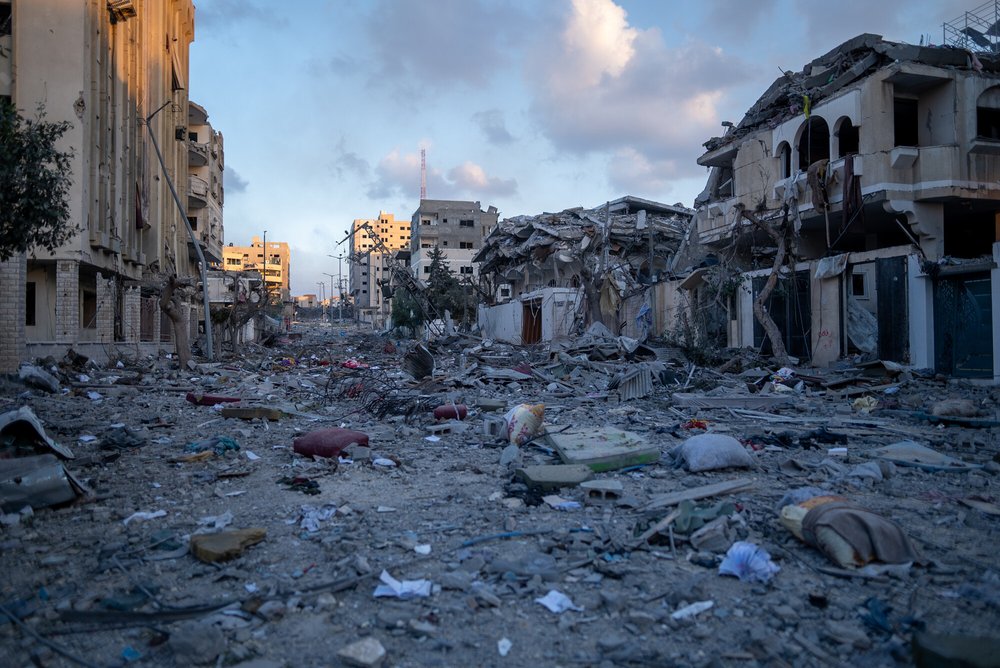
Israel’s military is killing Palestinians at an average rate of 250 people a day which massively exceeds the daily death toll of any other major conflict of recent years, Oxfam said today, as the most recent escalation of hostilities nears its 100th day.
Many more lives are at risk from hunger, disease and cold.
In addition, over 1,200 people were killed in the horrific attacks by Hamas and other armed groups in Israel on 7 October and 330 Palestinians have been killed in the West Bank since then.
Sally Abi Khalil, Oxfam’s Middle East Director, said: “The scale and atrocities that Israel is visiting upon Gaza are truly shocking. For 100 days the people of Gaza have endured a living hell. Nowhere is safe and the entire population is at risk of famine.
“It is unimaginable that the international community is watching the deadliest rate of conflict of the 21st century unfold, while continuously blocking calls for a ceasefire.”
Using publicly available data, Oxfam calculated that number of average deaths per day for Gaza is significantly higher than any recent major armed conflict including Syria (96.5 deaths per day), Sudan (51.6), Iraq (50.8), Ukraine (43.9) Afghanistan (23.8) and Yemen (15.8).
The aid agency is warning that people are being increasingly forced into smaller areas due to constant bombardment, as they are forced to flee from places they have previously been told are safe, but nowhere in Gaza is truly secure.
Over one million people – more than half the population – have been forced to seek shelter in Rafah on the Egyptian border. Oxfam staff in Rafah report massive overcrowding, with very little food and water, and essential medicines having run out.
This crisis is further compounded by Israel’s restrictions on the entry of aid, closing borders, imposing a siege, and denying unfettered access. Currently only 10 per cent of the weekly food aid needed is getting in.
Oxfam is also warning of the massive threat to life, beyond direct casualties, from hunger and disease. The onset of cold and wet weather is making the situation even more critical, with a shortage of blankets, no fuel for heating devices and no hot water.
One of Oxfam’s partner organizations, Palestinian Agricultural Relief Committees (PARC), described the situation for those living in tents as “worse than anything you could imagine”, with makeshift shelters letting in rain, being blown away in the wind and people resorting to desperate measures like selling precious food or water supplies in order to get a blanket.
Mutaz, an engineer who has been displaced to Al-Mawasi with his family, said: “The rain was going down from all sides of the tent. We had to sleep lying over the bag of flour to protect it from the rain.
“My wife and three of my daughters use one blanket at night. There are only enough blankets for four people to share. We have nothing.”
Earlier this week, a camp in Jabaliya was flooded with sewage when pipelines and a pumping station were damaged by Israeli air strikes. The lack of clean drinking water and proper sanitation poses a huge risk to health. Cases of diarrhoea are 40 times higher than this time last year, although in reality, the number of cases is likely to be significantly higher.
Sally Abi Khalil said: “While the mass atrocities continue, lives continue to be lost and critical supplies cannot get in. Israel’s total blockade of the Gaza Strip is restricting life-saving aid, including food, medical supplies and water and sanitation facilities.
“On top of the already horrific death toll, many more people could die from hunger, preventable diseases, diarrhoea and cold. The situation is particularly worrying for children, pregnant women and those with existing medical conditions.
“The only way to stop the bloodshed and prevent many more lives being lost is for an immediate ceasefire, for hostages to be released and for crucial aid supplies to be allowed in.”
The United Nations International Court of Justice is holding a hearing today on the legality of Israel’s prolonged assault on Gaza, and may issue an emergency order for the suspension of Israel’s military campaign.
Support our Nation today
For the price of a cup of coffee a month you can help us create an independent, not-for-profit, national news service for the people of Wales, by the people of Wales.

