


New bird flu outbreak confirmed in Wales
Martin Shipton
Animal welfare organisations are seeking a meeting with Deputy First Minister Huw Irranca-Davies to discuss further outbreaks of bird flu and the need to introduce tougher measures to stop the disease spreading.
The Welsh Government’s Chief Veterinary Officer has confirmed the latest outbreak is on a farm at City Dulas near Almlwch in the north east of Anglesey. A one kilometre restriction zone has been established.
In June 2025 two cases of bird flu were confirmed in different parts of the country. The first case was confirmed on a smallholding of 120 hens near Haverfordwest, Pembrokeshire. A second case was confirmed near Wrexham on a commercial game bird premises.
Animal Aid and the League Against Sports want to discuss the situation with Mr Irranca-Davies, who is also the Cabinet Secretary for Rural Affairs.
RSPB
A briefing document produced by RSPB, also in May 2025, stated: “Across winter 2024/25, there have been large numbers of avian flu cases in waterfowl, birds of prey and gulls – including cases in White-tailed Eagles and Red-listed species such as Great Black-backed Gull, Starling and Curlew. The UK poultry sector has also been hit hard. There have been a significant number of outbreaks at captive bird premises since November.
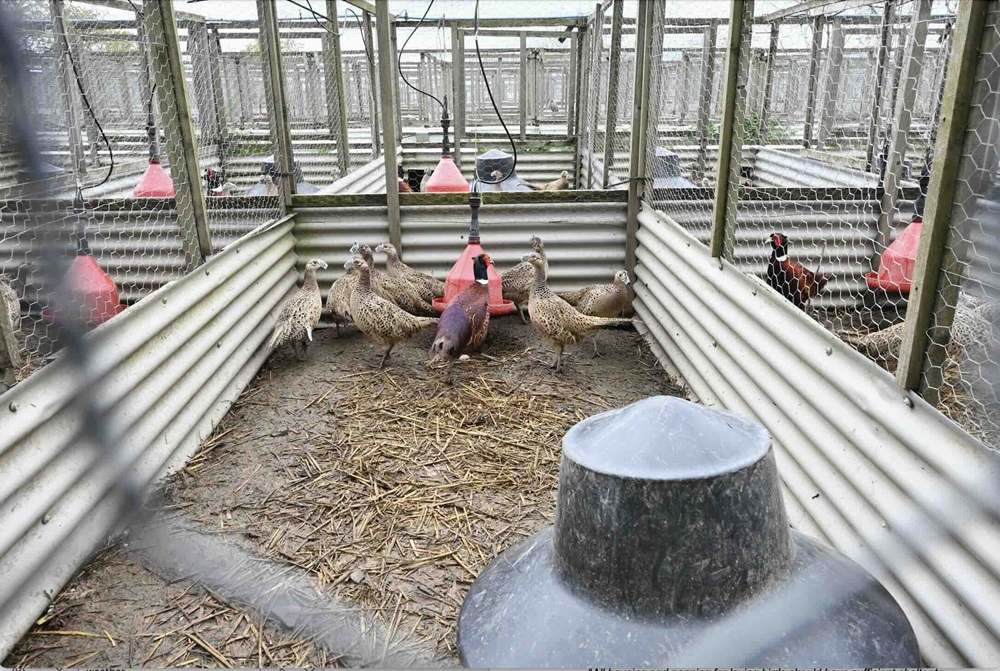
“In a typical year, it has been estimated that over 40m pheasants and red-legged partridges, and 2.6m mallards are reared in captivity and then released into the UK countryside ahead of the shooting season. The result is a drastic increase in susceptible birds present in the environment, at high densities which provide the opportunity for rapid disease spread, and with no immunity from prior exposure as new birds are released each year. This amplifies the risk of transmission of avian flu, and other diseases, within the UK and risks maintaining disease in areas, or at times of year, where it might otherwise fade out.
“Avian flu continues to pose a risk to wildlife health and biodiversity conservation, domestic animals, human health, livelihoods, food security and economies globally. Tackling this disease requires governments to take an integrated “One Health” approach to managing risks, which recognises that human, wildlife, captive animal, and environmental health are closely linked.
“Gamebirds occupy a unique position in that they often have close contact with humans (during rearing, shooting and consumption), with farm animals (often being released on, or near, farms), with wild birds (both in rearing pens, and after release), and with mammals (notably, predator species like foxes, as well as gundogs during the shooting season).
“As a result, there is a risk of cross-species transmission where outbreaks of disease occur in gamebirds and there is growing evidence of spill-over from gamebirds into wildlife.
“Since 2021, releases of gamebirds (pheasants and red-legged partridges) on specially protected sites, or within 500m of their boundary, have been regulated in England … There is very little regulation of gamebird releases elsewhere in the UK, although in 2023 Natural Resources Wales recommended that releases should be licensed because the current regime is inadequate to protect the environment; the Welsh Government has so far been silent on the matter.
“The four UK governments have all seen first-hand the devastation the virus can cause to wild birds and poultry and given the known risks, need to take a precautionary ‘One Health’ approach and regulate this activity. The RSPB is calling for governments across the UK to license all future releases of reared gamebirds and mallards … underpinned by a statutory code of practice, with mandatory reporting of movements and releases. “We believe statutory licensing is the only way to sensibly, proportionately and effectively regulate gamebird releases, and manage the associated disease risks. Given the severity of the ongoing global outbreak of avian flu, this should be developed as a matter of urgency. We are keen to engage with all interested parties in the design of a future licensing regime in each of the four UK countries.”
Investigation
Mr Irranca-Davies has also been sent details of an investigation published by Animal Aid and reported by Nation.Cymru in May 2025 that alleged three game farms in Powys were in breach of regulations designed to protect the interests of birds bred for shooting.
Animal Aid has reported the alleged breaches to the Animal and Plant Health Agency (APHA) and Powys County Council’s Trading Standards Department.
A letter to APHA and Powys Trading Standards from Animal Aid’s campaign manager Fiona Pereira states: “An Animal Aid investigation into three game farms in Powys in April found issues relating to animal welfare and breaches of the Code of Practice for the Welfare of Gamebirds Reared for Sporting Purposes.
“In addition, we discovered breaches of the Animal By-Products (Wales) Regulations 2006 and Schedule 2 of the Government of Wales’ Declaration of an All-Wales Avian Influenza Prevention Zone.”
Compensation
The League Against Cruel Sports is concerned at an FoI disclosure about compensation paid by the Welsh Government for game birds that have been culled.
In 2021 £1,446.71 was paid; in 2022 the figure rose to £150,439.93 and in 2023 compensation payments totalling £551,095.24 were paid.
Between April 27 2023 and June 3 2025, 26,491 game birds have been culled in Wales as part of Highly Pathogenic Avian Influenza control measures. Some 1,287 of the birds culled were partridges while 25,204 were pheasants.
A spokesperson for the League said: “These figures are quite striking as the Welsh Government has stated on record in the Senedd that ‘the Welsh Government does not support shooting of live animals or birds as a leisure activity’.
Support our Nation today
For the price of a cup of coffee a month you can help us create an independent, not-for-profit, national news service for the people of Wales, by the people of Wales.



If the farmer was crammed into a cramped pen like the birds are he woukd also suffer from some form of horrible disease. Why do we allow animals to be treated thus for the convenience of the farmer?
Farmers have far too much political power, given the tiny percentage of agricultural workers as a percentage of the workforce, and the pitifully small amount of money they bring into the economy. Slogans like “no farmers, no food” are designed to appeal to the emotions and not the reason; you might as well say ” no electricians/ lorry drivers / supermarket staff no food.”