


The Immigrant: Blessing or Burden?
Ishmam Ahmed
Before blaming migrants for today’s cost of living crisis, it’s important to remember that their contributions have been central to shaping and strengthening the modern British economy.
Britain’s modern story cannot be told without acknowledging the sacrifice and the rebuilding that followed the two world wars.
More than 1.3 million British lives were lost, most of them young men in uniform, during World War II leaving the nation with a devastating labour shortage and a desperate need to restore its public services and industries.
Into this void stepped men and women from across the vast British Empire, that stretched from
the Caribbean and Africa to the Indian subcontinent and Southeast Asia, legally British subjects who
answered the call to help rebuild the “mother country”.
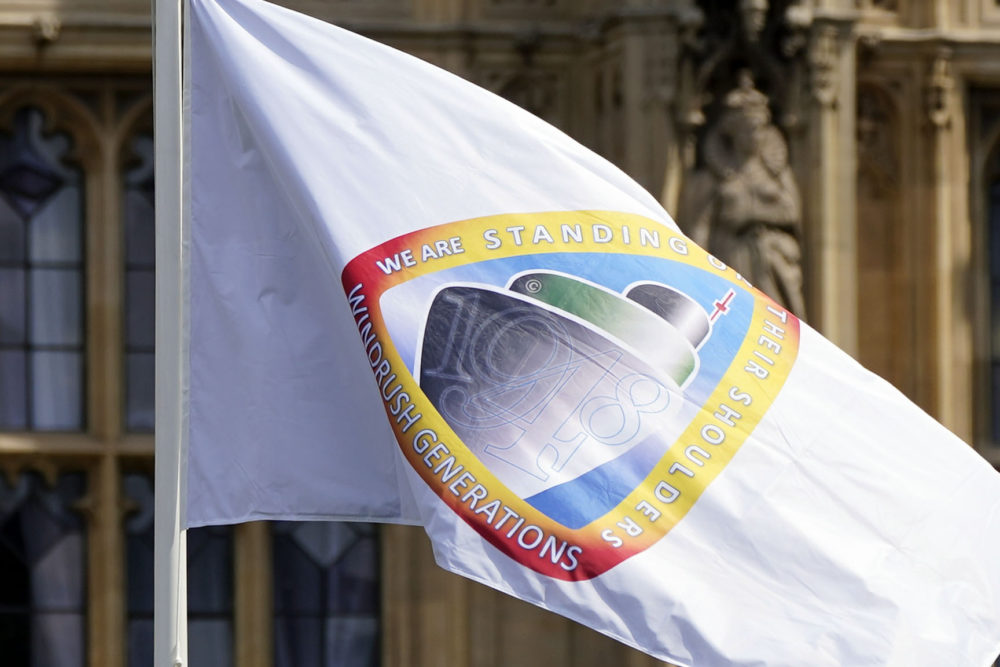
On 22 June 1948, the HMT Empire Windrush docked at Tilbury, carrying over a thousand passengers
from different parts of the world. Their arrival marked the beginning of what we now call “The Windrush
generation”.
The wave of migrants arriving in 1948 and the early 1970s, became the backbone of the Britain’s economic and structural recovery. Despite initial challenges of discrimination and housing barriers, their presence enriched the workforce, sustained public services like the NHS and transport, and gradually reshaped social attitudes. This lead to greater recognition of ethnic diversity as part of the national identity.
Their labour was not just useful, it was indispensable. Without them, Britain’s infrastructure and public services would have faltered. To forget their contribution is to forget how modern Britain was rebuilt from the ashes of war.
In the 21st century, migrants make up around 14% of the UK population and a significant share of the
labour force. Public services like the NHS, social care, and transport sectors heavily rely on migrant
workers to meet demand. Without them, staffing shortages would be very severe.
Migrants in the UK are often more inclined toward business and entrepreneurship, and this has become a powerful driver of job creation for both migrants and British citizens. Further to this, migrants contribute billions in taxes, help offset the challenges of an ageing population, and expand consumer markets.
Without migrants, the UK would face sharper labour shortages, lower productivity, and reduced innovation, alongside heavier fiscal pressures from pensions and welfare. The absence of migrant entrepreneurship would also mean fewer businesses, fewer jobs created for British citizens, and less cultural dynamism.
Divisions are being manufactured by some political rhetoric and media framing. Yet the evidence tells a
different story. Far from being the root cause of Britain’s cost of living crisis, migration has consistently
strengthened the UK’s economy.
The Migration Observatory and economists like Jonathan Portes stress that immigration has contributed positively to GDP and tax revenues, while the cost of living crisis stems mainly from global energy shocks, inflation, and housing shortages. To scapegoat migrants is to misdiagnose the problem and distract from the structural issues that demand urgent solutions.
Misinformation
When misinformation about immigration is weaponised by those seeking political power, it can have
serious consequences for the UK’s economic stability and for the rights of its citizens.
Cutting back on migrants means fewer workers for the NHS, care, farming, and tech, causing staff shortages, lower productivity, and less tax revenue. It also risks suffocating the entrepreneurial drive of migrant-run businesses that have long created jobs and revitalized local economies.
On the other hand, leaders who spread these myths often push laws that limit freedoms and fuel division, which can end up restricting rights for everyone, not just migrants.
In the end, scapegoating immigration weakens the very foundations of the country it claims to protect.
Support our Nation today
For the price of a cup of coffee a month you can help us create an independent, not-for-profit, national news service for the people of Wales, by the people of Wales.



The difficulty is illegal immigration of unskilled people mainly single men who seem to be overrepresented in crime although this remains to be seen and formally studied in depth. These are a relatively small part of immigration but a large part of the cause of public disquiet. At the same time the government puts restrictions and obstructions on people we need now like the young scientists Paul Nurse describes today. The conclusion is that the civil service especially the Home Office is inflexible and incompetent together with a suspicion that the government statistics are very poor.
Remainers knew Whitehall wasn’t up to the job of proper governance. Why didn’t you?
1) How do you know they are unskilled? You don’t.
2) How do you know they are more criminal? You don’t.
Extraordinary claims like yours demand extraordinary evidence, but as you are unable to produce it, you should stop repeating Daily Mail bigoted garbage.
How do you know they are skilled? How do you know they are not criminals? And round and round in circles we go….
The debate is quite oversimplified in the UK – both on left and right. Yes – almost all evidence shows that ‘migration’ does provides a net economic benefitto the UK, especially in the short term. Many migrants arrive as working-age adults, contribute more in taxes than they take out in services, and help counteract the UK’s ageing population by expanding the labour force et etc. Especially skilled migrants in e.g. IT, engineering tend to have strongly positive impacts on public finances, and I would say our communites. And their children i.e the second generation, often achieve similar or higher levels… Read more »
Yes, bonkers because the levels of immigration now is nothing compared to the levels of those days and Farage knows this but it’s his only policy – what his party breathes on.
As I say, oversimplified debate. Larger in absolute numbers today, but relatively to the era, it was very significant then. Being a member of commonwealth had rights for those born before 1971, and I’m thankful for the opportunity to move here
The article is dead right – immigration benefits the country and blaming them for our woes is disgusting and wrong. People who use this issue, like Farage, to gain votes should be ashamed of themselves. However, the trouble is that we can voice all we like the good about immigration but, just like the benefits for staying in the EU, they get pushed aside as many people become blinkered and just want something, someone to blame. Farage is the main instigator in all this – he’s ruining the country and needs to be stopped and put on trial for links… Read more »
Some immigration is fantastic for us, some is really not. Just need more of the former and none of the latter. It should not be difficult to filter the people who will benefit the UK and turn away those that are a danger to us. We do seem to have made a right mess of all this.
Did you vote to leave an arrangement that stopped failed claimants trying their luck in other European states? Did you vote to stop sharing security information with our neighbours? Did you vote for #GlobalBritain which meant replacing European migration with non-European migration still needed to pay for our cost-of-retirees crisis? Then you knew what you were voting for.
I didn’t vote for it. Any country should be able to manage who comes to their territory as it is quite simple. Countries have done it for centuries. In the modern day then, for example, Australia manages it.
Australia isn’t 26 miles from its neighbours.
Precisely.
That’s your plan is it? To move this island hundreds of miles from its nearest neighbours to be able to control the borders without needing to cooperate with the neighbours? And you wonder why the right aren’t taken seriously.
No idea what you’re talking about. Merely saying that we should be able to control our own borders, just as countries have done for centuries. Not difficult.
This island has never been able to control its borders. Who invited the Romans, the Barbarians or the Normans? In fact the most controlled it’s ever been in human history was when we were in the Dublin deterrent.
Should Wales be able to control its eastern border?
Of course, as should any country.
“Australia isn’t 26 miles from its neighbours.”
Papua New Guinea is about 2½ miles away from Australia. Still a lot further than the 0 miles to the UKs nearest neighbour though.
Between their closest respective islands, it’s about 90 miles between the two mainlands.
And the geopolitics is very different with PNG being a former Australian colony and the two are in a security alliance which means Australia can legally return boats without it being considered an invasion.
The UK instead chose to have no cooperation arrangements with its neighbours, which is when Nigel’s Brexit boats started arriving.
Have the Aboriginal Australians ever had a say on Immigration since the arrival of Captain Cook!
Unsure of the relevance of your comment but I suggest that they haven’t.
If you don’t understand the relevance, I suggest you read your previous posts, in which you twice demonstrate your ignorance of world history.
Your comment felt quite Farage-esque so I didn’t want to say more. Thanks.
Wrong. Countries have not “done it for centuries”.. Passports did not exist before WW1, and although there have, throughout history, been some states that tried to exert some control, generally populations moved quite freely around the globe. As you mention Australia, what system did the Aboriginals have for controlling unwanted white immigration? How did the Caribs put a halt to european invaders?
I think you’ll find most countries controlled their borders before passports. The Aborigines obv did not.
You mean the Australia which was settled by the English a couple of centuries ago, whose indigenous population has been crippled?
Yes. That one. Unless there is another. They have a very robust and fair immigration system that we should learn from for the benefit of everyone. Denmark too.
The difference between Australia and the UK was revealed when Boris Johnson and Liz Truss tried to negotiate a free movement deal with Australia and they laughed themselves silly.
Immigration played an essential role in the emergence of modern Wales, from well before Windrush. Immigrants from Ireland, England, the Empire and beyond dug canals, tunnels and docks, sailed ships, laboured in mines and metal works.
A quarter of the population of Wales were not born here. A large majority of our people have ancestors who came here in recent generations. We are a land of immigrants and should celebrate that.
take deliveroo type drivers – estimates we have now 90000 in the UK, maybe a bit higher, maybe lower. But -what the benefit to the UK of having these immigrants? No significant added value to the economy, in fact – money leaks out the UK economy as about 50% of their work is for US multinationals (who profit shift) and very few clear economic positives. I think this is very different to labouring in mines, digging canals which actually added value to UK businesses
Delivery drivers (only some of whom are immigrants) do this job because consumers want this service. It is badly paid, stressful and dangerous. Blame the companies making a profit by exploiting them, blame the government for not regulating terms and conditions, but don’t blame those providing this service.
The vast majority of these are immigrants – in fact close to 50% are illegally working here. I know these jobs are far from ideal. But my point is they also add very little value to the economy. By your very words – these are low margin, insecure, fragmented jobs – plus they have highly unproductive waiting times… so its economic contribution is limited, to be polite. In fact, it’s almost certainly has a negative impact when you consider their jobs in the whole. This is very different to migrants from 150 years ago during the boom of the industrial… Read more »
You are ignoring the undoubtedly essential work being done by immigrants in sectors like health and care, both of which are worried about the effect on their workforce and labour supply of today’s hostile climate.
You also misunderstand the economics of food delivery. Immigrants are not creating the demand for this service. That comes from consumers choosing to obtain food via this channel.
I’m not quite sure Deliveroo drivers are essential to society. However, you miss a key point that even Corbyn understands. You are paying unskilled immigrants very very low wages when you could temper this sort of immigration, which would force the corporations to pay better wages that would in turn attract people from the UK and help people get out of the benefits-unemployment cycle. Capatalists want mass immigration as it is also so much cheaper for them.
We do you say ‘you’? I’m not employing any delivery drivers. Big corporations are. So force them to pay a rate for the job that doesn’t mean e-bikes have to hurtle through the city at risk to themselves and others in order to get not even the minimum wage. Immigrants do not reduce wages. Profit-seeking companies do that. I don’t use food delivery but many Welsh consumers choose to. Without their demand these jobs would not exist. We should call hostility to immigrants by its real name. Racism. The upsurge in racism we are now seeing is being experienced by… Read more »
The work is the modern day equivalent of labouring in mines and digging canals. The value they add is to all the UK businesses they deliver for, and the supply chains those businesses use.
From an economic-impact point of view, all tehy add is a shift in where people consume the food, so it doesn’t add value, it just reallocates spending. For example, someone 1) orders a £20 meal in a restaurant, or 2) a £20 takeaway from home. …are the same amount of consumer spending.The UK economy doesn’t expand simply because the food was delivered instead of eaten on-site. Add to that, restaurants have a reduced margin as a result of the delivery (deliveroo would take 25-30% fee; it’s a US company) Add to that if the trend continues, fewer waiting staff are… Read more »
It’s nonsense to suggest that people would eat out if they couldn’t have it delivered. If the delivery apps didn’t exist they would instead order from a much smaller number of places that had their own delivery riders, or collect it themselves from takeaways, or buy supermarket fakeaways. There are two very different consumer demands being served – eating out is a social event whereas ordering in is about laziness and convenience. One isn’t at the expense of the other. That doesn’t mean I’m defending the delivery apps which indeed exploit workers, businesses and shirk normal employer responsibilities including not… Read more »
The population of the UK is made up of immigrants going back to the earliest millennia. The focus should be on the economy, not the colour of your skin or religious beliefs. Donald Trump’s desire to see Europe as a white only bastion is absurd. Reading the latest US foreign policy (NSS, Nov 2025), where European values are trashed, makes it even more important that we explore a more united front with our European partners, against a far right attempt to divide our communities.