

Making Tracks: Llandeilo
Making Tracks: Llandeilo
Jon Gower joins the Welsh Battlefield Society as they retrace soldiers’ steps during the Battle of Coed Llathen and Cymerau, a route you can follow by simply looking at the names on the map.
In January and June of 1257 the village of Llangathen near Llandeilo was the scene of two bloody battles – Coed Llathen and Cymerau. These military clashes are quietly enshrined in the names of local fields and farms. Not far from the crossroads at Derwen Fawr/ Broad Oak there’s Cae yr Ochain, “ochain” meaning “to sigh, moan or groan.” A mere crow’s hop away is Cae Dial, the Field of Vengeance or Revenge along with Cae Tranc, the Field of Death or Slaughter. Equally explicit is the name of a farm called Cadfan, which literally means battleplace, set on Llethr Cadfan or Battlefield Hill.
The two battles marked an important phase in the extension of both the reach and power of Llywelyn ap Gruffudd as Prince of Wales. Here at Coed Llathen an English-led force of knights and predominately Welsh infantry drawn from the Marcher lordships of south and east Wales were defeated by forces led by members of the royal line of Deheubarth.
The day, organised by Cymdeithas Meysydd Cad Cymru, the Welsh Battlefield Society, is divided into a series of site visits and mini-lectures, using a pub as a base. I consider the itinerary which lists morning coffee, a carvery lunch and afternoon tea at the very welcoming White Hart Inn. Someone must have bought shares. There’s also an opportunity to find out about the society itself.
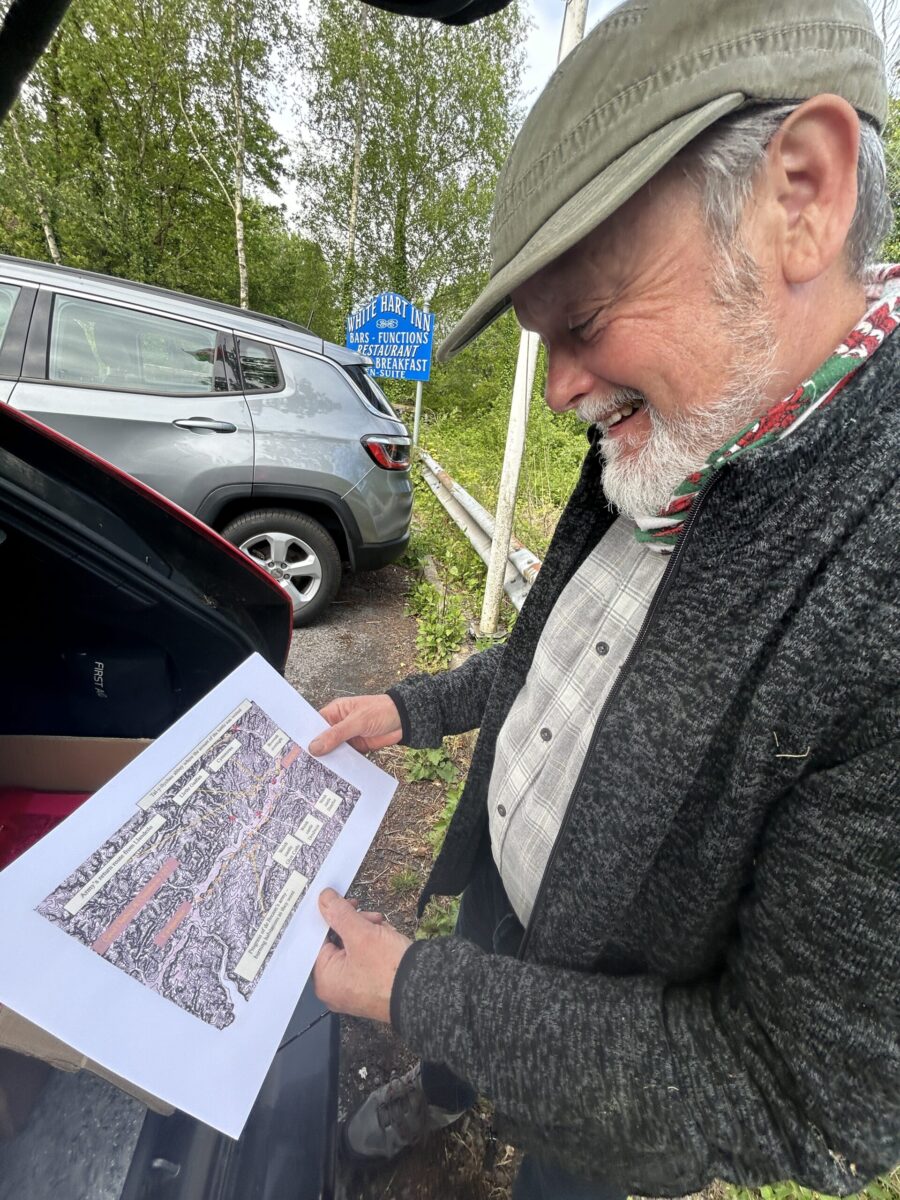
The society’s Rhisiart Dafys explains, ‘The purpose is to make the history of battlefields in Wales better known to the general public. When we visit a site, we try to bring in local people and explain what we’re up to. In the early days we tried to get the Ordnance Survey to put the little battlefield symbols back on their maps because many had been taken off.’ Since its inception the society has visited sites the breadth all over Wales, as well as visiting places further afield.’
The Welsh Battlefield Society is not about re-enactment or restaging: there is no dressing up or drilling as soldiers but rather a lot of painstaking historical detective work, turning desiccated documents and very old facts into imagined clashes and always seeing the lay of the land and how that affected events. Today we are joined by members of both the Owain Glyndŵr society and the Owain Lawgoch Society, the latter very keen to remember a Surrey-born Welsh soldier, a descendant of Llywelyn the Great, who fought in France and Switzerland: forces mustering.
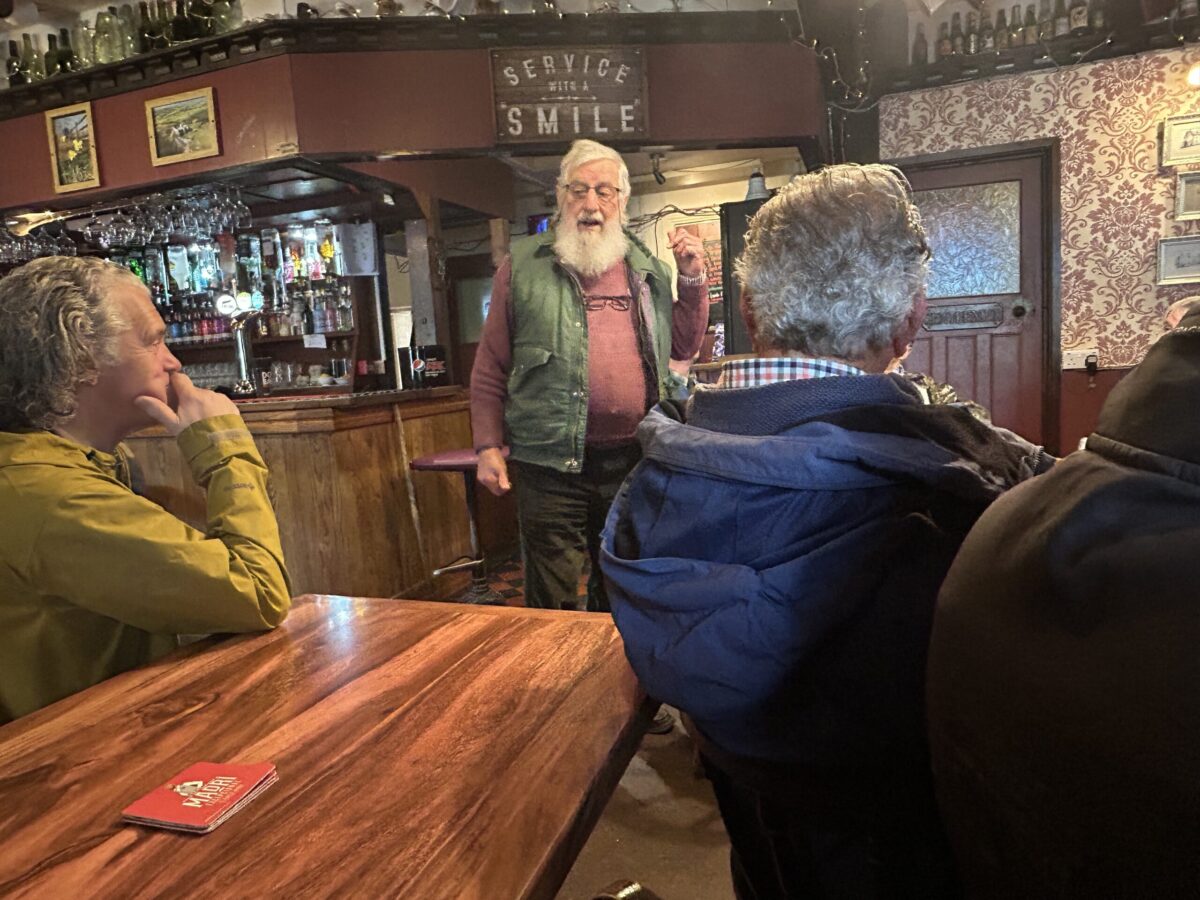
The day’s guide, founding member John Davies recalls that the main impetus for initially establishing the society came when the site of the decisive battle between Owain Glyndŵr and Sir Edmund Mortimer at Bryn Glas – at Pilleth, between Knighton and Presteigne in Radnorshire – came on the market.
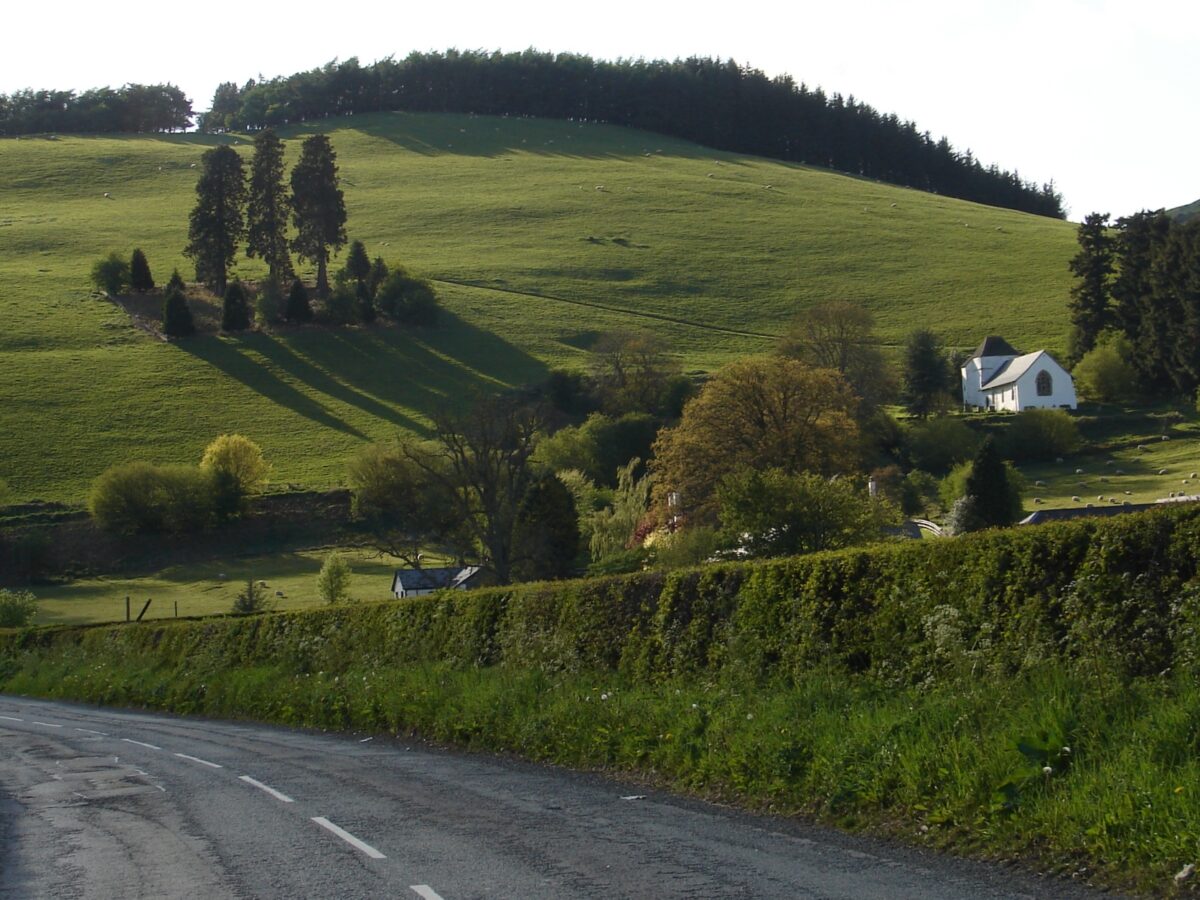
‘We formed a group to try and raise money to buy it. Eventually we couldn’t manage it but the people who lived up the valley they said they’d buy it and preserve it. The cause was therefore won so we decided to form a national society. That’s what we did: we meet three or four times a year, all over Wales, visiting sites, doing scientific appraisal of the evidence and learning what we can from looking at the landscape.’
John elucidated some of the complexity of the events at Coed Llathen and Cymerau. ‘In 1257, Edward I’s army came to the area as part of the conquest of this part of Wales. There must have been a suspicion that the monks of Whitland Abbey were supplying information to Llywelyn about the positions of the armies in South Wales. Because of that, a man called Stephen Bauzan and a crew from the garrison at Carmarthen Castle – then a key centre of government in South Wales – went to Whitland Abbey, where they beat up the monks and executed all the lay brothers in the orchard.
‘Rhys Fychan ap Rhys Mechyll, whose lands had been confiscated by Llywelyn’s supporters, was supporting Edward I to try and get his lands back. He persuaded members of the mixed garrison of English, Gascons and Welsh soldiers, based in Carmarthen, to come and receive the submission of his uncles, two Meredydds.’
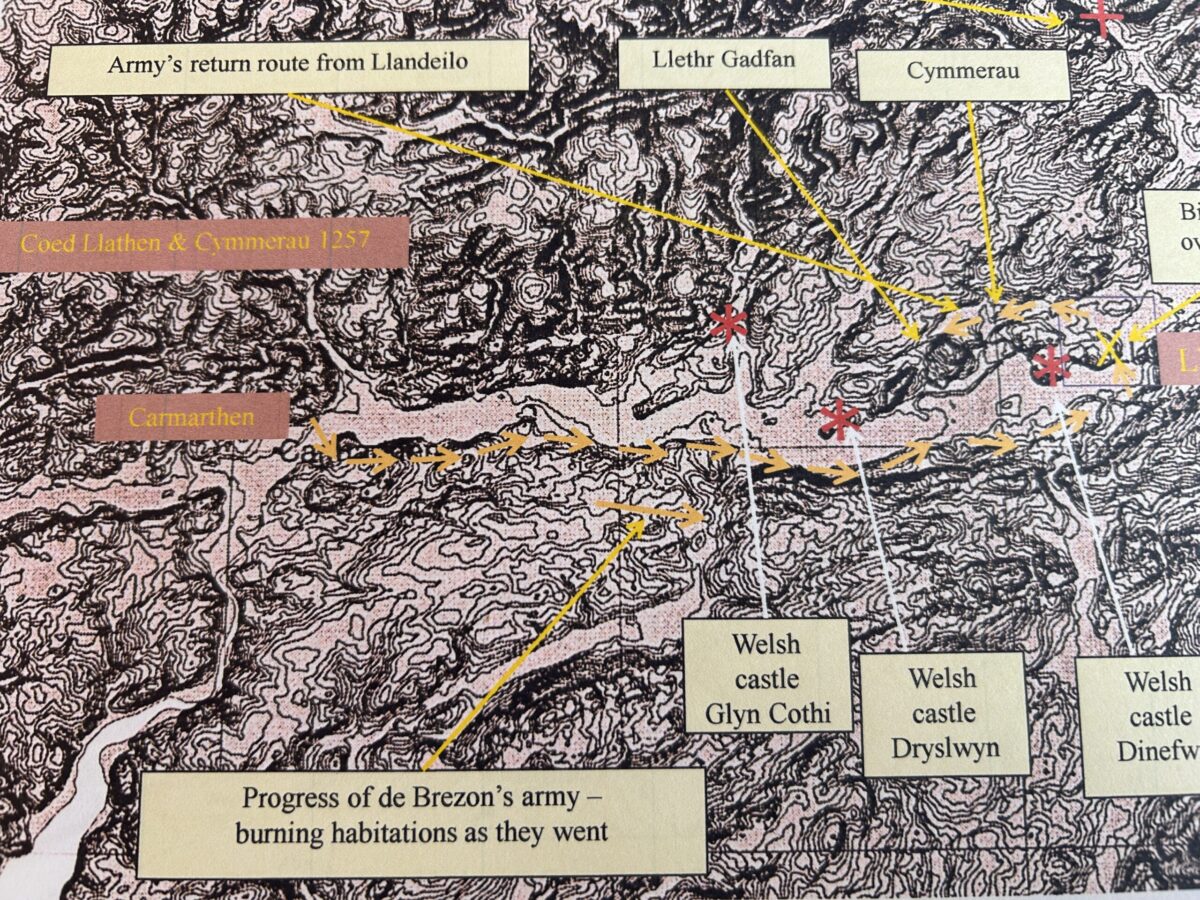
John Davies imagines the military progress in the mind’s eye. ‘The Edwardian army came up along the south side of the river up to the bridge at Ffairfach, near Llandeilo with Rhys Fychan as their guide. He went over to Dinefwr castle to negotiate with his uncles – for their surrender as the Edwardian troops thought – and didn’t come back. They were stuffed.’
This left the soldiers on the horns of a dilemma. ‘The choice was either they went up past Talley and round in a circle into the Teifi Valley, and then down to Cardigan, which was the other main Edwardian base in South Wales at the time, or go through hostile territory to get back to Carmarthen. The monks at Talley knew exactly what was happening so they became like the news gatherers of their day. The monks recorded everything, every event. And travellers passing through would provide stories which were included in the chronicles the monks wrote.’
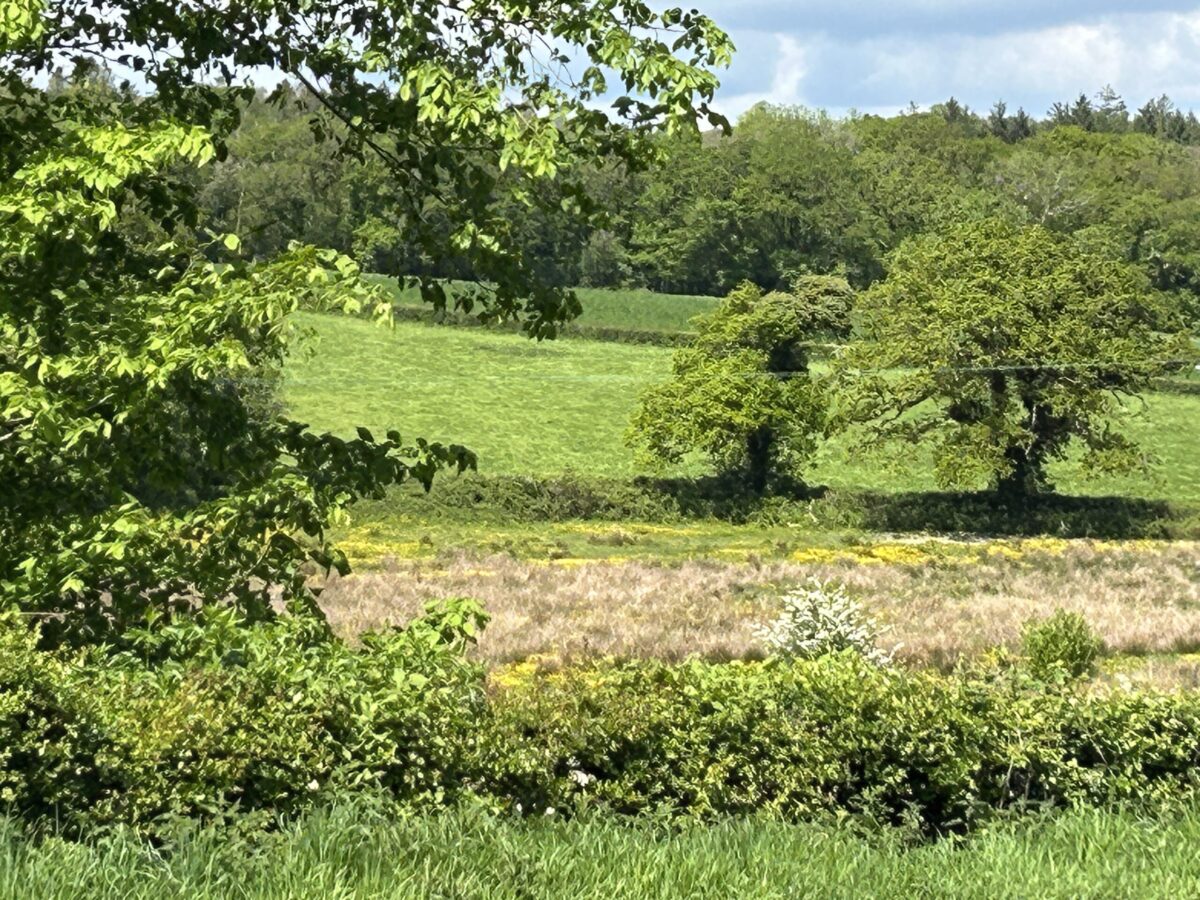
John Davies has used historical chronicles, place names and his geologist’s reading of the land to help him imagine what happened. In an article about the battles he describes how the valley with its Roman road running to Carmarthen closes westward as the slopes of Cefn Melgoed, forming the north-western valley side, converge with the hills on the southern side of the valley, namely Castell Gwrychion. At the place where the road passes between these two ridges is the present cross roads of Derwen Fawr [Broad Oak] in Coed Llathen, and the field at the junction is Congl Gwaedd [the Corner of Shouting].
The chroniclers, Davies tells us, were clear that noise figured greatly in the battle. We can imagine the sounds. A barrage of enemy-intimating noise, designed to deny sleep. The swish of arrows. The clank of mail armour; the anxious neighing of horses being urged on and the plashing, plodding feet of weary infantry as they crossed very wet ground. There was also the matter of the fog of war to contend with, not knowing if they had been betrayed by the very guide who had led them here.
Meanwhile their opponents lay in ambush, breaths duly bated. This was pre-GPS and many centuries before Ordnance Survey maps. Communication would have been down to messengers at best and decisions by commanders were based on instinct rather than surveillance. The soldiers would have been marching into marshes riven by sudden streams toward a certain trap laid by the men of Maredudd ap Rhys and Maredudd ab Owain.
Davies’ article goes on to suggest that, ‘If the English army were progressing westward towards Carmarthen, they would observe the valley narrowing with an open slope rising to the north-west. The sudden noise from Congl y Gwaedd would cause them to veer to the right and climb the long slope up Llethr Cadfan [the slope of battle] towards the present Cadfan Farm. However, immediately at the top of the slope, where the present lane passes the farm is a long hollow – “dead-ground” not visible from the slope up which the English army would be progressing. Here, it was possible to hide the main Welsh force and when the English soldiers reached the top of the slope they were face-to-face with the main body of the Welsh army. They were also open on their left flank to attack from the force in the Congl Gwaedd.’
The story of what happened next is told vividly by the place names. The death. The slaughter. The Carmarthenshire killing fields. Indeed, Edward’s favourite lieutenant Stephen Bauzon was killed here and while his body was possibly taken to Llansannor in the Vale of Glamorgan his actual death is captured in the name of a local Carmarthenshire stream, Nant Steffanos.
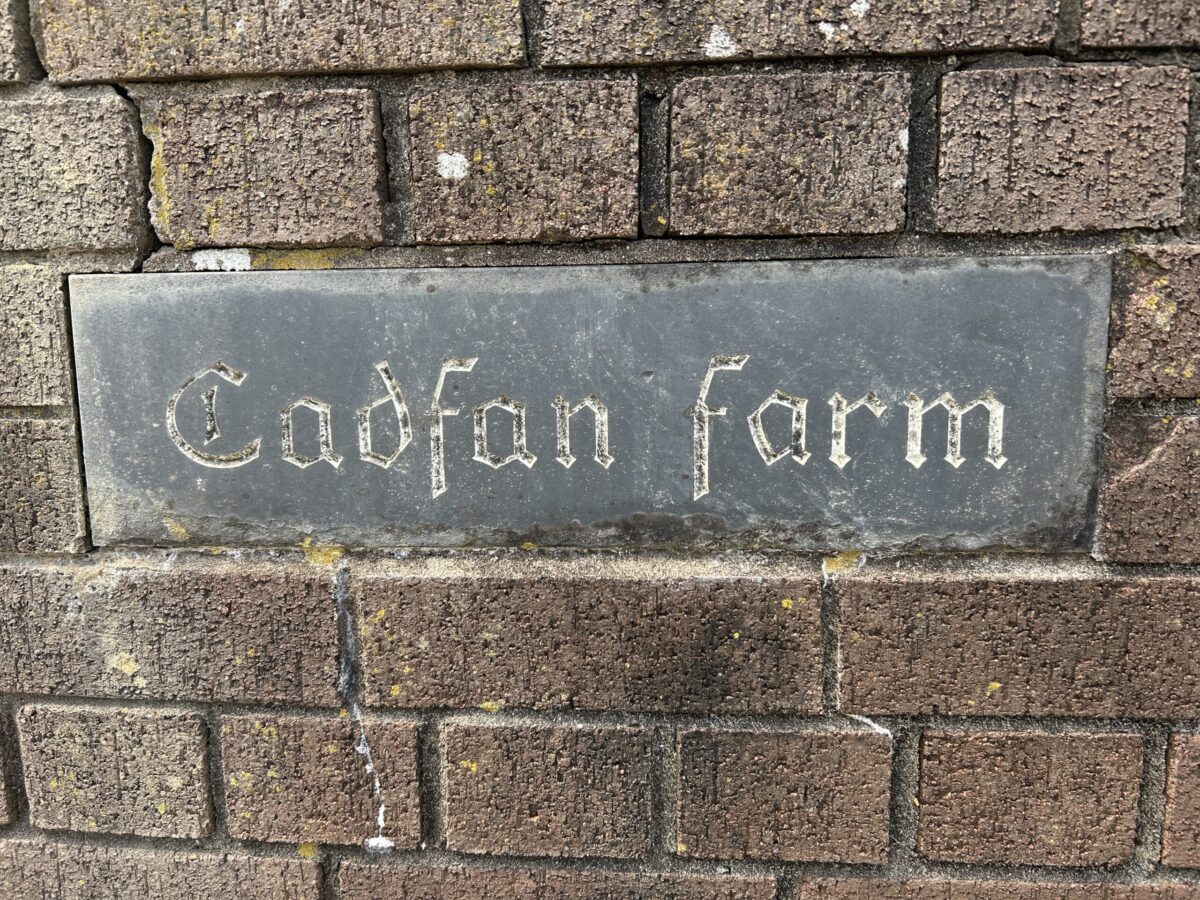
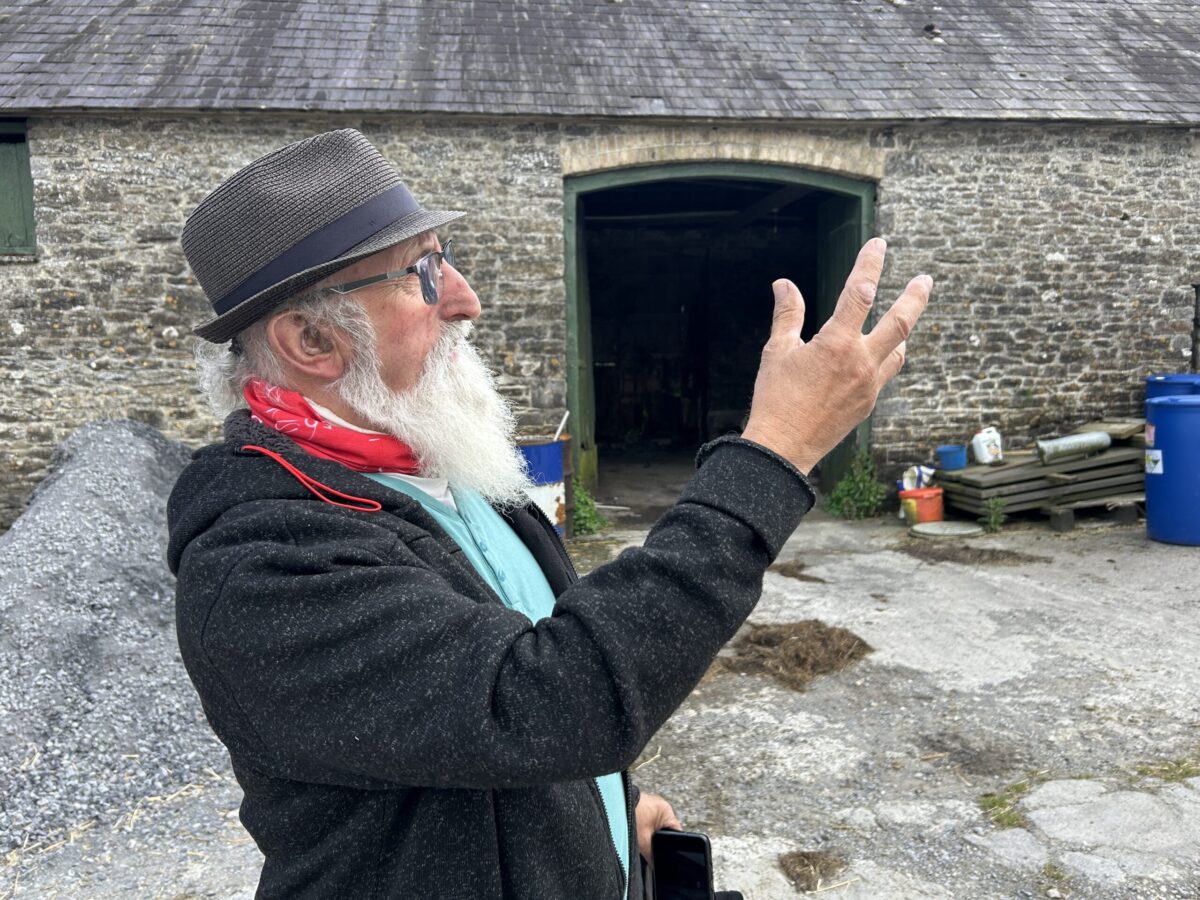
When we arrive at Cadfan farm itself we find a milking parlour set next to a very impressive 17th century house. Society member Calfin Griffiths points out some of the house’s notable features. ‘It’s a very, very old house with original thick stone slates from the quarry. You know there’s tons of weight on that roof. It’s not a mansion: it’s been built as a farm, a working house. And it’s very big compared to a lot of places. There are three chimneys actually made of stone and built round, like a turret, like a castle.’ In keeping with the age of the house a venerable old yew tree spreads its dark green leaves in the front garden.
Appropriately, a raven, known in Welsh as cigfran, flies overhead. Cigfran, literally meaning meat crow, would pick over the bodies of the slain on the battlefield as early Welsh literature attests. The single black bird above our heads is joined by another and they fly on, their lozenge-shaped tails distinctive against the pewter sky.
Ever enthusiastic and boundlessly knowledgeable, John Davies is a trained geologist – known familiarly as “John Rocks” – who looks for hard facts behind stories and myths. One recent example he shares with us is based on evidence of a massive historical volcanic eruption. Pausing at a farm gate, John recounts the story in the third branch of the Mabinogi concerning Manawydan, its lead character. Together with Rhiannon, Pryderi and Cigfa, he sits on the Gorsedd Arberth as disaster befalls the land. Thunder peals and a magical mist descends, leaving it empty of all domesticated animals and all humans apart, that is for the four protagonists.
One scientific explanation for this might have been a volcanic eruption. Davies explains that one of them affected huge swathes of the world: ‘From Western Europe to China there was a volcanic eruption which formed a cloud which darkened the northern hemisphere for a year. And most of the crops and animals died. And scientists found the ash band associated with it and they dated it to 539. The story in the Mabinogi actually fits exactly with that period.’
Over the years the society has travelled widely, taking in locations associated with events such as the Jacobite Rising in Carmarthen of 1843 and the Rebecca Riots that same year as well as the Merthyr Riots of 1831. They have followed Arthur’s quest to catch the enormous boar, Y Twrch Trwyth in the Mabinogi, suggesting that perhaps the circuitous route across Wales was actually that of a military campaign.
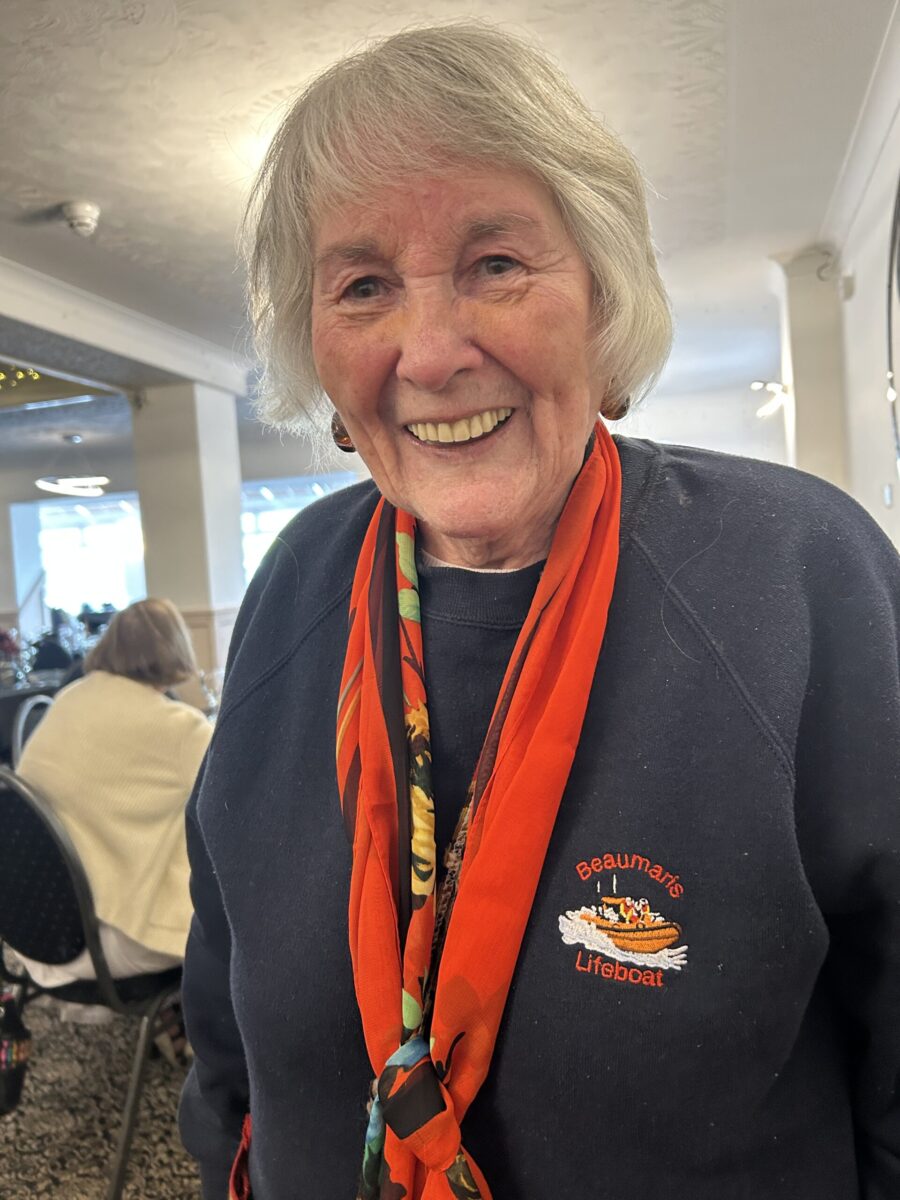
Sybil Davies, a retired district nurse from Neath. attended the very first meeting of the Welsh Battlefield Society in 2007, which happened to be at Coed Llathen, making this a sort of historical return journey. That turned out to be a very memorable visit, as Sybil recalls. ‘A fellow member, Sue, had a little dog with her, a lovely little dog. I’ll never forget it, we were standing on the bridge where the battle was, and where the men had died in the river, and the dog refused to go over the bridge. It got all upset and Sue had to pick the dog up and stay this side of the bridge. He sensed it, you know.’
One of Sybil’s most moving experiences was at Sempringham in Lincolnshire, when members of the society went to visit the Gilbertine Priory where Gwenllian, the only child of Llywelyn ap Gruffudd, the last native Prince of Wales was taken as a child.
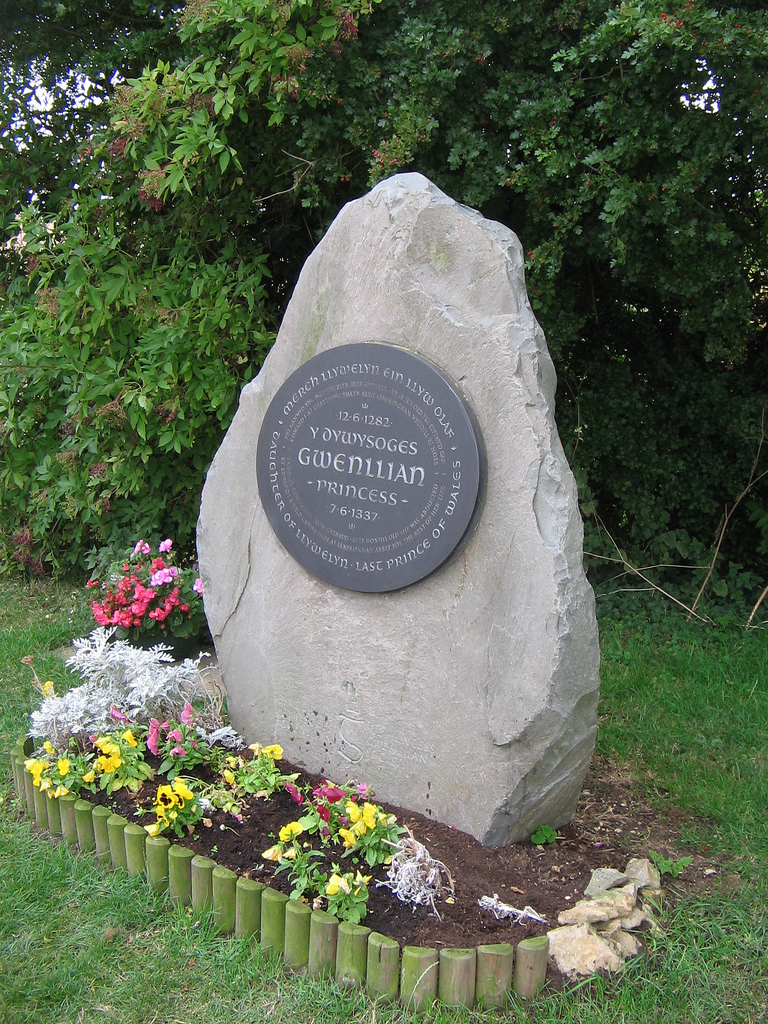
A few months after her birth, on 11 December 1282, her father was killed in a battle at Cilmeri against the English army. Gwenllian and the daughters of her uncle Dafydd ap Gruffudd were all confined for life in remote priories in Lincolnshire and never allowed freedom. Gwenllian herself was placed in Sempringham, where she remained until her death 54 years later.
Sybil Davies recalls arriving at the remote Lincolnshire abbey as evening settled. ‘I was there with my little grandson who was ten years old at the time. It was 7 o ‘clock in the evening and it was getting dusk. and I felt it was so isolated. There was this stone there and daffodils.
‘I was 50 then, I’m 84 now and I still get upset at the memory. I was standing there with Kyle and we were putting flowers on the grave at dusk. This little baby – I have three children – this little baby was brought up here all the way from Wales, away from the mountains of Wales, from the Welsh language. Her parents were dead and she’d been put in a convent. I wondered if the wet nurse who went with her spoke Welsh to her and if she’d ever known who she really was. The both of us started to cry.’
Sybil notes a deep irony. ‘The locals love her. When you go to Lincolnshire, they say, do you know about our Welsh princess? They take flowers to place on her memorial, they go to church, they pray for her, they have festivals. Children in school in Lincolnshire want to know about the princess. And our children in Wales don’t know about her at all.’
Details of Cymdeithas Meysydd Cad Cymru, The Welsh Battlefields Society can be found here. Their next field visit is on the 7th June 2026 when they will be visiting sites of battles in Rhiwbina, Cardiff and two battles at Rhymney Bridge. They’ll be meeting at 11.00 outside the Butchers Arms in Rhiwbina.

Jon Gower is Transport for Wales’ writer-in-residence. He will be travelling the breadth and length of the country over the course of a year, reporting on his travels and gathering material for The Great Book of Wales, to be published by the H’mm Foundation in late 2026.
Support our Nation today
For the price of a cup of coffee a month you can help us create an independent, not-for-profit, national news service for the people of Wales, by the people of Wales.


