

Pioneering Welsh fossil hunter recognised with second blue plaque
Nation.Cymru staff/agencies
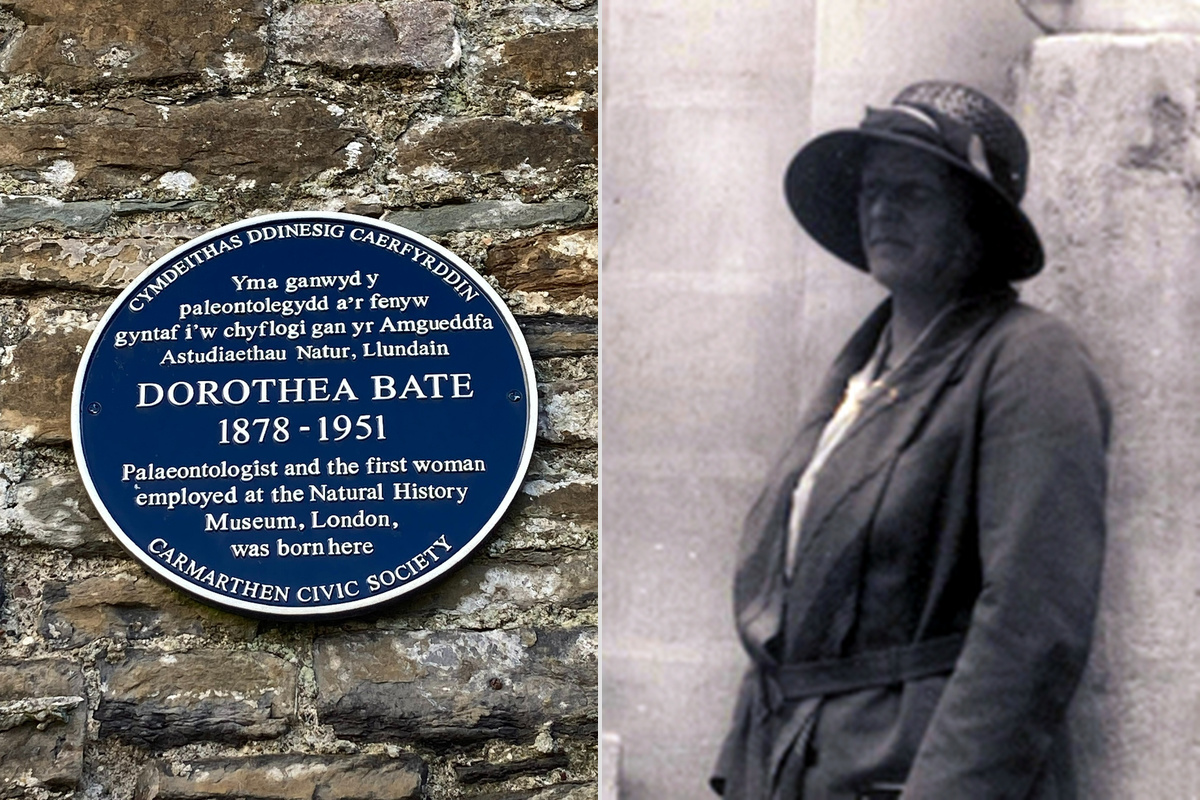
A pioneering Welsh scientist who transformed understanding of prehistoric animals is to be honoured with a second blue plaque.
Dorothea Bate, who was born in Carmarthen in 1878, became one of the first women employed by the Natural History Museum and a leading figure in the emerging field of archaeozoology.
Her latest plaque is being installed at the Natural History Museum in Tring, Hertfordshire, where she became officer-in-charge in 1948.
Bate developed a fascination with the natural world at an early age and, despite having little formal education, largely taught herself.
After moving with her family to rural Gloucestershire, she spent hours exploring the countryside and caves and collecting fossils.
She approached the Natural History Museum in London for work as a young woman and began an association with the institution which would last for more than 50 years.
Her first scientific paper, A Short Account Of A Bone Cave In The Carboniferous Limestone Of The Wye Valley, was published in 1901.
Bate went on to undertake expeditions across the Mediterranean, often travelling alone to remote caves in search of evidence of ancient life.
In Cyprus, she discovered a previously unknown species of dwarf elephant, while an expedition to the Balearic Islands in 1909 led to the discovery of Myotragus balearicus, an extinct goat-like animal.
She published more than 80 scientific papers during her career despite spending much of it without a permanent paid position.
Historic England co-chief executives Claudia Kenyatta and Emma Squire said: “Her research transformed our understanding of prehistoric animals and ancient environments.
“Not only does her work continue to be invaluable in the field that she helped to establish, but as one of the first women to be employed by the Natural History Museum she was instrumental in paving the way for future women in science.
“This plaque ensures that her pioneering contributions to science receives the wider recognition it deserves.”
Heritage minister Baroness Twycross said Bate’s achievements “helped break through the glass ceiling and paved the way for women in palaeontology”.
Innovative
Dr Sandra Knapp, director of research at the Natural History Museum, said: “The role of women scientists in natural history is often hidden – but Dorothea Bate’s work with fossil mammals was both innovative and set a path for others, despite obstacles.
“The installation of this plaque not only honours her but also serves as a reminder that women have been, and continue to be, key contributors to our understanding of the natural world.”
Bate moved from the museum’s geology department in London to its zoological branch at Tring during the Second World War and was appointed officer-in-charge shortly before her 70th birthday.
She died in January 1951, aged 72.
Support our Nation today
For the price of a cup of coffee a month you can help us create an independent, not-for-profit, national news service for the people of Wales, by the people of Wales.
Get more trusted Welsh news
Choose Nation.Cymru as a preferred source in Google News to see more of our journalism.



