


Funding awarded for project to preserve history of former psychiatric hospital
Nation.Cymru staff
The history of one of Wales’ most significant former psychiatric hospitals is to be digitally reconstructed as part of a major new research project.
Bangor University has secured almost £858,000 from the Arts and Humanities Research Council (AHRC) for a three-year project exploring the social and architectural history of the former North Wales Hospital in Denbigh.
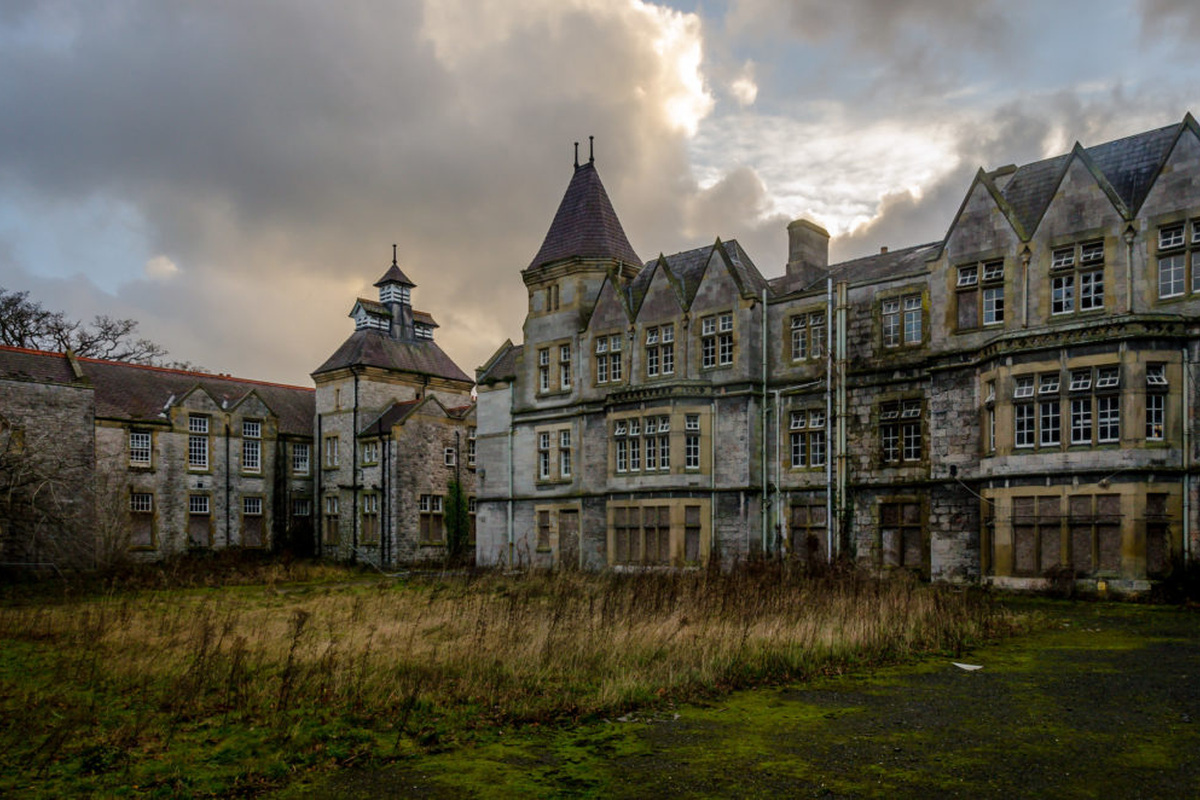
The Grade II* hospital, widely known as Denbigh Asylum, opened in 1848 and was the only psychiatric hospital in Wales to provide treatment through the medium of Welsh.
It eventually became one of Denbigh’s largest employers, housing more than 1,500 patients by the 1950s, before the last patient left and the hospital closed in 1995.
The site subsequently fell into serious disrepair following years of neglect, vandalism and arson, while its abandoned buildings became a destination for urban explorers and ghost hunters.
It has featured on television programme Most Haunted Live! under the title Village of the Damned and was previously the subject of proposals to turn it into a “horror hotel”.
But researchers say the fascination with the derelict hospital has helped obscure the history of the building and the people connected with it.
The new project, Voices in the Walls: The Social Afterlife of Asylum Architecture and the Heritage Politics of Mental Health in North Wales, will begin in January 2027.
Led by Professor Lucy Huskinson, researchers will examine bilingual archives, letters, diaries and newspapers stretching back to the original planning of the hospital in the 1840s.
They will also collect photographs, films, drawings, letters and personal memories from former patients and staff, their families, local residents and people who explored the buildings during their years of dereliction.
The material will be used to create a bilingual website featuring an immersive 3D reconstruction allowing people to explore the former hospital online or through virtual reality headsets.
Oral histories, archive photographs and soundscapes will also be incorporated, while a touring exhibition will visit cultural centres within the hospital’s former catchment area.
A special exhibition is planned for the National Eisteddfod in 2029, with bilingual teaching resources also being produced for schools.
‘Remarkable building’
Professor Huskinson said: “I’m grateful that this remarkable building, and the many lives it’s lived, from its inception, through dereliction, to its plans for redevelopment, will be preserved in memory for future generations.
“If you’ve a photograph tucked away in a drawer, an old home video, film footage as an urban explorer, or a memory or feelings attached to any part of the building whatsoever – even just a crack in the wall – we want to hear from you.
“Every contribution helps us build a fuller, truer picture of what this building has meant to this community and to Wales, and that, to me, is what makes it valuable: it hands this heritage back to the people who actually lived it, rather than leaving it to developers or ghost stories or academics.”
The project comes as a major redevelopment of the hospital site gets under way.
Compulsory purchase order
Denbighshire County Council acquired the site through a compulsory purchase order in 2018 and last year approved a contract worth up to £4.7m for the first phase of work, including site clearance, asbestos removal and demolition.
The wider redevelopment has previously been estimated to cost £107m and take 12 years, with plans potentially including around 300 homes and business units.
The council is also progressing plans to restore the hospital’s Grade II* Main Range and convert it into residential apartments.
Its historic chapel has been identified as a possible permanent home for the exhibition created through the Bangor University project, as well as a space for community use.
Denbighshire council leader Cllr Hugh Evans said: “The Former North Wales Hospital site holds a special place in the hearts of many people in Denbigh and its surrounding areas, and the project undertaken by Bangor University will offer an opportunity for the community to remember what was such a significant part of Denbigh’s history.
“I would encourage anyone who may have anything relating to the Former North Wales Hospital and would like to donate it towards the project to contact the project team at Bangor University.”
The hospital also has a place in Welsh cultural history, appearing in Caradog Prichard’s 1961 Welsh-language novel Un Nos Ola Leuad, regarded as one of the most important works of Welsh-language literature.
Once the research project is completed, its bilingual website will be maintained by Bangor University’s MA Global Heritage programme, while material submitted to the project will be passed to Denbigh Community Archives.
Support our Nation today
For the price of a cup of coffee a month you can help us create an independent, not-for-profit, national news service for the people of Wales, by the people of Wales.
Get more trusted Welsh news
Choose Nation.Cymru as a preferred source in Google News to see more of our journalism.



