


Plans for a Welsh Human Rights Act still at an early stage, says Counsel General
Ella Groves, ICNN Senedd Reporter
Proposals to introduce a Welsh Human Rights Act are still at an early stage, the Welsh Government’s chief legal adviser told Senedd Members, after being questioned over whether such a law would interfere with the deportation of foreign-born criminals.
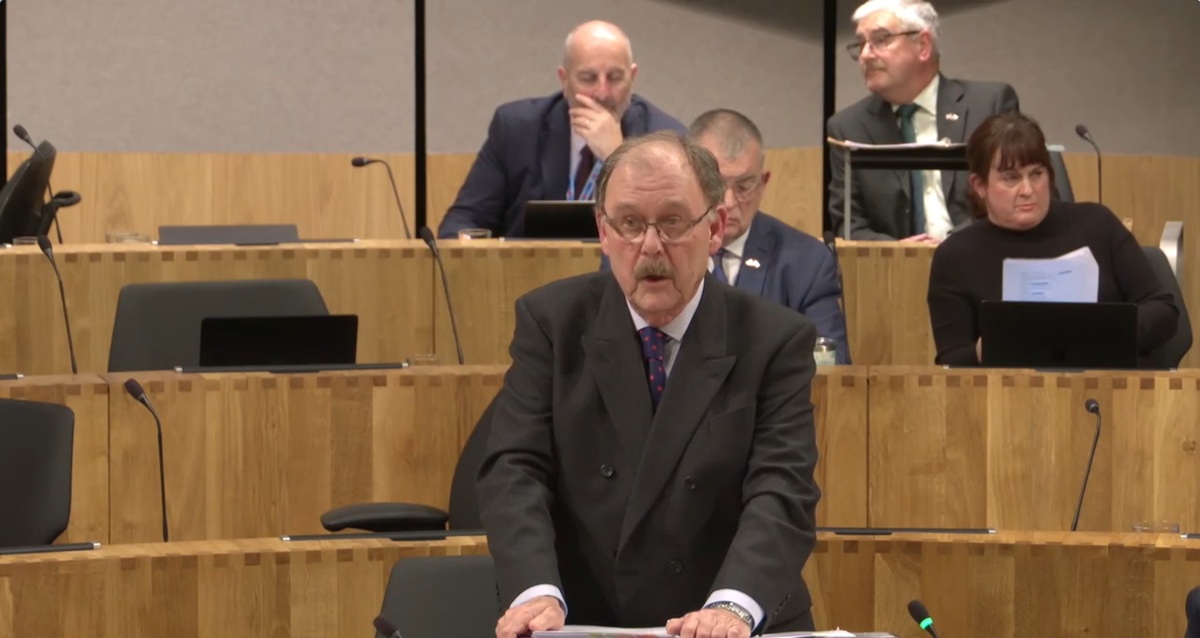
Speaking in the Senedd on Tuesday November 24, Counsel General Elfyn Llwyd said he could not give a guarantee that any future Welsh legislation could be used to stop deportation “because, at the moment, the measure isn’t even in its infancy”.
Mr Llwyd was responding to questioning from Francesca O’Brien, Reform UK MS for Gŵyr Abertawe, who had asked him what legal advice he had provided the Welsh Government regarding proposals to incorporate five different United Nations conventions in areas where Wales had devolved powers.
Ms O’Brien cited a recent case where a Nigerian national, who had sexually assaulted a woman in Manchester, successfully appealed his deportation order and then went on to rape a 19-year-old woman in Wrexham.
She said: “Human rights laws are already being abused by foreign offenders to remain in this country, at the expense of their victims.”
The Counsel General said he was “as appalled as she is” by the example she described and invited Ms O’Brien to closely scrutinise proposals “when the time comes”.
He added: “It is always better to have everybody’s opinion considered when you draft legislation.”
Powers over immigration and deportation are reserved matters for the UK Government.
A programme to develop and test options for strengthening human rights in devolved areas across Wales, called Hawliau i Gymru, has already been established.
In September this year, Senedd Research published an article highlighting that reservations within the Government of Wales Act 2006 could create legal hurdles to incorporate some of the UN conventions.
Children’s Rights
During the same Plenary session, Jane Dodds, Welsh Liberal Democrat MS for Brycheiniog Tawe Nedd, raised the issue of children’s rights after a Senedd committee recently heard evidence from the Children’s Commissioner for Wales.
The Children’s Committee was told The Rights of Children and Young Persons (Wales) Measure 2011, which made Wales the first country in the UK to integrate the United Nations Convention on the Rights of the Child (UNCRC) into domestic law, only requires ministers to have “due regard” to the convention.
Ms Dodds contrasted this with Scotland’s adoption of UNCRC, which “binds all public bodies, and requires decisions to be compatible with children’s rights”.
She called on the Counsel General to speak with his equivalent in Scotland to investigate similar options for children’s rights in Wales.
Mr Llywd said he was due to meet his Scottish counterpart shortly, describing it as a “handy coincidence”.
He said the Welsh Government was ensuring that “everything that they do” is compatible with UNCRC.
“We have to measure everything that we do against that particular optic, and ensure that in no way do we disenfranchise, or make life more difficult for, young children,” he said.
“We are committed to ensuring the human rights of the people in Wales, and that they are respected and protected, and that very much includes young people and children.”
Support our Nation today
For the price of a cup of coffee a month you can help us create an independent, not-for-profit, national news service for the people of Wales, by the people of Wales.
Get more trusted Welsh news
Choose Nation.Cymru as a preferred source in Google News to see more of our journalism.



Why would we need our own act? Of all the problems Wales faces, why are we spending thousands on legal advice and fees when we don’t need to?