


60ft Dolls’ The Big 3 at 30
Neil Collins
Mention Newport in the ’90s and a reference to 60ft Dolls is never far away.
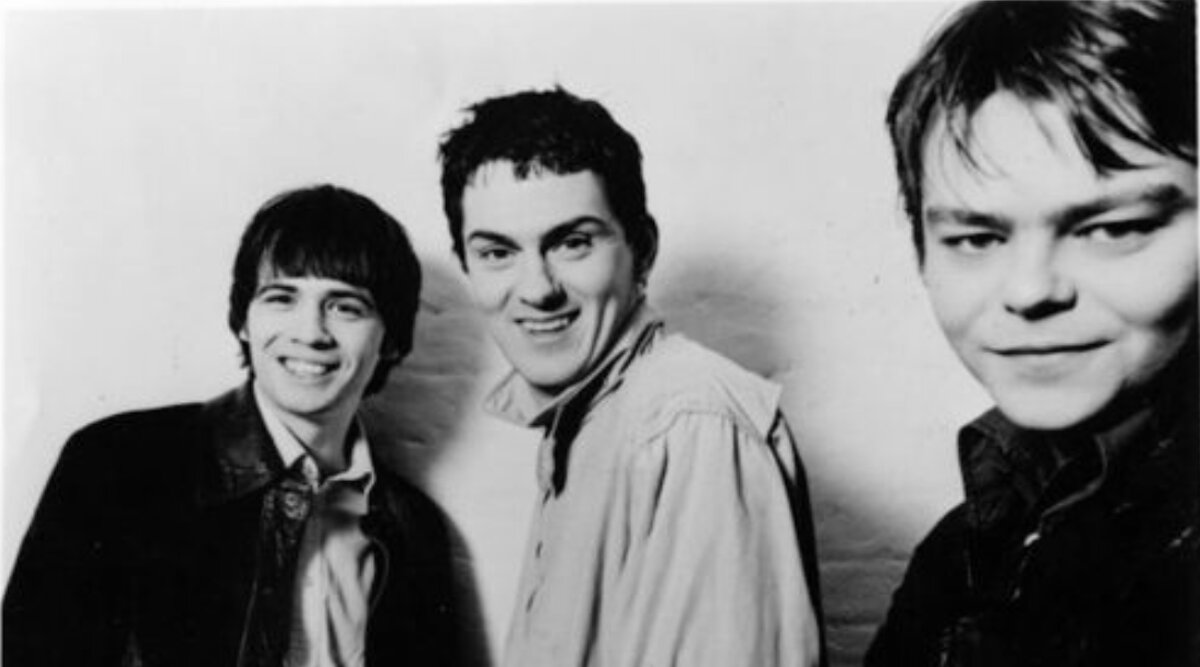
Now relative cult heroes, they burned brightly for a brief period when it looked like they would not only be the next big thing to come out of Wales, but the next big band to burst out of Britpop.
A tight-knit trio featuring Richard Parfitt, Mike Cole and the late, great Carl Bevan, the Dolls spearheaded an explosive scene alongside Dub War, Novocaine and Flyscreen. Centred around legendary live venue TJ’s, Newport was dubbed ‘the new Seattle’ by renowned rock writer, Neil Strauss.
The Big 3 at 30
‘At one point, they switched our electricity off…I’d dangled the TV out of the window, still switched on and hanging from the power cable.’
It was a rock ’n’ roll tale that would make even Mötley Crüe blush. These things weren’t supposed to happen in a plush hotel, let alone in sleepy Oswestry. But a young band called 60 Ft. Dolls were in town to record a BBC Radio Wales session, and carnage was about to commence.
Drummer Carl Bevan recalled to band biographer, Roy Wilkinson: ‘When we got back to the hotel, I asked the receptionist who was paying for the extras bill. “The BBC,” she said.
‘Our next words were, “Six pints, three double brandies please,” followed closely by, “Same again…”
‘They chucked us out at 11.30, so me and Mike broke into the restaurant, loaded a service trolley with champagne and whisky and barricaded ourselves in our room…
‘I was still a student and Mike and Rich were on the dole. We’d just signed with Rough Trade and were waiting for the cash to come through. We literally had a fiver between us…
‘The next day our manager turned up and said, “The money’s in boys. You’re all having a lump sum of £5,000 to get started, plus a wage. Apart from Carl and Mike, whose hotel bill is £10,000…”
‘A lot of that was for devastating one of the oldest bowling greens in Britain. We went through tour managers very quickly. Dick, one of our roadies, had a clause in his job description saying he wasn’t allowed to go to sleep before me and Mike. Dick fixed smashed-up guitars in record time…And kept me out of hospital and jail for years!’
Although the band baulked at the media’s ‘yob rock’ tag, 60 Ft. Dolls’ music was undoubtedly an aggressive experience. Yet it spoke more of hedonistic highs than brawling in the back streets.
‘[The Dolls] were well known for hell-raising,’ said Parfitt. ‘I was a bit older, but I was never a big drinker really. I was the Gary Barlow of the band. I was the straight guy compared to Mike and Carl.’
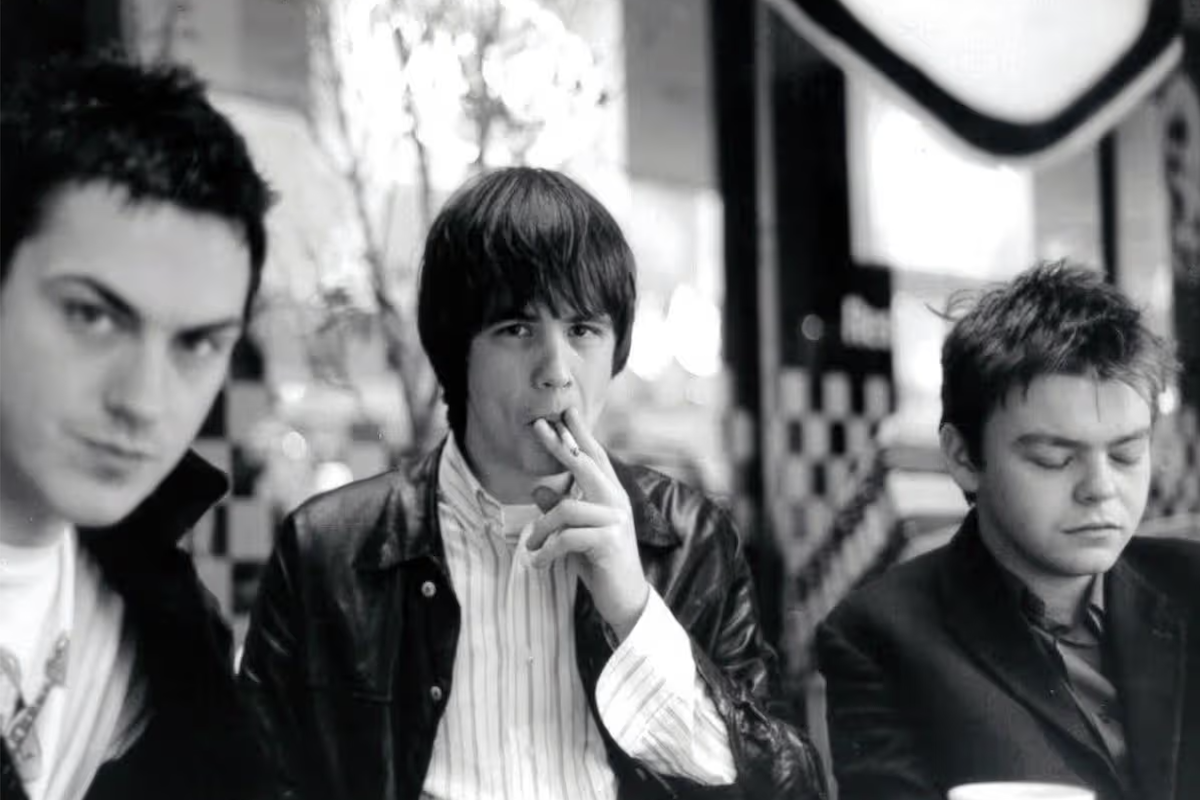
In the early ’90s, Parfitt was living in a small two-bedroom flat with his wife and baby. He was also broke, and making ends meet by delivering pizzas for Nicolino’s in Newport. Donna Matthews was a waitress there, and lived above TJ’s.
Parfitt said: ‘I remember her as a teenager busking with her sister dressed like The Bangles. At the end of each shift, her inebriated boyfriend would come to meet her. I remember thinking, “That boy’s got an excellent haircut – let’s put these haircuts together!”
‘The first version of the band was actually me, Mike and Donna, but she was smart enough to leave and go to London!’
Aged 20, Donna answered an ad in Melody Maker and became the lead guitarist for post-punk, Britpop front runners Elastica.
Mike Cole had already been long committed to the rock ’n’ roll lifestyle. He was briefly in The Darling Buds before being asked to leave after just three gigs. With the Dolls, Cole later sung the single Hair, which he wrote about Donna.
Carl Bevan’s introduction came via a more unconventional route – an evangelical church band. His father, Ray Bevan, was the founding minister at King’s Church in Newport, sometimes leading thousand-strong congregations.
‘I got to about 17, 18 and the seeds of atheism had taken hold,’ said Carl. ‘I started to do a kind of Tom Sawyer routine where I’d shimmy down the drainpipe, go off to town and get hammered, and then someone saw me: “Pastor’s Son Drunk and Disorderly”. I got thrown off drums; I was gutted!’
Carl heard there were a couple of local guys looking for a drummer, and approached them next to the jukebox at the Riverside Tavern.
‘When we played together for the first time, it was instant sparks and we all knew it,’ he said.
The triangle was complete – a cherubic pixie smashing away on drums, bolstered by a whippet-thin bassist with a Brian Jones moptop, and fronted by a scowling Robert De Niro lookalike with razor-sharp vocals. Three-piece bands always have to work harder as there’s less room to cover each other’s mistakes, but the Dolls instantly locked in tight together.
The magic was in the band’s brutal beauty – stripping back their sound to keep the essential ingredients, and jettisoning anything extraneous.
‘We were from the Hemingway school of rock ’n’ roll,’ said Parfitt. ‘Simplicity is more effective than complexity, and harder to achieve.’
Four years Cole’s senior and 10 years older than Bevan, Parfitt was the wise head. Raised on a diet of Beatles, Bowie and Beach Boys (‘the Shakespeares of rock ’n’ roll’), he was already a music veteran compared to his bandmates, having played with The Messengers, The Colours, The Truth and Blood Brothers. Alongside schoolmate, Jeff Rose (later of Dub War and Skindred), The Messengers even supported The Jam after Parfitt found Paul Weller’s number in the phonebook and left a demo tape with his mother.
Described by John Harris as ‘mod-grunge proto-pub metal blues’, 60 Ft. Dolls lashed together the songwriting styles of Lennon and McCartney, Weller and The Who with the guitars of the Rolling Stones and The Yardbirds. The eviscerating punk rock of Iggy Pop and the lo-fi and American hardcore heard at TJ’s also influenced their sound.
The Dolls gained early momentum thanks to an ecstatically received support slot with Throneberry at TJ’s. Parfitt said: ‘In those days, the NME meant a lot, and after that review I started to get labels ringing me up asking me for demos.’
In 1993, [Swansea band] Pooh Sticks singer, Huw Williams became the Dolls’ manager and within a year they released their debut single, Happy Shopper, via his Townhill label. Awarded Melody Maker Single of the Week, Everett True hailed it as a ‘three-chord, two-finger salute to a world, which long ago gave up caring about them’.
Plus, NME called it a ‘riff-chomping pop metal belter that recalls The Wildhearts’ breed of rock ’n’ roll scuzz.’ The same paper’s Simon Williams said: ‘Say hello to 60 Ft. Dolls and Happy Shopper – their viciously crunchy 45, which dares to shag The Jam and the Manics at the same time and not apologise for the mess afterwards.’
After support slots with Elastica and Dinosaur Jr, the Dolls joined the first NME BratBus tour in 1995 with Veruca Salt, Marion and Skunk Anansie. A one-off single via Rough Trade followed with the wonderfully raucous White Knuckle Ride. By the time of their next release, Pig Valentine (‘a cauldron of hatred’ according to the Stud Brothers), the Dolls had already signed with Indolent – an imprint of RCA – partly thanks to heavy rotation by Steve Lamacq on BBC Radio 1.
Likewise, influential American DJ Rodney Bingenheimer of KROQ-FM gave them regular plays, leading to a deal stateside with Geffen Records.
Accompanied by a video filmed on the Newport Transporter Bridge, Talk to Me landed in the Top 40. By now one of the hottest prospects in the country, impressive names were bandied about, like Pete Townshend and Bernard Butler, to produce the debut album.
Renowned for his work with the Pixies, it was Al Clay who got the nod. Parfitt told WalesOnline’s David Owens in 2015: ‘Al was great, he was the right guy for us. The wrong guy would’ve been somebody who turned up with a bottle of Jack Daniels, who wanted to join the band…
‘Al was like a sergeant major figure, he told us we weren’t leaving the studio and he’d lock the door. It was like bootcamp. He had an air rifle that he would fire at us when we were playing. It was his way of keeping us on our toes!’
Carl Bevan added: ‘Al Clay made me clean and polish my drums and cymbals and then stand to attention by the side of the kit.’
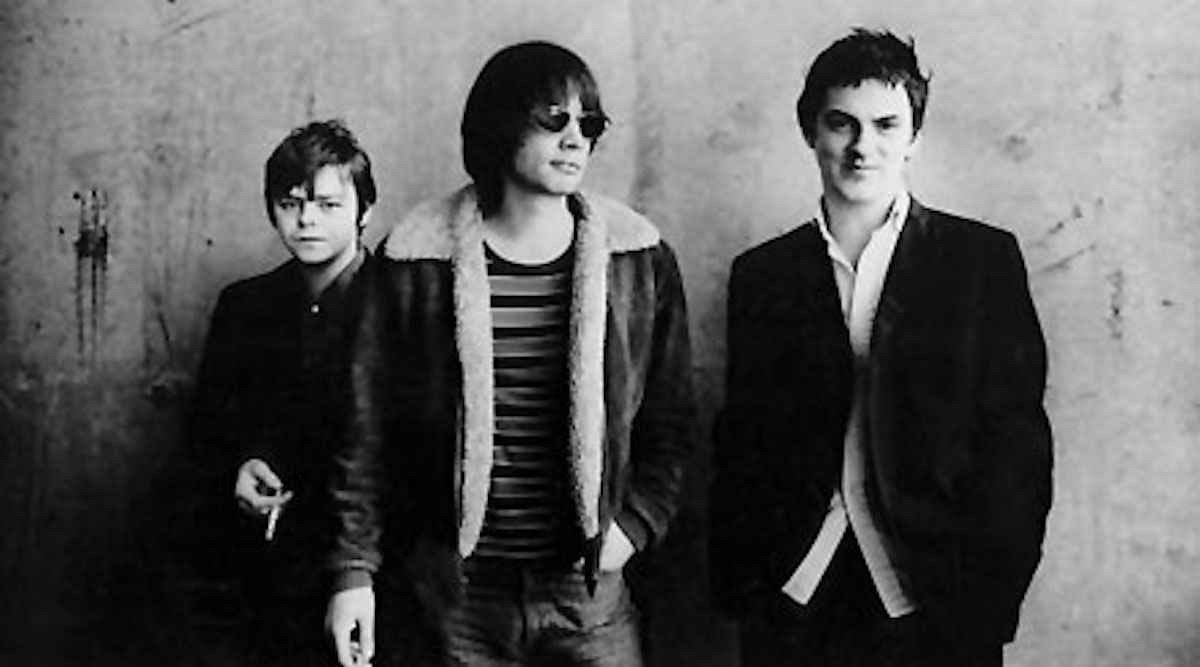
Recorded at Rockfield and featuring a photo (by acclaimed rock photographer Pennie Smith) of the band looking mean and moody at the Crindau industrial estate, The Big 3 was lauded with equally big praise. Its title was borrowed from one of John Lennon’s favourite groups, The Big Three – a Liverpudlian band of the early ’60s.
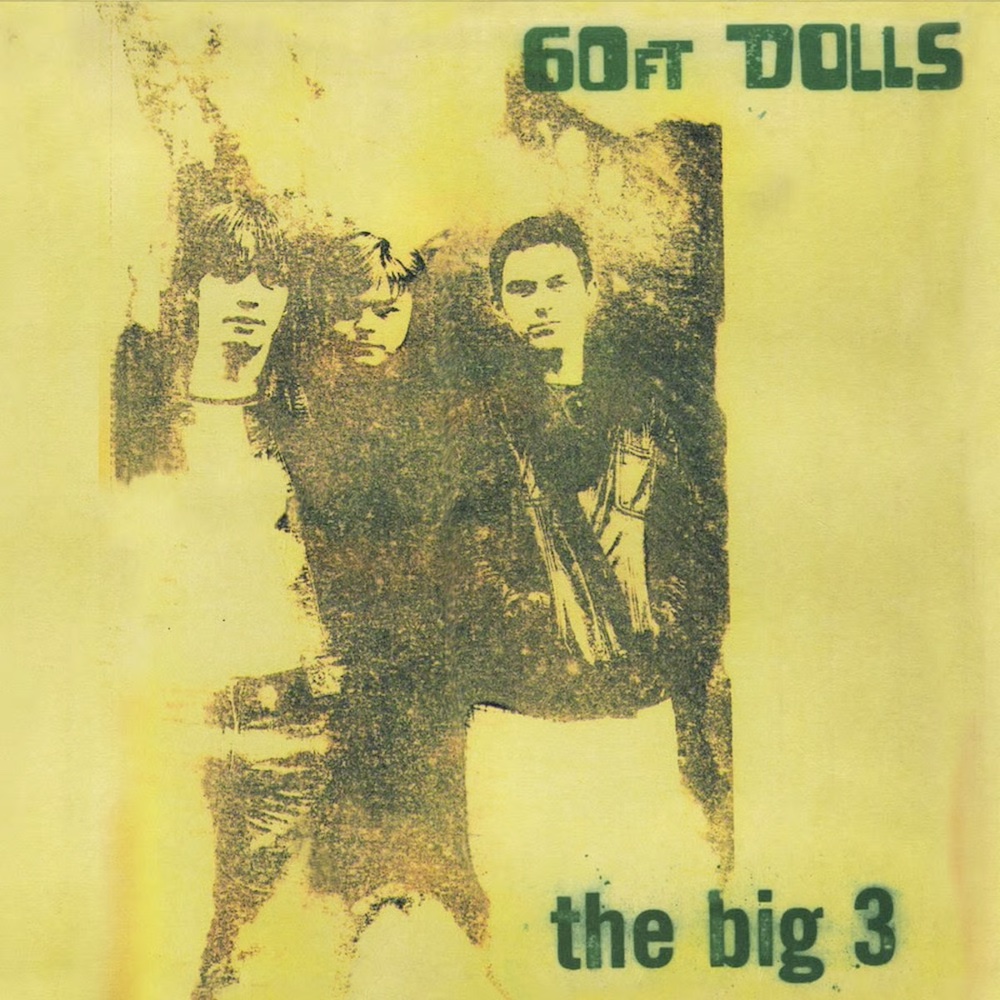
Released a week after the Manics’ Everything Must Go and the Super Furries’ Fuzzy Logic in May 1996, The Big 3 introduced an underrated talent in Richard Parfitt. His kitchen-sink lyrics and intricate guitar skills were often overlooked, but not in these reviews.
NME said: ‘The Dolls celebrate their hard-drinking, hard-rocking, road-hogging reputation with No.1 Pure Alcohol, a song that could be an anthem for their hometown of Newport, where boozing is second only to breathing, but it’s a deceptively sharp love/hate paean to life chained to the bottle…Never let it be said that the Dolls can’t articulate the underbelly of this torrid existence as well as any gutter poets.’
Melody Maker agreed: ‘You’ll hear words about duplicity, escape, consumerism, desperation, hatred, aspiration, [but] far from being witless hedonists, 60 Ft. Dolls have created a surprisingly serious album.’
Wales Arts Review added: ‘The Big 3 is a compelling argument that the Dolls remain undervalued, and that they are probably the greatest rock band ever to come out of Wales, forged in the snakebite-and-blackflecked night streets of post-industrial Newport in the early ’90s.’
Nothing could stop them. Not even Select hailing The Big 3 the best album since Definitely Maybe – a kiss of death for many a young group. Even the biggest band in the country couldn’t break their bond. When Noel Gallagher approached Mike Cole to come onboard as Oasis’s bassist following the temporary departure of Guigsy in 1995, he was given an instant response – just not the one he was expecting.
Parfitt said: ‘I was worried. If he’d gone, I wouldn’t have blamed him because he would’ve made himself rich and famous…Mike told me he’d been asked and I was like, “Oh, OK, are you gonna go?” He just said, “No f****** way!” And that was the end of that.
‘I really think it would be impossible for us to exist with any other drummer or bassist.’
The Dolls came face-to-face with Noel Gallagher once again when they watched the Sex Pistols from side-stage on their reunited Filthy Lucre tour at Finsbury Park in June 1996.
Rubbing shoulders with celebs like Johnny Depp and Kate Moss, the Dolls didn’t look out of place in a support line-up including Iggy Pop, The Wildhearts, Buzzcocks and Stiff Little Fingers. After a few missiles, the Dolls fronted up to 30,000 ageing punks with Cole taunting them: ‘We’re not scared of you… We’re Welsh!’
‘We’re not scared of you – we’re Welsh!’ The day 60ft Dolls took on The Sex Pistols
Within two years, the Dolls ceased to exist though. The band always veered too close to the precipice, and were lucky to get to the end of each week, let alone each year. The perils of a rock ’n’ roll lifestyle matched with a relentless schedule and big label pressures took their toll on Cole.
Parfitt said: ‘We had great chemistry, and there was no way we were going to get anyone in to replace Mike. Being in a band was the absolute worst place for him, but it was our group, the three of us. I didn’t think we could be the same with anybody else.
‘I’m a big believer in alchemy…A great band is usually great because of the chemistry between its members. John and Paul from The Beatles are an obvious example in that it couldn’t have been so great without one of them. They were so much more together than they were apart.’
The follow-up to The Big 3 should’ve been eagerly anticipated, but by its release in 1998, the band had already split and have since viewed it with ambivalence. Meaning ‘Magic Jewel’ (which Carl Bevan nicked from the back of a video game), Joya Magica was an understandably patchy and unfocused effort given what the band were going through.
Overproduced and lacking the raw, ‘live’ feel of its predecessor, Lou Giordano was the wrong choice as producer. Joya Magica had some good tunes, but it didn’t have the collective sound of The Big 3 and too often it failed to replicate the brilliance of its lead single, Alison’s Room.
Parfitt prefers to remember the band at their best: ‘I remember doing T in the Park and I started to play Stay, which just starts off with me singing on a guitar, and drums kick in, and then the band takes off.
‘There were about 10,000 people there. The song had just been released on the radio, and everyone started singing it at the same time as me.
I looked over at Mike and he looked over at me, and for that moment at least, it was like, “This is it – all these people are singing our song!”
International Velvet: How Wales Conquered the ’90s Charts by Neil Collins is available now via Calon: https://www.uwp.co.uk/book/international-velvet-collins/
Support our Nation today
For the price of a cup of coffee a month you can help us create an independent, not-for-profit, national news service for the people of Wales, by the people of Wales.
Get more trusted Welsh news
Choose Nation.Cymru as a preferred source in Google News to see more of our journalism.


