


Architecture awards celebrate innovation and emerging talent at National Eisteddfod
Nation.Cymru Staff
Architects behind a dementia care home and a major theatre redevelopment, as well as an emerging designer, are to be honoured at this year’s National Eisteddfod.
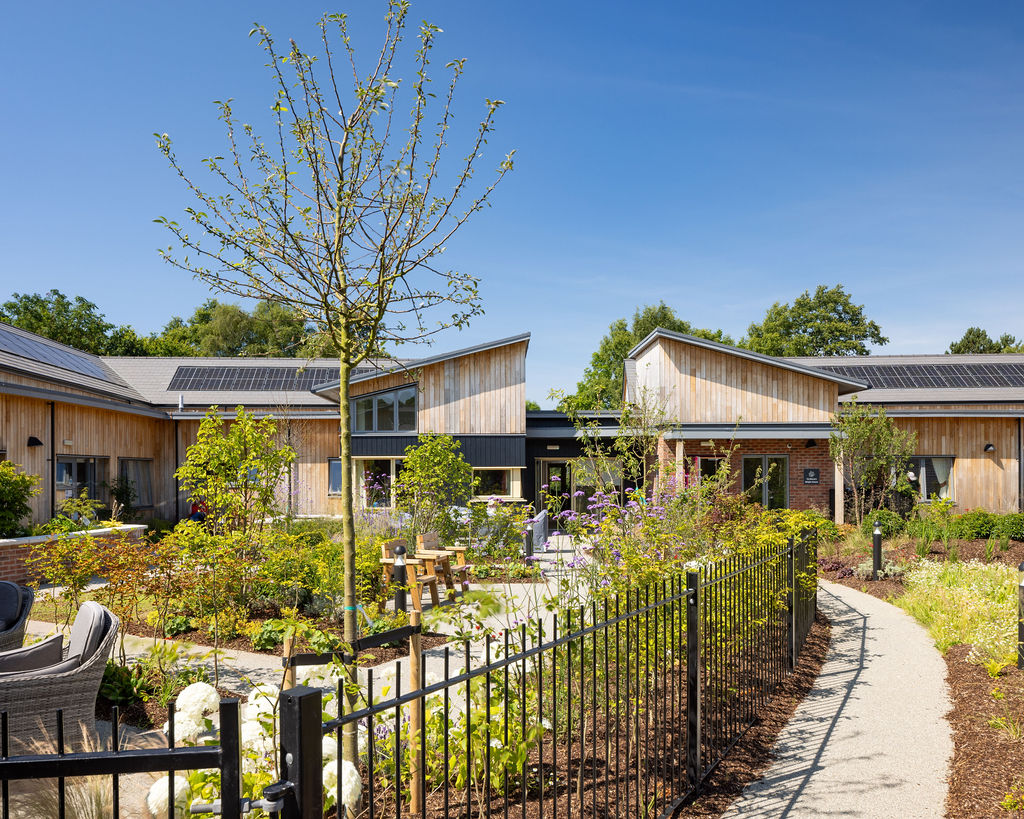
First, the festival’s Gold Medal for Architecture will be awarded to the team behind an innovative project to create a dementia care home that avoids an institutional feel and provides a sense of familiarity and self-determination.
Designed by the Cardiff-based Pentan and led by architect Dafydd Tanner, selectors Martin Davies and Jamie Yeoman, described the Severn View Park project in Caldicot, Monmouthshire as “a home from home” for its residents.
The £8m contract has already won industry plaudits and received the 2025 RIBA Journal MacEwen Award for architecture serving the common good and the 2026 Building of the Year awarded by the Royal Society of Architects in Wales (RSAW) recognizing design excellence.
Now the firm will receive the Norah Dunphy Gold Medal for Architecture in a special ceremony on the opening day of the National Eisteddfod, held this year at Llantwd near Cardigan.
Judges added that the project takes a decisive step away from all institutional associations both in terms of its architecture and the way the building is run.
“In this it succeeds admirably,” the selecters said.
The Gold Medal is awarded in honour of Norah Dunphy, the first woman in Britain to gain a Bachelor’s degree in Architecture, and commemorates architect Thomas Alwyn Lloyd, one of the founders of the Town Planning Institute.
Dafydd Tanner said Pentan has a strong record in the care sector, and responded closely to Monmouthshire County Council’s brief to produce an effective yet attractive domestic space.
Severn View Park replaces a well-loved but outdated 1960s predecessor in Chepstow, allowing residents “to live well with dementia”.
“We already knew what the private sector wanted but here we went back to square one and the result is a totally unique facility,” Tanner explained.
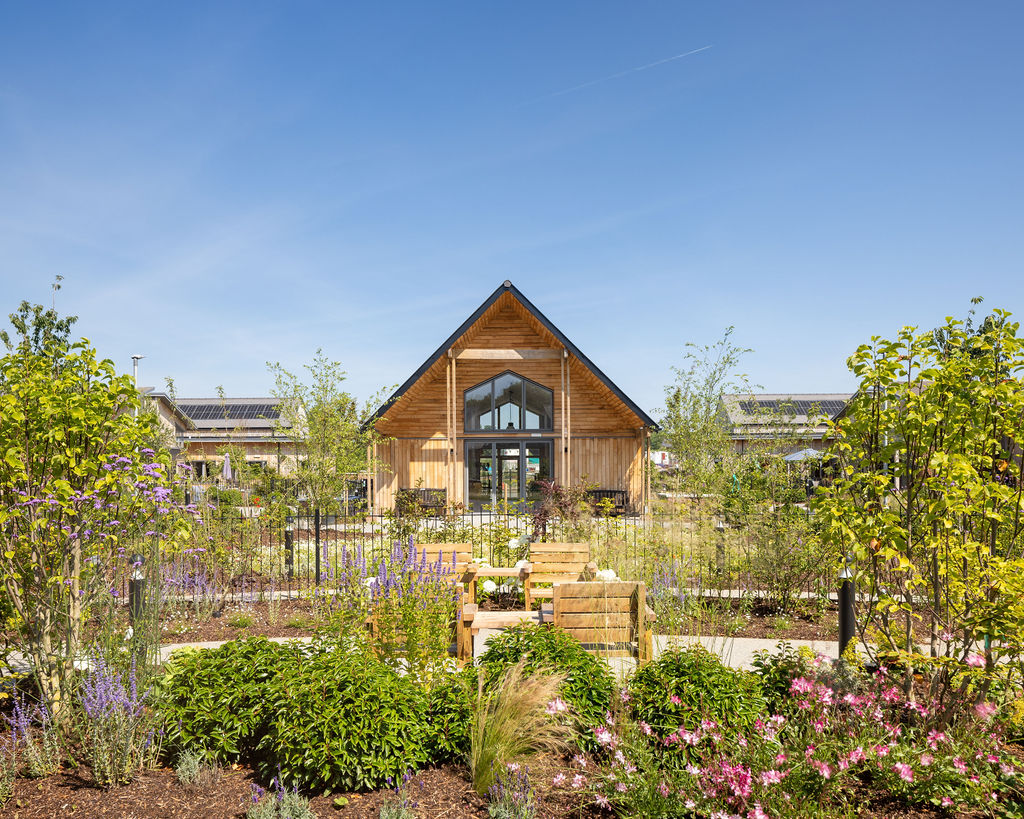
Set amid a housing estate outside Caldicot, Severn View Park consists of four low-lying houses enclosing a wide courtyard with a large gable-roofed hall at its centre.
Each single-storey building acts as an independent household for residents with dementia, fronted by its own small garden. Residents are free to roam around the planted courtyard, with its ‘sensory’ and ‘activity’ zones and a flock of
chickens.
Inside, the space is broken down into four smaller areas with an open household kitchen and a comfortable snug alongside if people want a calmer environment for meals, conversation or rest.
In all, Severn View Park provides 24 long-term residential dementia care rooms and eight short-term rehabilitation/respite care rooms.
Tanner added: “Receiving the Gold Medal from the National Eisteddfod is significant to us as it is an award from a different sector and one that has a much wider audience. We are looking forward to displaying this unique building at Y Lle Celf.”
Plaque of Merit
Next, the National Eisteddfod’s Plaque of Merit, awarded to celebrate exceptional design in new or refurbished projects, will be presented to Theatr Clwyd, Mold for its recently completed redevelopment.
The award celebrates a refurbishment, or new project in Wales, that conveys excellence in following the principles of placemaking as recognised by the Welsh Placemaking Charter.
Theatr Clwyd is a Grade II-listed theatre and cultural centre overlooking Mold in north Wales, originally opened in 1976 as the Clwyd Theatre and Educational Technology Centre.
The building was conceived as a multi-purpose regional arts venue, combining performance spaces with studios, galleries and community facilities.
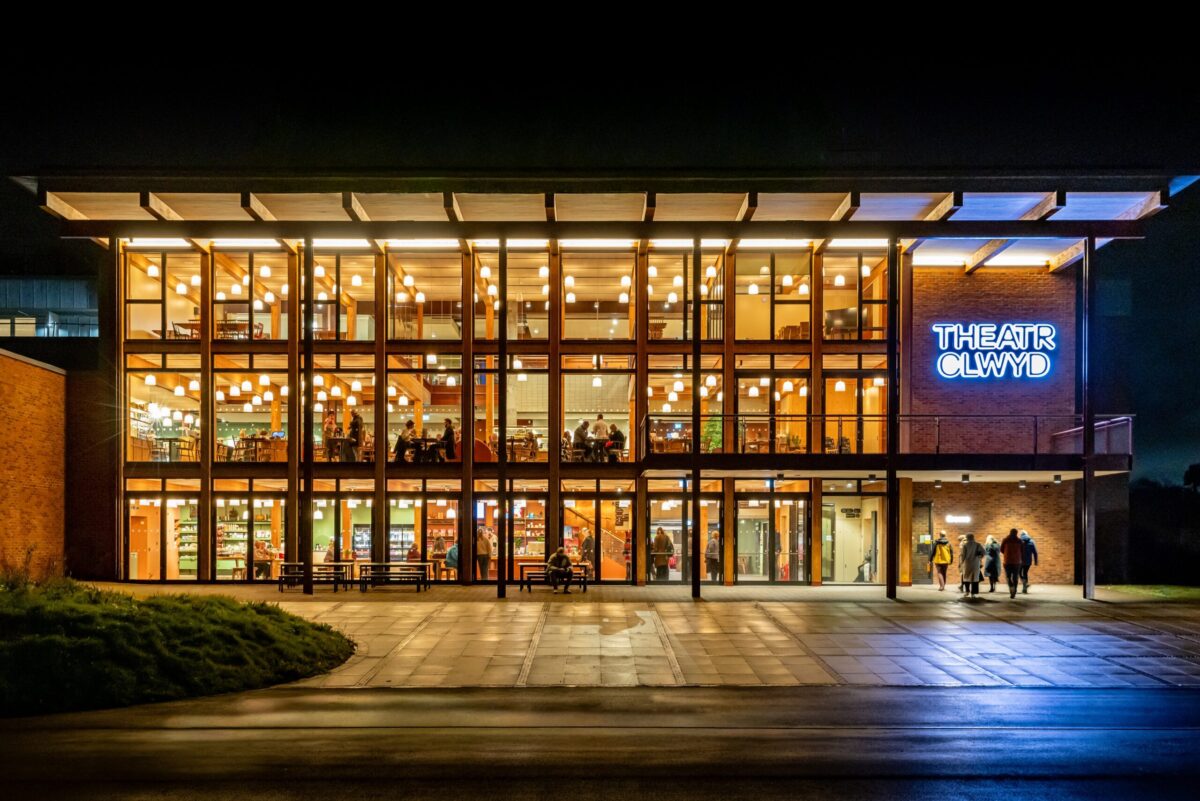
Nearly fifty years on, the redevelopment has led to the sprawling 10,000 square metre complex becoming a more coherent, accessible and technically capable civic destination, while retaining the character of the original structure.
The selectors, Martin Davies and Jamie Yeoman, described the project as “a dynamic scheme with extensive and impressive internal alterations”.
In his adjudication, Martin Davies said: “The new three-story foyer is undoubtedly the star of the piece. This masterstroke unites the building functionally and visually in all three dimensions. It is the new heart and springboard for the whole complex and brings the landscape right into the interior.
“Its power both internally and eternally is emphasised by the timber posts which run uninterrupted from ground floor to roof.”
Jamie Yeoman added: “The seamless way in which the public moves through the building and the visual clarity demonstrates the quality of the architectural design; it is smooth and seamless. Accessibility for all is a thread that runs through the design and is surprisingly well integrated; there is even a quiet place in the main theatre space.”
Completed in October 2025, the project marks a new phase in its evolution.
Liam Evans-Ford, executive director and CEO at Theatr Clwyd, said the award recognised the project for its signifcant impact on cultural life.
He explained: “An award at the National Eisteddfod is deeply special because of its place in Welsh culture. Theatr Clwyd has always been much more than a theatre – it is a creative home for artists and a vital cultural hub for communities across north Wales.
“This transformation has been an extraordinary collaboration with Haworth Tompkins and together we have renewed the theatre to be more welcoming, accessible and inspiring than ever before and where audiences can experience world-class theatre in the heart of north Wales and we will bring the Plaque of Merit to Mold with pride.”
Led by architects Haworth Tompkins, a London-based award-winning architectural studio, the project addressed the limitations of the original plan, where circulation routes had become convoluted and restrictive.
A new internal ‘street’ now runs through the building, linking auditoria, gallery spaces and public amenities in a more legible arrangement.
Alongside its three performance venues, cinema and event spaces, the theatre now accommodates rehearsal rooms, studios, workshops and dedicated areas for community use.

Back-of-house facilities have been significantly improved and a key aspect of the work was an emphasis on improved access and inclusivity. Step-free routes have been introduced across all levels, supported by new lifts and enhanced auditorium layouts that provide additional wheelchair seating.
The redevelopment has been shaped by extensive consultation, with more than 22,000 responses informing priorities around accessibility, sustainability and community use.
Delivered through a phased construction programme, the works allowed the theatre to remain operational throughout, maintaining its role as a cultural anchor for the region.
Scholarship
Finally, the National Eisteddfod’s Architecture Scholarship will be awarded to an aspiring architect who currently works in Aotearoa but is originally from the Cardiff area.
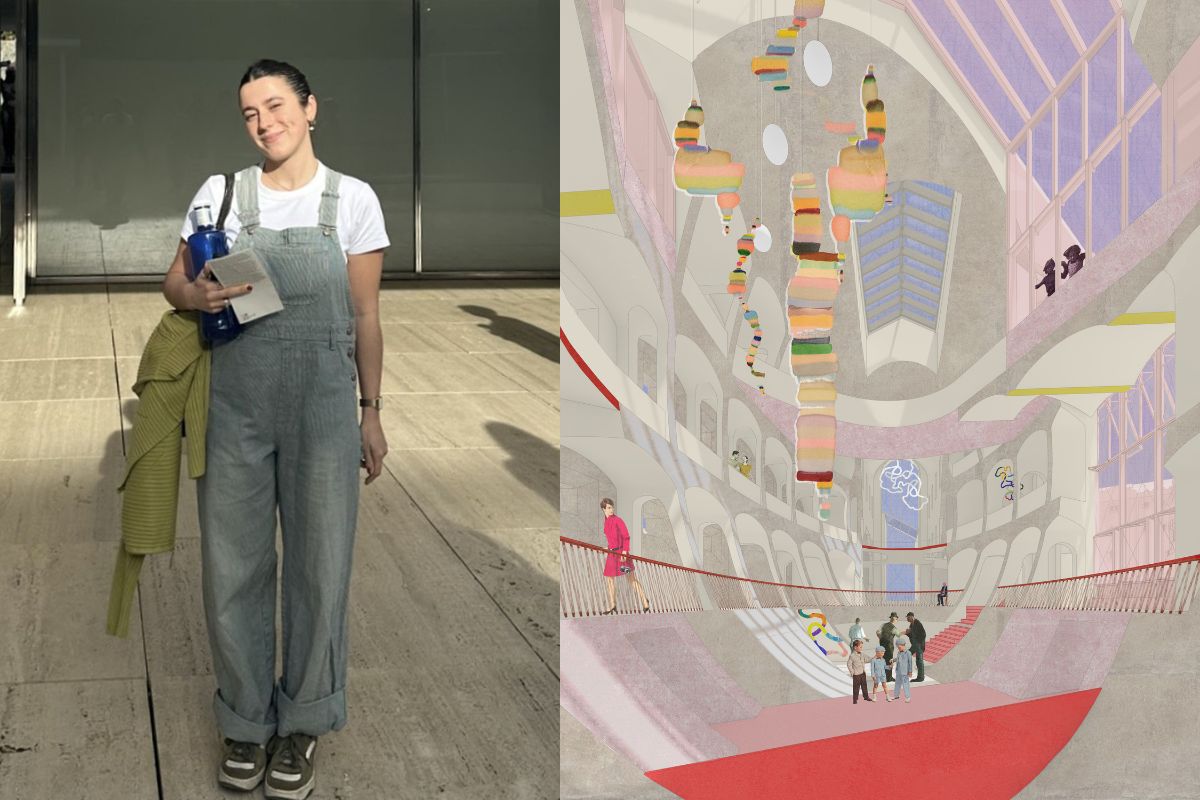
Beca Ellis from Llantrisant will receive the award worth £1,500, a gift from the freemasons of West Wales, for her work in three projects she carried out while studying for an advanced architecture degree at the University of Westminster in London.
This scholarship was established to promote architecture and design in Wales and is awarded to the most promising candidate to enable them to spread their awareness of creative architecture.
The scholarship is open to those under the age of 25, and is supported by the Design Commission for Wales and the Royal Society of Welsh Architects.
Beca presented details of three conceptual projects she had worked on during her master’s degree.
“The first of them was the redevelopment of an old prison in Barcelona into a centre to celebrate the art of Catalonia. I was in the city at the beginning of the year and came across the building and used it for the project. I went back to Barcelona in the spring to do more work and run the marathon at the same time,” she explained.
Creating an energy park was the second project, and a joint project with two other students was the third.
“We came up with the idea of Gweu-dy (Knitting House) which is to save an old farmhouse and turn it into a place to weave wool,” she said.
Beca, who is a former pupil at Ysgol Llanhari, will go back to college to follow a course that will qualify her as an architect. But, in the meantime, she is taking a year out to travel and has arrived in Queenstown in Aotearoa.
“At the moment I’m traveling after a period of study. I’ve been in New Zealand and Japan to work, travel and experience architecture since November last year, and have returned to receive my prize at the Eisteddfod y Garreg Las, and to celebrate Mamgu’s 90th birthday!
“When I return from my year of travel in the autumn, the hope is to work and create a new project with a group of friends, slightly different to the Knitting House project in Wales, so the money can contribute to this
She added that she was encouraged to apply for the scholarship by a friend while living in Japan.
“The only other time I have competed in an eisteddfod is the folk tune solo at the Urdd Eisteddfod years ago. I am so glad I tried,” she said.
The selectors, Jamie Yeoman and Martin Davies, said that Beca’s work stood out among the other candidates as very dynamic and full of energy.
In his comments, Jamie Yeoman said: “We really enjoyed the combination of art and engineering. Beca is a talented Architectural student and we hope this scholarship will help Beca complete her studies in Architecture. We look forward to seeing her work in the future.”
Martin Davies added: “Beca Ellis is clearly a very talented individual, who has the ability to absorb information and transform it into original concepts and creative plans.
“Her work has a wide variety and combines the extremes of free form artwork and detailed mechanical studies.”
Beca’s work will be part of the exhibition which will be open until August 8.
The Gold Medal, Plaque of Merit, and scholarship will be presented to Cwmni Pentan, Theatr Clwyd, and Beca Ellis during a special ceremony in the Eisteddfod Pavilion on Saturday, 1 August at 17:20, followed by a celebration in Y Lle Celf at 18:30.
For more information about the 2026 National Eisteddfod, held on farmland at Llantwd near Aberteifi from 1-8 August, visit the festival’s site here.
Support our Nation today
For the price of a cup of coffee a month you can help us create an independent, not-for-profit, national news service for the people of Wales, by the people of Wales.
Get more trusted Welsh news
Choose Nation.Cymru as a preferred source in Google News to see more of our journalism.


