


Book review: Cynefin by Carwyn Graves
Andrew Holden
I was given Carwyn Graves’ book, “Tir”, as a birthday present and, having enjoyed it, was keen to read more of his work.
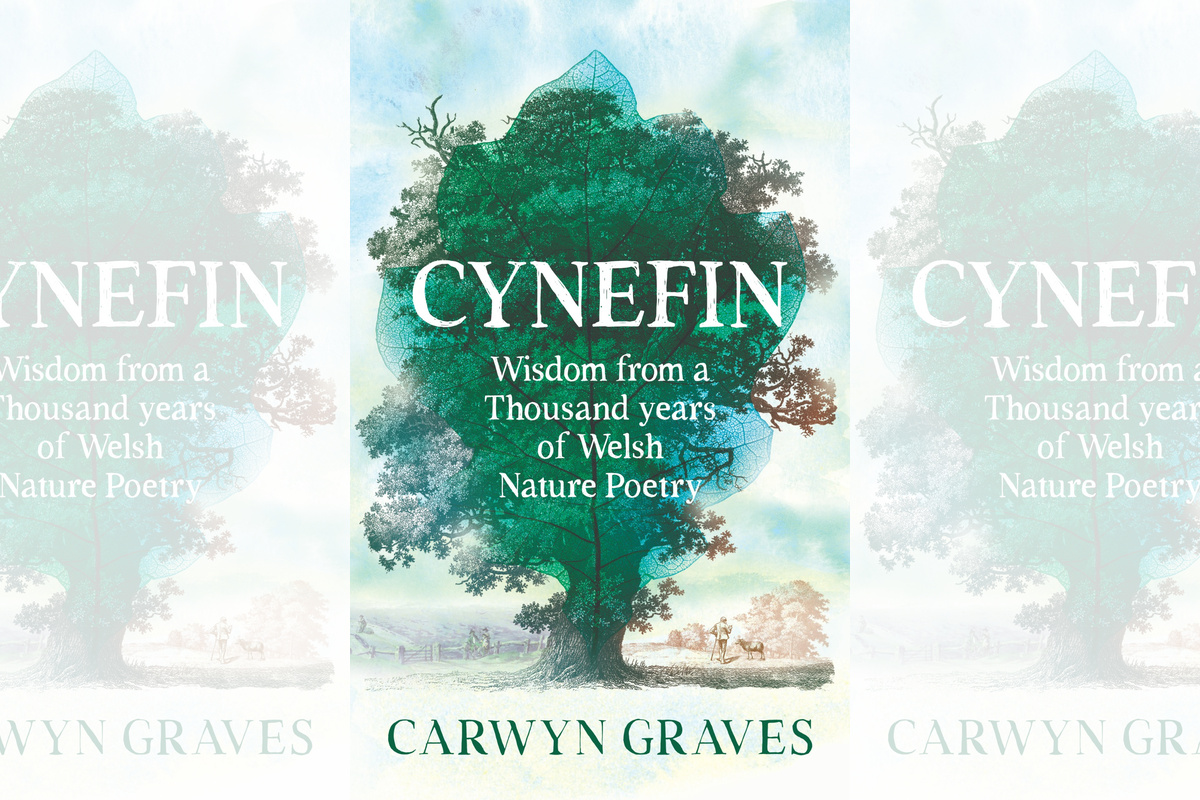
His latest book, “Cynefin – Wisdom from a Thousand Years of Welsh Nature Poetry”, promised to tick a number of boxes for me. Having just started to write poetry myself and having lived in Wales for most of my life, I have a newfound interest in the strict metre of Welsh poetry.
Carwyn prefaces the introduction with a poem, as he does for all the remaining chapters. This particular poem is an englyn, “Cled”, by Myrddin ap Dafydd, which was written in the 1990s to mark the early death of a much-loved hedge layer in their community. This poem, as he goes on to explain in the introduction, serves as an example of the tenet of the book.
The poet, the hedge layer and his labour as part of the social and natural world of their community embody the meaning of the word and title of the book, “Cynefin”.
The idea is that the nature poetry peculiar to this part of western Europe speaks not of nature and landscape as something separate from the communities who live in it – something to be exploited for profit or pleasure – but of those communities as inextricably part of the nature and landscape with which they live and work.
As such, Carwyn believes that the poetry of Wales can point to solutions for many of the climate and social ills that have increasingly beset the western world since the beginning of the industrial age. Or, as he puts it, “[the poems in this book are] windows into a gallery of works in the Welsh tradition that, together, may have the power to help root us in the living world in tough times to come.”
Subsequent chapters shed light on these claims by exploring the nature and development of Welsh nature poetry, using poems from Taliesin in the 6th century to Manon Awst in the 21st to give us examples of how such writers and their work have influenced his theories.
Predicament
In the first chapter, we’re given “Claf Abercuawg”, a very early englyn-poem in which the poet laments his ostracisation from society and imminent demise (probably from leprosy) in the season of new life and growth – spring. Juxtaposing his predicament with the season illustrates the “death-within-life” theme of the chapter. The call of the cuckoo in the poem is also used by the author to illustrate how such seemingly common sounds in the Middle Ages are not so common today.
This loss of the diversity and richness of the natural environment is something of a recurring theme of the book. Evidence for these theories does not come from poetic references or the anecdotal musings of elderly relations and friends alone. It is clear that the author has done his research, and he supplies some quite startling scientific evidence and statistical data on the subject.
Psychology
Such research and breadth of knowledge also extend to the literary and psychological tenet of the book. It is, after all, a book about poetry and what we can learn from it. This is evidenced in the wide range of poems, texts and uses of language in “Cynefin”.
As mentioned earlier, each chapter is prefaced with a poem which highlights that particular aspect of the narrative, but Carwyn also draws in references from a wide range of appropriate texts and papers.
Doing so adds to the analysis of the poem in question and how it applies to that narrative by way of contrast or explanation. In the case of poems written in strict cynghanedd metre, it also gives us insight into why and how it’s used. It is clearly a labour of love on his part.
Spiritual soothing
Each chapter adds something to the final conclusion that we, as a society, need to get away from seeing nature as something other and apart from ourselves, something that is there as some sort of spiritual soothing entity with which we can commune. Rather, we need, “…even within a Western context, to find the cultural resources for communities to develop deep relationships of dependence, delight and knowledge of the living world around them”.
The cynic in me believes we’ve come too far down the industrialised road for this to happen but, even over the last few weeks, I’ve read articles and heard stories about such community actions taking place across the country. English Heritage recruiting volunteers to scythe meadowland, for example.
A recent Guardian article about a devastating pollution incident at Furnace Brook, East Sussex, described plans to make the area “…a new kind of rural community, where people jointly own and manage their landscape, to cater to local needs”. But, after reading “Cynefin”, it’s maybe not so ‘new’.
I’ve greatly enjoyed “Cynefin” and Carwyn Graves’ previous book, “Tir”. Both are thought-provoking, insightful books which have piqued my curiosity. Very helpfully, he has included information in the appendix about where I can go next to read more.
Support our Nation today
For the price of a cup of coffee a month you can help us create an independent, not-for-profit, national news service for the people of Wales, by the people of Wales.
Get more trusted Welsh news
Choose Nation.Cymru as a preferred source in Google News to see more of our journalism.


