


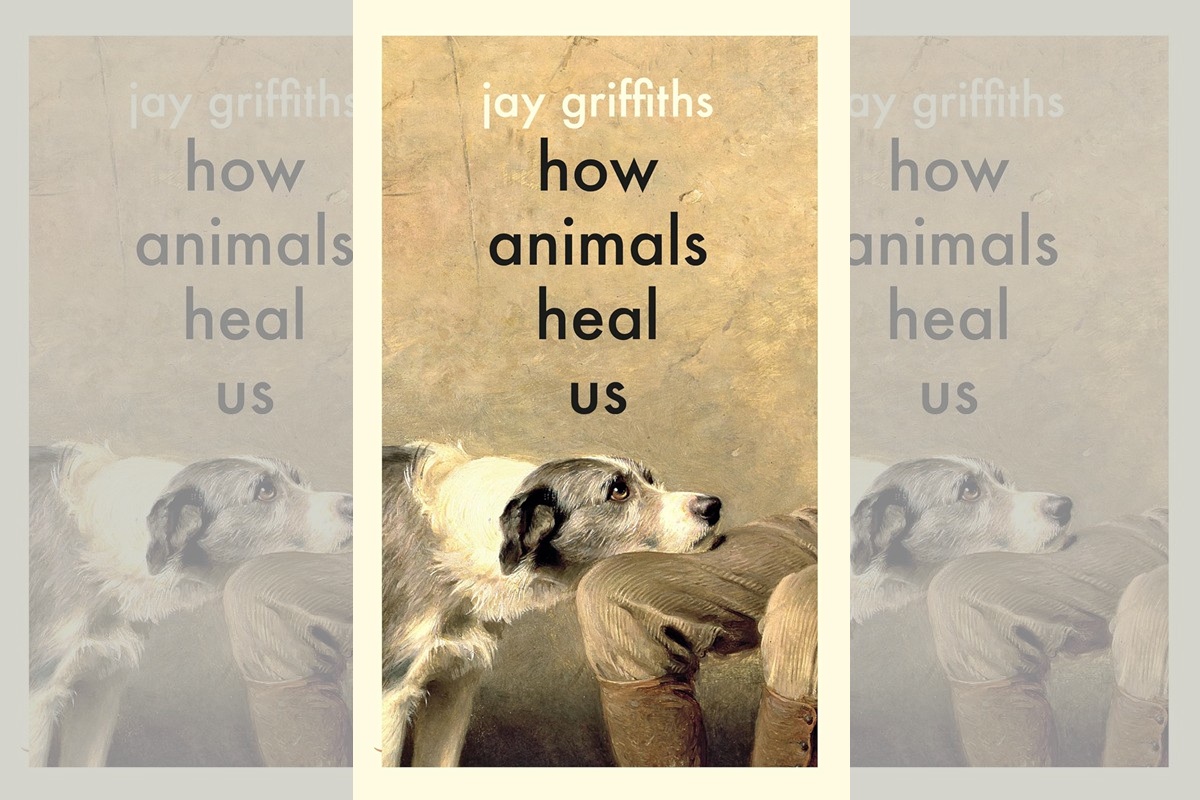
Book review: How Animals Heal Us by Jay Griffiths
Gaynor Funnell
There are some books you enjoy reading but are soon forgotten. There are other books which stay with you, offering information and insights you didn’t realise you needed to know and now can’t forget, a book which changes your perception of things. How Animals Heal Us is one such book.
A fascinating combination of scientific facts, indigenous knowledge, lived experiences and personal reflections, some stories are heartbreaking, others full of hope, but all tell tales of the marvels of animals.
Beautifully crafted in Griffith’s distinctive, lyrical prose, once read, you will never look at animals the same again. I found myself copying the author – as she describes in the introduction – repeating this newly acquired knowledge to a friend, with the hope they would be as amazed as I was.
‘Did you know… that baby jumping spiders dream?’ Griffiths writes, continuing that red deer make decisions by referendum; that woodlice display something called emotional contagion, the mirroring and spread of other’s moods.
I was particularly pleased to read that woodlice are included, having been fascinated by them since I was a child. Although I knew they had superpowers, by feeding on rotting organic matter, and ingesting toxic heavy metals, I didn’t know a calm woodlouse could calm others in the group if they are agitated when disturbed.
Did you know that chimpanzees dance under waterfalls, wolves play tug of war, lambs and ravens play king of the Castle, gorillas can learn sign language and can paint, sixty-five creatures laugh when playing, a cat’s purr can be healing, dolphins play with seaweed, elephants mourn their dead, crows hold funerals…that animals have a sense of justice, of fairness, of forgiveness? That when we see animals, the right amygdala in our brain lights up? ‘We are electrified…by animals, they, the great transformers, could transform us if we would let them.’ Griffiths writes.
The book, which ‘began by taking a thought for a walk’ and is dedicated to the authors two cats, is divided into four parts.
The first two describe how animals heal the individual psyche and the individual body; the second two, how animals heal both the body politic and the soul politic. Griffiths describes how animals are a salve for the lonely, by touch, by play, by just being, by demonstrating unconditional love; how donkeys are the ‘archetype’ of gentleness; how horses can ‘read our body language and do so even when we don’t think we are speaking it’.
How a scruffy labradoodle called Digby prevented a potential suicide, Digby being the Devon and Somerset Fire and Rescue Service ‘defuser’. Guide dogs for the blind are recognised by many of us, but I didn’t realise how life-saving other service and assistance dogs can be. They can answer doorbells, dial an emergency number, pick certain items out when shopping, bring medication, can open and shut a fridge. Medical Alert Assistance Dogs can recognise if someone is about to have a seizure, or go into a diabetic coma.
Cancer
There are incredible stories of dogs being trained to ‘smell’ forms of cancer, such as bladder, breast, kidney, prostate, as well as Covid, more preferable than a nose swap. ‘It is the animals who heal,’ say shamans, shamanism being the ‘world’s primary healing tradition, who use healing songs they learn from animals and plants, and ‘shift into animalesque costume, identifying themselves with the motley Earth and softly summoning the animals of that locality.’
There are stories of how animals have saved lives; Ethiopian lions, ‘Angels with black faces’, protecting a young girl after she was kidnapped by men; humpback whales, orcas, and dolphins saving swimmers from attack; of dogs protecting children. ‘Wolves were practising the ethics of cooperation and care millions of years before humans did.’ we are told.
Joy
It has to be said that although I read quickly, I took time reading this book. Firstly, because it deserved time, and secondly, after reading some of the recollections, I had to put the book down because of the enormity of what I’d just read. Some stories led me to tears, not just those of sadness and anger at the way humans have treated animals, but also because of a feeling of awe and joy, an appreciation of how much animals do just by being. The author tells of crying herself after being kissed by a whale. ‘From the heart for the heart of everything. I am crying for the sorriness of my species. Tears are holy.’
Along with woodlice, the small have their place, insects being ‘the most necessary to our very survival’, but also the ‘most despised of all creatures, the ones killed in large numbers…’, and bees, having ‘been declared the most important living beings on the planet.’ In Slovenia, there is a healing tradition of firefighters and others lying in a room with bees, for ‘relaxation and recuperation after traumatic call-outs’.
Along with the buzz of a bee, nature has its own chorus, not just the birdsong we are familiar with, but that of insects, frogs, bats, monkeys, elephants, sea lions. How quiet, how desolate would our world be without nature’s symphony.
Adventure
‘Writing this was a huge adventure’, Griffiths says, and reading How Animals Heal Us has felt like an adventure too. To say a book has changed the way you think, gives it a great responsibility in a way, but reading it as someone who feels close to the natural world and the more-than-human within it, this book has done that due to the miraculous stories being told; the book is filled with love.
Griffiths says that writing the book has changed her, that ‘the world feels radically different to me now’, that ‘the shape of my spirit has been shifted by the animals, transformed utterly.’
I was going to suggest this book should be read by every animal lover, but perhaps it would be better read by those whose connection to the natural world is limited, or where animals aren’t part of their life due to choice or circumstance. They might never think the same about animals again.
‘Mind wide open. Be more animal. Animals heal us.’
Support our Nation today
For the price of a cup of coffee a month you can help us create an independent, not-for-profit, national news service for the people of Wales, by the people of Wales.
Get more trusted Welsh news
Choose Nation.Cymru as a preferred source in Google News to see more of our journalism.


