


Book review: Paradwys Goll by Malachy Owain Edwards
Ant Evans
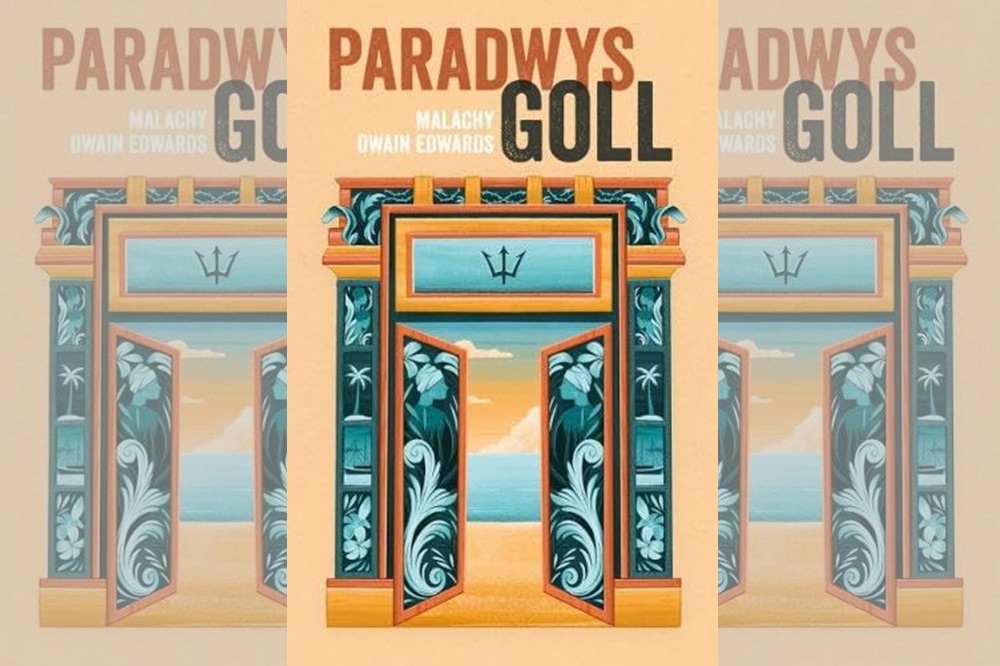
Following on from Malachy Edwards’ first volume, Y Delyn Aur, which was centred on questions of the author’s Irishness and whether he felt Irish enough to claim Irish citizenship, (and therefore keep his European citizenship in the wake of Brexit), the author’s follow up volume, Paradwys Goll looks in detail at the roots of Edwards’ family in Barbados.
What with October being Black History Month and Paradwys Goll being the Welsh Books Council’s Book of the Month, what better time to review this volume.
The volume’s first chapter, Parys, takes place during a trip the author takes with his family to Mynydd Parys on Anglesey. It is in this chapter that Edwards poses an important question; what is Black History? Is the history of Mynydd Parys, where items crafted with copper from there were used to buy African people, Black History? This reviewer would agree with that.
Edwards then goes on to outline that whilst his father ensured he was raised a Welshman and his Irish Grandma ensured the author’s familiarity with Ireland and Irish culture, his mother wasn’t one to discuss the past.
Consequently, when he was growing up, the author heard very little about Barbados, where his maternal Grandfather, Kenrick, came from.
With Kenrick having passed away in 2010, though he could no longer ask his grandfather directly about his experiences as a member of the Windrush generation, Edwards’ great uncle Sinclair, who also, with his brother Kenrick’s encouragement, moved to London before eventually returning to Barbados, was still alive. This leads the author on a journey to a small village by the name of Parris.
As an aside, I find the links between Mynydd Parys, Parris in Barbados and later the French capital itself, to be an interesting thread connecting important personal moments for Edwards within this volume.
Upon his arrival in Barbados, the author takes some time to explore. This reviewer read with great interest the details of that first evening and following day. As the author describes the “feast for the senses” on that initial Sunday whilst having breakfast on the sea shore, you almost feel transported there.
Readers are reminded though, that behind the idyllic postcard image are two centuries of colonialism, during which time the country had once been an important centre for the slave trade.
Moving on, Edwards goes to Bridgetown where, upon befriending a local lady, Evelyn, he proceeds to accompany her to the newly finished Monument to the Barbadian Family. Here, they read the biographies of eleven famous islanders who sought to improve the lives of their fellow countrymen.
Indeed, this chapter proves to be quite the historical eye opener. During the author’s second full day on the island, he visits George Washington House, which offers an unexpected insight into the first American president’s visit to Barbados in the 18th century.
Chains
Items in the museum included possessions of the colonists, such as telescopes and wills. In contrast, items associated with slaves were instruments of cruelty, such as neck collars and chains.
It is during the visit with Sinclair and his wife Daphne however that both Edwards and the reader are given an insight into the upbringing of the author’s grandfather, the family dynamics and realities of life in the Barbados of the past.
We find out family nicknames such as “Darts” (Sinclair and Kenrick’s grandmother) and “Beresford” (their father), and an explanation as to why Kenrick was their father’s favourite (being the first born legitimate son). This favouritism being highlighted in the decision to send Kenrick to England once he’d completed an apprenticeship as a tailor, rather than have him working on sugar plantations back home.
However, Kenrick would soon send his brother money to join him in London, where, despite experiencing racism in the workplace, he was happy to have gone, also pointing out how Kenrick would regularly send money back home to their parents.
That being said, Sinclair later points out that his brother had a habit of beating the women he was in a relationship with.
Having learned much from his visit to Sinclair and Daphne, later in the book, Edwards asks an interesting question; how well can we get to know somebody else? Which leads to a conversation between himself and his mother, who recalls during her childhood her father being subject to verbal abuse and how he once came home covered in blood when a racist set his dog on him.
Despite everything, she emphasises how proud she was of her father.
An additional source of information for the author were letters sent between his late Grandma and her mother, Agnes. In a letter dated the 4th of July 1960, Anges makes it clear that she was none too happy about her daughter’s relationship with Kenrick (what with him being black), preferring her daughter leave him and emigrate to Canada. Advice which wasn’t taken up.
Paradise lost
A central thread running through this volume, would have to be John Milton’s Paradise Lost (this also being the meaning of this book’s title).
Edwards includes extracts of Milton’s work at various points, offering the reader contextual analysis of those extracts and also of Milton himself. For instance, the author contrasts Milton’s comparatively radical republicanism and being in favour of divorce with his contrasting views on the slave trade, which were in keeping with prevailing views of the time.
As with Y Delyn Aur, stunning black and white photographs are included, providing an extra dimension into locations discussed in Paradwys Goll, such as a photo of the author, his mother and grandfather taken on a trip to Barbados in 2004.
Near the book’s conclusion, Edwards notes while it isn’t possible to return to a paradise lost, a pre imperialist time before the transatlantic slave trade, it is possible to build a new paradise.
This candidly written volume has been an eye opener for this reviewer and I would very much encourage anybody reading this review to read it too.
Support our Nation today
For the price of a cup of coffee a month you can help us create an independent, not-for-profit, national news service for the people of Wales, by the people of Wales.


