

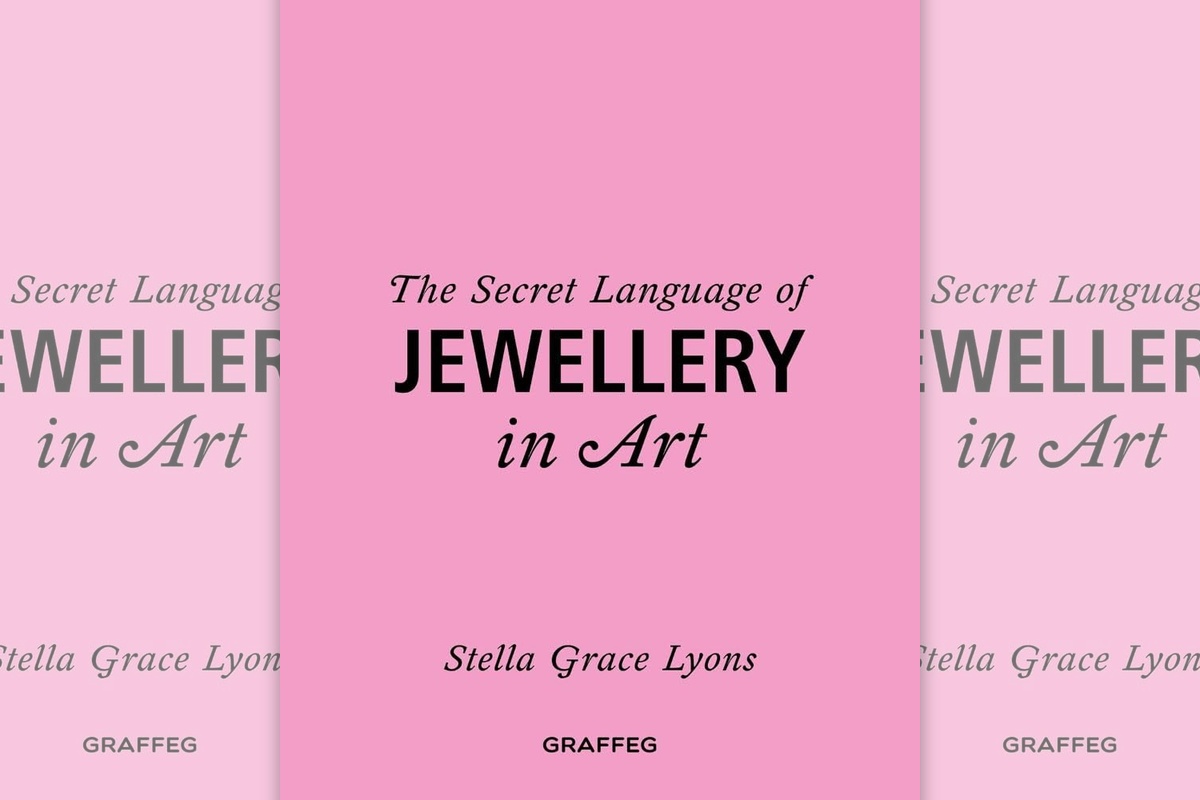
Book review: The Secret Language of Jewellery in Art by Stella Grace Lyons
Martin Shipton
Penarth resident and art expert Stella Grace Lyons has produced an enthralling book exploring the use of jewellery as symbolism in Renaissance portrait painting.
The Secret Language of Jewellery in Art, published by Graffeg of Cardiff, deconstructs 19 pictures by prominent artists of their time, explaining how jewellery worn by the subjects is more than purely decorative.
In her introduction, Lyons writes: “Jewellery in paintings can delight the eye but it also communicates. Power, virtue, lineage, ambition, desire and control; all glint within these tiny painted details. Adornments in paintings don’t just tell the protagonist’s story – they gesture outwards, to the political, religious and social tensions of the time. Jewellery may be small, but its inclusion in paintings has a powerful resonance. It charts, in miniature, the shifting tides of power, identity and the development of civilisation itself.”
Lyons’s analysis of one painting explains why a pub in Wales bears its unusual name. The Pelican in her Piety at Ogmore-by-Sea puzzled me when I first came across it, but Lyons places the name in its historical and religious context.
The image of a pelican feeding her young with her own blood became a recognisable motif in the 16th century. Its most famous example is in the so-called Pelican Portrait of Queen Elizabeth I, painted around 1575 and attributed to Nicholas Hilliard. It hangs in the Walker Art Gallery in Liverpool.
Lyons writes: “Bestiaries, those compendia of marvellous animal lore that so profoundly shaped the medieval imagination, cast the pelican as a bird of self-sacrifice. It was believed to wound itself to nourish its chicks. This noble bird came to embody Christ’s sacrifice – His blood shed for mankind’s salvation.
“In Hilliard’s iconic Pelican Portrait, Elizabeth wears the symbolic bird as a lavish pendant, its wings spread wide as it pecks at its breast. This is no ornament. This is jewellery as propaganda. The Queen presents herself as the self-sacrificing mother of the nation, ready to spill her blood for her people. It’s a sentiment she put into words: ‘There is nothing about which I am more anxious than my country and for its sake I am willing to die 10 deaths if that be possible.’”
Lyons writes: “Elizabeth 1 understood the importance of cultivating a personal brand and cultivated her public persona shrewdly through the painted portrait. More than 100 images of her survive.
“… Jewels were a critical tool in projecting Elizabeth 1’s power, prosperity and stability. By 1587, an inventory assembled by Blanche Parry, the Keeper of Her Majesty’s Jewels, listed 628 individual jewels in Elizabeth’s possession – a testimony to the enormous scale of her gem empire. In almost every portrait, including the Pelican portrait, she is adorned with a dizzying display of jewellery.
“ … But was it artistic licence? Did painters exaggerate Elizabeth 1’s bejewelled splendour, or did she really appear like this? Eyewitness accounts suggest the latter. In 1559, the Venetian ambassador known by the sobriquet ‘Il Schifanoya’ reported that the Queen, receiving French envoys, was ‘dressed entirely in purple velvet, with so much gold and so many pearls and jewels that it added much to her beauty.’”
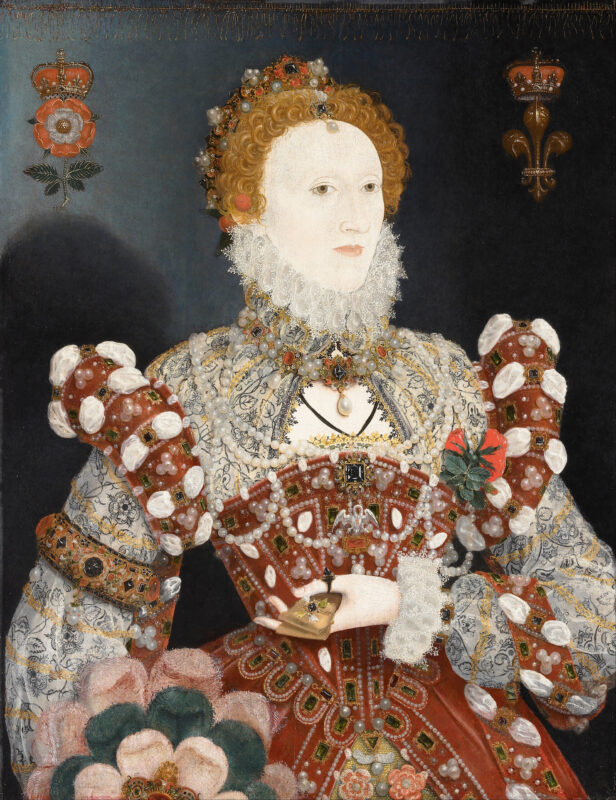
Lyons concludes: “In portraits and in life, symbolic jewels like the pelican became more than decoration. They were part of a sophisticated visual rhetoric through which Elizabeth 1 asserted her strength. As a woman in a man’s world, Elizabeth recognised that she was on the back foot: ‘I know I have the body of a weak, feeble woman,’ she declared in 1588, ‘but I have the heart and stomach of a king.’ This statement acknowledges the tension underlying her reign. Jewellery was a means of resolving that tension. Through the jewels she wore and bestowed, she carved out a vision of monarchy that could hold its own: female and formidable.”
All 19 chapters have their own insights, adding richness and complexity to a rare book that bridges the gap between fine art and history.
Beautifully illustrated with high-quality reproductions of the paintings the author discusses, the book represents a real bargain.
The Secret Language of Jewellery in Art by Stella Grace Lyons is published by Graffeg at £20.
Support our Nation today
For the price of a cup of coffee a month you can help us create an independent, not-for-profit, national news service for the people of Wales, by the people of Wales.
Get more trusted Welsh news
Choose Nation.Cymru as a preferred source in Google News to see more of our journalism.


