


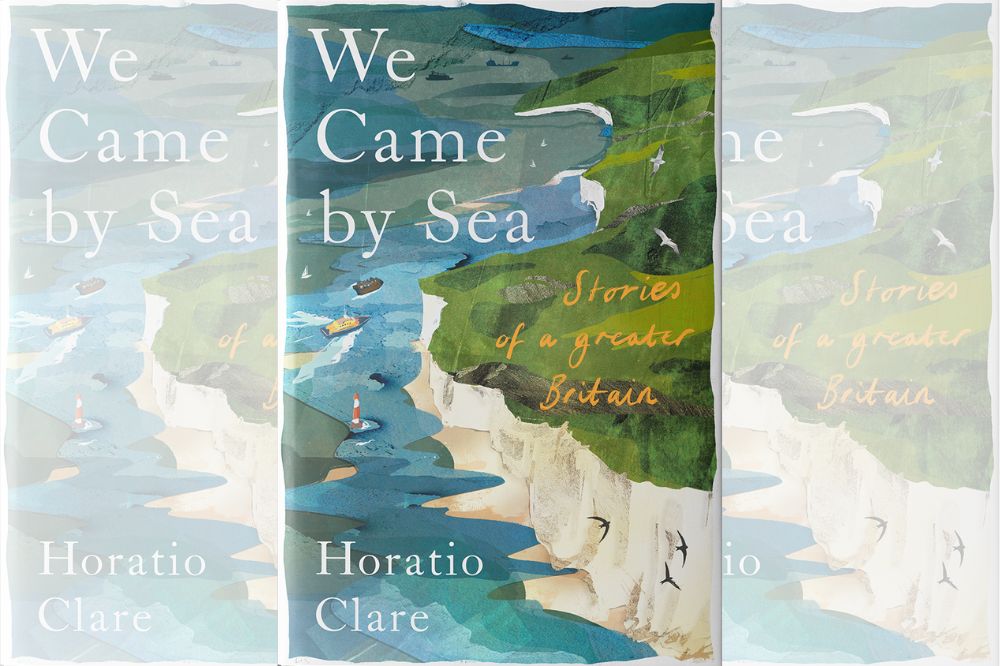
Book review: We Came by Sea by Horatio Clare
Elena Gower
In the British news, small boat crossings have become a dark obsession. Daily Mail headlines read “So much for migrants crackdown!”, whilst GB News alerts its readers to the “’Out of Control!’” so-called “migrant crisis.”
The Times, meanwhile, recently published an analysis by the Conservative Party with the conclusion “Channel migrants ’24 times more likely to go to prison’ than Britons,” in the same breath as the Telegraph’s bold claim that “Britain is turning into a hotel for the world’s criminals.”
Migration
Horatio Clare’s ‘We Came by Sea’ goes beyond these click-baiting headlines, and shines an informative, much-needed light on a situation shrouded in hateful darkness. He is a travel and non-fiction writer, and his previous books mainly consist of his pursuit of adventure.
From boarding icebreakers in Finland, and container ships across the world’s oceans, to following the flight paths of swallows throughout Africa, and curlews through Bulgaria, Horatio Clare is no stranger to embarking on long and difficult journeys. However, his seafaring and travelling is by choice, whereas the dark and hazardous journeys of asylum seekers and migrants are out of necessity.
The emphasis of the title could therefore be on the word “we.” Humans are, and have always been, a migratory species, the difference now is that people are being driven by war, political repression and climate change to flee their homeland.
“When we speak of asylum seekers or when we speak of refugees, I know, at least in theory, we are talking of whole spans of humanity,” Clare says..
Journalism
Some of the book is derived from various Financial Times articles, including his scoop about the Bibby Stockholm. He investigates the mystery of this ship by going out in the dark and exploring it from an inflatable small boat, [a similar vessel as is used in migrant crossings across the Channel.]
The Bibby Stockholm is described by Clare thus: “It is not just that she is ugly or utterly charmless, she seems sinister.” The ship was docked in Falmouth as a supposed solution to the housing of asylum seekers in the UK.
Volunteers
Clare begins his book by saying, “It often feels as though we are living in a time of fear. If the fear is not to subsume us, we must hear the voices defying it.”
He interviews volunteers on both sides of the Channel, from charities such as Care4Calais, who work tirelessly in an unforgiving situation. They work around the clock to deliver tents, clothes and support to asylum seekers who are sleeping rough along the French border.
Amongst the volunteers, he himself takes on the role of translator at one point, being the only apparent bilingual person, and conversing between the French police and the aid workers during a raid.
As right-wing politicians and press persist in the idea of a “migrant problem,” Clare ensures a detailed understanding of the care taken by good Samaritans to ensure the safety of refugees in distress, both on land and at sea. Their troubles don’t begin in the water, and they certainly don’t end there.
Horatio Clare visits a refugee camp in Calais called “The Jungle” more than once throughout the course of the book, and we see it change. Through storms and harsh winters, migrants wander through mud and rain, sometimes without shoes and certainly without the proper clothes and equipment.
At one point, he mentions a time when right-wing politician Lee Anderson visits the site, and what was his takeaway? That the charities are giving them hope to reach “El Dorado,” a phrase not once uttered by the migrants talking about Britain.
Clare emphasises the harmful way that politicians are curating false narratives surrounding small boat crossings across the Channel, how they affect the way police carry out their raids, and the increasingly difficult ways in which charities, like Care4Calais, are able to combat them.
“And here, too, are the volunteers, young and old, giving their time and care: here is kindness, here is generosity, here is hope.”
Hope
One of the main themes throughout this book is hope, and the way it is sustained by the migrants throughout their perilous, and often deadly, journey across the Channel. It is often repeated by interviewed refugees as the driving force behind their journey. To them, Britain is hope and possibility. To them, Britain is a place of safety and freedom.
So why do we portray those seeking a better life in a negative light? What can we do to better ensure that safety?
We Came by Sea by Horatio Clare is published by Little Toller Books and is available from all good bookshops.
Support our Nation today
For the price of a cup of coffee a month you can help us create an independent, not-for-profit, national news service for the people of Wales, by the people of Wales.



Thank you. I am so sick of the stupid, hate-filled rants about immigrants. Good to see the alternative. Very few of us are not immigrants, or descended from immigrants if you look into our genealogies. Britain is a potmess of immigration and this has been our strength through the centuries. What else can we be since we are an island: Ynys hon. Many recent immigrants have done and still do staff our necessary services, especially medicine, care work and hygiene. Many have fought for us in our wars. Many have made important inventions. Many create the small businesses which are… Read more »