

Calan Awst: The ancient Welsh harvest festival celebrated on 1 August
Nation.Cymru Staff
Before the National Eisteddfod became one of Wales’ biggest summer celebrations, 1 August marked the beginning of the traditional harvest festival known as Calan Awst, or Gŵyl Awst.
Observed across Wales and the wider Celtic world, it signalled the start of the harvest and one of the most important points in the agricultural calendar.
Traditionally celebrated on 1 August or the nearest Sunday, Calan Awst corresponds to the Lughnasadh or Lughnasa festival in Ireland, and the day is also marked in Scotland and the Isle of Mann.
Communities across Wales would come together to relax after a summer of working in the fields and enjoy the first fruits of the harvest with a feast.
Amgueddfa Cymru notes that Cawl Awst, ‘August Soup’, is associated with the celebration, and would be the “best broth of the year when a wide variety of fresh garden vegetables were available”.
They explain: “The broth, boiled in a large cauldron, would be prepared under the supervision of one woman and most families in the neighbourhood would supply the required meat (fresh beef occasionally) and vegetables.”
Modern commentators have highlighted that the harvest was an important time across the Celtic world as, if the crop failed, the winter was likely to bring suffering. As such, the festivals celebrating this period were considered a form of ceremonial blessing.
In her 1962 book, The Festival of Lughnasad: A Study of the Survival of the Celtic Festival of the Beginning of Harvest, Máire MacNeill posits that the harvest festival developed from a pagan rite.
Explaining the ceremony, MacNeill writes: “[A] solemn cutting of the first of the corn of which an offering would be made to the deity by bringing it up to a high place and burying it; a meal of the new food and of bilberries of which everyone must partake; a sacrifice of a sacred bull, a feast of its flesh, with some ceremony involving its hide, and its replacement by a young bull; a ritual dance-play perhaps telling of a struggle for a goddess and a ritual fight; an installation of a head on top of the hill and a triumphing over it by an actor impersonating Lugh; another play representing the confinement by Lugh of the monster, blight or famine; a three-day celebration presided over by the brilliant young god or his human representative. Finally, a ceremony indicating that the interregnum was over, and the chief god in his right place again.”
In the British Druid Order, which celebrates Gŵyl Awst, the traditions are drawn from the Fourth Branch of The Mabinogion.
Calan Awst was associated with the marriage of the lord of light, Lleu Llaw Gyffes, to Blodeuwedd, the flower maiden, symbolising the union of the sun’s life-giving power and the fertility of the earth.
It wasn’t until much later, during the 19th century, that Christian communities began to celebrate at the end of the harvest in September rather than at its beginning.
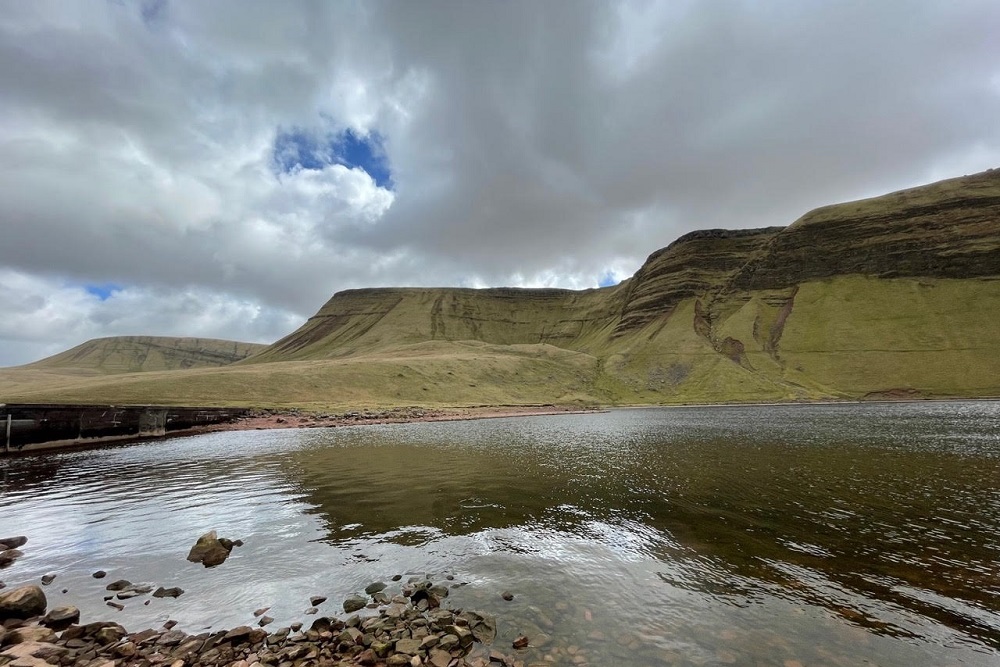
Mark Rees shared on Facebook: “Welsh folklore tells us the Lady of Llyn y Fan Fach may emerge from the water this weekend…
“On 1 August, people once gathered on the shores of this beautiful lake in the Black Mountain, hoping to catch a glimpse of one of Wales’s most famous figures of legend: “It has been customary from time immemorial for people from all parts to throng the banks of this lake on the first day of August to see the Fairy Lady of the Lake appearing on the surface of the water to comb her hair.”
“The lake, lying on the borders of Carmarthenshire and historic Breconshire, has long been connected with the mysterious Lady of the Lake, who emerged from the waters to marry a local farmer, only to return to her watery home when he broke the rules of their marriage.
“Older accounts also tell us that people once visited the lake on the first Sunday in August, when the waters were said to boil – a sign that the Lady and her magical cattle were about to appear.”
Support our Nation today
For the price of a cup of coffee a month you can help us create an independent, not-for-profit, national news service for the people of Wales, by the people of Wales.
Get more trusted Welsh news
Choose Nation.Cymru as a preferred source in Google News to see more of our journalism.


