

Cian Ciarán invites reflections on 80th anniversary of Hiroshima at National Eisteddfod
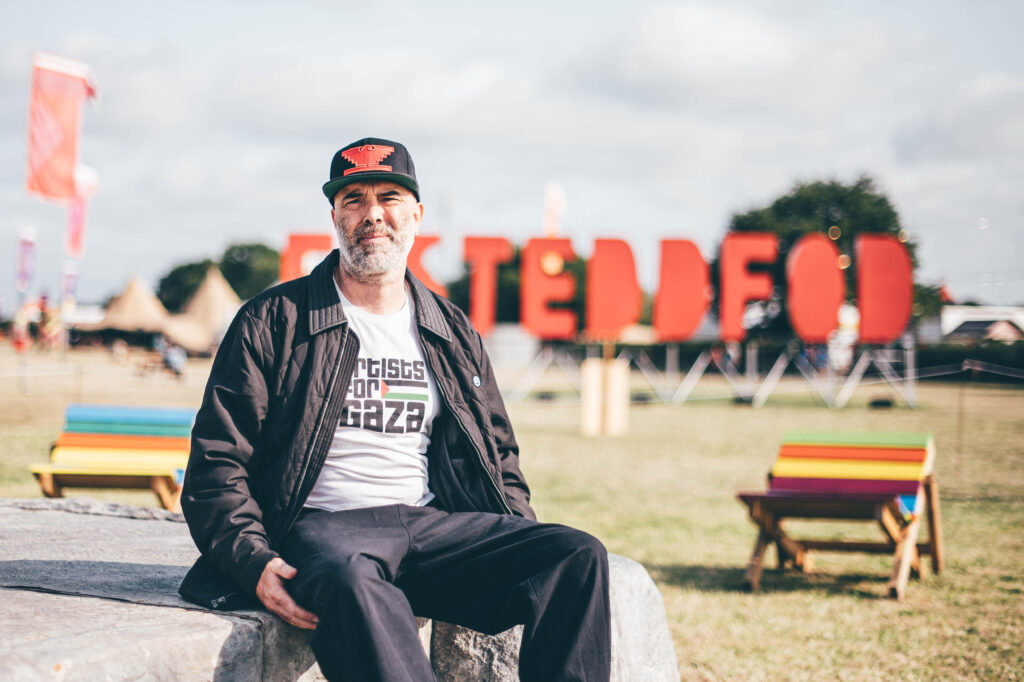
To coincide with the 80th anniversary of the devastating Hiroshima nuclear bombing in 1945, Super Furry Animals’ member, Cian Ciarán has debuted an audio installation at the ceremonial heart of the National Eisteddfod.
The acclaimed artist has produced a spatial audio experience that invites Wrecsam National Eisteddfod 2025 festival-goers to contemplate and reflect on the thousands of lives lost to the bomb at the Eisteddfod’s revered Cerrig yr Orsedd ceremonial stones.
Inspired by Cian’s visits to Japan – as well as conversations with survivors of Fukushima and their families – ‘Hibakusha’ is one of the art projects being presented during the Year of Wales and Japan – a year-long celebration of the connections between the two nations.
The soundscape blends Cian’s early childhood memories of growing up in north Wales in the shadow of the Cold War, surrounded by nuclear power stations, with the discovery of life stories of the Hibakusha – people who were directly affected by the bombing – a relative of whom he met with during a visit to Fukushima in 2013.
Hiroshima
A new meaning was given to the plea “Is there Peace?” (“Is there peace?”) during the 1945 National Eisteddfod in Rhosllannerchrugog when it was announced from the stage that Japan had surrendered and the Second World War was over.
The announcement about the war was sudden and unexpected. The Pavilion audience was enjoying a choral recitation competition when the Eisteddfod secretary, JT Edwards, stepped onto the stage and announced the news.
A Western Mail correspondent wrote: “For a moment there was complete silence. Everyone seemed stunned, not grasping the significance of the announcement. Then the floodgates opened. The crowd rose to their feet, shouting and applauding loudly until it seemed as if the roof might lift.
“Few in the pavilion that day had dry eyes. Everyone knew what it would mean for their husbands and sons still serving in the Far East.”
After the celebrations it was announced a thanksgiving service would be held. The Western Mail summarized the day: “So the Rhos Eisteddfod which began during the Second World War closed with the world at peace.”
The Eisteddfod took place just days after the first atomic bomb was dropped and exploded over the city of Hiroshima, killing 166,000 people.
Enola Gay
Cian’s six-hour installation – reflecting the flight of the Enola Gay aircraft from take-off to releasing the ‘Little Boy’ bomb over the Japanese city – began after a minute silence to mark the anniversary and consists of 12 speakers that will surround the stone circle to create a 360-degree audio experience.
Following a minute of silence at 12:00, people were invited to spend a minute or more to meditate and to reflect on all those across the world who are suffering, or have suffered, because of war.
The musician hopes the experience will encourage others to consider the effects of Hiroshima and inspire peace building, echoing the Eisteddfod’s core ceremonial call and response of ‘A Oes Heddwch?’ (‘Is There Peace?’).
Participants were also given a paper crane – symbolic of Sadako Sasaki’s international children’s peace movement – a reminder of the need to actively build peace and, like paper, how brittle it can be. A minute’s silence also took place at the Eisteddfod to mark the anniversary.
Cian said: “I think given the current geopolitical political climate it’s more important than ever for us to reflect, and this piece acts as a timely reminder of the catastrophic effects war and conflict can have on people’s lives.
“The Eisteddfod Genedlaethol is symbolic, and it has always offered a space for reflection and peace building. I made the conscious decision not to perform because I want people to focus on the subject, themselves and their experience in the installation.”
Japan 25
The piece is one of more than 20 art projects and collaborations that form the Wales Japan 25 Culture Programme. Led by Wales Arts International, the international agency of Arts Council of Wales, in partnership with Welsh Government and the British Council, the cultural programme is a key element of the Year of Wales and Japan 2025 designed to deepen creative and economic connections between the two countries.
The programme will spotlight the unique creative values shared between Wales and Japan, with a particular focus on cultural wellbeing, sustainability, and indigenous languages. Aligned with the Well-being of Future Generations (Wales) Act, the initiative supports creative collaborations rooted in equality, climate action, and community connection.
As part of the National Eisteddfod programme of events, Cian will appear alongside campaigner Catharine Huws Nagashima, a Welsh migrant to Japan, to reflect on the importance of remembrance to build peace. Titled ‘Cofio, Cofio, Cofio’, the pair will speak at the event on stage with Jill Evans, Is-Gadeirydd Academi Heddwch Cymru/ Academi Heddwch Cymru Vice-Chair, Wales’ first “peace institute”.
Jill Evans said: “Hibakusha remembers the thousands killed in Hiroshima and Nagasaki eighty years ago this week. Visitors to the National Eisteddfod will have a chance to think about the terrible and lasting impact of the use of nuclear weapons.
“In 1982 Wales declared itself nuclear-free and by becoming a Nation of Peace today we could demonstrate our resolve to work towards a peaceful future for all. That is the national conversation we need. In today’s global community this is more important than ever.”
Eluned Hâf, Head of Wales Arts International, said: “The year of Wales and Japan provides our two nations with the opportunity to share reflections and to learn from one another through arts and culture.
“Hibakusha is poignant sonic arts installation inviting visitors to the Eisteddfod a chance to reflect on the awful impact of the Hiroshima nuclear bomb within the peace of the symbolic circle of stones.”
Support our Nation today
For the price of a cup of coffee a month you can help us create an independent, not-for-profit, national news service for the people of Wales, by the people of Wales.


