


Connection, creativity and unforgettable singing in the Welsh mountains
Jude Rogers
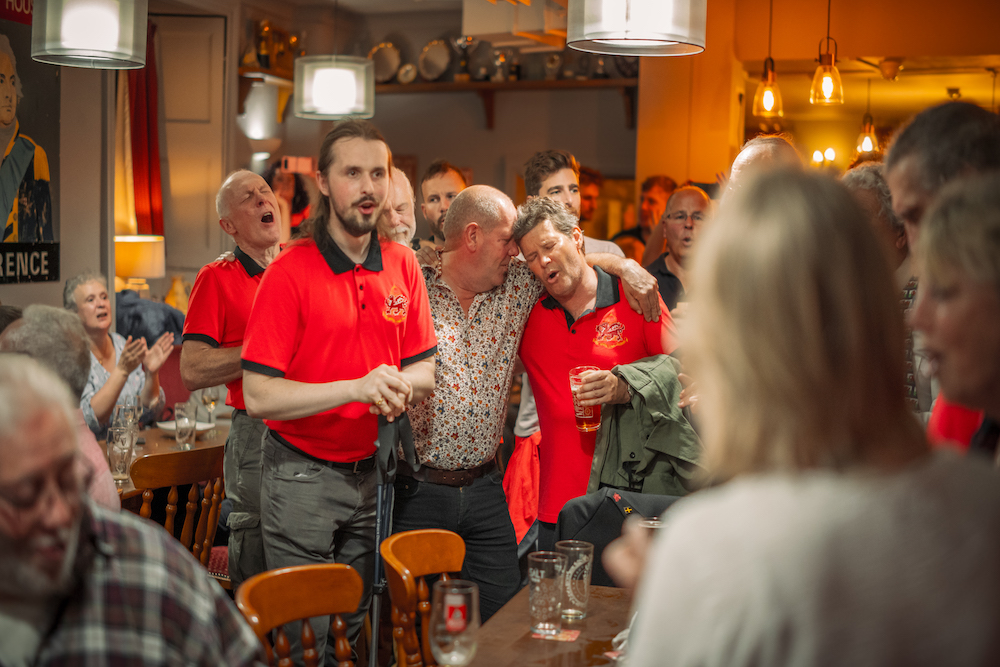
The best choir performances sometimes aren’t where you’d expect them. They happen after the singers have left the stage, thrown their blazers or scarves over the backs of pub chairs, grabbed a pint, and, between the beer mats and the drip trays, started singing again.
“And the singing just lifts you and takes you, and you go on and on and on,” says Trefor Ellis, a regular chorister at the Brecon Choir Festival, which celebrates its fifth edition this year. By night, after performances by world-renowned vocal ensembles, sea shanty crews, gospel scratch choirs and the festival’s mainstay – Welsh male voice and mixed choirs – two of the weekend’s most eagerly anticipated events aren’t held in the grandeur of Brecon Cathedral or Christ College Brecon, but in the town’s Clarence Inn.
These are the afterglows: free, informal gatherings following a performance, where the singing continues long after the more official programme has ended. They’re a little like folk sessions, with people taking turns to sing solo or in small groups, or leading everyone in songs that almost everyone knows.
The word afterglow, a popular title for songs, poems and paintings during the Romantic period, referring to the warm light that lingers in the sky after sunset, was being used metaphorically by the turn of the 20th century to describe post-concert performances full of the warm feelings that remain after an evening spent together.
An 1893 edition of the South Wales Echo refers to “a kind of local afterglow” while describing twilight games after a community gathering. In musical circles, the term came to describe the fellowship that follows a concert: the songs, conversation and companionship that carry the evening on. Similar traditions can also be found in American collegiate glee clubs and barbershop singing, but in Wales the afterglow has become an enduring part of choir culture.
“The afterglow culture in Wales is hard to fully articulate, perhaps because it is so spontaneous,” says Josh Games, co-founder of the Brecon Choir Festival, which he launched with Punch Maughan and Lynette Thomas in 2022 to help revive communal singing after the Covid-19 pandemic, while bringing together a broader range of vocal traditions. Afterglows are “a great leveller”, he says. “People of all backgrounds and starting points are coming together for no reason other than to be together, and to sing passionately. You might be completely new to singing and yet find yourself shoulder to shoulder with a seasoned professional.”
Festival-goers are “never just participants”, he adds – the festival also has a popular free Saturday afternoon choir trail, where the audience walks from Brecon Canal Basin through to its library and courtrooms to enjoy different singers. “Together with our acts, they shape the musical journey of the weekend.”
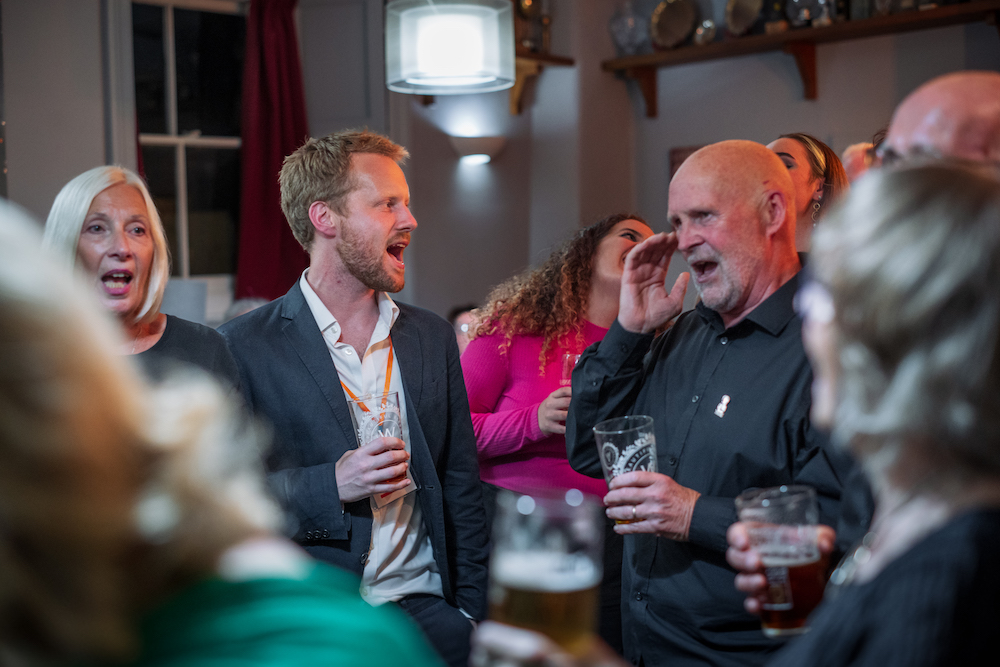
Trefor has experienced afterglows with both male voice and mixed choirs. He first attended the Brecon Choir Festival singing with Eschoir, the London-based Welsh male voice ensemble, and more recently with Borough Choir, for mixed Welsh voices.
“Singing at an afterglow feels like coming home,” he says. “Everyone’s glowing after a concert, everyone’s relaxed, and then a whisper goes round about what might be sung.”
Familiar songs abound – the kind that you may have sung along to yourself at a rugby or football match . Hymns such as Cwm Rhondda and Calon Lân sit comfortably alongside songs like Joseph Parry’s Myfanwy, Max Boyce’s Hymns and Arias, and the setting of Eli Jenkins’ Prayer from Under Milk Wood, sung to Arthur Henry Dyke Troyte’s Troyte’s Chant. Even Elvis Presley’s Can’t Help Falling in Love, gets a look in, which traces its origins to the eighteenth-century French song Plaisir d’Amour.
This year’s afterglows follow Friday night’s Made in Wales concert at Theatr Brycheiniog (featuring Eisteddfod winners Côr Llundain, local favourites Aberhonddu & District Male Choir and Young Singer of the Year 2026, Erin Morgan) and Saturday’s gala concert in Brecon Cathedral (with the internationally acclaimed vocal ensemble The Gesualdo Six, led by Owain Park, the newly appointed Chief Conductor of the BBC Singers) But for many Brecon regulars, those concerts are only the beginning of the evening’s entertainment.
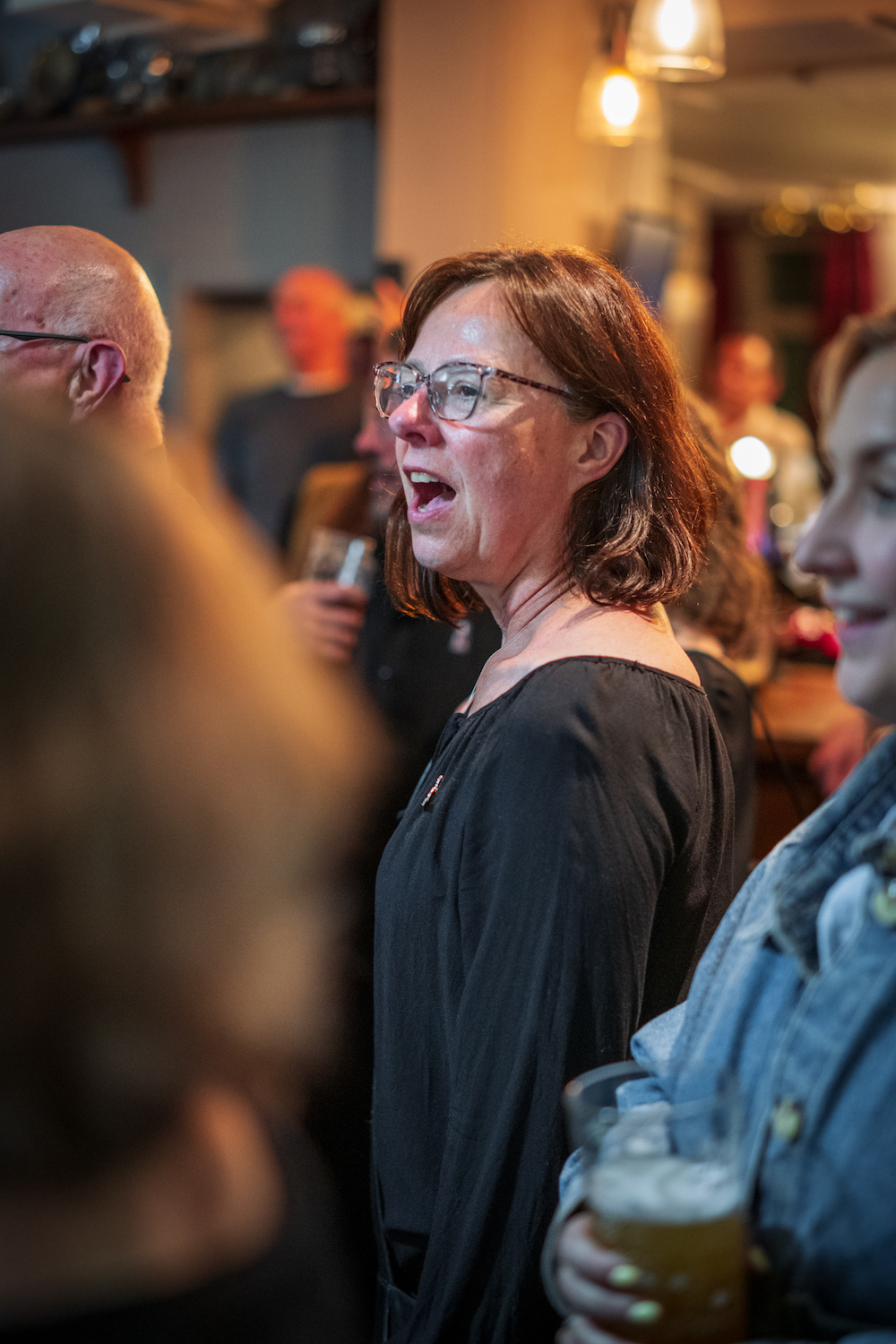
An afterglow can continue well into the small hours, Trefor says. He’s known of touring choirs that deliberately start evening concerts at six so they can finish by half past seven, leaving more time for the singing afterwards “And they don’t have to involve drink,” he says. “Singing gets people as high as a kite by itself. They’re a way of keeping the old Welsh culture alive, and what we’re like when we get together as a family.”
At the afterglow, strangers become friends, audiences become singers, and one voice joins with another until an entire room is carried along in the swell of a song. Like the fading light that gave the afterglow its name, the music continues to linger even after the afterglow is finished, in the heart and the soul.
Brecon Choir Festival runs from 16-19 July. For a full programme and tickets, visit www.breconchoirfestival.co.uk
Jude Rogers is the author of The Sound Of Being Human: How Music Shapes Our Lives
Support our Nation today
For the price of a cup of coffee a month you can help us create an independent, not-for-profit, national news service for the people of Wales, by the people of Wales.
Get more trusted Welsh news
Choose Nation.Cymru as a preferred source in Google News to see more of our journalism.


