


Dancing in the Dark
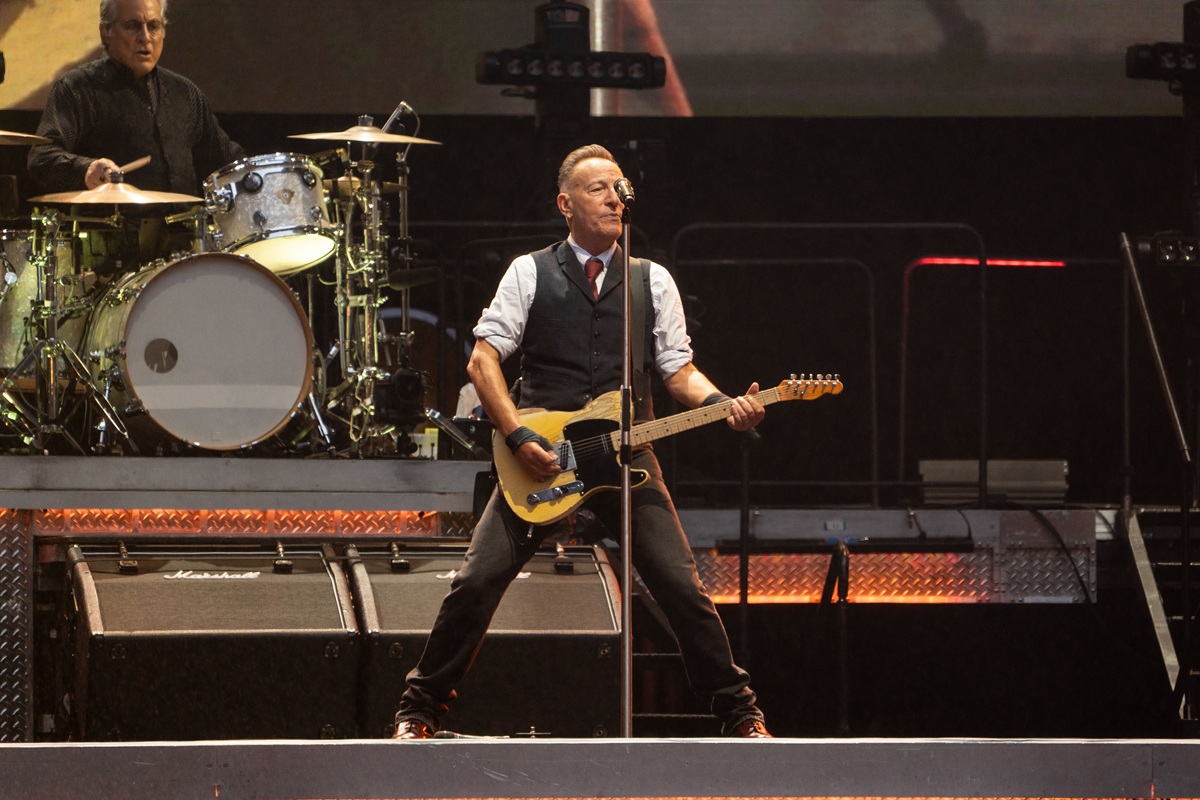
Brennig Davies
I met Bruce when I was eighteen and very sad. Maybe not the perfect conditions in which to meet an older man (or maybe they are, who’s to say?) but it worked for me.
I was in my first year of university, studying English in England, when all I wanted was to be a Welsh boy in Wales again. I felt — like all eighteen-year-old depressives before and after me — like my life was a blank page that, before I’d had a chance to even properly write anything, I’d scribbled over, and all there’d ever be was black marks.
And then one day, wrapped up in blankets at night, unable to sleep, I saw a video in my YouTube recommendations. I’d heard the name Springsteen before, but only in the context of dad rock and denim. But when I clicked on “Dancing in the Dark,” I was rapt. I, too, was getting up in the evening with nothing to say; I, too, wanted to change my clothes, my hair, my face, and felt there might be something happening, somewhere, without me.
But there was Bruce, in his white shirt and tight jeans, swinging his hips with Monica from Friends, singing in his spotlight about dancing in the shadows. He was saying: find the smallest spark you can, and you can make from that a fire. And my little world, ragged up around me, was very suddenly not over before it had begun.
For one thing, I suddenly felt less homesick, because he reminded me of people I know. Few artists are as purely American as Bruce, but when I listen to him, even now, I hear the toughness and black humour of South Wales.
There are three thousand miles and more between New Jersey and the Valleys, but in both there are communities marred by declining industry; cash-only bars; hard-as-nails women. People whose lives may not be glitzy, but who’ll keep going regardless.
This is the main thing I came to love about Bruce, among many things, including: his rough, foghorn voice; all the American iconography, the fast cars and open roads that have always thrilled me; the weave of his storytelling; his attention to the lowly.
What I’ve always loved about Bruce most, maybe, is the effort. There are rock and pop stars who have an ineffable cool about them, an otherworldliness, and then there is Bruce Springsteen. His cool is different, far more ordinary, but with something noble about that ordinariness; a cool that comes from the fact that he’s so obviously working so hard, and he’s not even trying to hide it.
How could he? This is a man whose longest shows extend beyond four hours without an interval. And why would he want to hide the effort? It’s always been, in my eyes at least, what he’s been about: he’s a poet of struggle, whose best songs are full of sweat and grease, blood and fight, managing to be romantic but unsentimental.
There is a hardiness to him that, in my eyes as a depressed teenager, felt way more inspiring than any old-school glamour. In “Tougher than the Rest,” for instance, he tells a lover that he may not be ‘some good lookin’ Joe’ or ‘sweet talkin’ Romeo,’ but in life ‘you get what you can get’ and he can bear any love she’ll give him.
It’s this toughness which is pivotal in Bruce’s songs and his whole ethos, but not in any kind of macho or show-off way — more the kind of toughness that comes from knowing that life is hard, and people are wronged by it, and have lumps carved from them whether they deserve this or not (and they never do, really). At most, you can find someone who may not be a beauty but, hey, is alright, and build an imperfect life with them. But imperfect doesn’t mean lacking.
Bruce carried me through my degree, and much of the rest of my life since, until I finally saw him play live at the Principality Stadium in Cardiff in May 2024. I was no longer eighteen and depressed but twenty-three and unsure of the future. I couldn’t believe that he was standing there before me.
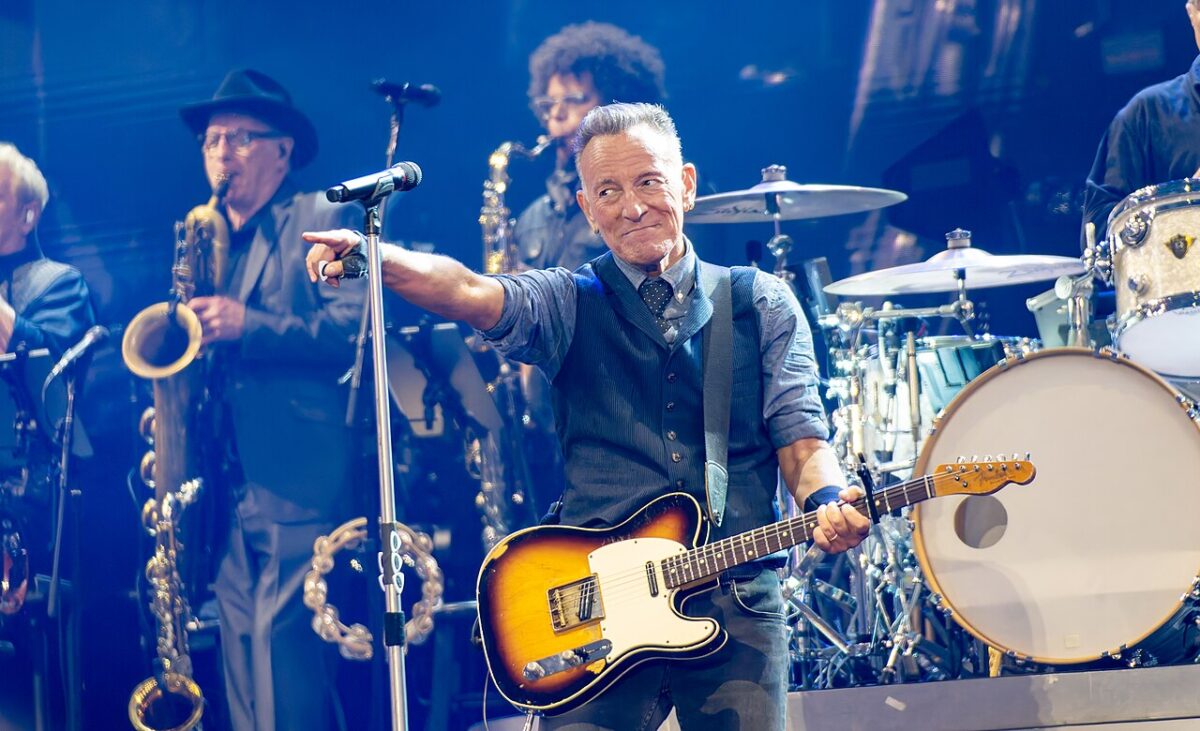
And then I remember he started playing “The River,” which will always be one of my favourites of his, and I became involved, like I always do, in the story of a young man from a small place no one knows or thinks to visit; who falls in love; who slowly feels life close in on him until disappointment sets in like mould. Who is desperate. Who can’t think of a way out. I felt it like a kick to the gut, as I do every time.
Insignificant
But then I looked around the stadium, and suddenly it wasn’t hard to imagine being the character in the song — someone who feels that their life is small, insignificant, maybe even utterly wasted — going to a Springsteen concert and hearing “The River” get played. I imagined that person arriving with a feeling that their life is worth very little, and then hearing the man onstage sing of this life, with a stadium full of people singing it back: a stadium of people with their own small, insignificant, wasted lives, each of whom might feel, at last, like their life is something worth singing about.
I’ve tried to tell you what Bruce means to me here, which has been difficult to summarise, but maybe this will always be why I love him most: seeing him live, I could remember being that version of myself at eighteen who felt, already, like his life was small and wasted.
And I didn’t feel like that anymore, twenty-three in Cardiff; standing next to my mother, watching a man in his seventies dance and holler and give his all. He made me feel — and continues to make me feel — like even if I had a small life, with a lifetime’s worth of struggles, it’d be worth it.
Because he is the Everyman; the rockstar with a folk singer’s love of story, of commonality; the poet of struggle.
And while he’s alive, I think Bruce will always be somewhere, playing his songs of dark blues and raw reds, and there will always be an audience of the hurt and the silly and the fallible, just like me, who’ll be there with him watching, clapping — loving, and singing, and dancing in the dark.
Support our Nation today
For the price of a cup of coffee a month you can help us create an independent, not-for-profit, national news service for the people of Wales, by the people of Wales.
Get more trusted Welsh news
Choose Nation.Cymru as a preferred source in Google News to see more of our journalism.



Rightly called ‘The Boss’, I was driving up the M1 in the mid-eighties and an old feller playing a fiddle came on the radio singing Dancing in the Dark ! Two Powis friends heard it too and one, a local fiddler booked him for the Newtown Folk Festival, he wasn’t old and he came from the North East, similar to the Valleys I guess. His name is Jim Eldon and if you want to hear a raw cover on YouTube…Good read, thanks…