

Edinburgh Fringe – Mr Jones: An Aberfan Story
Elena Gower
On the morning of the 21st of October 1966, the Aberfan disaster occurred, bringing 150,000 tonnes of coal waste down into the village from the hill above.
144 people were killed, 116 of them were children at Pantglas Junior School.
Despite it being one of the worst disasters in Wales’s history, it is curious that the stories of the village people still aren’t widely known.
Playwright and actor Liam Holmes said: ‘There’s not a massive amount of stuff on the Aberfan disaster.
Obviously, there are plays, there are books, there is stuff there, but there’s not a massive amount. And it’s really interesting, as soon as you go outside the valleys, obviously not to generalise, but the majority of the time, a lot of people aren’t really too sure what the Aberfan disaster was. Or, obviously they know it from The Crown and that episode there, and there’s certain bits that people have seen, but not a lot of people know a lot about it. And with the 60th anniversary coming up next year, it just felt like the time was right.
“Our story’s not so much focusing on the disaster itself, but more so the people who were left behind and having to pick up the pieces. And it’s, I suppose, a bit of a love letter to those people, more than anything else, as opposed to, an actual story about the Aberfan disaster.’
Personal story
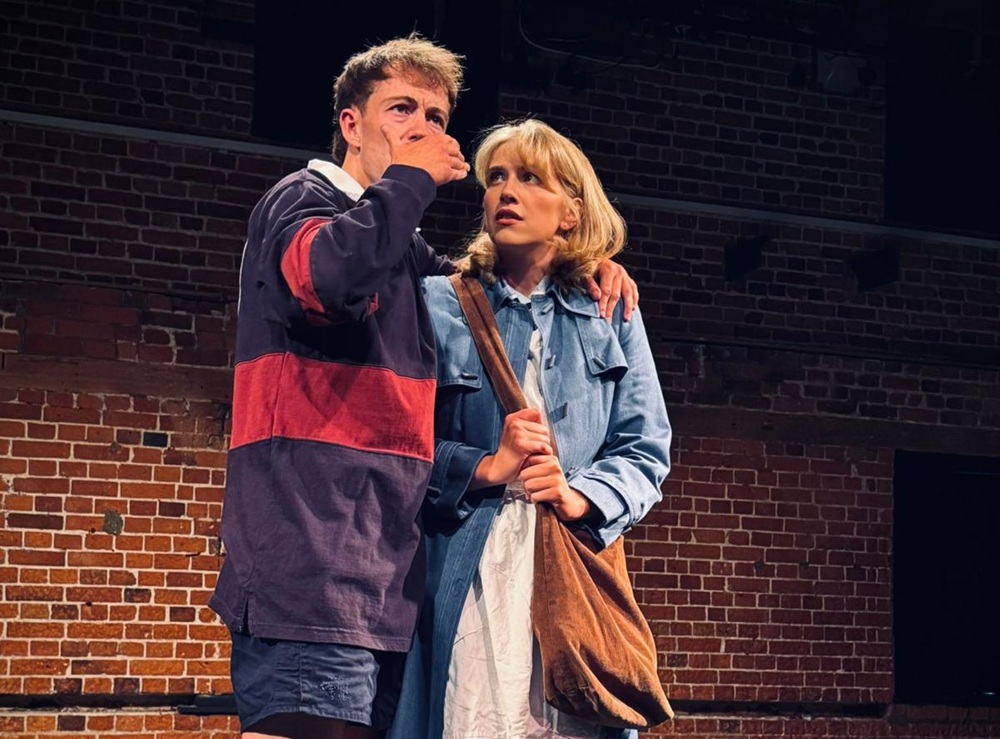
Mr Jones: An Aberfan Story, written by Holmes and directed by Michael Neri, is the fictional story of a young rugby player and nurse, (Liam Holmes and Mabli Gwynne) who experience the disaster first hand, and we see both their shared grief as their newly changed lives unfold.
This is a play written by a young person, about young people’s perspective of the disaster, but it’s equally inspired by, and uses, verbatim stories from the lived experiences of the people in the village.
It’s a personal story to the cast as well.
Mabli Gwynne explained: ‘My Pop, my grandfather, was a volunteer who was helping digging, and I learnt about it through him. And I just think, doing this now, kind of feels very full circle. It’s really lovely to be able to represent him in that way.’
Liam Holmes added: ‘There’s lots of family connections, lots of personal connections. You sort of learn about the Aberfan disaster through hearing word of mouth.
Dialogue
One of the many striking things about this performance is the dialogue. Although the play is centred around a very heavy topic, there is plenty of room to laugh, and experience the characters’ highs as well as their lows. Liam Holmes perfectly captures the essence of small-town Welsh gossip, particularly our own specific way of describing our kin.
My own favourites from the play being: “Jason the bus?” “Yeah, well he’s hardly a coach, is he?” and the running gag throughout, “Colourblind Maggie? With the lisp?” “Yeah, lispy, colourblind Maggie.” These are the sorts of things that can easily be heard in any small town across Wales, particularly the valleys. It’s writing that feels like it was drawn straight from the tables of a community hall bingo night, or Sunday chapel, or indeed, kids gossiping on the playground. The play uses verbatim clips from interviews with the villagers of Aberfan to focus on the very real lives that were changed after the disaster.
Natural
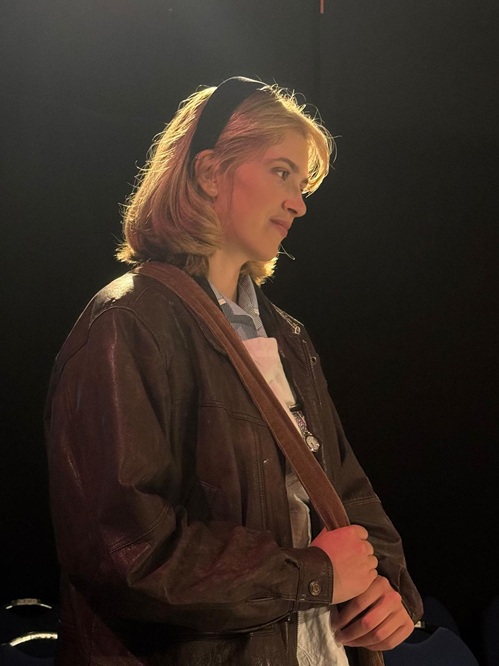
This brilliant writing serves as the perfect foundation for the two lead actors to play to their strengths. Both Mabli Gwynne and Liam Holmes act outstandingly, each with their own lovable quirks. Gwynne as Angharad Price embodies the mature and motherly nurse with poise and sharp wit, whilst maintaining a teenager’s stubborn pride. She plays the character beautifully, remaining calm through scenes of immense stress, and standing her ground within a heated argument.
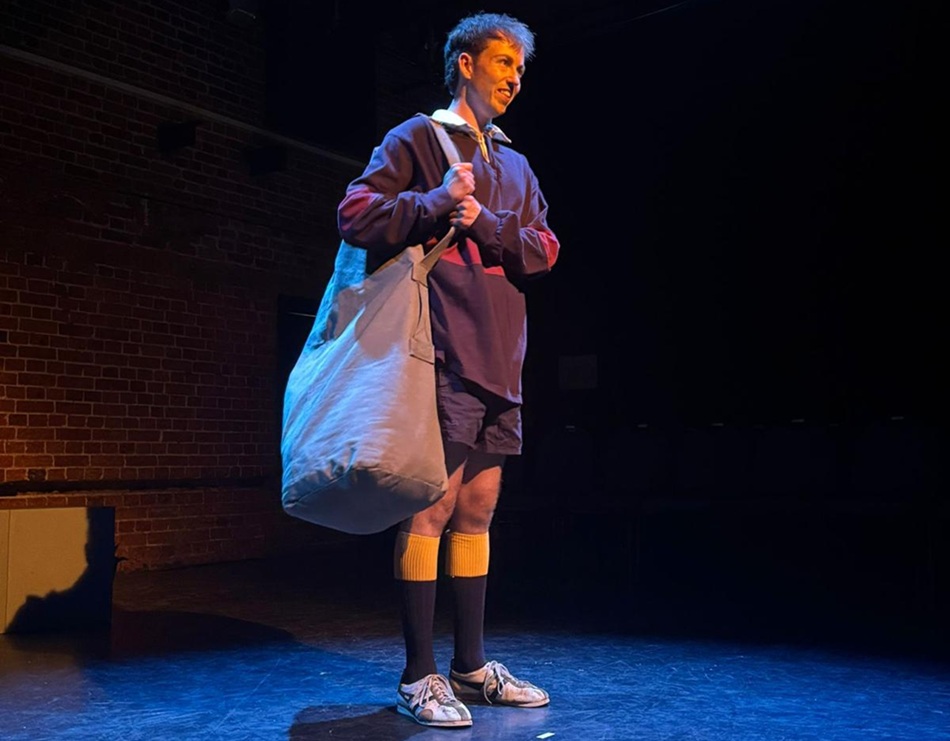
Holmes is equally talented as Steven Jones, with his young and boyish mannerisms, such as wiping his nose on his jersey sleeve, given parallel space as his emotional depth. Even when he’s “playing it cool,” his eyes are glittering with uncertain tears, and he’s swinging from side to side as he’s coming to terms with what has happened. They act incredibly naturally, with genuine on-stage chemistry, and are both an absolute pleasure to watch. We can expect great things from these two great individuals in the future, I’m sure.
Wales at Fringe
This being their first time, not only at the Edinburgh Fringe but in Scotland, Gwynne and Holmes have certainly made an impression. I asked them what their experience has been like so far:
Liam has been thrilled by the response: ‘It’s been fantastic, hasn’t it? It’s exhausting. It’s the most tiring thing we’ve ever done in our lives but it’s so fun, isn’t it?’
Mabli echoed this: ‘We’ve absolutely loved every second of it. First time in Scotland for us both as well. It feels like you’re in Disneyland but for theatre. It’s mental. The amount of different shows going on. We’ve just loved it, and the response has been fab.’
It is so important to hear Welsh voices, particularly surrounding such a pivotal event in our history. Sitting in the audience, you hear voices from all over. Plays such as Mr Jones are deliver such an important piece of history to ears that might not have heard about it.
Liam: ‘The good thing at the moment is the response from everybody who’s got a connection to Wales, or from Wales. It’s been fantastically positive, they seem to really, really enjoy the show, lovely chats afterwards as well. There’s quite a lot of people with connections as well, aren’t there?’
Mabli: ‘So many people have said ‘yeah, I remember it,’ or ‘this is where I was,’ and ‘thank you for telling the story.’ Even, like, flyering wearing our Welsh flags is just part of the experience, it’s so fun.’
My own experience watching the play, was sitting in an intimate space, being drawn in from the get-go, and not being able to restrain my tears. I was consoled by my audience neighbour and given tissues by some lovely ‘gogs’ after the show. Truthfully, I wasn’t sure how I was going to face the actors with mascara tracks down my cheeks. I was blown away by the sheer talent and hard work that was put in to make this play as extraordinary as it was. Simply, extraordinary.
Support our Nation today
For the price of a cup of coffee a month you can help us create an independent, not-for-profit, national news service for the people of Wales, by the people of Wales.



Sounds really good. Hopefully, it will be picked up and staged in Wales?