


Film Review: Madfabulous
Norena Shopland
After writing Forbidden Lives (2017), which featured Henry Paget, the 5th Marquis of Anglesey, I attempted over several years to engage the management at the National Trust’s Plas Newydd to feature their former resident during LGBTQ+ History Month and Pride Month.
I was consistently told that Henry’s sexual diversity/gender identity were all ‘rumours and innuendoes’ and no, they would not be taking part.
A change of management later saw a sea change in attitude, led by Henry being adorned on the front cover of a National Trust magazine. The gatekeepers had let him out.
Now, a biopic by Celyn Jones has been released detailing parts of his life. The Wales premiere took place on 23 April, hosted by the Iris Prize, the first feature film they have promoted and the first outside their annual festival.
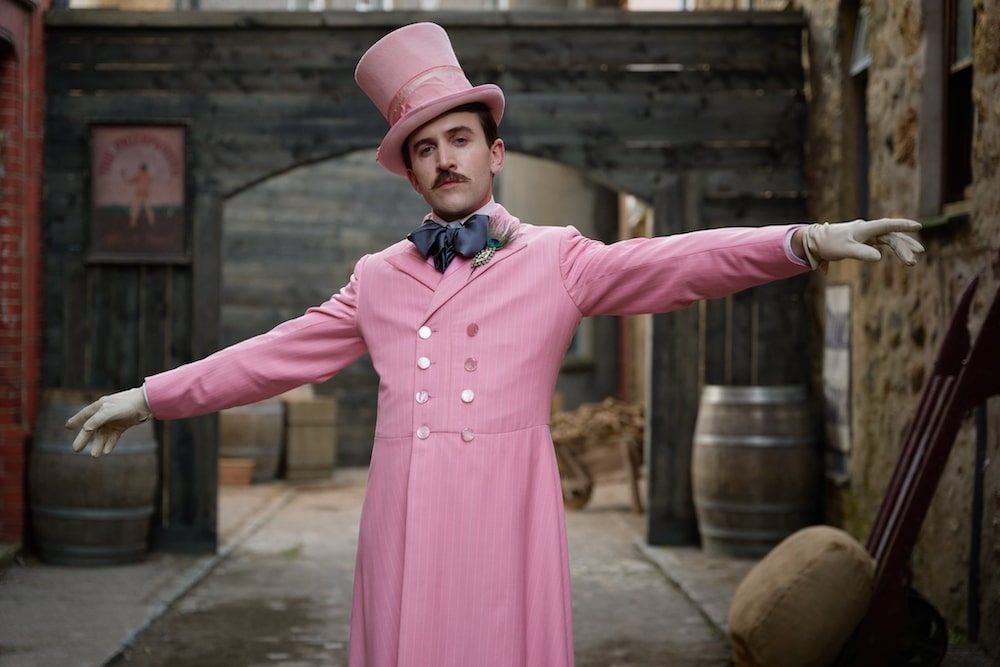
The film explores Henry Paget’s obsession with dressing-up, jewels and theatrical displays while family members circle, trying to save the family’s fortunes.
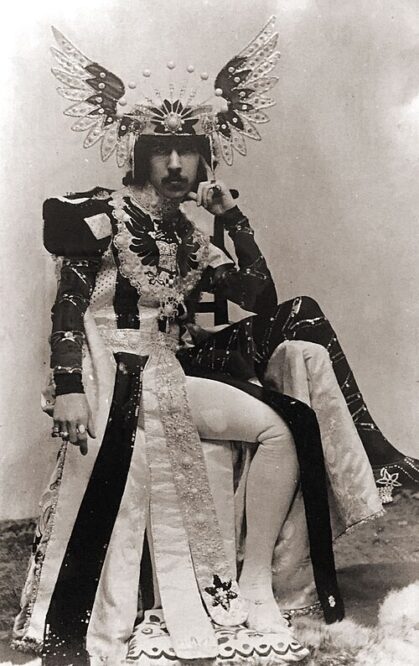
Most documentation was destroyed after Henry’s death, leaving convenient gaps for fictional presentations of the Dancing Marquis — a sobriquet taken from the famous ‘skirt dance’ popularised by American dance pioneer, Loïe Fuller.
The dance is usually spotlit in a dark setting to emphasise the luminous of the costume, but in the film, it loses something by being performed in daylight.
It is delightful to see a Welsh film with a large Welsh cast and crew – filmed in north Wales (set in the real Plas Newydd on Ynys Môn) with the post production done in south Wales.
A pleasing change to all those Welsh stories dominated by the English.
Callum Scott Howells (It’s a Sin) plays Henry with sensitivity and panache, as he whirls and dances through the first half, aided by Ruby Stokes (Bridgerton) as Lily, his wife and co-conspirator (who in real life left Henry shortly after their marriage but did reconnect later in his life).
Rupert Everett as the fictional butler Gelert (yes, named after the dog, to depict loyalty) is the steadying role throughout, the substitute father-figure and the true friend.
Disappointingly, this concentration on frivolity does leave less time for exploration of character and a more robust plot.
In real life Henry was a complex man, while the film version leans on the classic example typified by Philip Larkin’s poem, ‘They f*** you up, your mum and dad,’ with the death by suicide of his beloved mother (played by Siobhán McSweeney in a frustratingly short cameo) and a cold and distant father.
While Howells delivers a fine portrayal of Henry, it needed more nuance and even his breakdown at the death of his father left me rather unmoved.
The real Lord Penrhyn (played by Paul Rhys), who helped in the development of the Welsh slate industry and was indeed a cruel employer, probably never met Henry, but is conscripted in as something of a pantomime villain.
The myriad costumes are stunning; but it is cinematographer Laurie Rose who gives the film its visual depth; the dimness of candle-lit nineteenth century rooms contrasting with daylight filmed in – well, daylight – not an infuriating teal filter in sight.
Rose’s wonderful lighting highlights the contrast of Henry’s descent into despair with the bright outside world.
Madfabulous does effectively capture a life outside the ordinary, the pushing of boundaries in expression.
Regardless of sexuality or gender identity, why can’t someone dress to the nines and dance their way through life? And that, is where the film shines.
Madfabulous is in cinemas in June.
Support our Nation today
For the price of a cup of coffee a month you can help us create an independent, not-for-profit, national news service for the people of Wales, by the people of Wales.
Get more trusted Welsh news
Choose Nation.Cymru as a preferred source in Google News to see more of our journalism.


