


Finding My Voice in a Second Language
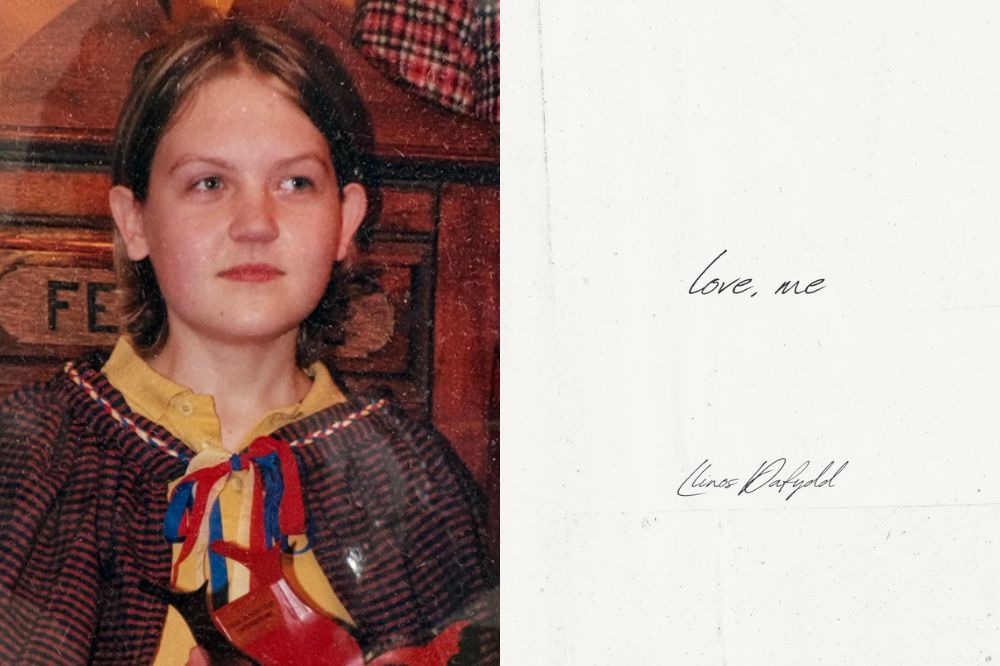
Welsh writer, translator and book editor Llinos Dafydd has released her debut poetry collection — but instead of writing in her first language, Cymraeg, these poems arrived in English.
Her mini e-book, love, me, is a handful of raw, confessional letters and poems — a small but powerful collection exploring trauma, survival, and the quiet, messy act of reclaiming a life after violence.
“These are just a handful of poems,” Llinos says. “Maybe one day they’ll grow into a full collection that feels worthy of a print copy. But for now, this little e-book is enough — it’s honest, and it’s mine.”
“I was raped at fourteen”
For Llinos, love, me is the culmination of years of silence and survival.
“I was raped at fourteen,” she says. “And for years, I didn’t tell anyone. I buried it so deep that I thought maybe, if I never spoke about it, it would stop being true.
“But silence is heavy. It presses down until you can’t breathe. And eventually, that silence started to crack. Writing became the first way I could make sense of what had happened and the only way I could start to unlearn the shame I had carried for so long.”
Those early attempts at writing were private, but they planted a seed.
“I never planned to share any of this. These words lived in the notes app on my phone, hidden away. But at some point, I realised that hiding them was just another way of hiding myself. That’s when love, me started to take shape.”
Why English, not Welsh?
Although her creative and professional life has always been rooted in Welsh, Llinos was surprised to find that these poems demanded to be written in English.
“I’ve always written in Welsh,” she explains. “It’s my first language, my home, my heartbeat. Most of my work as a journalist, translator, and editor is in Cymraeg.
“So when these poems started pouring out of me in English, my second language, it was unexpected. But looking back, I think that distance gave me what I needed to write honestly.
“Welsh is so close, so intimate, that it almost felt too sharp, too exposing. English gave me breathing space — a little distance between me and the words, enough room to actually let them out.”
Letters to every version of me
love, me is structured as a series of letters — to the girl she was at fourteen, to her body, to the silence that protected and suffocated her, and to the woman she has become.
“They’re not polished pieces meant for a critic’s eye,” Llinos says. “They’re honest, sometimes uncomfortably so. Letters to the girl I was. To the body I blamed. To the future me that still dares to hope.
“I wanted it to feel like a quiet companion — like someone sitting with you, not fixing anything, just letting you know you’re not alone.”
One of the most striking poems is a letter “dear body,” which reads:
dear body
i blamed you.
for everything.
for the way he looked at you.
for the way you froze.
for not being stronger,
faster,
louder.
i starved you.
hid you.
cut you.
called you names
i would never use
on anyone else.
but you —
you stayed.
you carried me
through every panic attack,
every school run,
every night
i wanted to disappear.
and now
i see you.
not as broken,
not as dirty,
but as the reason
i am still here.
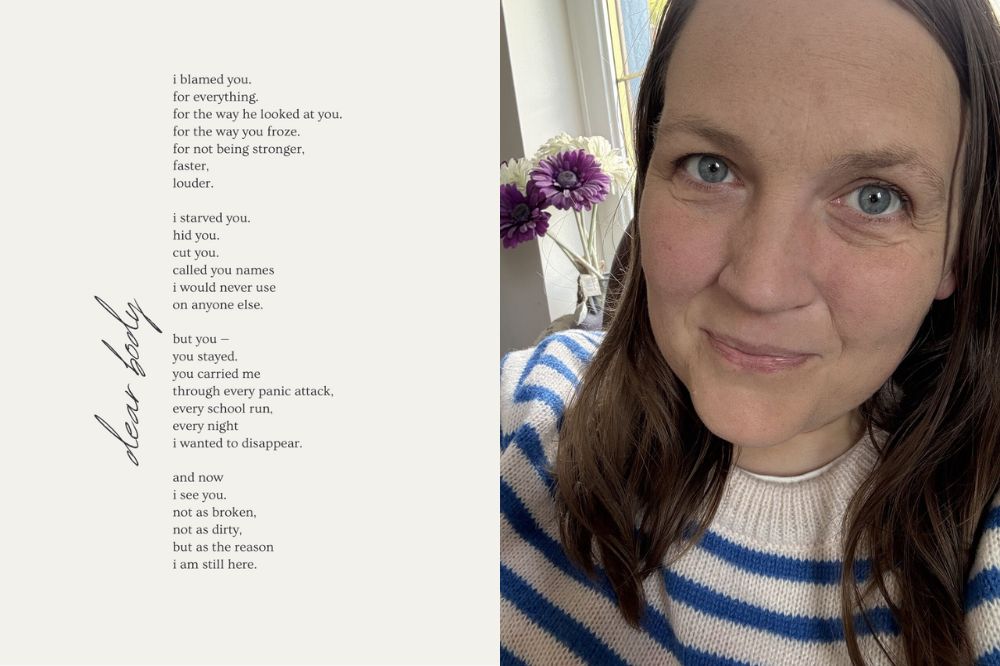
“That one was hard to write,” she admits. “But it was also the most healing. For years, I saw my body as a crime scene. Now, I see her as the thing that carried me through.”
Making it accessible
At just £5, love, me is deliberately priced to be affordable.
“I know what it’s like to need words and not have the money to buy an expensive hardback,” Llinos says. “I wanted love, me to be accessible, because these words — as heavy as they are — aren’t just mine.
“There are so many people out there carrying their own invisible weights. This little e-book is for them too. It’s my way of saying: you’re not alone, even when it feels like you are.”
The power, and cost, of sharing
Releasing the collection into the world hasn’t been easy.
“It’s terrifying,” she admits. “You spend years hiding something, and then suddenly it’s out there, where anyone can see it. But at the same time, it’s been freeing.
“The burden is still there. Trauma doesn’t just disappear. But now it feels seen. And that matters.”
She’s already had messages from readers thanking her for putting into words what they couldn’t.
“That’s the part that makes me glad I did this,” she says. “If even one person feels a little less alone after reading love, me, then that’s enough.”
Living, surviving, becoming
For Llinos, the book is a way to reclaim her own story, and not just about revisiting pain.
“This is my way of saying: I survived. I’m still surviving. And there’s hope in that.
“I don’t think you ever fully ‘move on’ — that’s a myth people tell to make trauma neater than it is. But you do grow around it. You find ways to build a life, even with the cracks.”
love, me is available to downlowd now via Llinos’ Ko-fi page for £5.
Support our Nation today
For the price of a cup of coffee a month you can help us create an independent, not-for-profit, national news service for the people of Wales, by the people of Wales.


