


Historic poem highlights unexpected cultural link between Hungary and Wales
Amelia Jones
A video explaining a lesser-known cultural connection between Hungary and Wales highlights how literature can carry powerful political meaning.
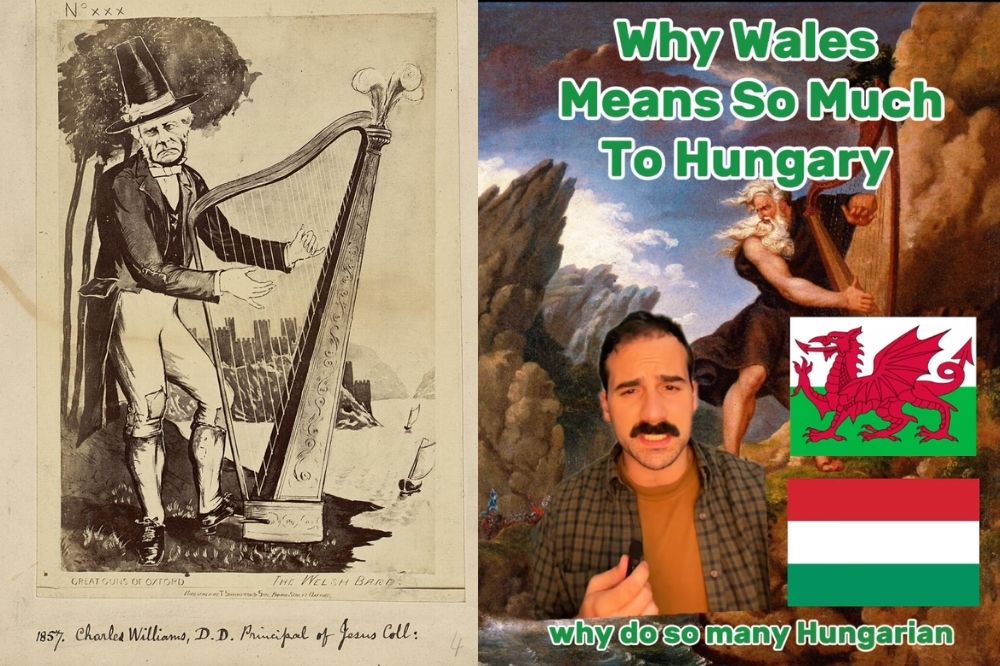
At the centre of this connection is The Welsh Bards, a poem by János Arany, one of Hungary’s most significant literary figures.
Every Hungarian pupil must learn this poem at school. It tells the legendary story of 500 Welsh bards who refused to praise King Edward I during his visit to Montgomery.
The video, created by Turan Explorer, a content creator focused on history, language, and cultural “weirdness” with a particular emphasis on Hungary, explores how this poem became so influential.
The poem recounts the story of King Edward I of England, who, after conquering Wales, demands that Welsh bards sing his praises. When they refuse, they are executed. Although historians believe this event likely never occurred, the story has endured as a powerful legend.
Arany wrote the poem following the failed Hungarian Revolution of 1848, when Hungary came under strict Austrian control. During this time, censorship and political pressure meant that writers were often expected to praise the emperor.
@turan_explorer Wales’s 🏴 surprising artistic inspirstion in Hungary 🇭🇺 #wales #welsh #walestiktok #welshtiktok #welshtok #welshhistory #history #poetry #literature #hungary #cymru #medievalhistory #fyp #foryou #foryoupage
Arany’s analogy criticised the tight control wielded over the Kingdom of Hungary by Baron Alexander von Bach after the defeat of the Hungarian Revolution of 1848 by a military alliance between the Imperial Austrian Army and the Imperial Russian Army.
The ballad was also a covert form of nonviolent resistance to Government censorship and to the many other repressive and widely unpopular policies imposed by the Baron upon the Hungarian people. It was also a harsh denunciation of both the domestic policies of the Monarch and of his planned visit to Budapest.
This was because Emperor Franz Joseph had ascended to the throne during the 1848 revolutions throughout his Empire and had given the military carte blanche to defeat what he saw as both rebels against his crown and as a serious threat to the future survival of both the dynasty and the Roman Catholic Church.
Rather than directly criticising authority, Arany used the Welsh story as an allegory for Hungary’s situation.
The defiant bards symbolised resistance, while the king represented imperial power. To avoid punishment, Arany even claimed the poem was a translation of an older work, though no such original existed.
In the video, Taran says: “Even though Hungary and Wales couldn’t be further apart from one another geographically and have very little in the way of actual relations, this poem about Welsh history has remained an important part of the Hungarian canon. The image of the Welsh Bards is an unlikely but powerful symbol of the Hungarian identity.”
You can view the full video here.
Support our Nation today
For the price of a cup of coffee a month you can help us create an independent, not-for-profit, national news service for the people of Wales, by the people of Wales.
Get more trusted Welsh news
Choose Nation.Cymru as a preferred source in Google News to see more of our journalism.


