


How Wales helped Black Lace singer step out of shadow of ‘Agadoo’

Bethan Tanner
To say that Wales has a connection to music would be an understatement. Music is woven into the history and culture of the Land of Song, from the tradition of choral singing, to the Eisteddfod; to arguably our most famous export, Tom Jones. This influence made its impact on me from the earliest age: we didn’t recite the Lord’s prayer at primary school, we sang it.
When I moved to Sheffield for university, I was struck by the feeling that South Wales and Yorkshire were kindred spirits: both full of towns and cities reimagining themselves in the shadow of 20th-century industrialisation; both regions shaped by a working-class resilience, intertwined with creative energy. With a 2022 study finding that there are now half as many professional creatives from working-class backgrounds in the UK than there were during the 60s and 70s however, it is clear significant inequalities still exist in terms of turning that artistic energy into sustainable careers.
Director Kim Hopkins touches upon some of these themes in her new documentary, Still Pushing Pineapples, a film that will resonate with anyone who has spent time in a Welsh working man’s club or a rundown Blackpool ballroom. The film opens on a dark stage; at its centre, a man dressed as a pineapple. It’s an absurd, oddly melancholic image which acts as the perfect precursor to the sweet, funny, poignant film that follows. The distant voice of a Top of the Pops presenter echoes through the film, “… have you ever wondered who’s in that fruit?”
The man ‘forever trapped’ inside that pineapple is Dene Michael, one of the former lead vocalists of Black Lace, famous for their 80s novelty records, all of which take second billing to their greatest hit Agadoo (“Push pineapple, shake the tree”), (in)famously dubbed “the worst record of all time.”
Now, forty years from the song’s release, Dene finds himself at a perpetual fork in the road: to keep the money coming in from nostalgic club nights where audiences pay to hear him sing the song he’s reported to have sung 45,000 times; or to follow his heart and break free of his legacy, creating a new audience for his own music.
The film is an odyssey of nostalgia; a journey through the sweeping cultural changes that have taken place over four decades, as Dene ferries himself, his 89-year-old mother Anne and his new love Hayley, from once-grand nightclubs in fading seaside towns, to Benidorm, home-away-from-home for many of his life-long fans.
When not on the road, Dene lives a relatively modest existence. A small terraced home in Leeds with splashes of past glamour, most notably the Bentley parked outside. It is a stark reminder of how, for ordinary working-class people, there is no safety net or inheritance to help cushion the fall from stardom. Without that buffer, we see Dene’s constant slog. He tells Hayley he’s got “a little bit of money coming in”: a Christmas lights switch-on; three holiday-season gigs. At one point Hayley tells Dene she’s had no electricity all week. When Dene’s home-made single This Is The Moment fails to chart, it is easy to understand the allure Agadoo still has over him.
Nostalgia is a word synonymous with rosy-hued warmth. For Dene however, it’s a double-edged sword, offering him his livelihood but making re-invention almost impossible. What does it do to a person when you are forced to continually play your greatest hits, with nothing from the last thirty years of your life included? What does it mean to grow older and feel as though you still have so much to give but not the opportunities to give it? When Dene’s manager asks him to shave his beard off before a gig, Dene complies without question, frustrating Hayley who continually encourages him to be himself; to live in the present. A fresh-faced Dene Michael – the one they saw on TV in the ’80s – is what the audience want however. At times it feels as though he has no choice.
It would be understandable that some bitterness might take hold but no matter what hard knocks Dene experiences, he approaches the world with charm, a sense of humour and a warmth that lights up the screen. Supported by the determined Hayley in what becomes a sweet love story, and his gorgeous mum Anne who has an infectiously joyful presence, they become a delightful trio to watch. As much as it may rain, their sunshine shines through.
Still Pushing Pineapples is a film about legacy and shaping your own destiny. It doesn’t shy away from the sometimes harsh realities of Dene’s life but it’s ultimately a hopeful story about resilience and a deep love of music. As much as he lacked control over his career, Dene has still experienced extraordinary highs. Agadoo may be the albatross around his neck, but it turns out, despite the diminishing returns, it is also the safety net that many working-class artists don’t have.
The highs and lows of Dene’s story highlights how vital it is that we continue to create opportunities to support young working-class artists. It is essential, not only to ensure long-lasting careers, but to ensure long-lasting careers on artists’ own terms.
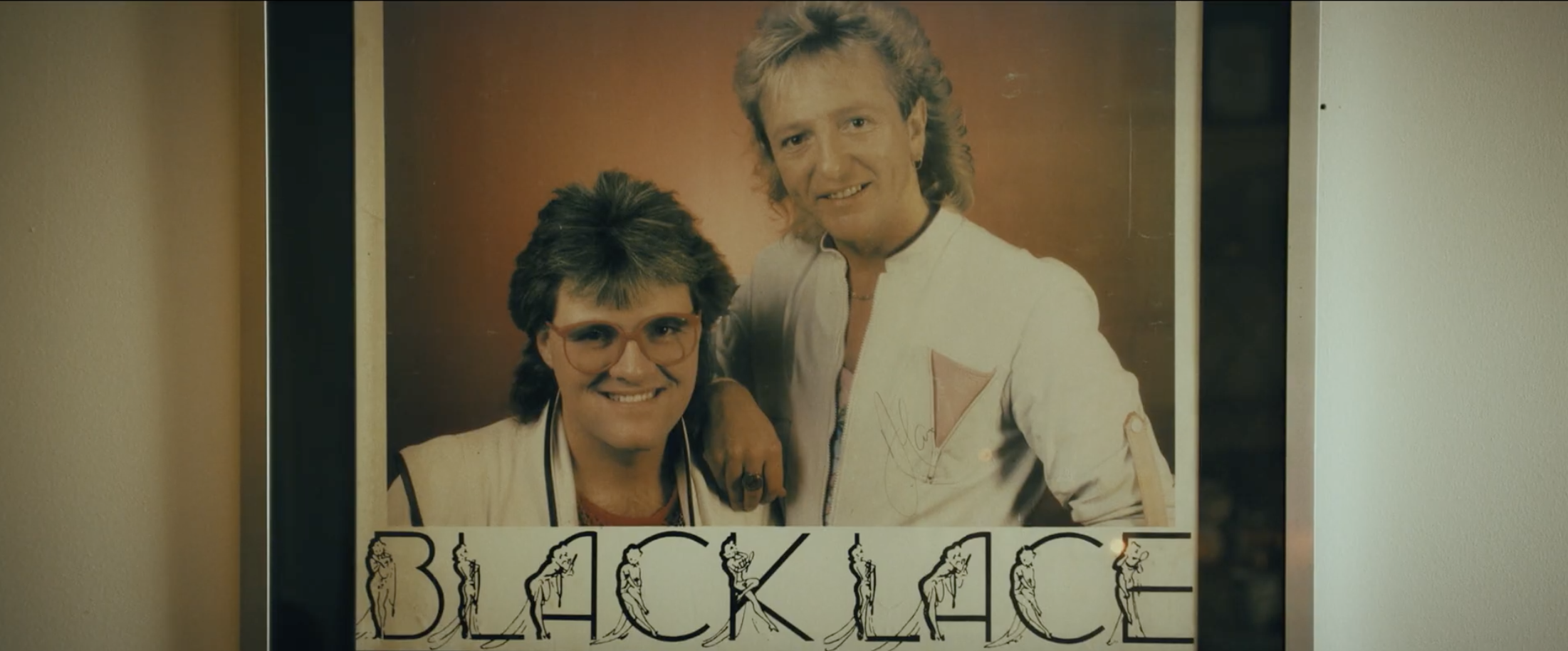
Still Pushing Pineapples is coming to cinemas from November 28. Find out more about the film and where it’s screening HERE
The film received funding from Ffilm Cymru and was co-produced by Welsh producer Nan Davies at One Wave Films.
It will be playing in Chapter Arts Centre, Cardiff from Friday 12 December (with a special Q&A with director Kim Hopkins) until Thursday 18 December. Find out more HERE
This article was commissioned by Film Hub Wales as part of its Made in Wales project, which celebrates films with Welsh connections, thanks to funding from Creative Wales and the National Lottery via the BFI.
Bethan Tanner worked on Still Pushing Pineapples through the Ffilm Cymru Trainee Producer scheme. She currently works as a Production Manager overseeing post-production for commercials, and is developing her own slate of short films.
Support our Nation today
For the price of a cup of coffee a month you can help us create an independent, not-for-profit, national news service for the people of Wales, by the people of Wales.



Genuinely tragic… not his current ‘predicament’, but Black Lace’s career. And as for this fella’s ambitions to be a serious songwriter… don’t make me laugh. I’ve encountered more talented lamp posts.
No-one’s forcing him – least of all me – to sing Agadoo a 45,001st time. He could get a job in a kebab shop or as a security guard and earn a living that way, he just prefers to cling onto the crap-stained shirt-tails of his ‘career’ as a one hit wonder. Desperate.
It’s another cautionary tale about the futility of using pop music to build a career in music. You’ll be on an exploitative contract, singing songs other people have written (and who themselves will have a middle man taking a large cut of their publishing), and then discarded once the trend moves on. It’s a business model designed to enrich middle management at the expense of desperate young people chasing fame. It’s well documented how members of S Club 7 ended up selling brit awards on ebay to pay the bills whilst their management pocketed £50 million plus, and it’s also… Read more »