

Llio Heledd returns with new song inspired by traditional Welsh poetic form
Stephen Price
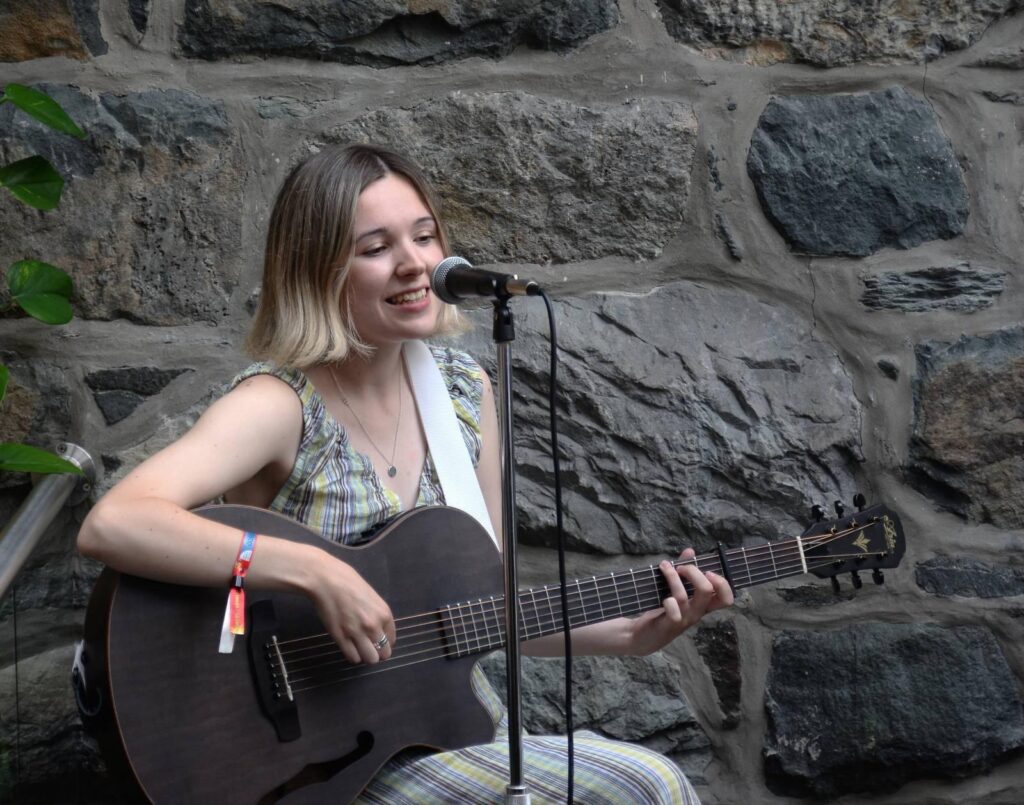
Following the release of her debut single, ‘Afon’, Llio Heledd has returned with her second single, ‘SA1 Abertawe’ — a summery, feel-good song celebrating Swansea and its docks inspired by a traditional Welsh poetic form.
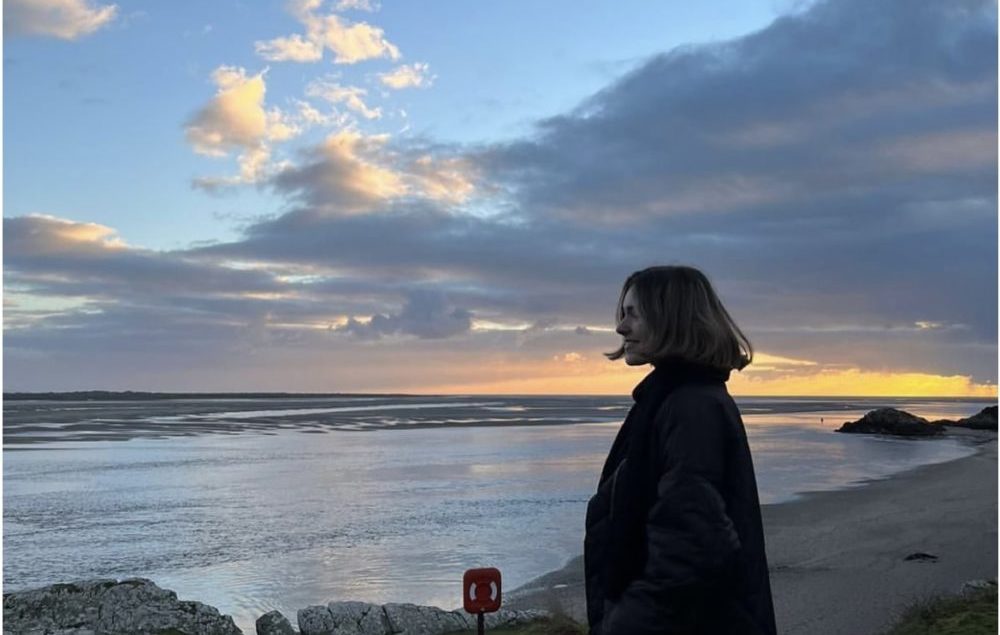
Originally from Morriston, Swansea, Llio Heledd is now based in Cardiff after studying in Aberystwyth and Utrecht.
It was in Cardiff that she began writing songs with guitar and exploring cynghanedd, a traditional and highly intricate form of Welsh poetic composition.
Its influence can be heard throughout her songwriting, including on her debut single, ‘Afon’, which reflected on her experience of growing up Welsh-speaking in Swansea.
‘SA1 Abertawe’ is made up of a series of ‘englynion’, painting a picture of the peace and beauty of Swansea’s Marina and Docks.
Inspired by many Sunday mornings spent with her father, having coffee while watching the boats, seagulls and people leisurely coming and going, the song captures the atmosphere of the area and the feeling that there are few places quite as lovely.
The experience is brought to life through the image of turning her face towards the sun — a simple but unique moment of connection with the place.
With Dylan Thomas an integral part of Swansea’s cultural landscape, the song also features an englyn about the poet, with a reference to his description of Swansea as a: “Dinas bardd yn hardd a hyll”
Llio Heledd’s music has an acoustic, folk-inspired sound, bringing together traditional Welsh poetry and contemporary folk songwriting. She recently performed at Sesiwn Fawr Dolgellau, as well as at venues across Cardiff, including The Canopi and Paradise Gardens.
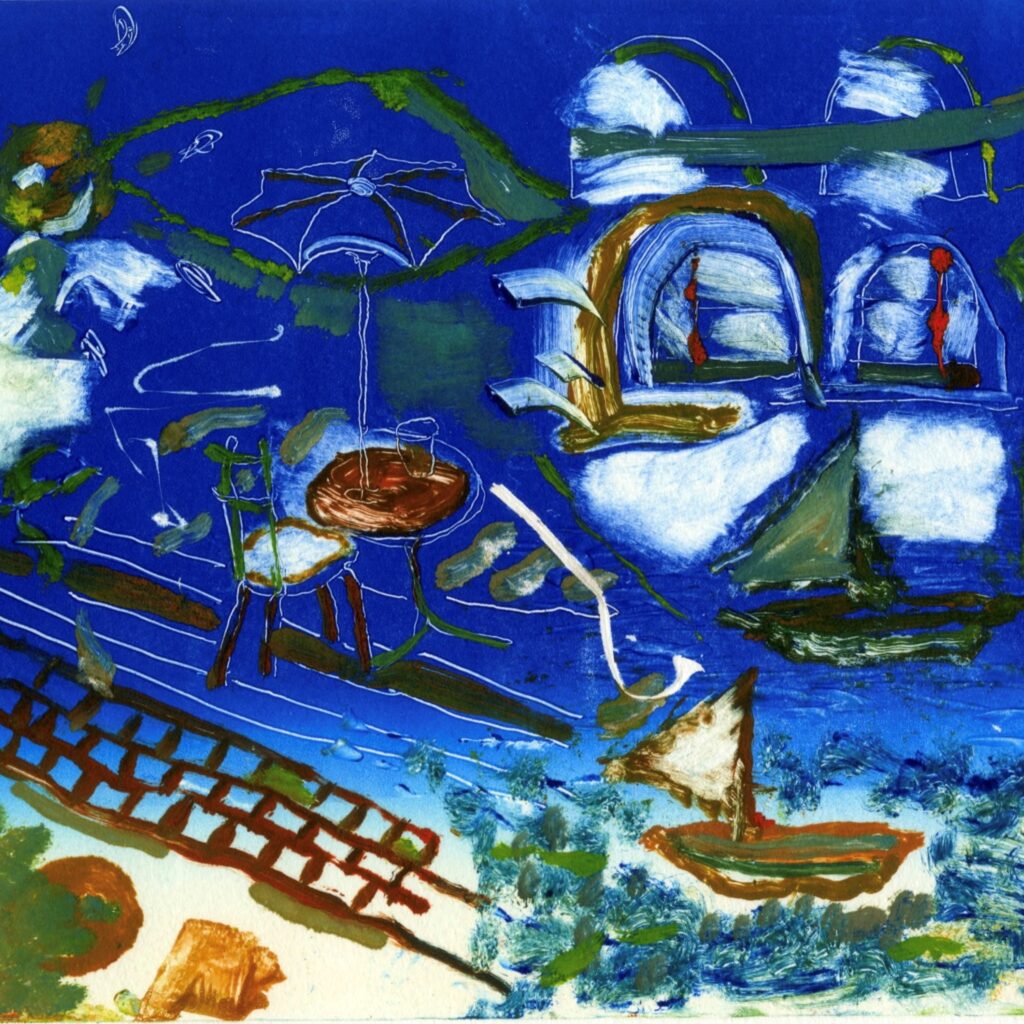
The striking cover artwork for the single was created by Esyllt Lewis, an artist from the Swansea area. There is also much excitement surrounding the release of Llio Heledd’s first music video, created by animator Lleucu Non, which will be released soon.
With ‘SA1 Abertawe’, Llio Heledd continues to explore the relationship between poetry, music and place, bringing traditional Welsh forms to a new audience through contemporary Welsh folk songwriting.
After her studies at both Aberystwyth and Utrecht universities, she made the move to Cardiff and began song writing and writing poetry in her spare time, making use of the Welsh form of Cynghanedd in her original works.
Cynghanedd
In Welsh-language poetry, cynghanedd (which literally translates as “harmony”) is the basic concept of sound-arrangement within one line, using stress, alliteration and rhyme.
The various forms of cynghanedd show up in the definitions of all formal Welsh verse forms, such as the awdl and cerdd dafod.
Though of ancient origin, cynghanedd and variations of it are still used today by many Welsh-language poets, such as Llio.
A number of poets have experimented with using cynghanedd in English-language verse, for instance Gerard Manley Hopkins. Some of Dylan Thomas’s work is also influenced by cynghanedd
Lucky
Llio was previously in a small Welsh folk band, called Beca Band and since university has rediscovered her love for folk guitar-playing and song-writing through the Welsh language.
Cynghanedd is a difficult form to master – how did you become interested in it?
“I was very fortunate that my grandfather composed poetry through the form of Welsh cynghanedd, and the musical quality of the form appealed to me.
“This was passed on to my Father who passed the enjoyment of Cynghanedd on to me.
“I am definitely still learning and feel lucky that I am able to learn from my Dad and my grandfather about a type of poetry that is very special to Cymru.”
What does it mean to you to be singing in your native language?
“I would say that it was never a conscious decision that I made as it was natural for me to sing in my mother tongue, and in the language that I feel that best able to express myself.
“For me it’s important to be understood by other Welsh speakers while celebrating the Welsh langauge music scene and culture.
“I was raised in a Welsh speaking household and my first language is Cymraeg.”
It’s early days for Llio, but with her gentle and soothing voice and her natural talent, you can expect to hear a lot more from her in the future.
Follow Llio on Instagram.
Listen to SA1 Abertawe on Spotify and all streaming platforms.
Support our Nation today
For the price of a cup of coffee a month you can help us create an independent, not-for-profit, national news service for the people of Wales, by the people of Wales.
Get more trusted Welsh news
Choose Nation.Cymru as a preferred source in Google News to see more of our journalism.


