

New Wales / Trinidad pirate opera returns after sell-out performance
Stephen Price
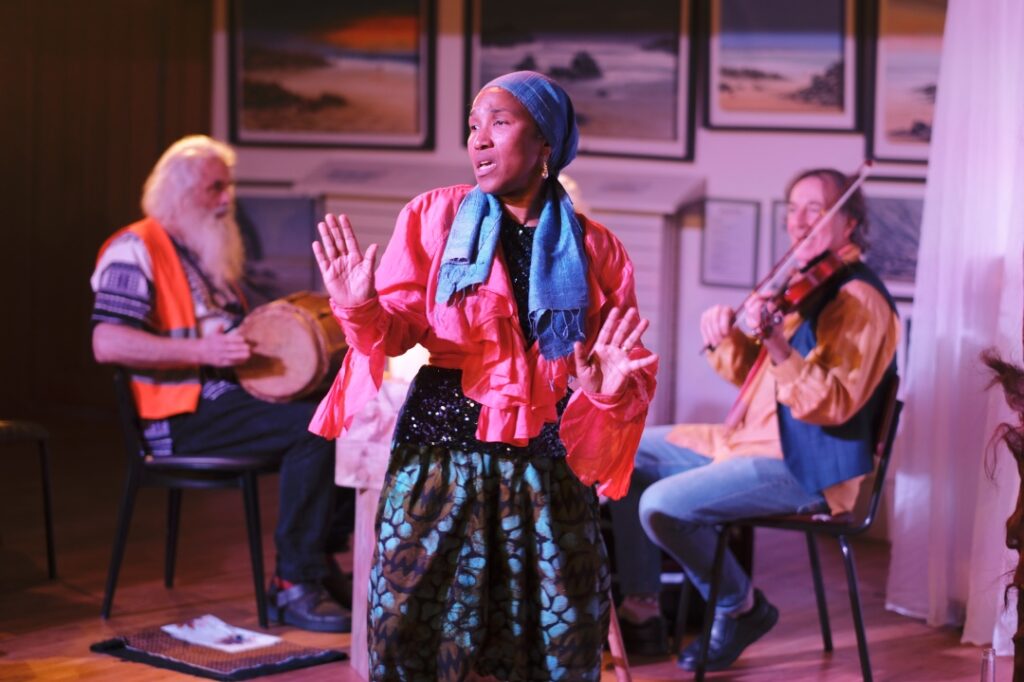
It’s a serious attempt to break every stereotype about opera – and it’s happening in Wales. The creators met whilst building a carnival, the audience are arriving dressed as pirates, it touches on slavery and a British reticence to explore the legacy of the past, it tells a funny pirate story mixing European classical song with Trinidadian songs performed by a calypso band, and it’s bringing accessible sparkling opera traditions to communities in local halls.
“We made this piece of international carnival-inspired music theatre and then just performed it at a hall down the road – we had no idea if anyone would come, whether it would work, or if they’d like it, and amazingly tickets sold-out!” says cultural entrepreneur Richard Parry, who has pulled out of the hat this new calypso/classical opera called An Act of Piracy. His team of musical pirates are now offering the show to theatre audiences across Wales. “It turns out people love it, and it’s now giving new insights into Welsh life, both here and in the Caribbean. We’re delighted that it’s exciting people and we’d love to tour it through Wales.”
Last week the cast played the piece at London’s Conway Hall, and on 6 February it will return to Penarth Pier Pavilion, home of the sell-out first performance. “The reaction to the show has been terrific,” says Mary-Anne Roberts, who sings Trinidadian chants and songs in the opera. “People are amazed to find that Wales and Trinidad have a shared history They love the juxtapositions of Trinidadian calypso and classical European operatic traditions. It’s a show of great contrasts and deep poignancy.”
The show set out to highlight Welsh participation in the colonising of Trinidad. The carnival style of the show is accessible, and the story reflects terrible crimes of the past while celebrating Trinidad’s folk music culture. “Horrible things can happen in beautiful places,” says Mary-Anne, who was born and raised in Trinidad, only discovering her surname was Welsh when she visited Wales. “From 1498 Trinidad was a Spanish colony. Towards the end of the 18th century it was populated mainly by a French plantocracy and their enslaved workers. After the British invasion of 1797, Governor Picton increased what constituted crimes, and intensified brutal punishments. The worst of this was experienced by an enslaved African workforce who were viewed as fair sport and disposable.”
Thomas Picton, who’d been born in Pembrokeshire, grew the island’s slave-based economy, and this included investment and development by Welsh settlers. Places in Trinidad today carry Welsh names and the islands’ accent is often said to be influenced by Wesh accents of colonial settlers. When slavery was finally abolished poor people from every part of the British Empire were coerced to Trinidad as indentured labourers.
“Amid all this economic and social brutality”, reflects Mary-Anne, “people in Trinidad have continued to take our shared humanity seriously – the importance of celebrating life, friendship and community is rooted in the wisdoms of Trinidad’s shared cultures. Perhaps our new calypso opera will open fresh conversations between Wales and Trinidad.”
Her co-creator Richard Parry has spent a lifetime creating theatre and classical music events, with a certainty that theatre and music can be a strong influence in shaping wider human culture. “We’re telling a vitally important story in song – in this unique way,” says Richard. “There is such power in sung stories, and we all know that our classical opera tradition has been a cultural powerhouse. In this carnival piece we ask how the traditional European powers of voice, story and economy relate to the stories and music of Trinidad.”
Mary-Anne and Richard were born at the same time, her in Trinidad and him in Britain. They’ve both spent their lives in theatre, but Richard’s classical European tradition has taken him to opera houses, international arenas, embassies, recital halls and music festivals. In Trinidad, taking singing really seriously has traditionally involved investment in the musical life of calypso songs. The calypso forms have dominated much of the musical culture of modern Trinidad, and Mary-Anne grew up with Calypso in a tradition that is part of the way of navigating life on the island.
“The power dynamics of our two traditions of song are very different,” says Richard, who frequently reflects on the cultural advantages and opportunities afforded classical artists and creators in European culture. “There is a lack of serious platform, interrogation and celebration in Britain for other sung traditions from around the world. In our opera a black woman and white man perform side by side, singing songs from different worlds. We want to raise questions about the dynamics and future of song and classical music theatre.”
Professional theatrical and operatic ventures usually demand weeks of rehearsal but lack of funds meant that An Act of Piracy was assembled amid just a handful of meetings and practice time. Mary-Anne explains that long rehearsals were a luxury unavailable to them when putting the show together. “Richard had a script and a clear idea of the shape of the piece, so we just rehearsed everybody in front rooms, an odd afternoon in a local arts centre, meeting up when we could, and trying to piece the whole thing together like a jigsaw. It is just how carnivals are made. Lots of conversations, informal planning, thinking through things over a cup of tea, gradually building, until you come to the excitement of putting it together and the day of the celebration. This is exactly what we did. We’d both built carnivals before – and making this show was like that. It is truly a carnival opera.”
Enthusiastic audience reaction to the show and calls that followed for further performances have come as a relief for the creative team. “It obviously works, and people want to see more,” says Richard, “but it’s not finished yet. Although this is a tight, energetic, funny and moving show we were always clear that it is a work in progress – we’re making changes all the time, and the opera will grow and develop. At the moment it tells the story of a Welsh farmer kidnapped by pirates at the end of the 18th century and taken to Trinidad. The warmth of the Trinidadian music and culture is wonderful, but people want to know even more about the history of Trinidad and we’ll gradually tell even more of that story. If the show can tour Wales, then that narrative will become larger.”
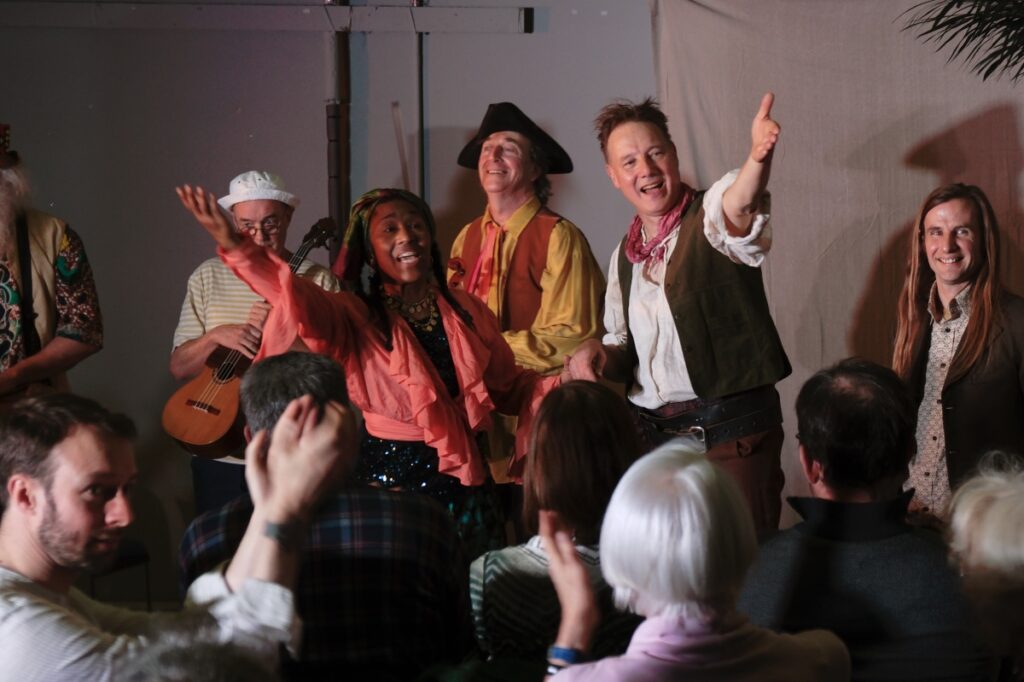
The piece is already attracting collaborators. Audiences are invited to dress in carnival spirit for a pirate opera party, and guest musicians have been joining the first performances to play for audiences before and after the piece, and in the interval. At London’s Conway Hall last week players from West London’s carnival drumming group Dance Carib took part in the show. “We’ve been collecting artists and musicians who are delighted to contribute to the performance,” explains Mary-Anne. “Carnival drummers from London already have long and lovely connections to carnival in Wales. It was so good to work with them, and they now want to join us again in Wales, and in this way the carnival opera is growing!”
In 2021 Mary-Anne was part of the Laku Neg collective of artists who created the Re-framing Picton installation in Amgueddfa Cymru, Wales’s national museum. Although convicted, Thomas Picton was never sentenced for the torturing of a British Citizen, Luisa Calderón, during his governorship of Trinidad. He is known to have tortured and killed many others, yet has been celebrated in Welsh culture with monuments and statues, and having schools, roads and pubs named after him. The Re-framing Picton project began a public process of reflecting on Welsh international history and the new An Act of Piracy opera continues that reflection and exploration.
The carnival spirit is in the blood of the creators of An Act of Piracy. Richard and Mary-Anne met in 2018 whilst building the carnival that opened Eisteddfod Genedlaethol in Cardiff. “We carefully drew together community to make Carnifal y Môr on the steps of the Senedd and Butetown’s carnival celebration took the Eisteddfod by storm,” reflects Richard. “The Eisteddfod told us that, in living memory, there had never been a lifted atmosphere like that on the Maes . That’s no surprise, because there is great joy and profound humanity in carnival. We want to help Wales re-connect with that joy.”
‘An Act of Piracy’ will be performed next on 6 February at Penarth Pier Pavilion at 7.30pm. Pirate party begins a 7.00pm.
Further information: https://www.actofpiracyopera.org/
Support our Nation today
For the price of a cup of coffee a month you can help us create an independent, not-for-profit, national news service for the people of Wales, by the people of Wales.


