

Newly unearthed Roman villa described as ‘Port Talbot’s Pompeii’
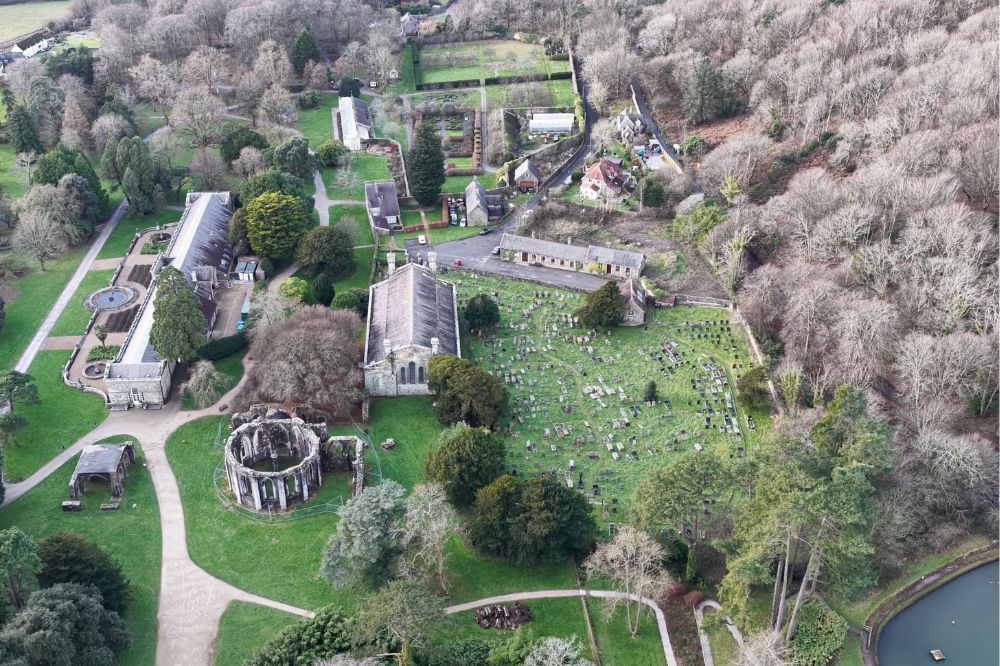
Experts have uncovered a unique slice of history, a villa described as ‘Port Talbot’s Pompeii, which they say offers unparalleled information about Wales’ national story.
ArchaeoMargam, a collaborative project between Swansea University’s Centre for Heritage Research and Training (CHART), Neath Port Talbot Council and Margam Abbey Church, believes the find in Margam is of profound importance.
Funded by Neath Port Talbot Council’s Heritage, Culture, Tourism and Events strand of UK Government’s Shared Prosperity Fund, the project has brought together communities, pupils, students, volunteers and SMEs from across the region.
The ambition was to shine a light on the pre-industrial heritage of Margam and the team struck gold when geophysical surveys conducted by Llandough-based Terradat revealed the footprint of a Roman villa complex of a scale and level of preservation unmatched across the region.
Project lead Dr Alex Langlands, Associate Professor and Co-Director of CHART said: “This is an amazing discovery. We always thought that we’d find something dating to the Romano-British period, but we never dreamed it would be so clearly articulated and with so much potential in terms of what it can tell us about the elusive first millennium AD here in South Wales.
“Margam is famous for its nationally significant monuments and for having evidence of Bronze Age, Iron Age, Medieval and Post-Medieval heritage. But we knew practically nothing about what was going on in the Romano-British period. This is the missing piece of the puzzle.
“It is too early to speculate about the date range of the building, its architectural features, who constructed it, and how it fell out of use. But from the geophysical survey alone we can start to build hypotheses about how important this site could be and what it can tell us about Margam’s long-term role in the social, cultural, and economic developments across the first millennium in Wales.”
Cllr Cen Phillips, Neath Port Talbot Council Cabinet Member for Nature, Tourism and Wellbeing said: “Heritage is a key asset for Neath Port Talbot and this spectacular find underlines why we as a council set up our Heritage, Culture, Tourism and Events Fund using SPF funding from the UK Government. Our Heritage strategy recognises its power to connect our communities, celebrate our shared identity, and inspire future generations. By valuing and protecting this heritage, we strengthen local pride, attract visitors, and create opportunities for learning and growth. I am extremely excited to find out more from this untold chapter in Margam Park’s long story.”
Professor Helen Griffiths, Pro-Vice-Chancellor for Research and Innovation at Swansea University, said: “We are delighted that our long-standing partnership with NPTC is delivering tangible cultural benefits to the communities we serve.
“ArchaeoMargam tightens our support of skills enhancement and social cohesion for stronger and more resilient places. We are delighted to work with community partners and give them a meaningful voice in the co-creation of the groundbreaking research done at Swansea University.”
Terradat Technical Director Christian Bird said: “The surveys went exceptionally well, and the high-resolution magnetometry and GPR data are remarkably clear, identifying and mapping in 3D the villa structure, surrounding ditches and wider layout of the site.”
The villa sits within a circa. 43 m x 55 m defended enclosure, perhaps a remnant of an earlier Iron Age defended settlement or reflecting instability in the late-Roman world and the need to defend against external aggression from both east and west. There is also a substantial aisled building to the south east, either a large agricultural storage building or a structure related to the later history of the site, possibly a meeting hall for post-Roman leaders and their followers.
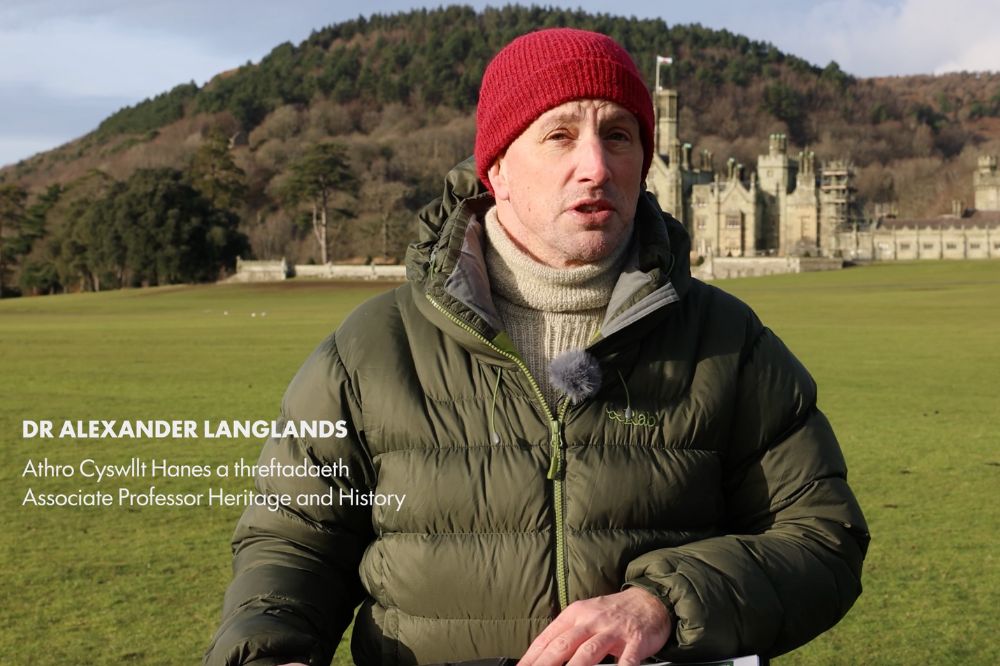
Dr Langlands added: “One thing can be concluded, Margam, a place that may even have lent its name to the historic region of Glamorgan, is one of the most important centres of power in Wales, with its geographical location placing it firmly at the gateway between the rugged upland terrain of western Wales and the fertile Vale to the east.”
ArchaeoMargam has also undertaken archaeological excavations in land to the west of the Abbey Church delivering more than 900 person engagements with local school pupils, the Young Archaeologist Club, volunteers, and students from Neath Port Talbot Group of Colleges and Swansea University.
NPT Council Education Officer and Young Archaeologist Club leader Harriet Eaton, said: “This opportunity turned history into a real-life adventure for our members, allowing them to gain practical experience beyond the classroom and making archaeology both tangible and fun.”
Beverley Gulley, church warden and long-time supporter of Margam Abbey Church added: “As the only nave of a Cistercian Abbey to survive the Dissolution and still be in use as a church today, Margam Abbey Church is a monument of unique importance to the region. This is a deeply spiritual landscape and one that we are keen to know more about in partnership with people from across the region.”
The findings of the ArchaeoMargam project – including detailed updates on the Roman villa – will be shared more widely at a free open day at Margam Abbey Church on Saturday, January 17. You can book your place here.
Learn more about the School of Culture & Communication
Support our Nation today
For the price of a cup of coffee a month you can help us create an independent, not-for-profit, national news service for the people of Wales, by the people of Wales.



I’m pleased they found it but it’s entirely unsurprising. The area is lousy with Roman and British archaeology. The Via Julia Maritima goes RIGHT past it. Mynydd Baedan behind it is covered in both Roman and British siege earthworks and camps. At the top of Mynydd Margam, walking past the Earthworks is a fortified camp called Y Bwlwarcau. About a five minute drive away under the dunes, in the same place as Cynffig Castle, is the buried town of Cynffig (Engulfed by the sands following the tidal surge of … I cant remember, 1600?) , which itself was found to… Read more »
Always interesting to learn more about the highly advanced lives of ordinary Britons in partnership with their continental friends before the Barbarians came and abolished it all.
😀 I’m not sure I’d call the Claudian invasion and occupation a partnership, but your point is VERY well made and taken
Referring to it as a partnership is kind of like Referring to the brits committing genocide against the Irish as “the troubles”. 🤣🤣
Free from London’s control Ireland became the second richest country in the world. Free from Rome’s control, Britain was plunged into five centuries of the dark ages from which it never really recovered.
Let’s hope that any artefacts found stay in Port Talbot and won’t start winging their way to England’s “British” Museum as usual.
Well in Wales at least. The Margam stones museum opens for like 1 hour every week or so when they can be bothered. I’ve STILL not been able to see the original Bodvoc’s stone. The closest museum worthy of the name currently is in Cardiff or Swansea