
On Being a Writer in Wales: Helen Pendry
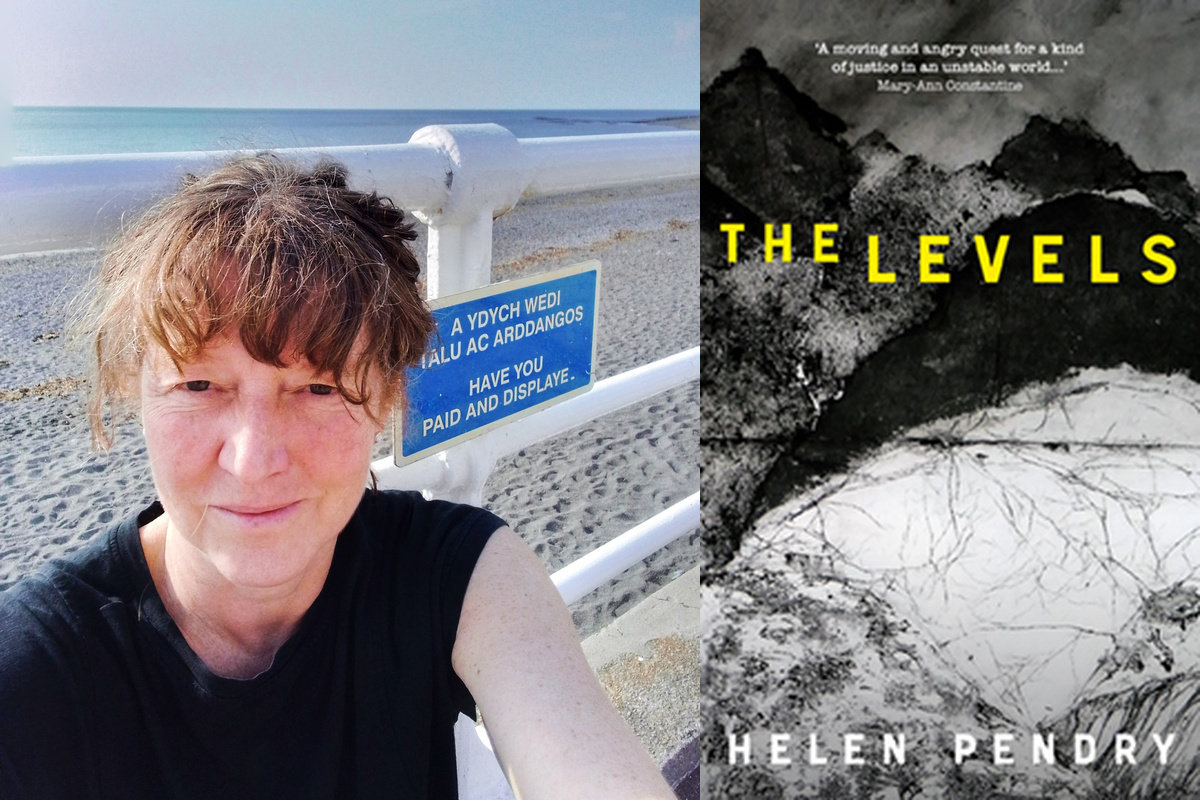
Helen Pendry
It’s a stormy November night in the Cynon Valley, 1929. Rain sweeps down in sheets from a black sky, and waterfalls cascade from the mountains. The residents of Henry Street are peering out of upstairs windows at the old Taff Yard, which has become ‘a troubled sea’.
Downstairs, furniture floats on water that has lifted linoleum and is lapping at the windowsills. One man saves his piano by raising it onto a table (‘with help’, adds the Aberdare Leader’s Mountain Ash correspondent).
A week later, there’s more rain and more flooding. In Abercwmboi, the water runs down the mountainside like a river, pouring in through the back doors of Bronallt Terrace and out through the front doors. At Pwllhelig Farm, Ynysbwl, a cow is washed from the yard and drowned. Underground, pit ponies have to be waded from their stables to a safer place.
‘Sir,’ writes my great-grandfather William George Kingdom (WGK) to the editor of the Aberdare Leader. ‘Such an amount of suffering and loss as some people have endured during the recent floods can be expected to make people think.’
Unfortunately, he continues, that thinking, unlike the flood water that provoked it, has been shallow, going no deeper than the phrase ‘it was an act of God’.
‘In attempting to show the foolishness of this saying,’ writes WGK, ‘I bear in mind that it is a phrase used in legal quarters as meaning “something has been done for which man is not to blame, so no liability rests on any authority in respect of damage done or loss sustained”.’
WGK is an unemployed miner and a lay preacher. He left school at the age of 12. He has things to say, despite the fact that most people with any authority think Strand Street, where he lives with Ellen and their six children, ‘cannot produce anything but slaves’ (WGK, Aberdare Leader, 19 April 1930).
(Joseph Keating, in his wonderful memoir My Struggle for Life, which is mostly about his struggle to be a writer, reckoned Strand Street was home to renowned poachers in his childhood in the 1870s – men ‘who would not hesitate to shoot any gamekeeper who interfered with them. The Strand appealed to our imagination and we admired it.’)
At a post-flood meeting of the Mountain Ash District Council, Keating (now a councillor) stands up to say that the colliery and railway companies had ‘twisted the river about with nowhere to go [laughter]’, and it is they who should pay for the work needed to prevent future flooding. In his childhood, he says, ‘trout had lurked in crystal pools’, but they’d ‘vanished like a dream under the grimy spell of King Coal.’
‘Let us consider seriously and sincerely the matter of floods,’ writes WGK in his letter. ‘I am of the opinion that the chief reason for floods is not the amount of rain which falls but the amount of men’s foolishness in taking the inside of the earth and dumping it on the outside.’
Dozing
Reading these century-old reports and letters in the Aberdare Leader, I’m often startled out of my National-Library-induced reverie by their prescience. I have to stifle a laugh so as not to disturb the other writers/researchers dozing at their desks or travelling through time and space on the wings of other people’s words.
‘The great pity is that most of the suffering has fallen on those who were not responsible for the unnatural, unreasonable raising of the river bed,’ WGK goes on. ‘There may be a lot of nonsense written and spoken about the story in Genesis of “The Flood”, but I believe some great flooding of parts of the world did take place and people suffered because they would not pay attention to warnings given by those who could calculate them, as some can now, as to what is likely to happen if men do things in the face of Nature. One wonders whether the lessons of the past two weeks will have any effect.’
Suffering
Is this what it means to be a writer in Wales? To repeat down the generations that lessons should be learned from the suffering caused to humans and nonhumans by greed and brutality (i.e. extractivism, colonialism, capitalism)? That blame and accountability should be attached to the real perpetrators of violence (fast and slow) and not shifted onto those who suffer it and resist it?
Perhaps time in this little pocket of the world is folded – convoluted – and when we worry the carcases of old songs (pace R. S. Thomas), we also see the future.
Helen Pendry is the author of The Levels (Parthian, 2019), a crime novel about what happens when an arms company that sells weapons to countries that bomb civilians in Gaza, Afghanistan, Lebanon… decides to set up a training ground in mid Wales.
Support our Nation today
For the price of a cup of coffee a month you can help us create an independent, not-for-profit, national news service for the people of Wales, by the people of Wales.
Get more trusted Welsh news
Choose Nation.Cymru as a preferred source in Google News to see more of our journalism.