

On Being a Writer in Wales: Sarah Reynolds
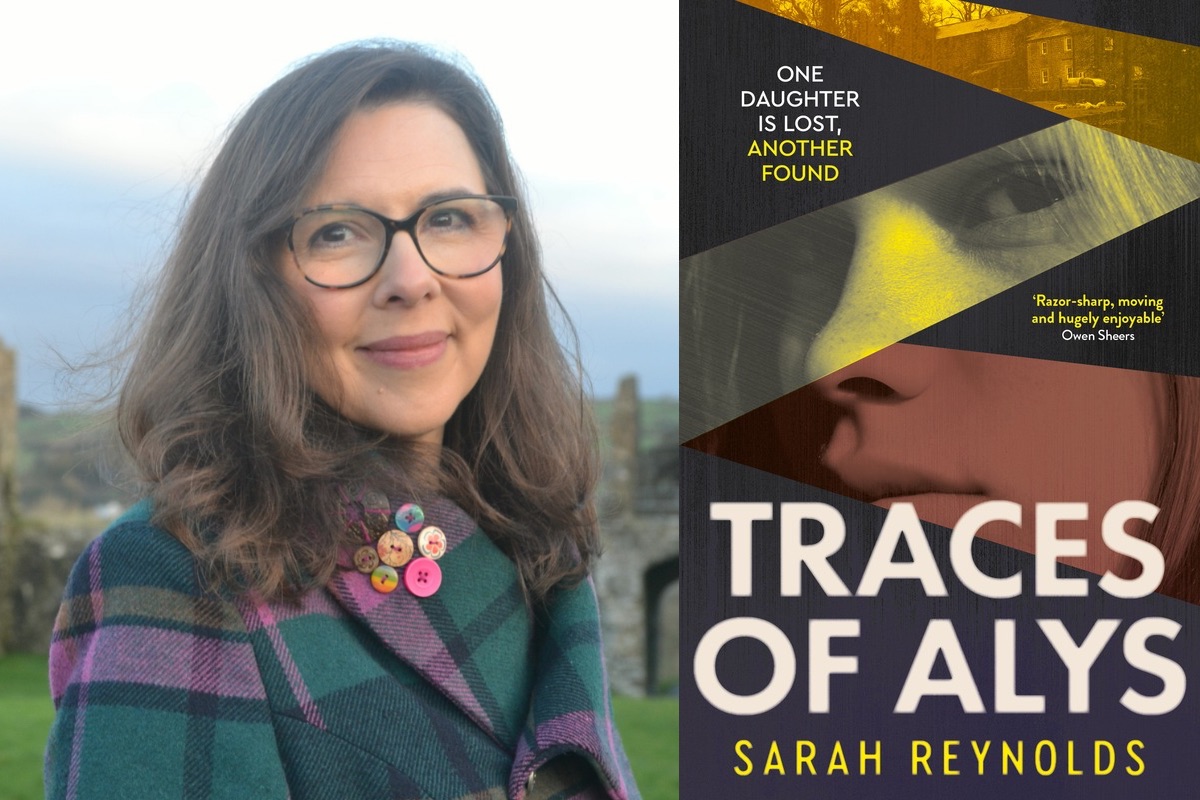
Sarah Reynolds
To be a bilingual writer in Wales is to be alert to the sound of two languages, two literatures, two cultural legacies. It is a privilege to speak both Welsh and English: to enjoy the rich culture of Wales in stereo. It can be intimidating too. Amongst this throng of vibrant voices, what can I offer the choir? The lament of language loss is a well-sung hymn, and it’s not mine to sing. My own story is not of language loss but of language gain.
As an immigrant to Wales – albeit from neighbouring England – it was love that brought me here: I married a Cymro Cymraeg and learned Welsh as an adult. This experience is very different from the one described in Language Regained by the renowned Welsh-language writer and campaigner Bobi Jones. I was never putting the Welsh language ‘back where it belongs’, but finding belonging through the Welsh language. I have written light comic fiction in Welsh about this experience, but my new novel Traces of Alys is a very different proposition: a dark, twisting mystery in which language becomes a means of survival.
My own writing often begins with a seed of truth: something small and real that I can transplant into new soil, water with ‘what ifs’, and nurture with imagination.
These things I know to be true: language learning can be transformative. It can change how you think, how you view the world; it can change who you are.
What if a language could save your life?
If the stakes are high enough, anyone can acquire a new language; the need to communicate is so essential to our humanity that we find a way. The depth of that learning depends on both a push and a pull. The push might be necessity: a refugee fleeing their motherland must find a new home in a new language. But to make that new language feel like home, there must also be an emotional pull: the kind that sweeps you up in a welcoming cwtsh. Deep language learning is not an intellectual exercise; it’s an act of love.
Traces of Alys is about many things: trauma, escape, and the lies we tell to protect ourselves. But it’s also about language: the language that fails us, and the language that heals us.
The main character shares little in common with the bumbling characters of my previous novels – which were largely based on my own experiences. My Welsh is not yet as strong as my English, and may never be, but I am fascinated by those Welsh learner writers who can ‘pass’ as mother tongue writers.
What better way to assert one’s mastery of the language than to win one of the most prized competitions in the National Eisteddfod, judged anonymously and on literary merit alone? Among this elite group is the late, great Tony Bianchi: a Geordie with no Welsh lineage, who won both the Daniel Owen Prize and the Prose Medal. When I was creating the main character in my novel, Bianchi was never far from my thoughts.
Childhood trauma reverberates through Tony Bianchi’s fiction. In his semi-autobiographical short story collection, Cyffesion Geordie Oddi Cartref, the father stalks the pages as a brooding, malevolent figure. In an interview on Beti a’i Phobl, Bianchi describes how his own father used silence as an act of violence. It seems fitting, then, that Bianchi should create a silence of his own: living his life in a language his father could not speak and writing books his father would never be able to read.
Bianchi is not the only writer to find refuge in a second language. Childhood trauma is a powerful undercurrent in the work of Chinese writer Yiyun Li. Writing solely in English, she has described the abandonment of her mother tongue as ‘a kind of suicide’. But this type of linguistic immigration is only possible if the destination is a majority language.
The curious experience of being a learner-writer in a minority language is that linguistic immigration is never absolute. To write bilingually in Wales is to refuse the abandonment of the mother tongue; it is to insist upon both languages, in constant conversation, shaping and unsettling each other. The central drama of Traces of Alys lies in seeking reconciliation with that reality.
It is language that lights the path for ‘Alys’ to find her way home. In the end, Traces of Alys is not a novel about a girl who goes missing; it’s about what it means to be found.
About Traces of Alys
1995 – 15-year-old Emma sends her family a bunch of flowers and disappears. Her best friend Kate blames herself.
That night in west Wales, Idris and his son find a crashed car, a teenage girl and a man trying to kill her. The girl can’t remember who she is. Their neighbour says it’s her missing daughter, Alys, finally home, and takes her in. Twenty years later, a body is found during renovations at a local park where Emma was last seen. Kate believes that she has, at last, found the end of Emma’s story; instead, it is only the beginning, as finally secrets will have to be faced.
A family mystery about escaping, finding home, and what – or who – is left behind.
Sarah Reynolds is an award-winning bilingual writer. Originally from Surrey, Sarah moved to Carmarthen in 2009. She’s written two Welsh-language novels: Dysgu Byw and Cyffesion Saesnes yng Nghymru. Her short story, ‘Catch of the Day’ won the Rhys Davies Short Story prize and the short film adaptation, Helfa’r Heli won a BAFTA Cymru award. She has written numerous short stories, articles and scripts. Traces of Alys came second place in the Bridport Novel Prize. She is a lecturer in Creative Writing at Swansea University, and lives with her family in Carmarthen.
Support our Nation today
For the price of a cup of coffee a month you can help us create an independent, not-for-profit, national news service for the people of Wales, by the people of Wales.
Get more trusted Welsh news
Choose Nation.Cymru as a preferred source in Google News to see more of our journalism.


