


Poet Profile: Gwenhwyfar Ferch Rhys
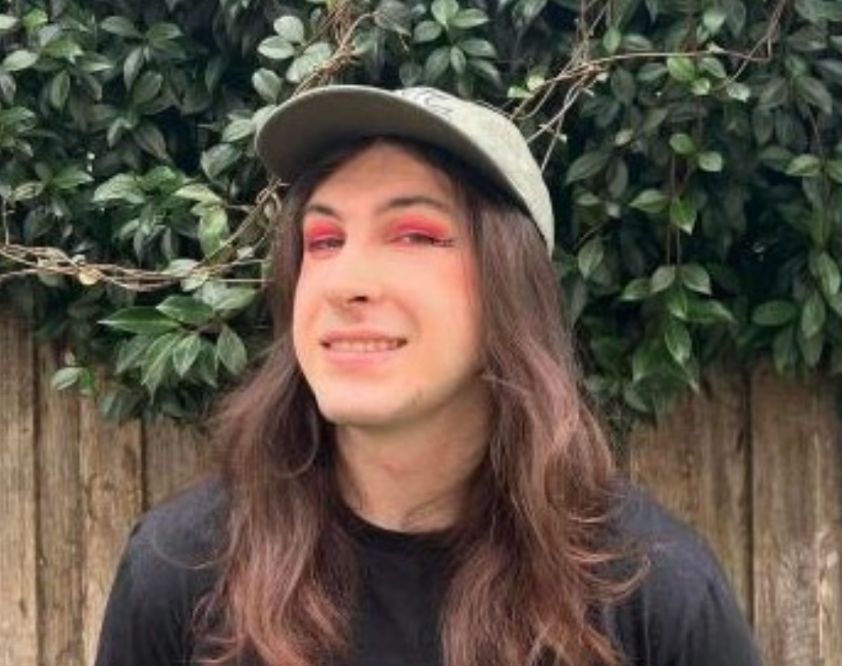
Gwenhwyfar Ferch Rhys is a poet, performer and journalist from Wales and Scotland. She is a former Young Makar, with her debut spoken word show ‘[ac]quiesonce’ premiering at the Edinburgh Fringe in 2025.
Gwenhwyfar is published across various journals and anthologies, including Up/Roar from Arachne Press and Fierce Salvage, a 2025 anthology of queer Scottish writing from 404Ink.
Here, she joins us in our ongoing series of Poet Profiles, where we pose ten questions to poets helping shape the literary landscape of Wales.
Do you remember what first drew you to poetry?
I began writing poetry in my early teenage years as a kind of emotional regulation mechanism – whenever I felt overwhelmed with negative emotions, I would write about it and release the feelings onto the page, like a valve expelling steam from a boiler so that it doesn’t explode. I was drawn by that catharsis, and by the subsequent feeling that as long as my suffering was turned into art – was the only way I could reliably create new art, in fact – then it would always have a silver lining. But as I began to get more serious about doing this professionally, I recognised that this was a dangerous mindset. If one must suffer to create, then to pursue a career in creative writing is to make oneself financially dependent on bad days. I could already see that outlook taking hold of me – my first thought when something bad happened wasn’t ‘oh no’, it was ‘well, at least I have something new to write about!” As much as I’m glad that this kind of approach got me into poetry, eventually I started to worry that if I stopped being unhappy then the poems would stop too. You can’t live like that.
What inspires you outside of literature?
Following on from the above, I tried to restructure my approach and realised that external inspirations were invaluable. Almost all of my writing is still autobiographical in some sense, but I mediate that through something bigger, beyond myself: be it an image, historical event, mythological narrative, political or scientific concept, etc. Aristotle said that the successful use of metaphor is just a matter of perceiving similarities, and anywhere that I can see parallels between external stimuli and my experiences and interests, I can find inspiration. This approach ensures that there is no longer a direct 1-1 relationship between my suffering and my creating, since I’m using my personal experiences to explore wider topics rather than just exploiting them to make new poems.
What projects or poems have you been working on lately?
A great example of this new approach in action is my debut collection, which I’ve been working on for the past year and a half. It’s called Y Plant Darogan and Othe(i)r Foredreamings, and it interweaves my personal experience of growing up trans with myth, history and contemporary political discourse, as well as some pop culture, family photos, and visual art!
Perhaps my favourite source of inspiration for the project is Paul Davies’ Welsh Not Love Spoon, a huge love spoon carved from a railway sleeper which the artist had previously turned into a Welsh Not. It’s held in the Storiel museum in my hometown of Bangor and its life cycle and layers of meaning are just so richly delicious.
Y Plant Darogan and Othe(i)r Foredreamings developed as three standalone pamphlets which come together to form a collection. The first one, [ac]quiesonce, explores the intersection in my identity between transness and Cymreictod (or ‘Welshness’.), connected by the idea of timing and expectation. The Cymraeg legend of ‘Y Mab Darogan’ foresees that Cymru will be liberated from colonisation, but only if we wait for the right moment to challenge it; similarly, I was convinced for many years that I had to wait for the ‘right time’ to actualise my transition.
The project expanded into a full-length collection as I added After Pride Comes, which is much more directly focused on what is happening to trans people right now in a contemporary, political sense – the way that in the six or seven years since I realised I wasn’t cis, transphobia in the UK, US, and elsewhere have moved from fringe extremist ideology to official government policy.
The third pamphlet, Where A Kid Can Be, takes a more lateral approach to this discourse. It explores the spaces where I did or didn’t feel welcome as a kid, before becoming fully aware of my gender identity, and compares them with the spaces that hold significance to me now. It has a particular focus on comparing urban spaces – mainly the Chuck E. Cheese’s pizza arcade in the suburban town in America where my grandparents live – with natural spaces around Gogledd Cymru, like Roman Camp in Bangor and Gelert’s Grave in Beddgelert.
The new creative process at work behind this collection has allowed me to experience writing as something healing, rather than self-destructive. And since I’m now writing with a bigger emphasis on narrative, all the trauma explored is eventually resolved, rather than just exploited and left open. It’s thanks to this collection that I have finally gained the confidence to change my name to Gwen and fully come out as a trans woman.
What’s one word you wish you could use in a poem but never have?
While I was writing [ac]quiesonce I wanted to take the opportunity to delve into the history and culture of Cymru as much as possible, because it wasn’t something I’d really felt able to write about before. As well as the legend of Y Mab Darogan I covered the drowning of Capel Celyn, the use of the Welsh Not, the Glyndŵr rising, the medieval tradition of ‘Y Cywyddau Brud’ (and for that one I actually relied on some very helpful Nation.Cymru articles), the ancient religious practices regarding the river Dyfrdwy and the more recent folkloric traditions surrounding changelings.
I wanted to use specific examples at every opportunity, steeping the project in as much Cymraeg culture as possible. I was almost always able to find a place in my own personal story where these things seamlessly fit in. But the one word I really wanted to include, and somehow just couldn’t find the right place for, was ‘hiraeth’. As much as it seemed to perfectly fit with my project, it felt so horrifically cliché – I think, due to it being appropriated by people who don’t understand the historical and cultural context and just think it’s a fancier word for nostalgia – that wherever I put it, it just felt out of place.
Do you have any rituals or habits that help you write?
I would say I’m a very ritualistic writer, yeah. Some of the rituals are more practical. If I’m writing prose I’m constantly copying and pasting my work into a fresh word document; in theory so that I can then edit without worrying about what I’m losing, since it’s all in the old document. But in years of doing that I have never once gone back and used stuff from the old document, so admittedly it’s much more about subduing my anxiety over losing things than actually preventing loss. And if I get stuck writing a poem I like to copy out the parts I do have in my notebook and write dashes where the missing syllables need to be filled in – it helps me feel out the metre of the stanza and narrow down how I could finish it. Those two I might actually recommend.
But I also do this thing I can only explain by comparing it to V.E Schwab’s Darker Shade of Magic series, where there’s a race of sorcerers who can travel to alternate worlds, but only if they have a token from that world. In the same way, I like to have a token from the world I’m trying to write into existence while I’m writing. For example, just before I started writing Where A Kid Can Be, my dad found a Chuck E. Cheese token in this pot of old coins he was sorting. I claimed it, and for the rest of the writing process I literally could not make any progress if I didn’t have that coin in my palm.
Who are some of your favourite living poets, and what resonates with you in their work?
Probably my number one poetry hero of all time would be Kathleen Jamie, who served as Scotland’s Makar (poet laureate) 2021-2024. Although my dad’s family have lived in Cymru since time immemorial, I happened to grow up in Scotland, and when I was 17 I experienced this miraculous coincidence where the Scottish Poetry Library and StAnza festival launched separate programs to find a handful of ‘Young Makars’ and I managed to end up on both. When we Young Makars performed at StAnza, Kathleen Jamie opened for us, and this was profoundly impactful on me. To perform alongside the Makar made me ask questions about my own work and how it speaks for others. That was almost four years ago now, but I never stopped thinking about my work as this platform that represents the communities I’m part of. I guess as a transgender poet it feels more urgent than ever to intervene in a lot of the conversations that are being had about us but (thus far) without us – looking at you, Supreme Court. So I guess it’s more her career as a wider literary figure rather than her actual written work that resonates with me, but recently I did read her CNF book Surfacing, which I highly recommend. It’s an expansive and lucid collection, moving from Xiahe in Tibet to Quinhagak, Alaska, focusing, as the title implies, on buried things rising to the surface. My favourite section is set in the Links of Noltland, Orkney. Jamie asks some brilliant questions about the difference between cherishing our heritage and curating it, which probably applies to us all, to a lesser or greater extent.
Is there a poem by someone else you wish you’d written?
A couple years ago I rounded up a team of poets from my university to take to the Universities’ Poetry Slam. We’d never been before, and in many ways we weren’t really prepared to slam, but somehow we just about limped into the semi-final round. One of our team members didn’t have anything she felt was worthy of the semi-final, bur she spent the next 12 hours writing, memorising and performance-ising an entirely new poem from scratch.
The end result of that process – ‘Ríastrad’ (which you can find on her Instagram @agscriobh) absolutely blew me away. She switches fluently between English and Gaeilge, the physicality is amazing, and she tailors the story of this legendary hero from her native culture so personally to her own experiences and desires that it makes you feel like the story is an organic extension of her person. To be honest I nicked a lot of that to write Self-Portrait as Y Plant Darogan (see below), so in a way I don’t wish I’d written her poem so much as I wish I’d written it first!
What have you read recently that excited or surprised you?
More recently I have been really inspired by the work of Chen Chen and Stephen Sexton. I love the way that Chen always bends form to purpose – in his collection Your Emergency Contact Has Experienced An Emergency, almost every single poem looks completely different to every other poem because he’s thinking so actively about molding the use of form so that the poem’s content resonates as loudly as possible; it reminds me of how churches are designed to maximise reverberations. And Stephen Sexton has some really fascinating and moving thoughts about elegy, poetry, childhood and memory that have been pretty central to a lot of the poetry I’ve written lately – I would recommend his Irish Times piece about his book If All the World and Love Were Young as much I would recommend the actual book.
If your poems were a type of animal, what would they be and why?
Probably a Chimera, since I feel like I’m always smashing a bunch of things together to see what happens!
One last thing! Would you like to share one of your poems and tell us why you chose it?
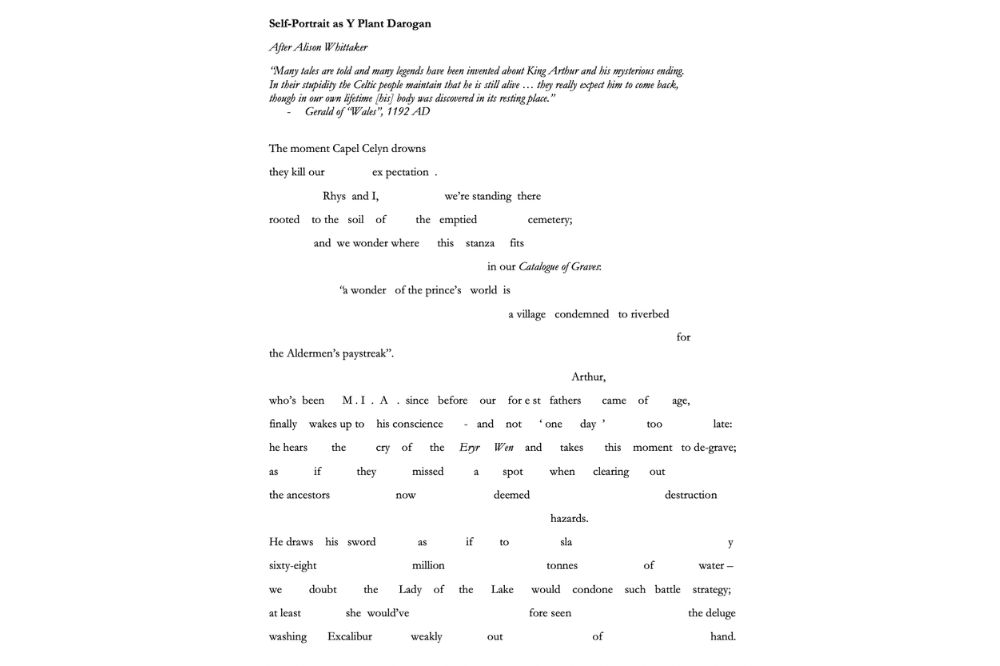
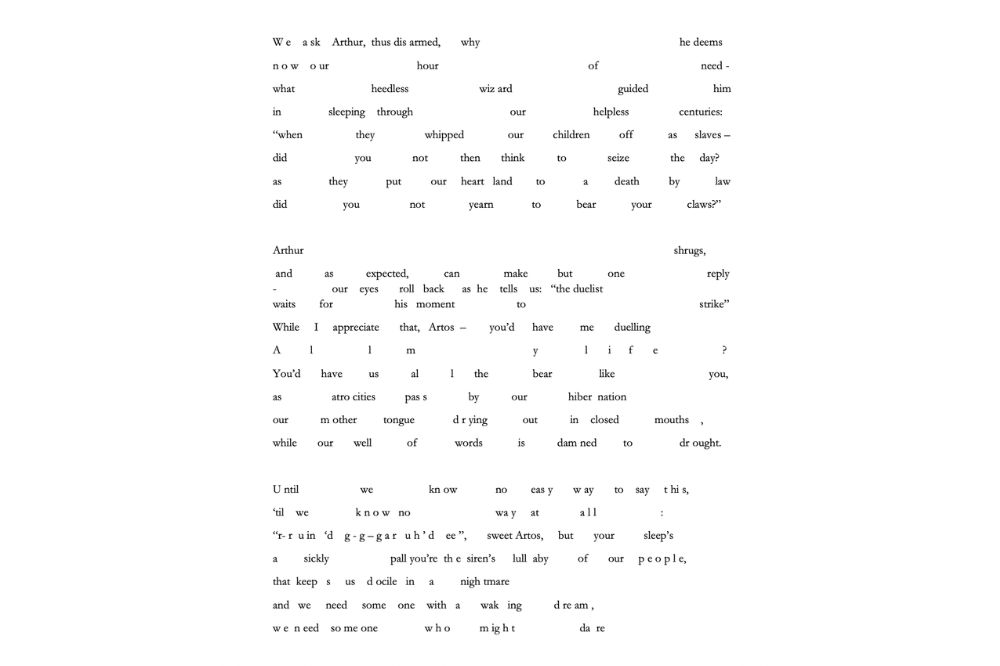
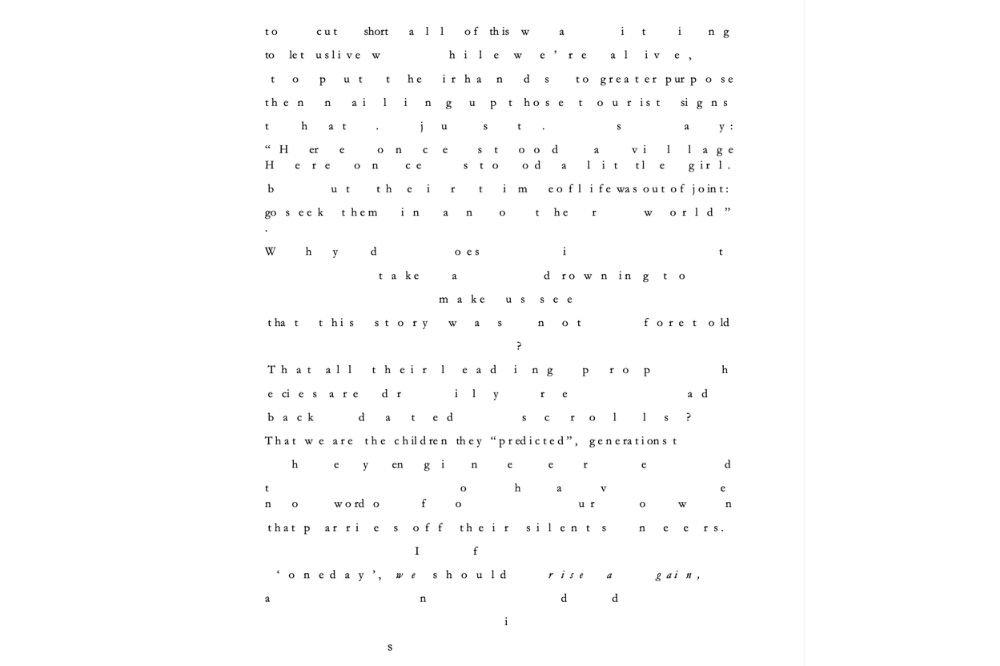
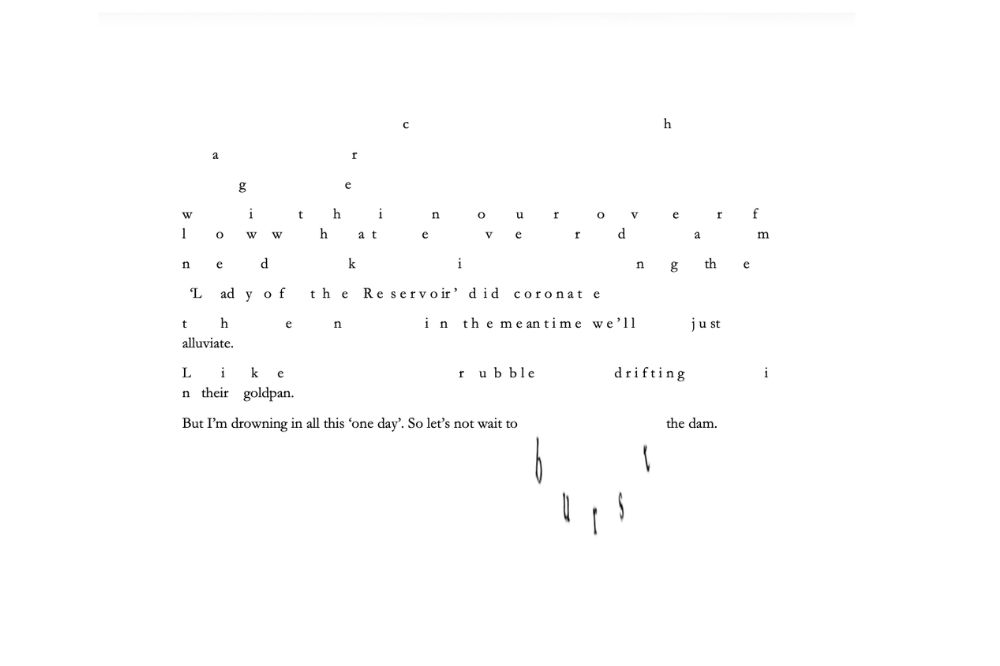
I’m sharing ‘Self-Portrait as Y Plant Darogan’, which is kind of the heart and soul of my pamphlet [ac]quiesonce. I wanted to use the idea of Arthur coming back in our darkest hour. This poem was published in the Australian journal Voiceworks, but not in Cymru, so I’d like to take this opportunity to share it with its intended audience!
Support our Nation today
For the price of a cup of coffee a month you can help us create an independent, not-for-profit, national news service for the people of Wales, by the people of Wales.
Get more trusted Welsh news
Choose Nation.Cymru as a preferred source in Google News to see more of our journalism.


