


Poet Profile: Katrina Moinet
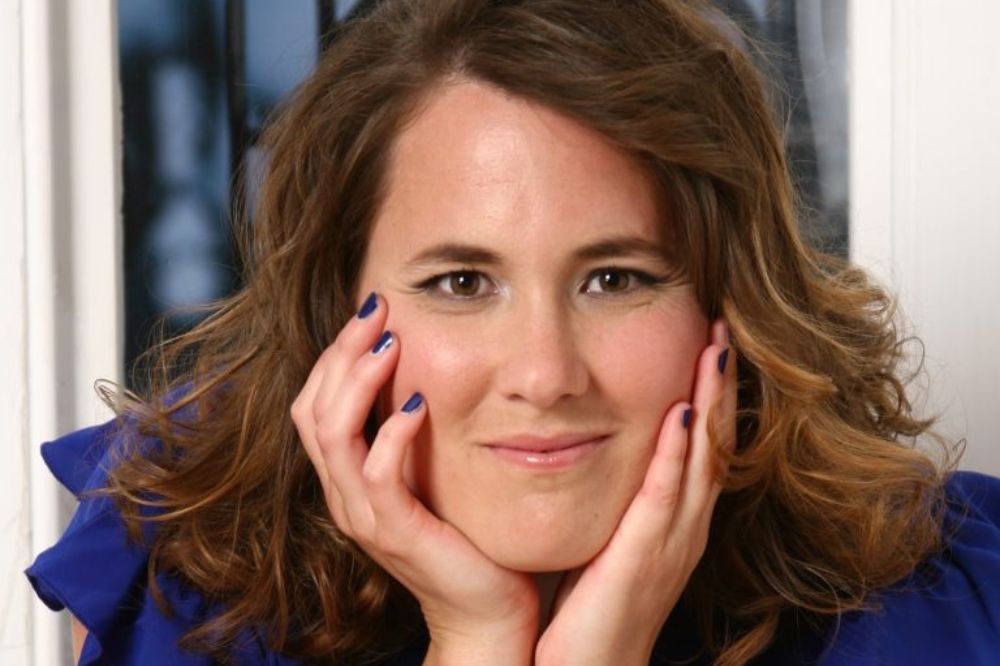
Billed as “one to watch” by Poetry Wales, Katrina Moinet has emerged as one of Welsh poetry’s most resonant contemporary voices. Their debut pamphlet Portrait of a Young Girl Falling was shortlisted for Wales Book of the Year and praised for its frank yet playful approach to power, gender and language.
This week, to mark the release of new collection State of the Nations, Moinet becomes the first guest in Nation.Cymru’s new Poet Profiles series, where we pose ten burning questions to poets helping shape the literary landscape of Wales.
Do you remember what first drew you to poetry?
At the outset of Covid, in 2020, being furloughed from a project management role gifted me the opportunity to steer my life towards things that bring me joy. After completing some creative writing modules with the Open University I applied for a master’s at Bangor University. The application process required submitting a portfolio of five poems. My poems were raw and personal, perhaps not accomplished but certainly lyrical. It was the first time I’d gathered work and placed belief in my writing. I got accepted. And so many amazing things have happened since!
Who are some of your favourite living poets, and what resonates with you in their work?
There are too many to choose just one! The first poem to astound me was Tiffany Atkinson’s ‘Consent’ from Lumen (Bloodaxe, 2021). Lines alternate gravity with the ordinary:
‘On the radio it wasn’t tyranny / she just said / all the men that have assaulted me in my life / have been nice guys’
How neatly this highlights common misunderstandings about sexual assault: assailants are rarely strangers; mass media ignores assailants who do not fit an aggressor profile. The reader re-examines tyranny in terms of a society that allows assault to persist. Scorched on my brain is Atkinson’s juxtaposition of an impassive account coupled with strong imagery: a finger pushing through cellophane to touch ‘cool meat / FLESH.’
The first collection to knock me sideways was Kim Moore’s All the Men I Never Married (Seren, 2021). Moore’s poem ‘42.’ had a similar effect, as a list of questions that begins ‘Is it XXXX if your husband/boyfriend/friend did it? This erasure represents society’s suppression of conversation around rape and the way women censor themselves from verbalising rape experiences.
Is there a poem by someone else you wish you’d written?
The contemporary poetry scene is jammed with talent! I have sheer admiration for so many writers. Amy Acre’s Mothersong (Bloomsbury, 2023) is simply stunning and thrilling in its experimental reach, ‘Atheism’ being one of my favourites from that collection. Many of my early poems dealt with motherhood, my difficult birthing experience and post-partum psychosis through weaning. If I can gather these vignettes into a collection half as good as Amy’s, I’ll be utterly replete.
What have you read recently that excited or surprised you?
I recently discovered Victoria Spires’ effervescent writing. I’d highly recommend her pamphlet Soi-même from Salò Press. I’m reading Natalie Ann Holborow’s Wild Running, brilliant non-fiction brimming with gorgeously rich description and her cracking brand of humour. I don’t even run! Natalie’s work is always outstanding. This book explores the body, rhythms, connection to place, noticing in the slowing down and observing.
What inspires you outside of literature?
Little fails to inspire me! My latest collection State of the Nations incorporates music, art, pop culture, current affairs, water-cooler moments, menopause, government eff-ups. A recent preoccupation is the shape of the world my daughter is growing into and different forms societal change takes.
What projects or poems have you been working on lately?
Black Iris editors Lauren Thomas and Sarah Gibbons run a series #poetryofbreakingnews each November which asks for visceral responses to what’s happening in the world. This kind of poetry activism is something I find very exciting. Submission windows and response turnaround times can leave a writer’s work in long-standing limbo. Black Iris review and accept poems within a swift 48-hour turnaround window. The writing engages socially and politically with immediacy, stimulating debate. My erasure poem ‘Donald Trump Addresses the House of Representatives on the Epstein Files’ is a simple but devastating poem highlighting how predators, even (and perhaps especially) the most famous, hide in plain sight.
Do you have any rituals or habits that help you write?
This may sound counter-intuitive … often what helps a poem bloom for me is a good night’s sleep! Ideas will slop around my neuron soup all day then right before bed or sometimes jolted awake in the middle of the night, I’ll scribble a line or phrase destined to become a seedling to something new.
What’s one word you wish you could use in a poem but never have?
I’d never shy away from using particular words in a poem, if the tone, voice or context strengthens their inclusion or the poem’s intention. Poetry has a wonderful capacity to inhabit that gulf between reader and speaker, between interpretation and intention.
Self-censorship is probably the worst kind for a writer. I battled with the decision to include the word ‘rape’ in my poem ‘Out of Harm’s Way’ in my debut pamphlet Portrait of a Young Girl Falling. As a woman writer, this subject connects strongly to my poetics of embodied experience. As mother-daughter-wife-colleague-youth workshop facilitator the subject matter clashed with all my other societal roles. The exposure was, at times, unbearable.
Once shortlisted for Wales Book of the Year that fear of exposure converted into validation – I’d entered the conversation. It was an incredibly liberating process. Narratives now emerging call for shame to “switch sides”. This brings me hope that words can pave the way for new modes of thinking, living, thriving.
If your poems were a type of animal, what would they be and why?
Nation.Cymru reviewer Eric Charles compared my work to ‘a lioness’ in his review and I suppose there’s a soupçon of truth to that. Since committing to and shaping life around my creative practice, a hunger, energy and strong work ethic keep me writing. Choosing to write later in life buffers against that incertitude of ‘Am I really a writer?’ replacing it with a simple daily focus on the many ways to thrive and survive my writing life!
One last thing! Would you like to share one of your poems and tell us why you chose it?
I had the privilege of attending Clare Potter’s launch of Nôl Iaith (Cyhoeddiadau’r Stamp). Clare spoke of the freedom of expression that comes from writing in a second language, how writing through the lens of Cymraeg allows a distance, since the experience wasn’t lived through that language. This resonates very much for me in the poem I’ve chosen.
My newest collection State of the Nations (Atomic Bohemian) offers a candid exploration of global shifts in hard-won freedoms (movement, data, body politics). It contains experimental poems on broad subject matters, poems that incorporate song lyrics, poems that discuss AI, menopause, end-of-life care. And poems where the ‘political’ becomes personal.
The below poem was first published yn Gymraeg in Poetry Wales’ 60th anniversary edition, which was a huge honour and a personal writing highlight. Saying that, there was a certain shield my second language afforded me, and the writer decision not to include an English translation at the time felt multi-layered in raising the Cymraeg-ness of my poetry, my lived experience, and the prevalence of hidden female embodied experience in society, in any language. I look forward to a point in time when this poem’s subject matter has nothing more to say.
I feel enormously lucky to work with my publisher Briony Collins – who is also one of the most incredible poets I know – at Wales-based indie press Atomic Bohemian. At a time when publishing is facing huge challenges, Briony was willing to risk including some poems in my new collection in both Cymraeg and English because of what this represents to language, to experience and to solidarity.
Haven’t you already said all there is to say about rape?
when you ask
i look back, centuries back through the slit
eye of a needle
see camel humps queued
ten thousand more mothers & daughters
silent mouthed
sackfuls of thirst, so
i snag-n-thread my words & hope
these stitches heal
Onid wyt eisoes wedi dweud y cyfan
sydd i’w ddweud am dreisio?
Pan ofynnaist
rwy’n sbïo, ganrifoedd yn ôl
trwy’r llygad nodwydd
gweld camelod ciwio
deng mil o famau & merched
cegau mud
sachau o syched
rwy’n edafu geiriau & gobaith
pwythau’n gwella
From Katrina Moinet’s State of the Nations (Atomic Bohemian, 2025)
Support our Nation today
For the price of a cup of coffee a month you can help us create an independent, not-for-profit, national news service for the people of Wales, by the people of Wales.


