


Poet Profile: Laura Wainwright
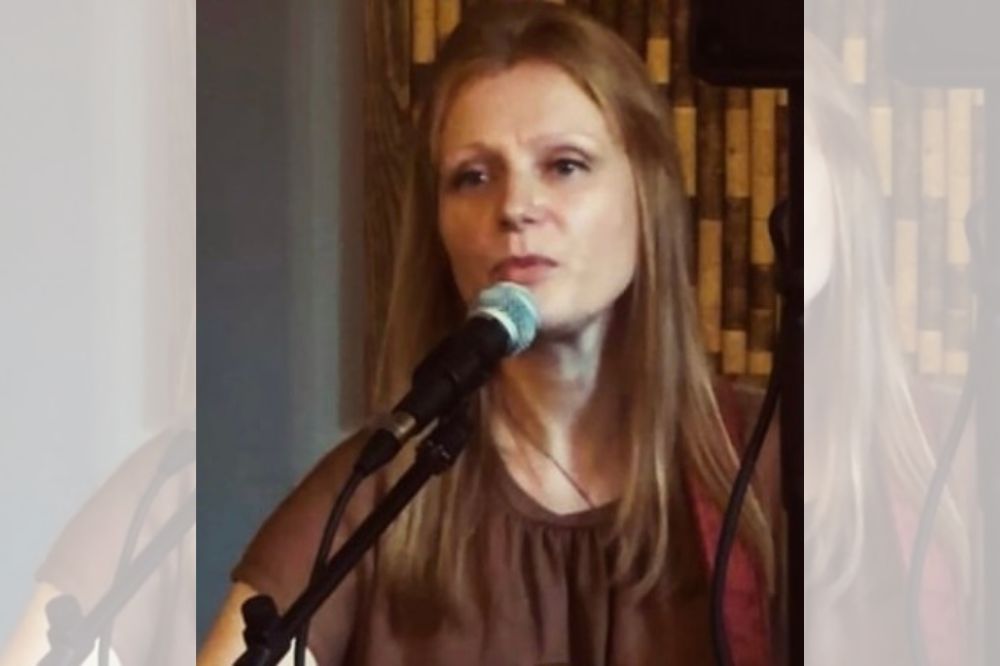
CJ Wagstaff
Fresh from winning the poetry award at Wales Book of the Year 2026 for her debut collection The Storm’s Flora (Seren, 2025), Laura Wainwright joins us for our ongoing series of Poet Profiles, where we pose ten questions to poets shaping the literary landscape of Wales.
Born in Cardiff and based in Newport, Wainwright holds a BA, MA and PhD in English Literature. Her previous pamphlets include Air and Armour (Green Bottle Press, 2021), Coedcernyw: among other things (Clutag Press, 2023), and Thrall: Poems and Art (Seventh Quarry Press, 2025), a collaboration with the poet Robert Minhinnick. Here, she talks music, cycling, serendipity and more, as she reveals the how and why of her practice.
Do you remember what first drew you to poetry?
From a young age I loved the sounds of words and how they could be arranged and alchemised into aural patterns that, to me, seemed like music. I feel that same thrill when I read and write poetry now. I am also drawn to poetry’s enchantment by concision: its distilled, intricate craft – how relatively few words, and what sometimes might seem like apparent simplicity, can reveal deepening strata of meaning, feeling, connection, allusion, if we take the time to really see and listen.
Who are some of your favourite living poets, and what resonates with you in their work?
I dread questions that ask me to name favourites, in any art form. Everything is in flux. Poets and readers alike are constantly changing, discovering, developing. And there are so many poets whose work I would like to know better. But I would always hope that Robert Minhinnick’s Diary of the Last Man could be saved from the shipwreck.
Is there a poem by someone else you wish you’d written?
‘Curlew’ by Lynette Roberts
What have you read recently that excited or surprised you?
Dean Browne’s After Party: a truly exciting collection and a very worthy winner of the Seamus Heaney First Collection Prize this year.
What inspires you outside of literature?
I play music (guitar) and I also paint and sketch when the mood takes me. I love to wander and observe. Cycling is one of the best ways to experience the world – the other day I was riding alongside swallows and an emperor dragonfly.
What projects or poems have you been working on lately?
I’m working on a collaborative, mostly instrumental musical project, as well as what I hope will eventually be a new poetry collection – though I’m a very slow writer.
Do you have any rituals or habits that help you write?
Living helps me write – that is to say, embracing new experiences, connections, serendipities, diversions, whenever I can.
What’s one word you wish you could use in a poem but never have?
I can’t think of one word. But I wish I could write poetry in Welsh: the most poetic of languages.
If your poems were a type of animal, what would they be and why?
They would be birds, flown before I found out why.
One last thing! Would you like to share one of your poems and tell us why you chose it?
I’ll choose ‘The Luthier’ from The Storm’s Flora and allow the poem to speak for itself:
On the coldest morning she could recall,
breath scrawled about the mourners,
who rubbed and shuffled,
while blue grass sparkled
around a sound-hole in the earth.
From down there came the frost’s harmonics –
three silverish strings – singing:
lully, lulla, lullay,
sleep well my luthier,
you made such music yet didn’t play.
Support our Nation today
For the price of a cup of coffee a month you can help us create an independent, not-for-profit, national news service for the people of Wales, by the people of Wales.
Get more trusted Welsh news
Choose Nation.Cymru as a preferred source in Google News to see more of our journalism.


