


Poetry review: Graveyards On Other Planets
CJ Wagstaff
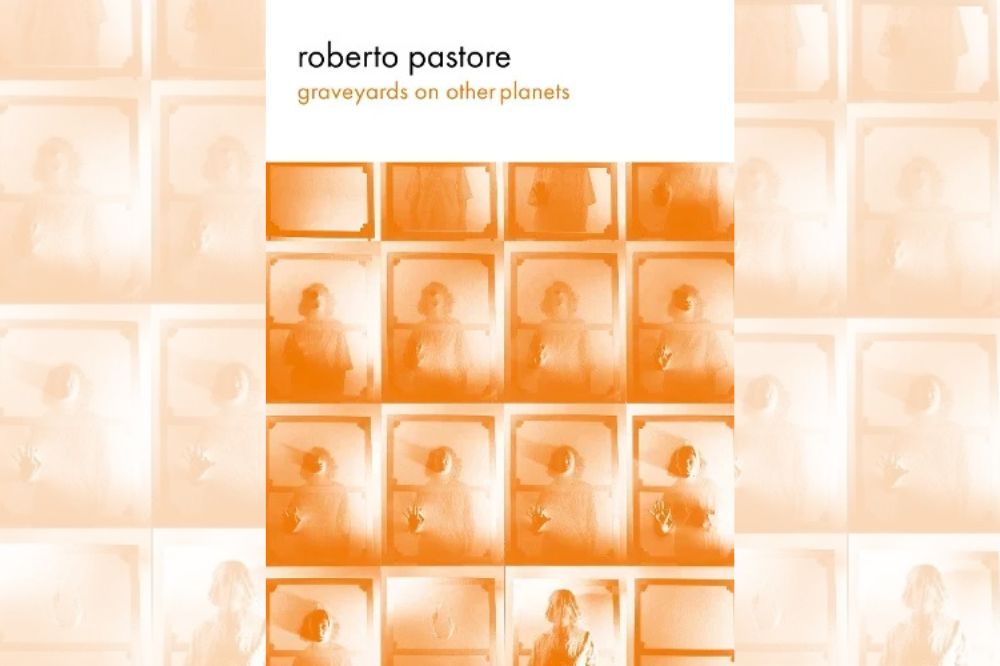
Roberto Pastore’s Graveyards On Other Planets approaches the human condition with a curious blend of wit and existential wandering. These poems move through the terrain of everyday life with a slightly slanted perspective, as if the speaker is observing the world and its inhabitants from orbit. In this work, Pastore’s narrative instincts guide the reader through scenes that feel at once confessional and theatrical, grounding abstract reflections in solid, sometimes startlingly physical moments.
One of the most distinctive qualities of the collection is its delicate but deliberate application of humour. Instances of solemnity and longing are punctured by the gently absurd, such as in ‘Don’t Be a Stranger’, as the speaker implores his reader to “think of me doing my walkies”. Throughout these poems, twinkles of levity recur as openings through which warmth is allowed to enter.
Yet humour never dilutes the emotional intensity of the work. Much of the collection dwells on the strange beauty of human vulnerability, as the poet imagines us in our most primal and unfiltered forms. In ‘The Great Flood’, the speaker recalls a period of shared isolation with a partner, describing the peculiar intimacy of their combined excrement and how they “fucked on the sofa”, revelling in this strange new freedom. Pastore renders these images with a tenderness that transforms bodily awkwardness into a symbol of closeness.
Red Telescope’ continues this fascination with the ordinary choreography of human life:
“you’d tilt it down
into the neighbour’s windows
where the urgency of their human bodies
moving about, cooking, undressing,
doing human things under yellow light
felt rapturous”
This voyeuristic perspective does not feel intrusive so much as it does reverential. The subject doesn’t witness a spectacle, but evidence of life unfolding through these little rituals. The yellow light bathing the scene lends it the softness of a dream.
Many of these poems are written as direct address. In ‘I Read Your Poems’, a speaker confesses, “I found them when you went out for something / in an old box stuffed with your schoolwork.” Pastore writes conversationally, as though he is connecting with a friend or telling a story over coffee. This quality becomes one of the book’s most effective tools as it lulls the reader into a sense of familiarity, inviting us into these private, confessional moments.
Pastore demonstrates a willingness to stretch the boundaries of the narrative poem. He seems to have a foot in two stylistic worlds as he floats between contemporary speech acts and modes of expression that feel almost mythopoeic. In ‘Speaking of Failure’, for instance, the imagery shifts from concrete memory to symbolic meditation:
“As key takes
the form of hole, so
the hare’s heart is unlocked
by my grandfather’s shotgun.
Hole which light burnt through, as life
festers the centre of all things,
so the savage yolk emulsifies…”
These lines carry a tone that feels faintly archaic, yet their subjects remain tactile and (mostly) modern – a shotgun, a hare, a key, a keyhole – as they move like dream logic from one image to the next.
This dreamlike quality is hard at work in Graveyards On Other Planets. Instances of repetition flirt towards form, but in Pastore’s hands become more like incantations. The work’s strong narrative drive provides a reliable anchor for the reader, but the language often drifts blissfully into something more amorphous.
Ultimately, Graveyards on Other Planets is a collection preoccupied with proximity. Proximity between lovers, between neighbours, between memory and the present. This collection suggests that human existence is composed of these close encounters, some tender, some grotesque, all loaded with meaning should we pay attention for long enough to find it. This work invites the reader to bask in those moments where the ordinary world becomes dazzling, illuminated by the miracle of being alive together.
Graveyards on Other Planets by Roberto Pastore is published by Parthian. It is available from all good bookshops.
Support our Nation today
For the price of a cup of coffee a month you can help us create an independent, not-for-profit, national news service for the people of Wales, by the people of Wales.


