


Reconnecting through strings: Ffidil Fawr builds a new Welsh fiddle tradition
Stephen Price
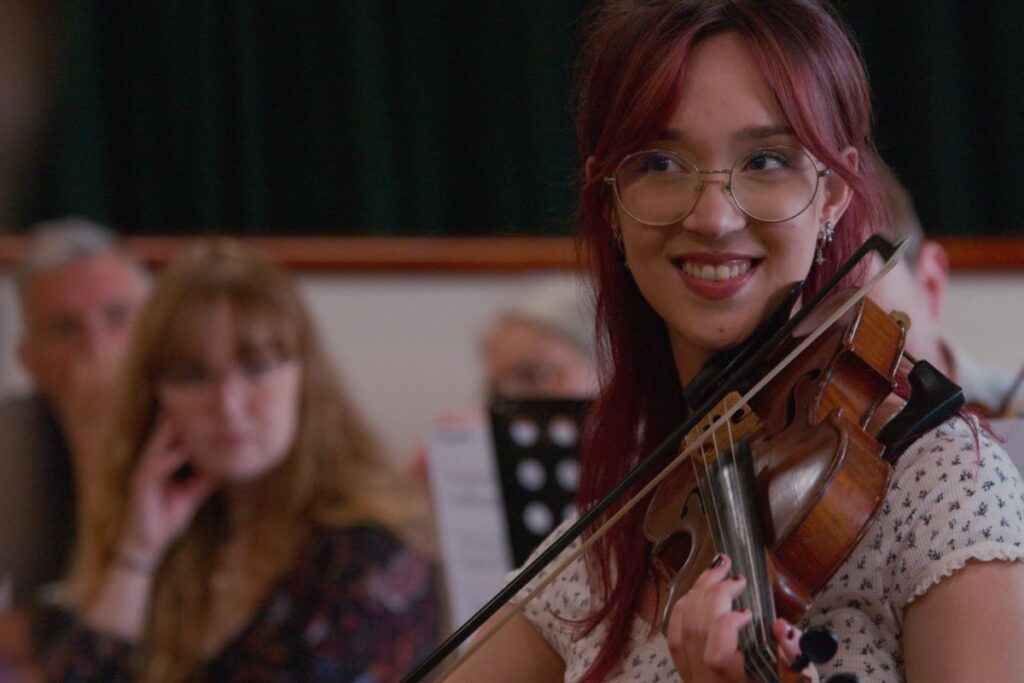
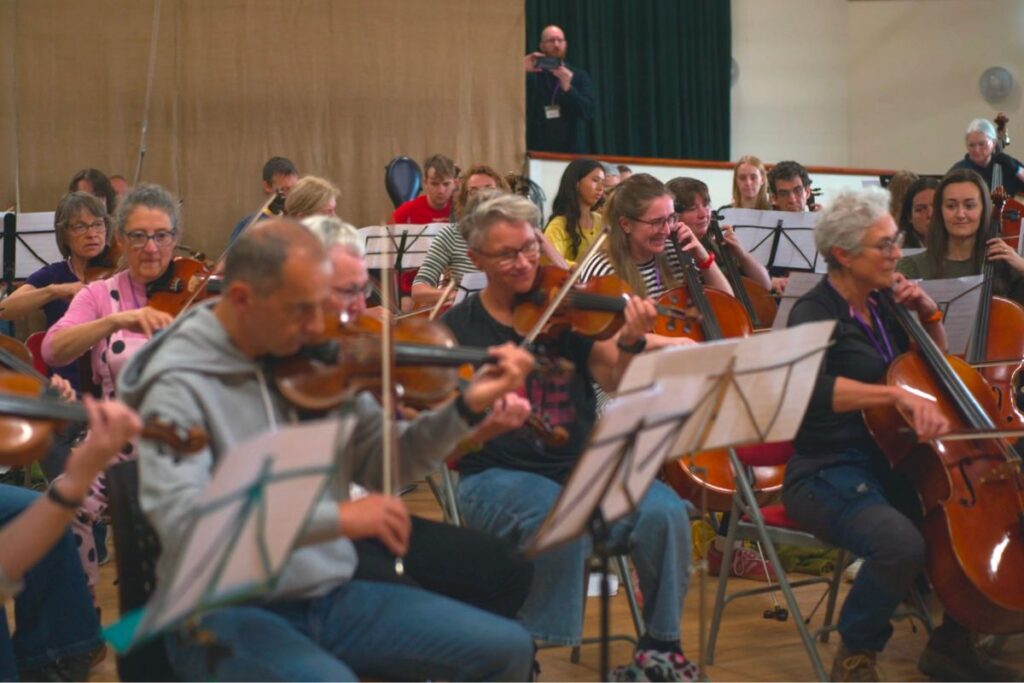
What does it mean to reconnect with your heritage as an adult? For a growing number of musicians across Wales and beyond, the answer can be found in a room full of fiddles, violas, cellos and double basses, playing Welsh tunes together late into the evening.
This November, Ffidil Fawr returns to Stackpole Outdoor Learning Centre in Pembrokeshire, bringing together adult bowed-string players for a weekend dedicated to Welsh traditional music, community and learning. What began as an ambitious idea to create a space specifically for string players interested in Welsh traditional music has rapidly become something much bigger: a community of people rediscovering the joy of making music
together.
In a country where many people learn instruments as children but stop playing as adults, Ffidil Fawr offers a different pathway back into music.
Participants include former school orchestra members dusting off instruments after decades in their cases, classical musicians looking for a fresh challenge, and complete newcomers to traditional music searching for a
more social and meaningful way to play.
At its heart, Ffidil Fawr asks a simple question: what happens when adults are given permission to learn, experiment and make music without the pressures of exams, auditions or perfection?
The answer is often transformative.
Reconnection
Across Wales, there is growing interest in traditional music as a way of connecting with place, language and identity. While the Welsh harp is widely recognised as a national symbol, the fiddle has long been part of Wales’s musical landscape, playing a central role in dance music and community traditions.
In recent decades musicians have worked to revive and strengthen Welsh fiddle traditions, uncovering repertoire, styles and techniques that risked being forgotten. The fiddle remains an important part of Welsh folk music today, but opportunities for adult string players to engage with the tradition remain relatively limited. Ffidil Fawr was created to help change that.
Hosted by members of the Welsh chamber-folk trio VRï alongside Angharad Jenkins (Calan, Delyth & Angharad) and Awen Blandford (Mikey Kenny Band, Anna McLuckie Band) team of passionate volunteers, the weekend combines learning by ear with structured teaching approaches familiar to classical players. Participants explore repertoire, ornamentation, rhythm, ensemble playing and style, while developing confidence in listening, improvising and learning music away from the printed page.
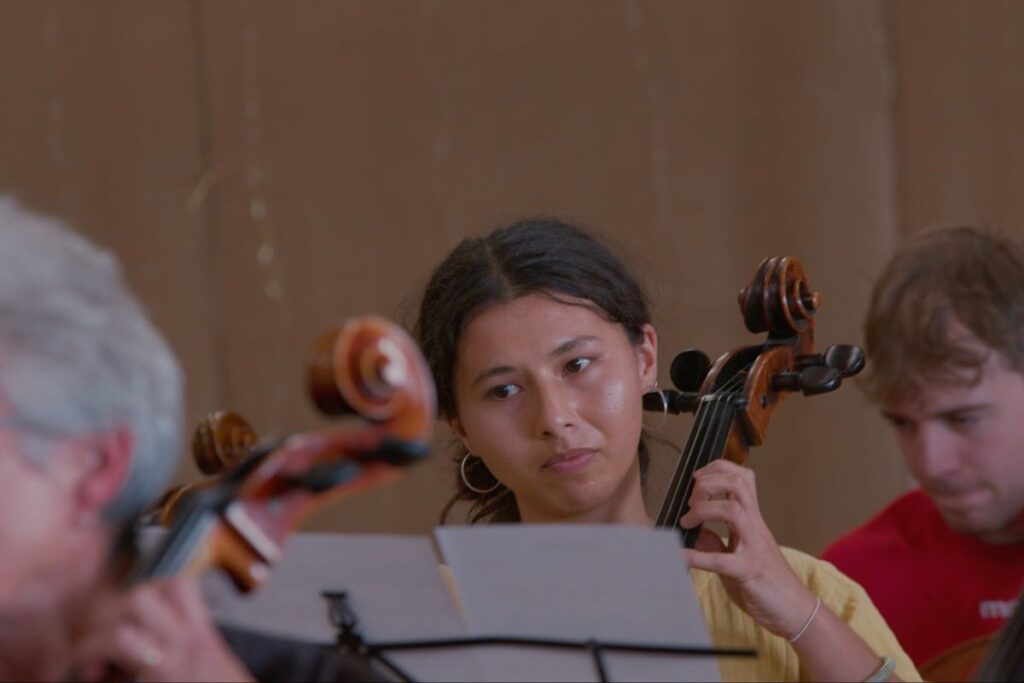
Importantly, the event is not limited to fiddlers. Cellists, violists and bass players are encouraged to explore how lower-string instruments can contribute to Welsh traditional music, helping to develop a broader and more inclusive string tradition for the future.
Through dedicated classes and ensemble sessions, participants discover new roles for their instruments and contribute to an evolving musical language that feels both rooted in tradition and relevant to contemporary Wales.
For many attendees, however, the music is only part of the story. In an increasingly fragmented world, Ffidil Fawr offers something that is becoming harder to find: time and space to be together.
Over four days, participants share meals, tunes, conversations and walks along the Pembrokeshire coast. Friendships are formed between people who may never otherwise have met – teachers, retirees, healthcare workers, professional musicians and complete beginners united by a shared curiosity about Welsh culture and a love of music.
By the end of the weekend, what began as a group of individuals often feels more like a temporary village.
‘Living, evolving and shared’
The organisers describe the event as being about much more than technique or repertoire.
“It’s not just about the fiddle, or even the music. It’s about finding connection. Traditional music gives us a reason to come together, to learn from one another, and to participate in something bigger than ourselves.”
Participants frequently speak about the sense of belonging they experience. Many arrive feeling nervous, unsure whether they are good enough or whether they will fit in. They leave with new skills, new friends and a renewed sense of confidence in their musical abilities.
In this way, Ffidil Fawr is helping to build more than musicians. It is helping to build a community.
At a time when Wales continues to explore its cultural identity in the twenty-first century, projects like Ffidil Fawr demonstrate that heritage is not something preserved behind glass.
It is something living, evolving and shared. Every tune learned, every session played and every instrument picked up again contributes to the continuing story of Welsh traditional music.
For those who have not played since school, it offers a way back. For classical musicians, it offers a new perspective.For lovers of Welsh culture, it offers a direct connection to a living tradition. And for everyone who attends, it offers something increasingly precious: a place to belong.
Ffidil Fawr 2026 takes place from 26–29 November at Stackpole Outdoor Learning Centre, Pembrokeshire.
The weekend is open to adult fiddle, viola, cello and double bass players of a range of abilities who are interested in exploring Welsh traditional music in a supportive and welcoming environment.
Find out more at ffidilfawr.cymru.
Support our Nation today
For the price of a cup of coffee a month you can help us create an independent, not-for-profit, national news service for the people of Wales, by the people of Wales.
Get more trusted Welsh news
Choose Nation.Cymru as a preferred source in Google News to see more of our journalism.



Welsh Fiddle Tradition thanks to Abram Woods…