

Review: Owain & Henry
Desmond Clifford
Thrilling. Owain & Henry is among the best experiences I’ve ever had in a theatre. Is it a perfect play? By no means; it has some faults and we’ll touch on them. But it’s passionate, committed – and get this: BIG! Welsh theatre, such as it is, has often been scrappy and fragmented, and has dodged the biggest questions. Not this. Owain and Henry are proxies for Wales and England, and, for many of us, subjects don’t come much bigger than that.
Gary Owen’s play charts the outbreak of Glyndŵr’s rebellion against the English crown in the person of Henry IV and his unflatteringly presented son Prince Hal (who in later life pursued a career as a war criminal in France).
It began as a mean dispute between Owain and an English neighbour in which the King, unwisely, took the side of the Englishman. The play is in English, but we intuit from the context when Welsh is being “spoken”; the author and actors handle this very adroitly, and with humour.
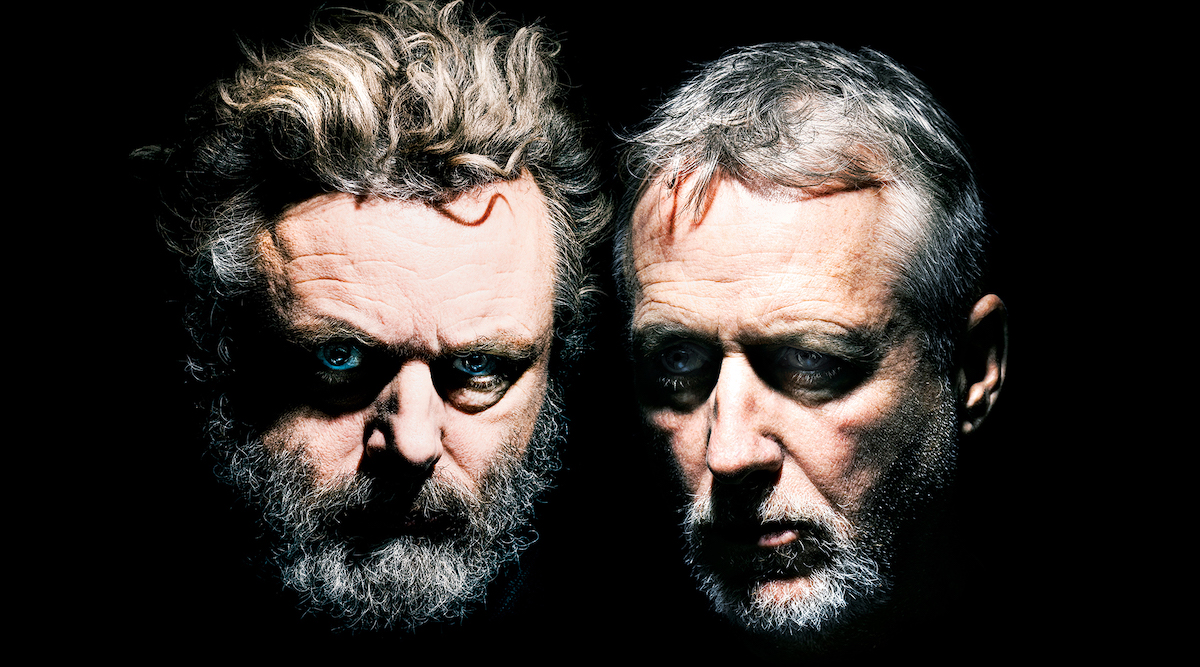
Owain, in this dramatic version at least, was a rather reluctant rebel. Only as injustices to him and his community piled up did he eventually raise the standard of revolt. In real life he must have had immense charisma, which makes Michael Sheen a natural for the part – he is among today’s most conspicuous Welshmen and no stranger to political interventions.
Then as now, the Welsh were fractious and divided but they flocked to Glyndŵr’s side. The rebellion spread across Wales.
I saw the play at the Millennium Centre, barely a mile away from Cardiff Castle, which was besieged and captured by Glyndŵr in 1404. The mix of history and performance is just intoxicating. This is what it means to live in a country in touch with its past.
Wales has few enough national heroes, at least of the martial kind, and this puts a heavy load on Owain’s shoulders. He is burdened with the nation’s self-image and he must be the Prince we demand him to be.
Michael Sheen’s Glyndŵr is an all-round good guy: wise, judicious, slow to fight – his wife, Mared, was the more clear-sighted on that front – and humane.
This script has him choosing to “allow” England’s survival, which is historical moonshine. His alliance with Percy and Mortimer – the Tripartite Indenture – was beaten.
If they’d won, Glyndŵr would have ruled Greater Wales including a slice of English borderlands while England proper would have been divided in two, north and south. Alas, that’s not how it panned out.
There’s a little too much conjecture about England’s future imperial mission, a concept which would have made little sense in 1400.
Gary Owen’s script owes something to Shakespeare’s construction of “Glendower”, the absolute show-stealer in Henry IV, Part 1. Shakespeare’s tropes and even some of his language are very well and cleverly integrated into Gary Owen’s script.
It would make no sense to ignore Shakespeare completely, but neither would you want to copy him. It’s very well done.
The fighting side of Owain’s story is also done well. The staging is cinematic; at times it isn’t clear what’s on stage and what’s film projection. The lighting was superbly dark and moody; Powys and Gwynedd on rainy days in November.
It’s rare for a Welsh play to be performed on this scale. The cast was large and impressive. Glyndŵr’s wife, Mared, superbly played by Rakie Ayola, had a touch of Lady Macbeth’s resolve in the national cause. When Owain was in danger of coming over all lily-livered it was she who stimulated his aggression and kept his focus.
The English royals had a bad rap. Just as there’s a type of Owain that we, as a Welsh audience, want to see, so too we have ideas about what a medieval English king should be like – and it’s not pretty.
A huge shout-out and acclaim are due to Nigel Barrett who played Henry as a last-minute stand-in for Linus Roache who, sadly, withdrew due to illness. Barrett played the part with script in hand which actually worked well, and unobtrusively – real kings often do have scripts in hand.
Bore
Henry IV was played as a bit of an unimaginative bore, even if skilled as a manipulator. The younger Prince Henry (Hal of Shakespeare fame) is a pompous little prick, a do-nothing know-it-all.
The famous Jack Falstaff is awarded a cameo role but has none of the charm and devilry lavished on him by Shakespeare. The drippy, cruel and clueless Prince Henry is a bit of a harsh caricature. As Henry V, he stands out as one of England’s more effective kings.
The play centres on the military drama of Owain’s rebellion and is done very effectively. I wonder, though, if a trick was missed in not dramatizing Owain’s wider vision for Wales.
His parliament met at Machynlleth, and he articulated a vision for Wales including universities, one each in north and south. Owain’s ultimate failure meant we had to wait another 500 years for those colleges. A victory could have created a very different country.
I have seen the “Pennal Letter” he sent to the king of France and delivered by his emissary Gruffydd Yonge to Paris. Owain’s signature is at the bottom: Princeps Waliae, Prince of Wales. It’s magnificent.
In return for French support, Owain offers to support the French-backed Papacy. Sadly, it never happened. (I am opposed to the return of the letter to Wales; it belongs in Paris where it was sent – though it should be permanently exhibited.) We get little sense of this wider vision in the play.
Stirred
Owain’s rebellion may have started unintentionally but developed into something altogether bigger. At moments I felt genuinely stirred by patriotic sentiment, as we are encouraged to by the text. Some of us feel it, some of us don’t.
It put me in mind of WB Yeats and an episode of Irish history. About 100 years ago WB Yeats wrote:
“Did that play of mine send out
Certain men the English shot?”
Yeats was referring to an explicitly nationalist play he wrote, “Cathleen ni Houlihan”, which exhorted young men to go and fight for Irish freedom. In 1902, when the play was first performed, the likelihood of anyone going out to fight for Irish freedom seemed very remote, yet barely a decade later that’s exactly what happened.
Looking back in 1938, when Yeats wrote his poem, he wonders whether he helped inflame opinion and contributed to revolutionary violence.
If Gary Owen and Michael Sheen had any such doubts, they hedged their bets. This Owain is socially responsible, a touch pacifist even in some of his utterings. Completely unhistorical, of course. If Owain could have won, he would have done so. He was a realist and knew how the world works.
Deeply moving
The ending of this play was a sort of sing-off between Wales and England. It was extremely well done and deeply moving, for this spectator at least. It conveyed very well one of the confusions of our condition. I won’t say more – I’ve tried hard to avoid spoilers in this review. It’s tempting – and I have given in – to see significance in this play appearing just a few months after the enormous shift at the ballot box in May this year.
Politics and culture are weathervanes in any country. Something’s happening in Wales and this play is part of it.
If it’s playing to a gallery, what’s wrong with that? There has been no gallery to play to until now.
How can theatre be more relevant? It’s thrilling to be here. It’s thrilling to watch. This is what a Welsh National Theatre is for.
Support our Nation today
For the price of a cup of coffee a month you can help us create an independent, not-for-profit, national news service for the people of Wales, by the people of Wales.
Get more trusted Welsh news
Choose Nation.Cymru as a preferred source in Google News to see more of our journalism.


