


Review: To Kill a Mockingbird at Wales Millennium Centre
Rhys John Edwards
It feels a bit redundant to review To Kill a Mockingbird. What fresh take can anyone really expect to offer about a novel that has been so endlessly dissected – not least by generations of suffering GCSE students who still know its use of metaphors, imagery and social commentary better than many of their closest relatives.
But best to start with the obvious: To Kill a Mockingbird is brilliant, obviously. And despite the weight of its cultural legacy, this UK touring production actually manages to surprise.
Writer Aaron Sorkin (of whom, I should confess, I am an insufferable fanboy) demonstrates that even a text as familiar and beloved as Harper Lee’s classic can be reimagined with striking vitality, offering something genuinely new without betraying its foundations.
The story follows the Finch family – siblings Scout and Jem, and their father Atticus – in 1930s Alabama. Atticus is appointed to defend Tom Robinson, a Black man falsely accused of rape, and his trial is framed through the eyes of the Finch children – and friend Dill – who witness the brutality of prejudice and learn about the ignorance that comes from collective certainty.
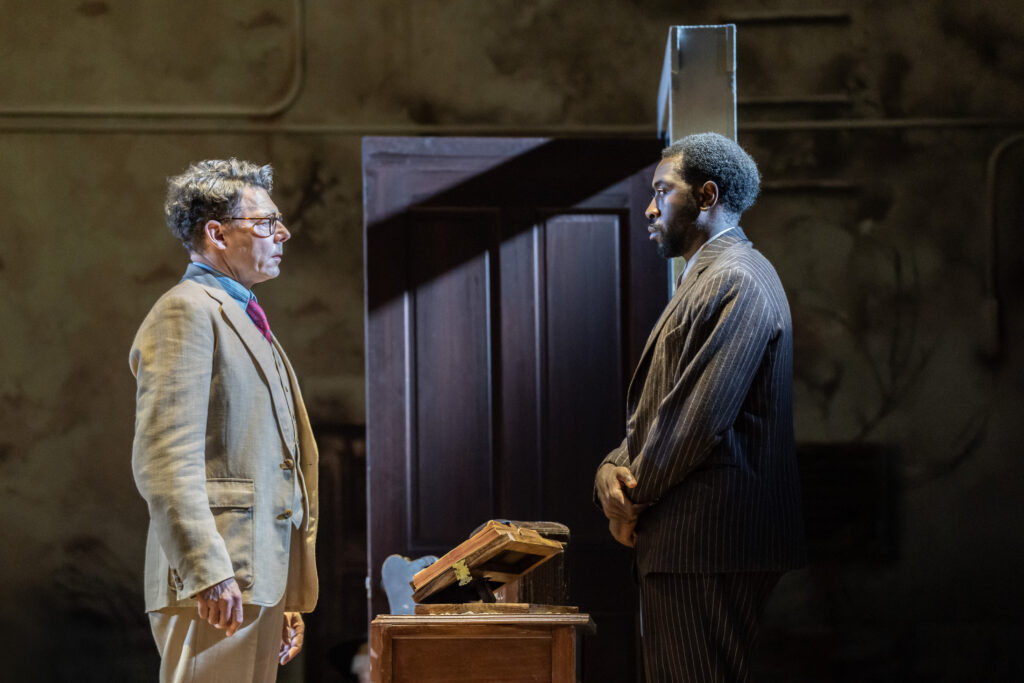
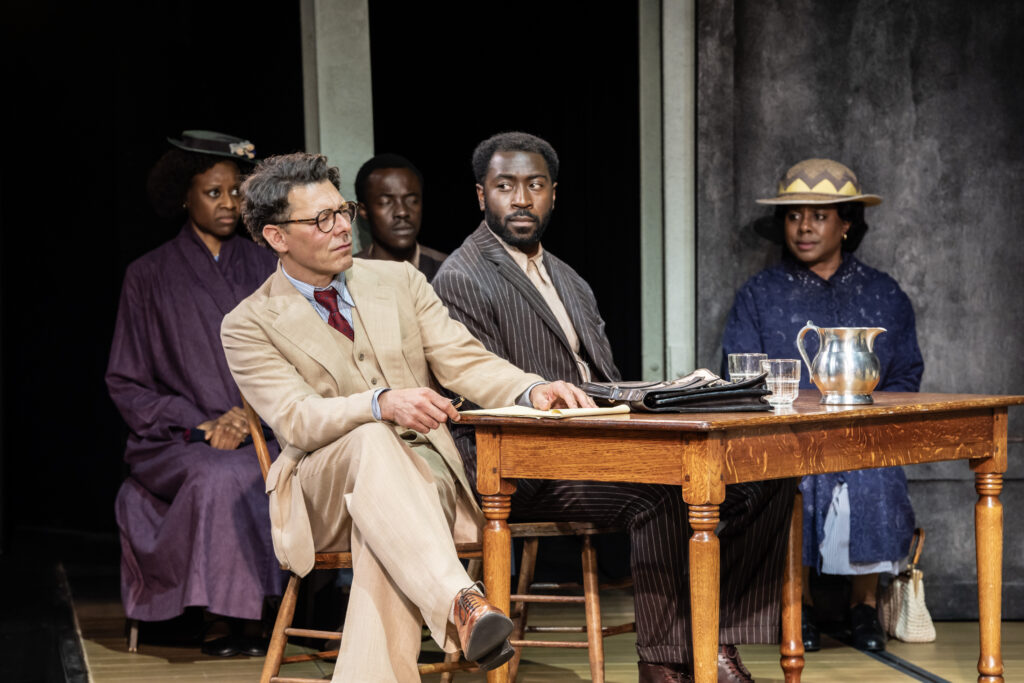
Richard Coyle is superb as Atticus Finch. With a flawless accent and poised physicality, he captures the essence of a man determined to cling to decency in a world that is equally determined to punish him for this at every turn.
Aaron Shosanya brings a quiet dignity to Tom Robinson, moving with grace despite the horrific circumstances his character is thrust into. And Oscar Pearce is chilling as Bob Ewell, delivering a performance so repulsive it provokes exactly the discomfort and revulsion the role demands.
Elsewhere, Andrea Davy’s Calpurnia, commands the stage and frequently steals the limelight from Coyle. Anna Munden (Scout), Gabriel Scott (Jem) and Dylan Malyn (Dill) provide vibrant childlike energy whilst serving as the production’s narrators, guiding us through the story with warmth and charisma.
Scenes blend with fluidity that feels cinematic
The set dissolves effortlessly between the Finch home and the courtroom, with scenes blending with a kind of fluidity that feels cinematic. Direction (originally from Bartlett Sher, now overseen by Louise Muller) embraces minimalism in the central performances, but isn’t afraid to make bolder choices elsewhere, such as leaving the jury box empty and positioning the audience as its replacement.
Glimmers of Sorkin’s trademark rhythm
Sorkin’s script is both witty and profound, switching between the two at dizzying speed. As ever, his dialogue has a musical quality, a distinctive style that tends to earn him as much criticism as praise. Mockingbird, though, offers a more palatable strain of ‘Sorkinese’ that may even win over his critics. There are glimmers of his trademark rhythm, but for the most part it’s more grounded than usual, closer to the subtlety of The Trial of the Chicago Seven or Molly’s Game, than the unabashed stylisation of his Steve Jobs biopic.
He is also conscious to shine a light on the aspects of the book that remain strikingly contemporary – which in fact, is almost everything – but in particular, the immortal line “A mob is where people go to take a break from their conscience,” reverberates purposefully and painfully throughout the auditorium.
Its lesson is clear
Sorkin is also deliberately critical of Atticus as an aspirational figure, challenging the character’s belief that there is ‘good in all people’ – because does it really matter if terrible people have good in them, if they continue to do terrible things? It is your actions and the choices you make that determine how ‘good’ you are, not whatever goodness may lie dormant beneath. After all, what is the value of that ‘goodness’ if no one ever sees it?
Likewise, Atticus’s view that hatred is often fuelled by personal pain – a need to blame an enemy for one’s own misfortune – is contrasted with Dill’s uncompromising kindness. How is it that all the awful things that have happened to Dill have made him gentler, whilst the hardships in Bob Ewell’s life have made him cruel?
To Kill a Mockingbird sadly doesn’t have to do much to prove its relevance, but this production succeeds because it understands that what makes the story endure is the way it asks questions that are never explicitly answered. This is not a lecture, but nor does it need to be. Its lesson is clear and let’s hope that in time, there will be far fewer people who need to learn it.
To Kill a Mockingbird is playing at Wales Millennium Centre till Saturday 29 November.
Support our Nation today
For the price of a cup of coffee a month you can help us create an independent, not-for-profit, national news service for the people of Wales, by the people of Wales.


