

Sain share special compilation to mark 50 years of iconic recording studio
Stephen Price
To coincide with Gŵyl Sain, which is being held for the first time this year to celebrate 50 years since the opening of Sain’s first recording studio at Gwernafalau, Sain is releasing a special compilation including tracks recorded at Sain Studios over the past half century.
If the studio walls could talk then all sorts of memories would flow – old tales and lostmemories of epic late night recording sessions, of solid artistic partnerships, of songs coming tofruition and of music history being recorded on various machines.
There is a history andalthough many memories will probably stay within the four walls of the studio, half a century later it is time to share memories and to listen again to some of the tracks recorded at SainStudios over a period of time which has seen so much development in technology and in music.
What better way to do this than to release a compilation of 30 songs recorded between 1975 and 2025.
Gwernafalau
Sain’s first studio was opened in 1975, 6 years after the launch of Sain as a recording company.
This studio was Gwernafalau, a small studio in a barn on a small farm in the village of Llandwrog, near Caernarfon. The owners were Osborn and Glesni Jones and the rent for the studio was the first copy of every record to be recorded there.
In the years between 1969 and 1975 Sain would record at various other studios such as Rockfield Studio in Monmouth and studios in London. Recording Heather Jones’ album, ‘Mae’r Olwyn yn Troi’, in 1974 at Rockfield, with engineer Kingsley Ward, was an experiment and an investment, in time and money – Huw Jones and Dafydd Iwan learned a lot about what was possible while working with musicians on a well thought-out album and Gwernafalau was based on Rockfield in a way and Kingsley Ward was a great help while they worked to realize their dream of opening Sain’s own studio for their own, new record label.
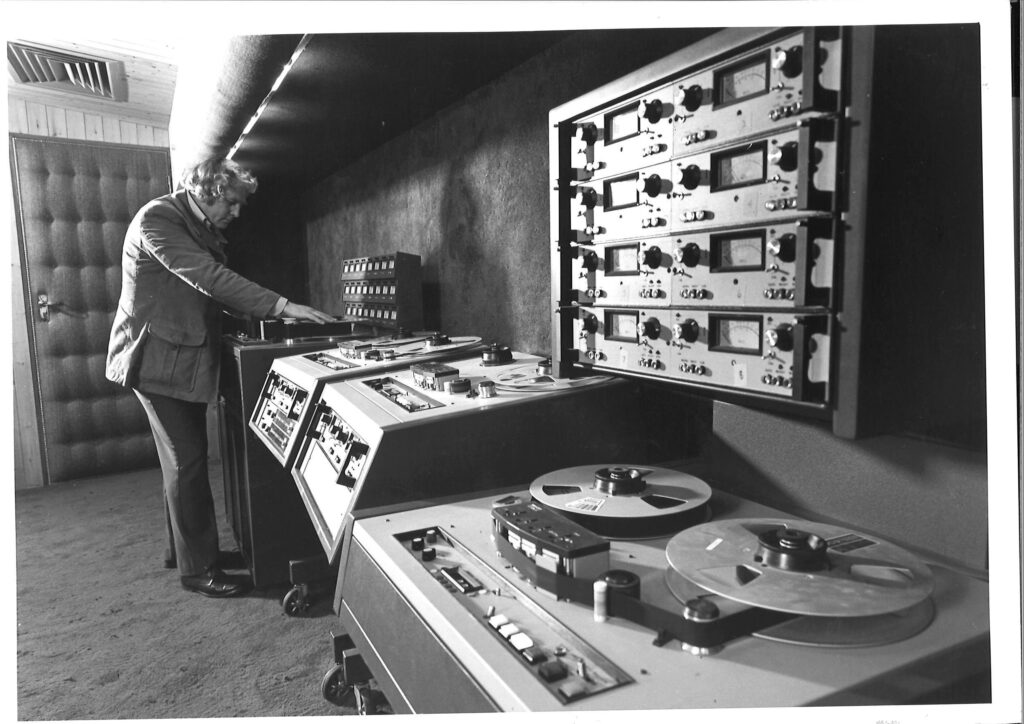
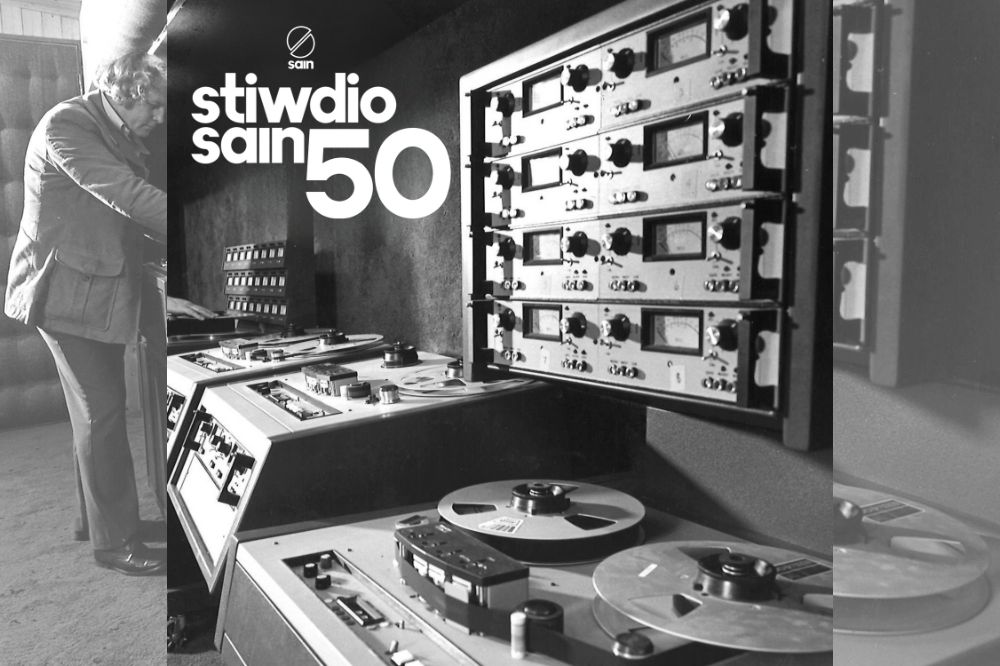
A recording desk, similar to the Rockfield desk, was custom made for them by Rosser Electronics, Swansea, and they bought an 8 track recording machine which used to belong to Pete Townsend from The Who, and everything was recorded on a 1 inch tape.
The first album to be recorded at Gwernafalau was ‘I Mehefin (ble bynnag y mae)’ [To the month of June (wherever it may be)], by singer-songwriter Morus Elfryn. He had been a member of the 60s folk group Y Cwiltiaid and the satirical 70s group Y Dyniadon Ynfyd Hirfelyn Tesog, and the album is highly regarded today by musicians such as Gruff Rhys.
The first Welsh rock opera, ‘Nia Ben Aur’ was mixed at Gwernafalau although most of the album was recorded in London, before
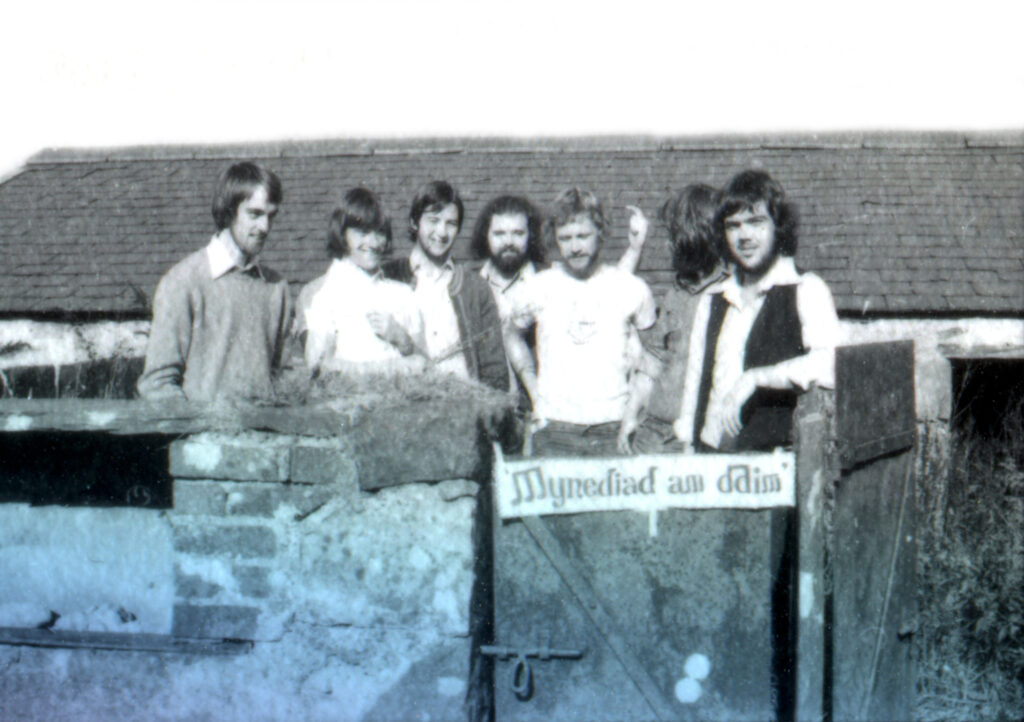
the studio opened. Some of the other notable early albums to be recorded at Gwernafalau were ‘Ail-Ddechra’ (Brân), ‘Wa Macsbredar’ (Mynediad am Ddim), ‘Teulu Yncl Sam’ (Sidan), and ‘Ffordd Newydd Eingl-Americanaidd Grêt o Fyw’ (Edward H Dafis). Huw Jones worked as the engineer at the beginning before Hefin Elis started as engineer and producer and subsequently
worked on many of the above named albums.
It was an exciting period in Welsh pop music and Gwernafalau was a busy hub of music and new contemporary Welsh music artists and bands.
The recording method was quite different then – after recording on 6 tracks you had to mix and bounce everything to the remaining 2 tracks, before deleting the original 6 tracks and then continuing to record more instruments or vocals on the now 6 empty tracks. The original 8 track recording machine used at Gwernafalau is still at Sain Studios today.
Excitement
The thrill and excitement of this early period of recording Welsh pop music is recalled by Sioned Mair (Sidan) and Dafydd Roberts (Brân).
Sioned said: “I remember driving to Gwernafalau in my father’s car – I had only just passed my test! I remember all five of us going there in Caryl’s Mini once. At that time the recording process was more of an ensemble and not much re-recording so the challenge was to get it right the first time round, and when that happened I can still remember the sense of achievement…We could also
experiment vocally, because of the new technology, especially with songs such as ‘Ar Goll’ and ‘Dwi Ddim Isio’. It was a lot of fun…we were young and anything was possible!”
Dafydd added: “Going to Gwernafalau to record with Brân in October 1975 was a truly memorable experience. I had just started my second year at Bangor University and had been a member of Brân for about a year. Earlier in the year the group had won the Song for Wales competition and the competition at the Pan Celtic Festival in Ireland, beating Clannad, and all summer we had
been performing in a show called ‘Harping Around’ at Theatr Gwynedd, Bangor, and then came the invitation to record with Sain with the newest recording technology at Gwernafalau studio.
“We were all really excited to be experimenting with the new gear, and being able to set down extra tracks on top of the original ones – such a new experience. And then the thrill of all the different options when it came to mixing it all! Even though it was only an 8 track machine, the possibilities were endless!
“It was an exciting and productive period and Sain is to be congratulated on being so forward thinking and enterprising in those early days in endeavouring to raise the standard of Welsh music recording.”
Classic albums
Over 100 albums were recorded at Gwernafalau between 1975 and 1980, including ‘Syrffio Mewn Cariad’ (Endaf Emlyn), ‘Adlais’ (Huw Jones), ‘Am Heddiw Mae ‘Nghân’ (Eleri Llwyd) and ‘Hen Wlad fy Nhadau’, (Geraint Jarman).
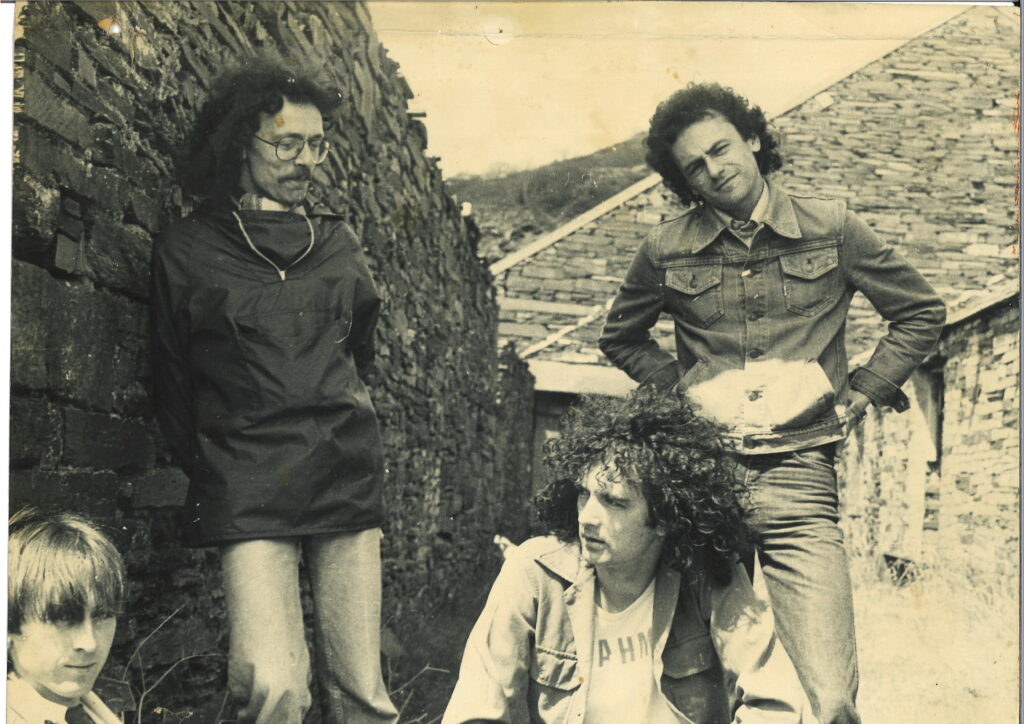
In 1980 Sain’s present studio at Llandwrog opened as a new state of the art 24 track studio with a Harrison desk – one of the most prominent studios in Europe at the time. The first album to be recorded here was ‘Fflamau’r Ddraig’ by Geraint Jarman. The album press release from that time states that Geraint and his band (which included Tich Gwilym, Neil White, Cat Croxford and Richard Dunn) worked with engineer Eryl Davies and engineer and producer Simon Tassano for 12 days in the studio, recording on the ‘late shift’ between 6pm and around 8am.
This nocturnal way of recording had its advantages – around 4am one morning, Simon went outside for a walk, and happened to hear the tremendous sounds of the dawn chorus in the car park. He immediately grabbed a microphone and recorded the musical birds for about ten minutes. Their sound can be heard on the song ‘Colli Ti’.
It was Jarman’s choice to bring Simon Tassano with him to the studio. He then went on to work on a number of renowned Sain albums, including ‘Dawnsionara’ (Endaf Emlyn), ‘Hwyl ar y Mastiau’ and ‘Shampŵ’ (Bando) and ‘Dwed y Gwir’ (Rhiannon Tomos). Jarman and Heather Jones came to know him at the end of the 70s and Heather also worked with him in the band Red Brass.
Originally from London, Tassano became prominent in rock and folk music worlds and also on the London jazz scene. He worked with singer Richard Thompson in the studio and in live performances for over 30 years and he was the sound engineer on his Grammy nominated album ‘Dream Attic’.
Meredydd Morris, guitarist for Rhiannon Tomos and her band, remembers working with Tassano while recording at Sain: “We recorded Rhiannon’s album over a period of 12 days, working from 7pm until around 6am..It was a privilege and an education to work with Simon Tassano and I learned a lot from him. I think that’s where I was inspired to work as a record producer.”
A new sound
Through his work in Sain Tassano definitely bought a new sound to Welsh music.
In the first two years of the new studio albums by Leah Owen and Edward H Dafis were also recorded and Sain had started to branch out to other genres of music and were recording folk and choral music as well as the contemporary pop and rock.
Some of the main artists of the 80s period were Bwchadanas, Tecwyn Ifan, Y Ficar, Steve Eaves, Sobin a’r Smaeliaid, Meic Stevens
and Dafydd Iwan.
Rosalind and Myrddin and Trebor Edwards were big names in the middle of the road genre and the young Aled Jones was starting to record for the first time, at Stiwdio Sain.
A 24 track machine meant recording on a 2 inch tape. There were so much more possibilities with multi tracking and the tracks were mixed down to 2 ¼ inch tracks. By the mid 80s the recording was still analogue but it was possible to mix down to a digital format, 2 tracks, stereo.
One of the engineers at this time was Eryl Davies and there were many other notable producers, including Gareth Mitford, Hefin Elis, Myfyr Isaac and Gareth Hughes Jones. In the early 80s you had to be resourceful in order to have any sort of reverb effect on a track – before the days of the plate reverb (a big box, similar to a chamber with a big metal plate), a microphone and speaker
was placed near the roof of Sain’s building, in order to get the echo. You can still hear the sound of a rogue seagull, also on the roof, on some tracks.
As we came to the end of the 90s, analogue recording on tape came to an end. With the development of digital technology the recording process changed dramatically and the Radar and then Pyramix systems were used. Emyr Rhys, Gethyn Evans, Annette Bryn Parri, Maartin Allcock, Tudur Morgan, Sion Alun Jones and Siwan Lisa Evans were prominent as engineers and producers at this time.
Studio 2 opened at Sain in 1987, as a post-production and editing suite and in 2013 Studio 3 was opened which is generally used for dubbing and voiceovers.
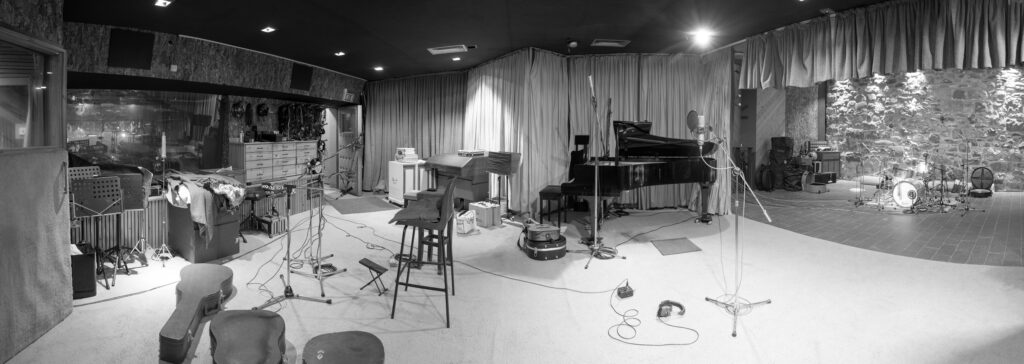
Today the recording software is yet again changing and developing and a new team is at the helm at Stiwdio Sain – Aled Wyn Hughes, Ifan Emlyn Jones and Osian Huw Williams. The studios are as busy as ever recording music for Sain and so many other labels and companies.
The new compilation, ‘Stiwdio Sain 50’, will be streaming on 26.09.25. Gŵyl Sain, in partnership with Menter Ty’n Llan with support from Cymru Greadigol/Creative Wales, celebrates Sain’s archive and the Stafell Sbâr Sain artists.
Join them for a day full of live music, talks and fun as we mark Sain’s journey while looking forward to the coming years. In the
afternoon, between 2 and 5 there will be a Sesiwn Stiwdio @ Canolfan Sain – a unique behind the scenes look at Sain Studios🎙 Studio Tours – Explore where Welsh music history was made.
In Conversation – Dafydd Iwan, Don Leisure and Rhys Spikes discuss the release of Sain Records’ first predominantly sample-based album Tyrchu Sain, created from the label’s audio archive with samples from artists such as Brân, Endaf Emlyn, Edward H Dafis and Sidan.
Live Acoustic Set – An intimate studio performance by Gethin Griffiths and Elis Derby of Ciwb.
Gŵyl Sain: Evening Gig @ Ty’n Llan | From 18:00
The celebration continues with a night of live music at Ty’n Llan community pub: Performances from Lo-Fi Jones, Malan and Elin a Carys
Sain’s Legacy: Marged Tudur and Dyl Mei in conversation DJ sets by Don Leisure and Klust DJs Wood-fired
pizza by Pizza Llan & Sain-themed cocktails.
Tickets – www.sainwales.com
Buy the new album direct from Sain or from all good music stores from 26 September.
Support our Nation today
For the price of a cup of coffee a month you can help us create an independent, not-for-profit, national news service for the people of Wales, by the people of Wales.


