


Surveillance, love, and rebellion: Inside Common/Wealth’s radical new show
Adam Johannes
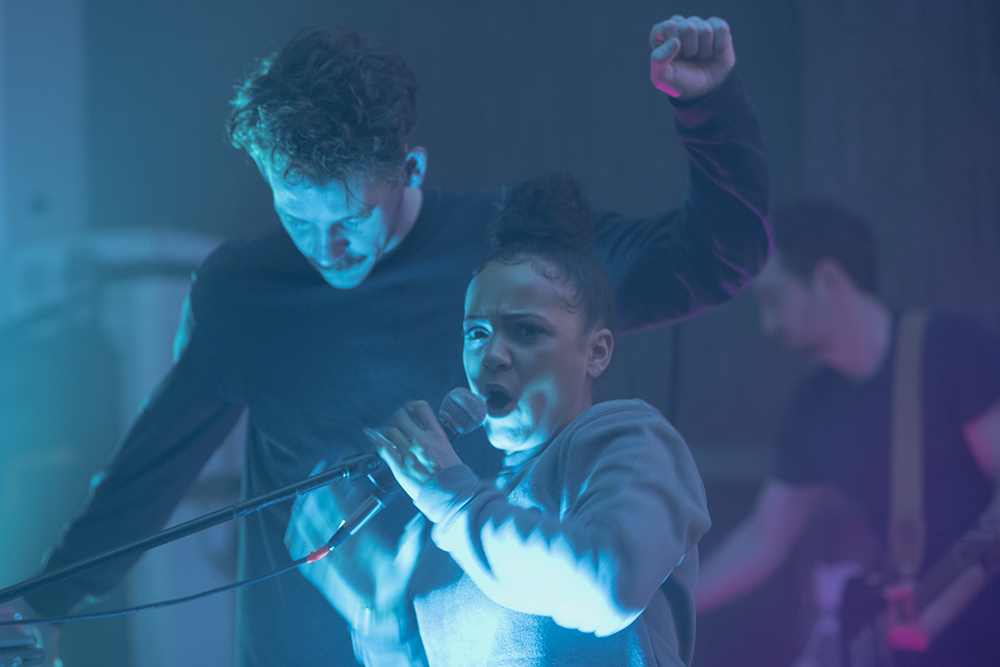
Part community ritual, part Situationist happening, part punk gig, Common/Wealth’s new show, Demand the Impossible is about the spycops scandal, decades of undercover policing infiltrating left wing movements, often forming intimate relationships under false identities.
But it’s not just about surveillance, but something more intimate and devastating, what happens to the human spirit when the hand of the state reaches into the private spaces of love, trust, and friendship.
The play’s director, Rhiannon White, and cast member Bianca Ali meet me in a half-lit rehearsal room in Newport. Around us fragments of staging, video screens, cables, protest placards. Everything feels provisional.
Demand the Impossible doesn’t begin with a curtain. It begins with movement. “The show being promenade,” White says, “is in itself part of the design. We’re interested in agency but also the notion of complicity. Everything is about choice.”
Sharp
White is animated, sharp, warm. “We want the audience to be active, to make choices about what and how they experience the work,” she says. In the show, screens, sound, and live performance blur together. A society watching and watched, consuming and consumed. It mirrors our times. Fractured, mediated, disoriented.
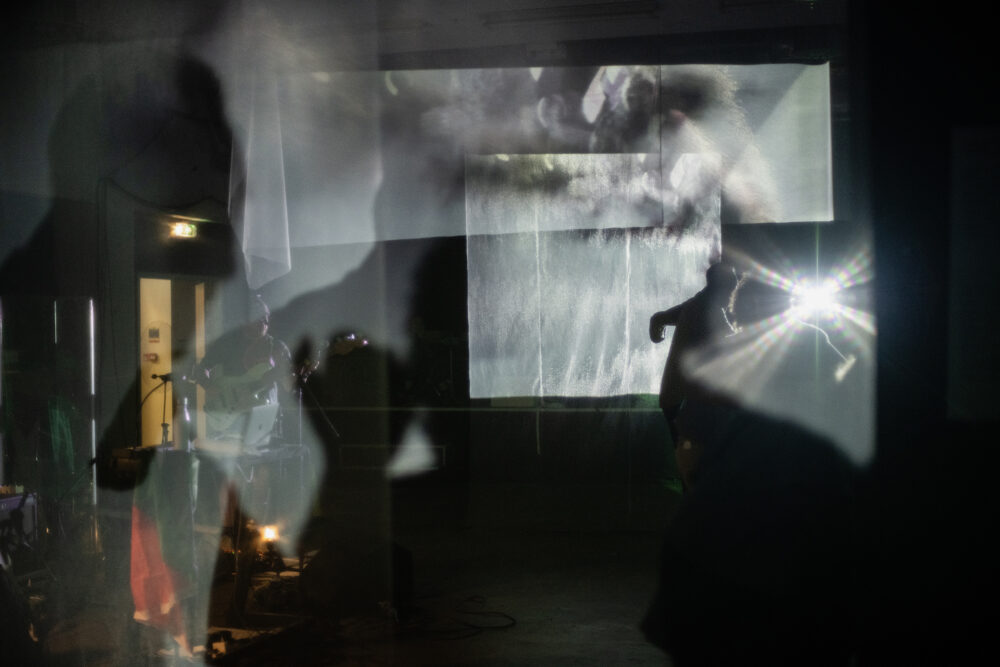
The audience moves as if through a surveillance grid. The phone, once a tool of communication, becomes an instrument of mutual policing. A creative technologist films on his phone, projecting live footage on giant screens, a nod to the state and our constant documenting of each other.
What does it means to live under a low-level, constant occupation by the state? What happens when surveillance and abandonment become the condition of the working class? The format forces the audience to choose their perspective, to feel implicated. It’s the anti-Netflix, a demand for participation in an age of passive watching. “It has multiple meanings. I’m sure each audience member will experience something different.”
White refuses to frame this as a story about individual police officers. “The play isn’t about the police,” she says. “It’s about the state. The police are not a character in the show, but we do feel the state is present. The police are a tool of the state.”
For White, distrust runs deep. She grew up in St Mellons, a Cardiff estate where the police showing up “was always a sign of trouble.” Early experiences of a mum suffering domestic violence, and police indifference, shaped a lifelong hatred of authority. As an activist, she was “hit with batons at free parties at six in the morning, pushed against buildings, kettled at protests, scared by the police.” Friends were arrested and taken to court. Her anger is personal, but her art transforms it into something universal.
Music pulses through Demand the Impossible. “Working with a band made sense. Subculture, music, art go hand in hand with activism,” White says. “These musicians played in Bristol squat parties, some probably had undercover police in their circles. They’re performing some old songs and new ones. We wanted the music to hold the atmosphere of the world we’re creating — to transport us.”
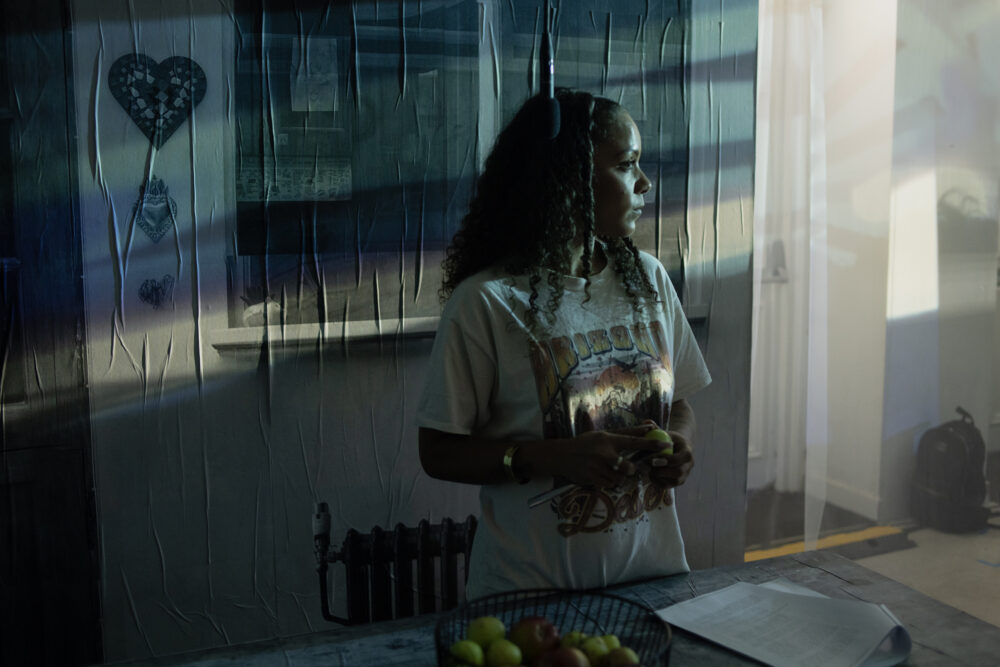
I ask about Common/Wealth. They began by squatting empty buildings in Bristol, staging large-scale shows with “no funding, no money,” White recalls, “just great passion.” The name captures their ethos: “Common as in ‘poor’ and ‘in common’, and ‘wealth’ as in all the wealth that comes from that. We wanted to make work relevant to our times, with something to say, and to work with people not usually in theatre. We tell different stories and challenge narratives.”
“Me and my friend were from council estates, and we didn’t see the kind of theatre we loved,” White remembers, “When we did see working class theatre, it was always a poor version. We wanted to make high-quality, working class theatre in found spaces, outside the institutions.”
Demand the Impossible is their most complex work yet. It began with her friend Tom Fowler from the SpyCops Info podcast. “I’ve been in and around activism since my twenties, and friends were spied on by the police,” she says.
“One Christmas Tom phoned me. He was pissed off with people taking the story and sensationalising it, telling a version that wasn’t thinking about the movement or the big picture. I said, what if we made a show? Because we trusted each other, and we’d both been in that world a long time, it felt like we could do it justice”.
Collective
The process was collective. Interviews with activists, constant check-ins “with people on the ground who’ve experienced this.” “That’s been our barometer,” White says. “There are stories of women who’ve experienced trauma at the hands of the state, and we wanted to avoid glorifying that or telling something untrue.” She also wanted the show to speak directly to her own city. “I kept asking how this was relevant to east Cardiff,” she says. “Then I thought about Bianca, her story, the Cardiff she represents. For our audience to connect, they needed someone who’d lived what they’d lived.”
Bianca Ali’s story embodies that bridge. By the time Ali steps on stage, she’s already done the impossible. Not the glamorous kind, but the everyday kind: surviving, speaking, refusing to shut up. “I didn’t have the opportunity to go to the shops,” she recalls of her time in an abusive relationship. “Never mind all these opportunities now falling into my lap because of the activism.”
She says it with a half-smile that carries both defiance and fatigue. Because what follows survival isn’t peace, it’s work. Many already know her story. During the Black Lives Matter movement, Ali became a visible voice for racial justice in Wales. Before that, she founded The Take Back, supporting domestic violence survivors.
“When I went through domestic violence, I wrote what I thought was a poem,” Ali says. “I showed it to my friend, who said, that’s spoken word, you need to do something with it. I put it on stage and performed it and it went well. I found that to be a part of the beginning of my healing, putting how I felt into poetry and performing it to an audience of strangers.”
“Creativity has been a way for me to show activism in a different way,” she says. By chance…or maybe fate…Ali began working with theatre-maker Gavin Porter at National Theatre Wales, and then came Common/Wealth, the radical theatre company known for turning ordinary stories into urgent, beautiful, political performance.
Triggered
For Demand the Impossible, she worked with writer Taylor Edmonds, who shaped her words into a script. “We had an interview. I just told my story. The script came from that. A lot of it is my actual words,” Ali says. “It was hard at first, being triggered by talking about my own stuff constantly. Over time, it got easier. I had that question from day one: how do I play myself when I am myself? So I’ve just been myself, saying the script as I did in the interview.”
The act of performing has become its own healing. “This is helping me process stuff,” she says. “The activism was so heavy for so long, I didn’t get to process it, or any of the campaigns we were fighting for. I didn’t process what happened to Mahamud till now, till I stopped, read those words, and let them sink in.”
Her own distrust of police isn’t theoretical. “I was born into a family that hated the police, for their own reasons,” she says. “My family are many different cultures and ethnicities. From every corner of my family, nobody likes the police, and it’s been because we’ve been targeted for as long as they can remember.”
When Ali performs, she’s speaking to the next generation, to anyone who’s ever felt disposable. “It’s a message,” she says. “If we don’t act, everything you see in the show will continue and get worse. It’s about demanding those things you talk about but don’t think can actually happen…and making them happen.”
She pauses, and for a moment the theatre, the activism, the art all seem to collapse into one thing, the need to tell the truth. “Go and do what you can,” she says finally. “Within campaigns, within protests, within your own communities. Find out about things that have been happening that haven’t been highlighted, and demand the impossible.”
After Bianca Ali, the play widens its scope to another hidden history, the blacklisting of trade unionists. One character connects the dots between the secret policing of activists and the economic punishment of workers who resist. White based it on the experience of her mum’s ex-boyfriend, a Cardiff Council electrician, Steve Barley, blacklisted for trade union activism. “He’s from Trowbridge and St Mellons, socialist to his bones,” she says. “There’s an assumption people in those areas aren’t political, but we wanted to challenge that with a gentle character who’s politically intelligent and has experienced the state and its impact on everyday life.”
Assumptions
White’s voice hardens when she speaks about how her community is represented. “It’s easy to make sweeping assumptions about poor communities. There are good and bad everywhere, but a lot of people I know are good and intelligent. They know the world better than most. They’re international in their soul. People are disenfranchised, and every political party has played a role. That’s why Reform can prey on people. But of course, we should still call racists what they are.”
The title Demand the Impossible comes from a slogan of the 1968 Paris uprising, the same year the Special Demonstration Squad was founded, the secret police unit that began infiltrating political movements. “In ’68, people wrote ‘Demand the Impossible’ on the walls,” White says. “I loved that invitation to think beyond what we know. What if the police didn’t exist? What if abolition was real? What else could we live in? Because there are many more of us than them.”
Theatre rarely asks such forbidden questions anymore. But Common/Wealth does. In a culture saturated by defeat, Demand the Impossible feels like a counter-transmission. A reminder that imagination itself is political. This is theatre that refuses to comfort. It refuses neat resolutions. It dares audiences to look at complicity in their own lives, at the machinery of the state and their place within it.
White leans forward, her voice both urgent and weary. “It’s important to show audiences what’s possible, artistically and politically. It’s about the times we’re living in. I’ve never seen political theatre be so direct before. It is full of rage, full of anger, full of joy, full of hope. No one’s making shows about all the things we’re feeling right now.”
In other words, if the state wants to render us passive and hopeless, Common/Wealth are having none of it. They’re asking you, the audience, to wake up, feel it in your bones, and maybe — just maybe — demand the impossible, too.
Demand the Impossible performed by Common/Wealth Theatre is at the Corn Exchange, Newport
runs until 13 October.
Support our Nation today
For the price of a cup of coffee a month you can help us create an independent, not-for-profit, national news service for the people of Wales, by the people of Wales.


