


The day that saw the dawn of the Furries and the rise of the Manics
Neil Collins
The return of Super Furry Animals has been met with huge fanfare including a sold-out show in Cardiff last weekend.
Meanwhile, Manic Street Preachers are hitting the road once again on a joint headline UK tour with fellow ’90s heavyweights Suede this autumn.
While the Super Furries and the Manics are vastly different, their shared vision changed Welsh music history forever and their devoted fans continue to flock to their gigs three decades later.
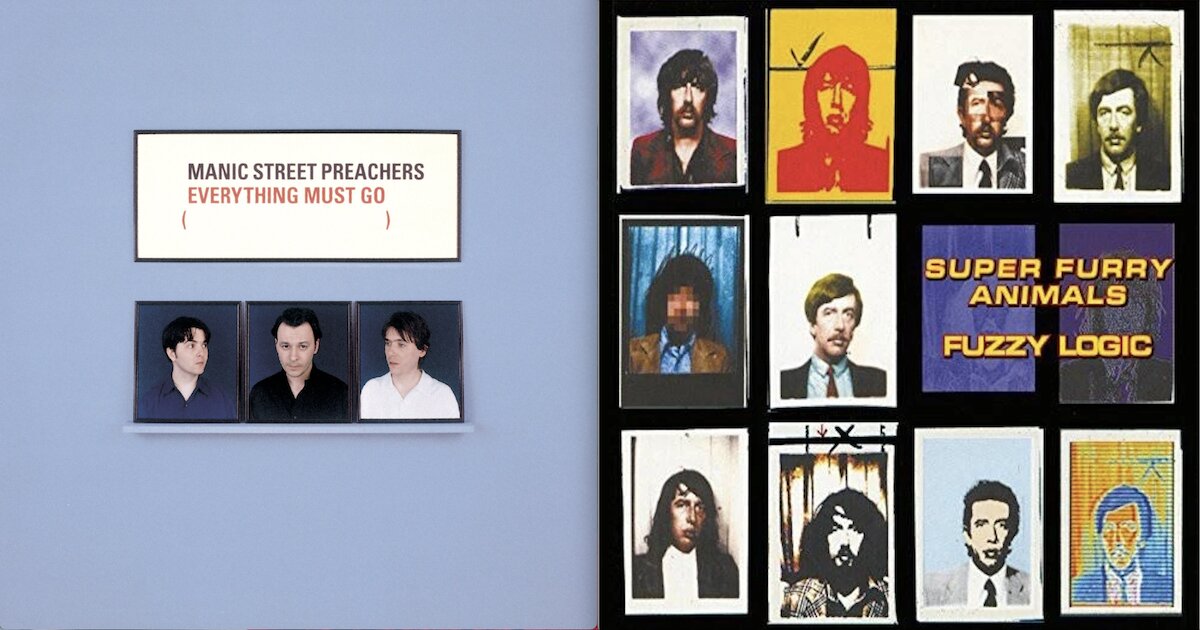
On 20 May 1996, both bands released classic albums on the same momentous day – one bursting with invention and idiosyncrasies, while the other emerged from tragedy and transformation.
For the Super Furries, their debut Fuzzy Logic introduced the world to the surreal brilliance of a group who would carry Welsh language and identity into adventurous new territory.
Grand, anthemic and emotionally raw, the Manics’ fourth album Everything Must Go became one of the defining British records of the decade following the bleak intensity of The Holy Bible and disappearance of Richey Edwards.
In extracts from his book International Velvet: How Wales Conquered the ’90s Charts, Neil Collins revisits the legacy of both albums on their 30th anniversary.
Nicky Wire has often spoke of Everything Must Go as the moment when Britain’s biggest cult band came overground, and it’s easy to see why – from the Queen Vic to the Rovers Return, the Manics were everywhere.
Central to its success was lead single A Design for Life. A heart-on-sleeve tribute to working-class resilience, it encapsulated everything they had been trying to say since forming in the mid-’80s.
After months of paralysis and indecision, Wire sprawled two potential ideas across 20 pages of A4 in the summer of 1995. One was The Pure Motive and the other was A Design for Life – the latter’s title inspired by Joy Division’s An Ideal for Living EP.
Once it was whittled down into one coherent piece, James Dean Bradfield devised the song’s trademark spiralling riff: ‘Nick had sent me some lyrics and said to me “Let’s see if we’ve got anything,” and the song came out in about five minutes…I called up Nick and knew we had it, that we could carry on. It was like finding the final piece…
‘Then I was pacing around the house for half a day thinking, ‘God, I don’t think I’ve ever been this close to potentially writing a No.1 single with a perfect lyric.’
In late 1994, Bradfield admitted: ‘At the end of the day, we haven’t written the song that the milkman can whistle.’ Now, seemingly they had.
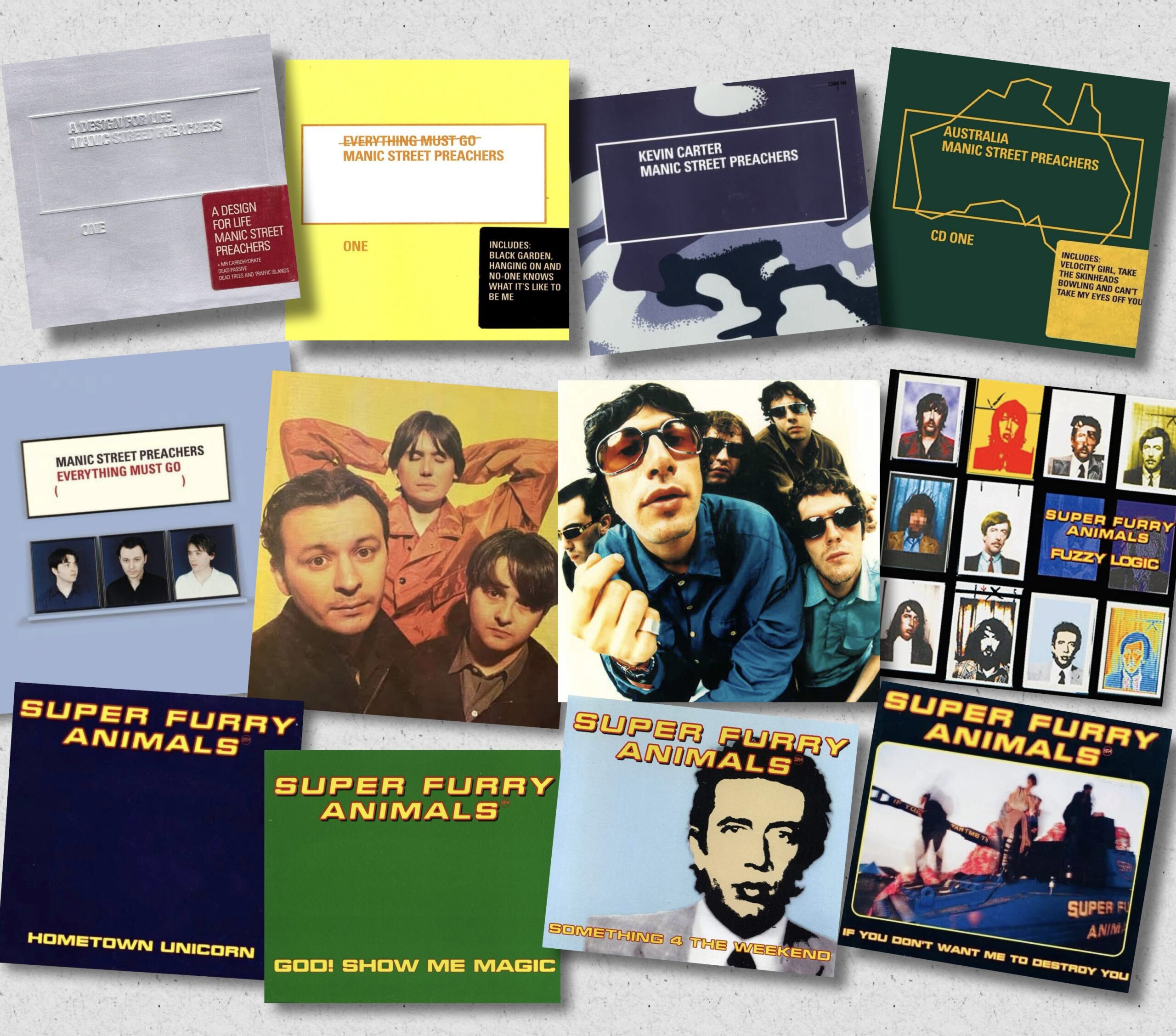
The Manics had previously approached producer Mike Hedges for The Holy Bible thanks to his work with Siouxsie and the Banshees. This time, they had another of his masterworks in mind – the widescreen ‘Wall of Sound’ production that had sprung Yes by McAlmont & Butler into the Top 10 the previous year. Their very own George Martin, Hedges immediately labelled A Design for Life a ‘jukebox’ record that people would want to listen to again and again.
Call it serendipity or divine fate, but the Manics were about to mount one of the most miraculous comebacks in rock ’n’ roll. By the time a slogan-heavy video, a gorgeous string section and Sean Moore’s drum solo finale had been added to the amalgamation of Ennio Morricone and Phil Spector, the end result was pure gold.
After the commercially problematic Holy Bible, the Manics faced the very real possibility of being dropped by Sony. Therefore, A Design for Life couldn’t have been timed better. Briefly No.1 in the midweek charts in April 1996, it agonisingly missed out on the top spot to Mark Morrison’s Return of the Mack.
Part of Wire’s incentive in writing the lyric was his reaction to Blur’s portrayal of ‘Parklife Britain’. In Kieran Evans’s docufilm Escape from History, he said: ‘The working-class symbols of a miners’ institute were being bypassed and turned into some sort of On the Buses caricature of working-class Britain, and it was being done by people who weren’t even working class.’
Bradfield added: ‘That representation of cheeky, saucy, seaside working-class postcard desires just seemed a bit condescending.’
Wire’s depiction of the working class was very different. In 2016, he said to The Quietus: ‘That was my only problem with Pulp – it always seemed to be done with such a sense of irony, and everything was presented as some sort of Carry On film, which was anathema to me.’
The hugely powerful opening line of A Design for Life (‘libraries gave us power’) was inspired by the inscription ‘Knowledge is Power’ above the door at Pillgwenlly Library. It was the antithesis to Liam, Loaded and laddism.
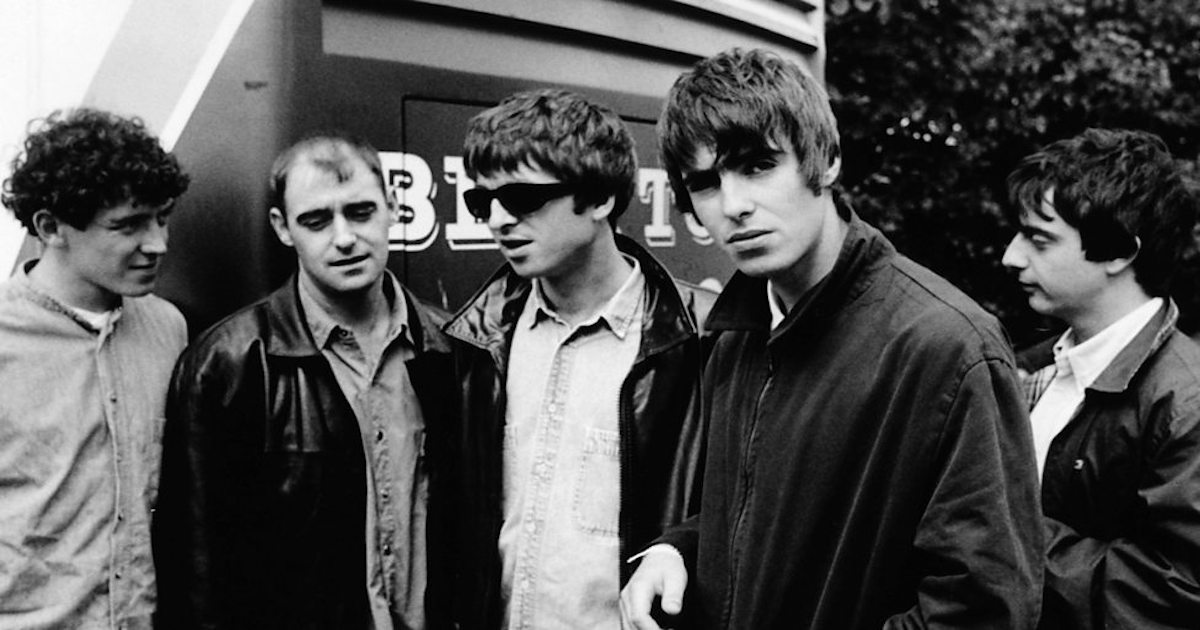
Simon Price found it hard to stomach that the Manics were suddenly supporting Oasis:
‘Nicky Wire’s wife and brother both worked in libraries. One suspected that Liam Gallagher would feel out of his depth if a woman told him she was a Libran, never mind a librarian…
‘Nicky dedicated A Design for Life to Dennis Potter, Dennis Skinner, Arthur Scargill and Antonio Gaudi, and now here he was backslapping with this proudly illiterate apeman, who had probably never made it to the end of an Enid Blyton.’
Wire has often said the song couldn’t have been written anywhere other Wales – or more specifically, the south Wales valleys. Manics superfan, Michael Sheen said: ‘I remember once driving back to London from Wales and as I crossed the Severn Bridge, A Design for Life was playing, and I was just weeping…
‘There’s a peculiar kind of Welsh bigness and the Manics are absolutely in that tradition: dramatic and passionate. We have the word “hwyl” in Wales – that sense of it coming from somewhere deeper than your bootstraps, in your gut.’
Bradfield added: ‘We won an Ivor Novello for Best Contemporary Song for A Design for Life, which is one of my favourite moments in the band. I don’t think there are many examples in British rock/pop history where every line of the song means something…
‘It talks about boom-and-bust economy, it talks about the gap between the haves and the have-nots where the haves don’t give a damn about tax, but you know the have-nots constantly get preached to about not spending above their means…And being told, ‘Stay in your place,’ but also, “You can’t enjoy yourself either.”’
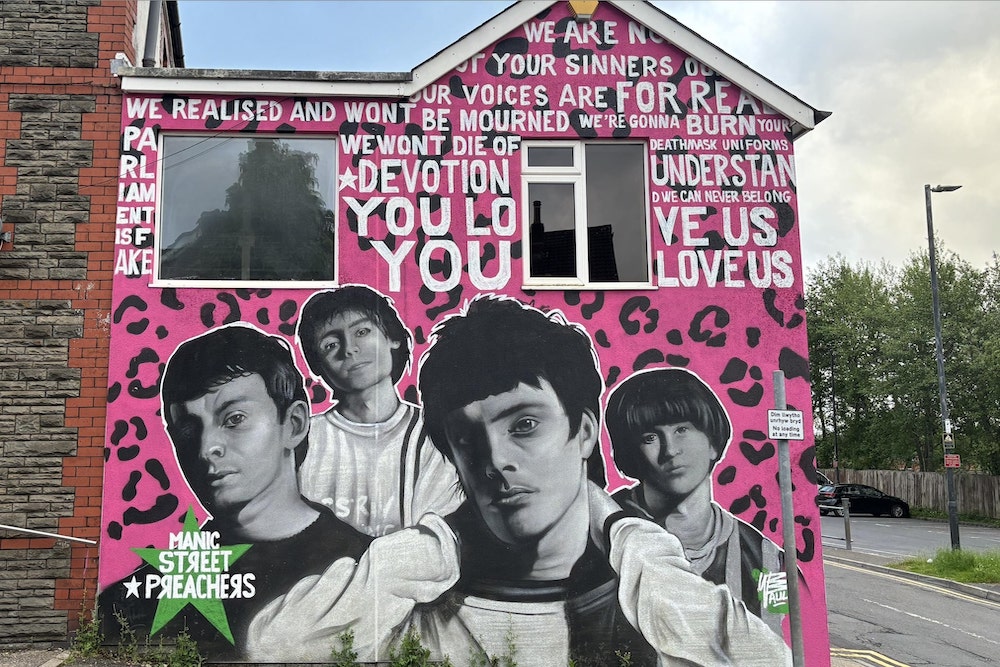
With a working title of Sounds in the Grass (inspired by a series of paintings by Jackson Pollock), Everything Must Go featured four Top 10 singles. Intrinsic to its success was that it had missing band-mate Richey Edwards’s influence etched across it.
Far from the leopard print and mascara of their past, the Manics’ new aesthetic was a purpose non-image as depicted in the album’s artwork, as Simon Price explained: ‘You only needed to glance at the cover of Everything Must Go to know that something had changed: this band had been redesigned…Mark Farrow’s sleeve was a masterpiece of neat, uncluttered modernism…
‘Its only conscious statement seemed to be that there was no statement. Below the title stood a pair of wide-spaced parentheses containing no text, just a yawning void (which spoke louder than words ever could).’
Richey had written full lyrics for three songs: the achingly beautiful Small Black Flowers that Grow in the Sky, the Nirvana Unplugged acoustic strum of Removables and an unlikely hit in Kevin Carter. The fact that a bleak lyric about a Pulitzer Prize-winning photographer (who died by suicide) could reach No. 9 demonstrated that the Manics were still brilliantly subverting the British mainstream.
Wire and Edwards co-wrote the Sylvia Plath-inspired The Girl Who Wanted to Be God, and Elvis Impersonator: Blackpool Pier, where the Manics actually found themselves in agreement with Blur about a creeping stateside influence in British life. It conveyed that Brits would lap up anything American even if it was dead culture, and a cheap imitation at that.
Richey’s uncomplicated guitar playing from the No Surface All Feeling demo even found its way onto the final record underneath Bradfield’s Smashing Pumpkins-esque riffing. Plus, a band who vowed they would never write a love song had now written two; both were included. Enola/Alone and Further Away were written by Wire for his wife, Rachel.

The most poignant lines of the whole album came via its title track: ‘I just hope that you can forgive us, but everything must go’ and ‘I look to the future, it makes me cry’. Across four minutes, Wire agonises about their decision to continue without Richey. Not only had they lost their driving force, but also their manager Philip Hall, who died from cancer in 1993.
Following Richey’s disappearance, Bradfield came back to live with [Philip’s wife] Terri Hall in Shepherd’s Bush where the new songs brought her to tears: ‘He was often found in the kitchen banging away on the guitar, whether that be one in the morning or one in the afternoon.
‘[The album] sort of drew a line under the painful period and nodded towards a future – a future without people that we loved, but a future nonetheless.’
Likewise, the fourth and final single, Australia, referenced Wire’s yearning to get away as far as possible from all the press intrusion and rumours surrounding Richey’s disappearance.
At the 1997 BRIT Awards, the Manics scooped British Group and Album of the Year, while at the NME Awards they won Best LP, Live Act and Single. Reaching No.2, Everything Must Go was only kept off the top spot by George Michael’s Older.
The album was dedicated to Tower Colliery in the Cynon valley where 239 miners led by Tyrone O’Sullivan each pledged £8,000 from their redundancy payouts to buy back the mine for more than £1 million amid strong UK government resistance. Within its first year it ran a £3 million profit.
***
Creation Records once had a semi-serious, unwritten rule that they would never sign a Welsh band. By 1995 though, they were breaking one of their Ten Commandments as Alan McGee was smitten with Super Furry Animals: ‘I thought I was signing an out-and-out Britpop, Blur kind of band. Little did I know that I was signing The Beach Boys meets Gong meets Isaac Hayes on a f****** acid trip.’
With Britpop fast becoming a homogenous scene, you couldn’t blame McGee for not being initially enthused at another group of fellas bearing guitars, decked in combats. Simon Price thought the same: ‘At first, I didn’t get it…Yet another cagoule-wearing band signed to Creation by Alan McGee with the Oasis millions.
‘The way in which the press played up SFA’s drugginess misrepresented them as a laddish herd of gonzo hedonists…But SFA’s reputation as wacky funsters almost did them a disservice, taking attention away from the transcendent gorgeousness of their music.’
Splott-born Creation Records A & R man, Mark Bowen had alerted the Scottish Svengali to their charms after seeing only their second-ever gig in Aberystwyth in March 1995. The band had only just debuted at Lampeter University Students’ Union, and now here was a rep from a prominent label inviting them to London.
‘My passion at the time was either women or football,’ said McGee. ‘But I thought, for once, I should do my job, so I went to their next show.’
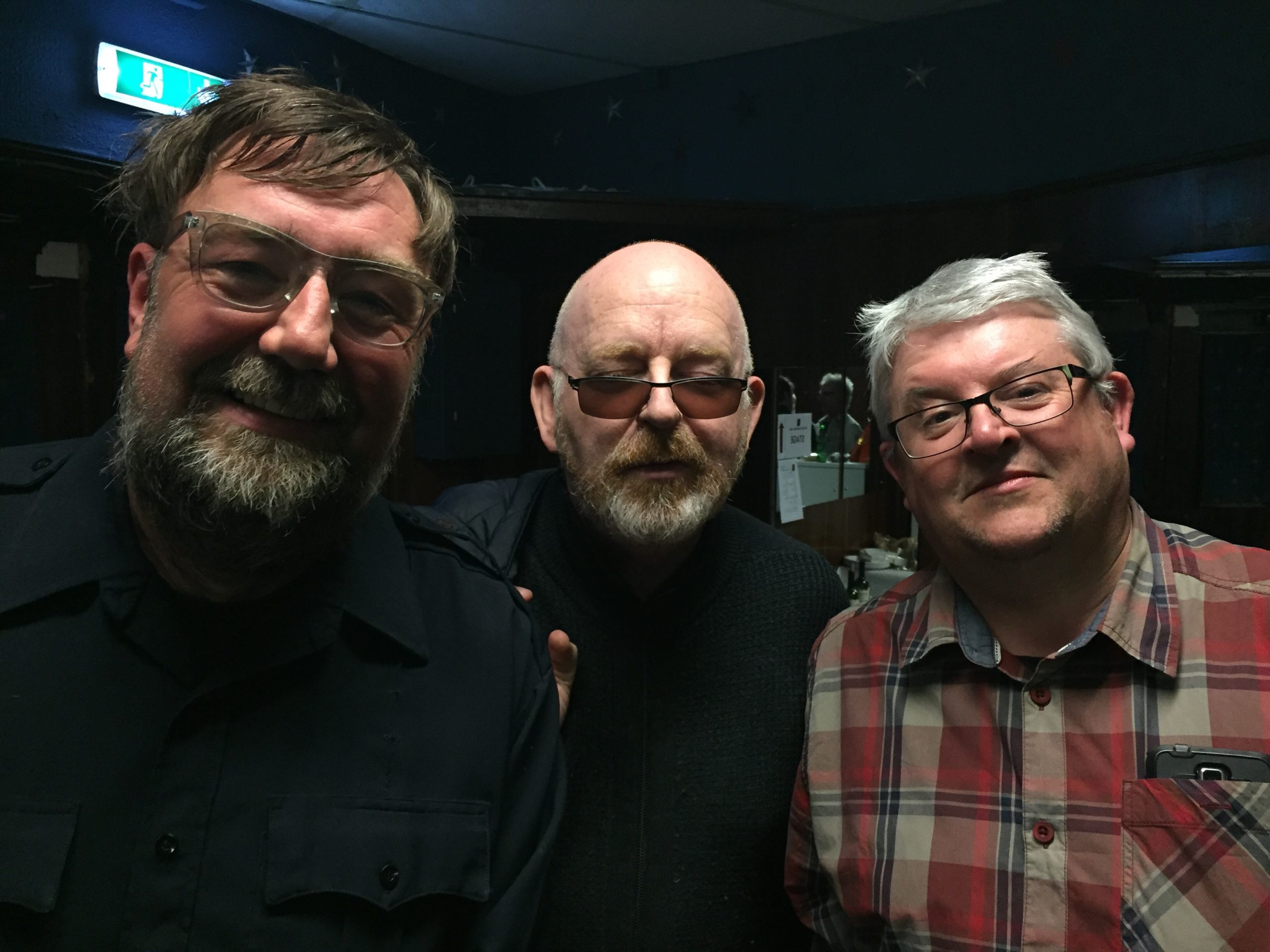
Alan McGee was renowned as the man who spotted Oasis at King Tut’s in Glasgow in 1993 and propelled them to stratospheric heights. It may have been only the Furries’ second gig outside Wales, but labels were already vying for Britain’s coolest new band, so he needed to act fast.
Approaching them after their short set, McGee asked if they would like to rub shoulders with Primal Scream, Teenage Fanclub, My Bloody Valentine, The Boo Radleys and, of course, Oasis on Creation Records. Swiftly adding the band to his ranks, he famously implored them to sing in English – only to be told they already were!
The Super Furries gained admirers quickly in the Manics. In August 2020, James Dean Bradfield recalled to The Line of Best Fit his first memories of hearing Fuzzy Logic at Big Noise Recorders (formerly Sound Space Studios):
‘From the title and the cover, I had no idea what this band was going to be like…And then looking at some of the titles, I saw Hometown Unicorn and I was like, “F*** me, that’s a great title.” Nick put it on in the office, and we sat down and listened to it, and it was just a lovely, exciting moment of having almost a sense memory of what a band is going to be like before you even hear it.’
Everything Must Go may have topped Melody Maker’s end of year album poll, but Fuzzy Logic finished close behind it at No.3. Nicky Wire declared it as his favourite record of 1996: ‘It reminds me of Bummed by Happy Mondays, the way the chaos and disorder comes together at certain moments into perfection.’
Initially, the most striking thing about Fuzzy Logic was its brilliant sleeve by Britpop artist-of-choice Brian Cannon. His classic covers already adorned Oasis’s Definitely Maybe, Suede’s Dog Man Star and The Verve’s A Northern Soul, but Fuzzy Logic is perhaps his most iconic.
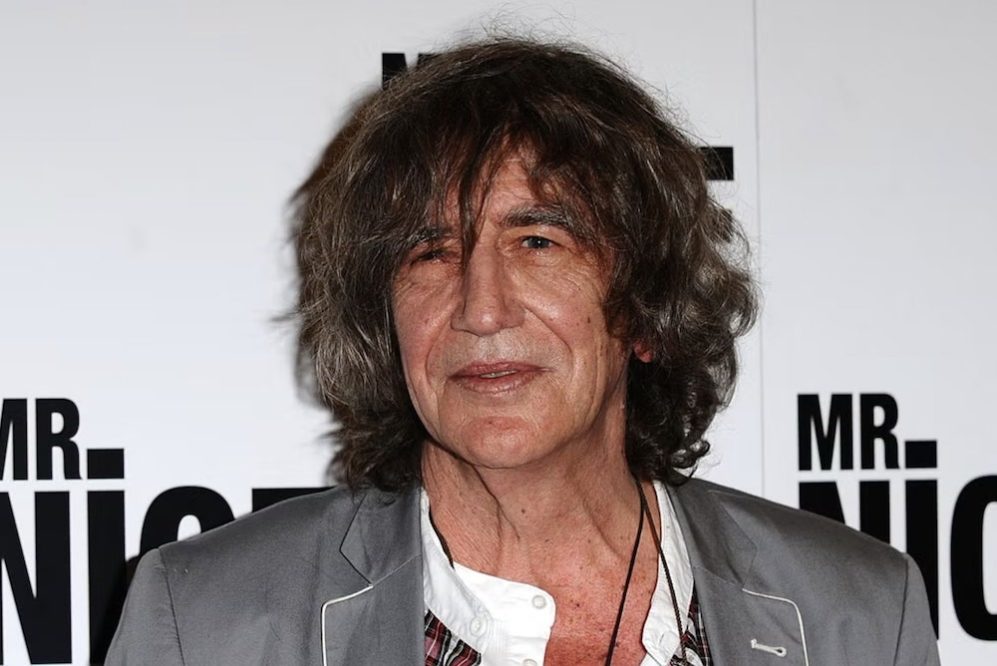
Gruff Rhys had sourced a collection of passport photos of the Bridgend-born drug smuggler, Howard Marks, who had over forty aliases during his time at large. When Cannon arranged the shots in a collage across the table, he envisaged a record that would jump off the shelves. Add into the mix a track called Hangin’ with Howard Marks and Creation’s decision to coincide Fuzzy Logic with the release of Marks’s autobiography, and the campaign was off to a flyer.
Marks was sent an advance copy of the album while in prison in Indiana. Upon release, legend has it that he attended the Furries’ Pontypridd Town Hall gig in June 1996 with a +10 request for the guest list. Coincidentally, he met Rhys Ifans that night, who would go on to portray Marks in the 2010 biopic, Mr Nice.
Rejecting inward-looking schools of thought, the Furries saw Marks as a progressive, revolutionary icon sharing their own internationalist vision. Ric Rawlins said: ‘They were consciously trying to create what they termed ‘outlaw culture’ – a reaction against certain notions of Welsh nationalism.
‘This had been cemented in their minds one night when they had visited Clwb Ifor Bach, which that evening was operating a Welsh-speakers-only door policy.
‘When the gig came to a close and Heather Jones came on to sing Land of My Fathers, they were disheartened to see everyone standing up to sing the national anthem.’
‘We made a point to sit down,’ said Gruff. ‘We’re not interested in any anthem, it’s such an antiquated notion and so exclusive. We’re all about inclusion.’
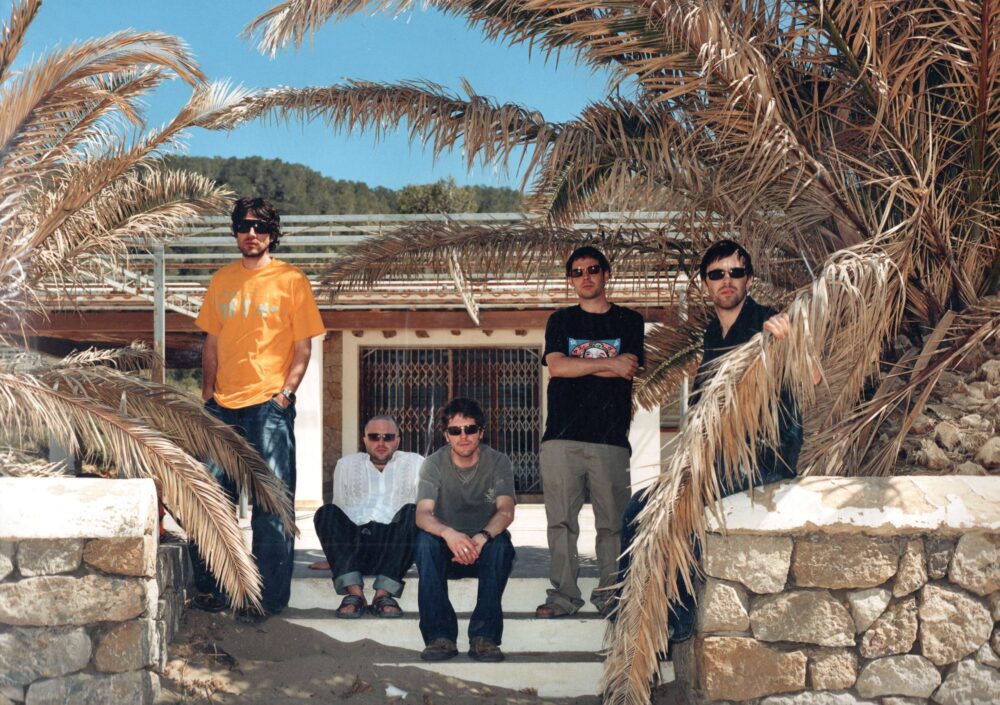
The Furries’ first performance on Top of the Pops with Something 4 the Weekend was prefaced with an on-screen graphic saying ‘O Gymru’ (‘From Wales’). It may seem a tokenistic, simple stab at the Welsh language, but it demonstrated how quickly the perception of Welshness had changed. The single gave the band their highest ranking at the time of No.18.
Hearing such a strong Welsh accent belting out a Top 20 hit on national TV was a thrill, but Gruff attempted to make his words more decipherable: ‘I was 25 and singing in English for the first time, so it took me a while to settle on my singing accents because I was kind of winging it.
‘On Fuzzy Logic, I’m trying on a few different accents. I think I’m trying on a Birmingham accent on Something 4 the Weekend because I was listening to a lot of ELO and The Move, so it’s pretty weird.’
Lead single Hometown Unicorn offered an early instance of the strange subjects found in the Furries’ songs. It referenced the reported UFO abduction in 1979 of Franck Fontaine, who reappeared a week later lying in a cabbage patch with little memory of what happened. While guest reviewing for NME, Pulp loved it and awarded it Single of the Week.
God! Show Me Magic secured the same accolade a couple of months later. Its inlay featured the quote ‘Gorau Chwarae, Cyd Chwarae’ (the motto of the Football Association of Wales, meaning ‘It’s Better to Play Together’ – a precursor to the simplified ‘Together Stronger’).
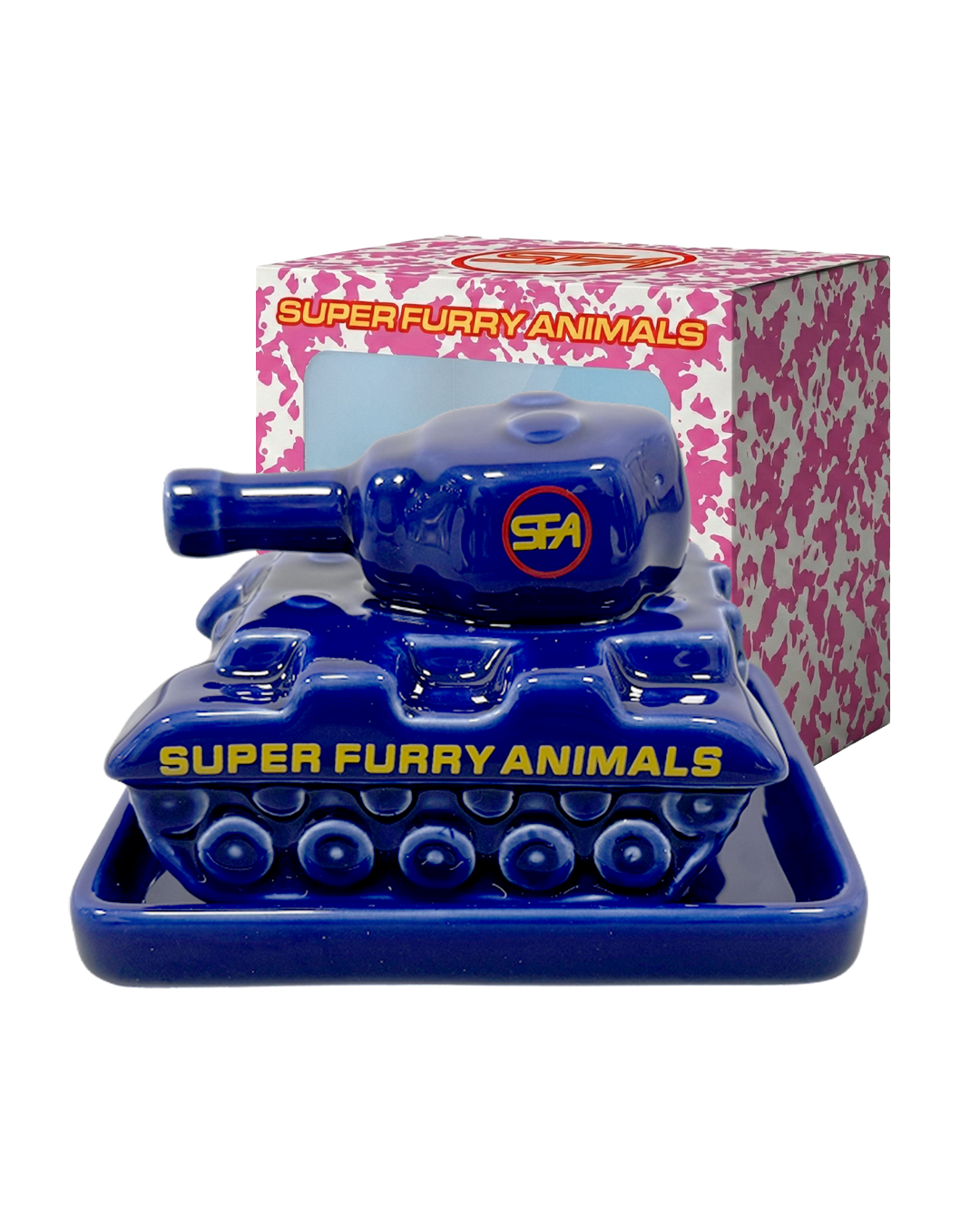
With the SFA techno tank adorning its artwork, the fourth and final single, If You Don’t Want Me to Destroy You, also reached No.18. Amongst its B-sides was a delightful rebuttal to their detractors in the language debate, (Nid) Hon Yw’r Gân Sy’n Mynd i Achub yr Iaith – meaning This Is (Not) the Song that Will Save the [Welsh] Language.
There was also the guitar-pop perfection of Frisbee, while the outro to Long Gone sampled Rhys Ifans in the midst of an acid frenzy captured via answerphone. Gathering Moss was a welcome dose of dreamy, balalaika-infused prog-psychedelia, while Fuzzy Birds was dedicated to a late friend – a swan, who exploded into a flurry of sparks outside Rockfield when it flew into the power line.
As darkness descended, the band believed the studio was cursed, especially as they were blighted with continual instances of the number 23.
The ‘23 enigma’ is a belief popularised by books, conspiracy theories and even a movie starring Jim Carrey, which suggests that the number appearing in regular frequency could be a symbol of some larger, hidden significance. The control panel at Rockfield was far larger than Gorwel’s production desk at Stiwdio Ofn, and he found gremlins in its 23rd channel. Gruff then counted 23 beams above Gorwel’s head. When the bird got fried outside the studio, it was also the 23rd day of the month. No prizes for guessing where Fuzzy Logic charted!
Melody Maker’s review offered both plaudits and casual racism: ‘Never mind that the band are a bunch of scamps with names like Grumph and Bumble, that their first language is gobbledygook and their second is Welsh, that they worship ‘cute’ dope smuggler Howard Marks to the extent of putting him all over the cover and writing a song about him. All that’s just a blind distraction from the little baroque box of baubles to hand.’
With lyrics reading like the end credits to a film, For Now and Ever was perfectly placed as the album’s arms-in-the-air denouement. NME said:
‘Fuzzy Logic closes with the smashingly cheesy For Now and Ever wherein Gruff howls, “We’ll be together ’til the end”, and the punters hold their SFA scarves aloft and weep a particularly tearful finale. It then ends with what appears to be the BBC sound effects workshop being blown up. The prog’s b*llocks!’
International Velvet: How Wales Conquered the ’90s Charts by Neil Collins is available now via Calon: https://www.uwp.co.uk/book/international-velvet-collins/
Support our Nation today
For the price of a cup of coffee a month you can help us create an independent, not-for-profit, national news service for the people of Wales, by the people of Wales.
Get more trusted Welsh news
Choose Nation.Cymru as a preferred source in Google News to see more of our journalism.


