

The flawed Gwen John exhibition

Norena Shopland
The rainbow flag, flown to mark LGBTQ+ History Month in February was still flying on top of the National Museum in Cardiff when I visited on 4 March to see the exhibition Gwen John: Strange Beauties, (7 February – 28 June 2026).
On seeing the first notifications of this new showing of John’s art I was extremely pleased, but by the end of the visit I was feeling very much let down.
Gwen John had for many years been overshadowed by that of her artist brother, Augustus John, simply because she is a woman. He however, recognised her worth and famously predicted that in fifty years, “I will be known as the brother of Gwen John”. It was a little later than that when an exhibition of her work was staged in London in 2023 curated by Alicia Foster.
Now, Amgueddfa Cymru is staging a new show to mark John’s 150th birthday, showcasing over 200 paintings and drawings, including rarely seen works from international collections.
While we rejoice John is finally getting the recognition she deserves, particularly during International Women’s Day celebrations, we are left wondering why a flawed image of her life is being portrayed.
John was sexually fluid. This is not in dispute; modern biographies cover her relationships openly and with understanding, and one of the best is by Alicia Foster following her exhibition. John has frequently featured in the LGBTQ+ history of Wales, and is something of a queer icon here, so the question for Amgueddfa Cymru is, why is this ignored in Stange Beauties?
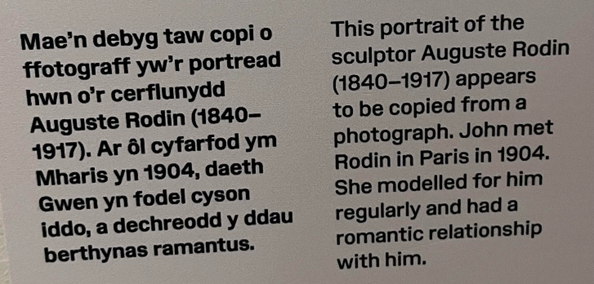
Due to this extensive coverage, ignorance cannot be an excuse. When challenged, the answer was that the exhibition is about her art, but why then include a label announcing John had a romantic relationship with Auguste Rodin? This one man takes precedent over several women John is linked to.
Amgueddfa Cymru has long had a dedicated LGBTQ+ staff network and yet they were not invited to contribute to this exhibition. It was not until the staff preview that they realised John’s sexuality had been mostly white-washed out.
The only reference was a label discussing Véra Oumançoff, stating ‘John developed strong feelings for Oumançoff,’ but with no previous indication of her attraction to women, what is the reader to make of these ‘feelings.’
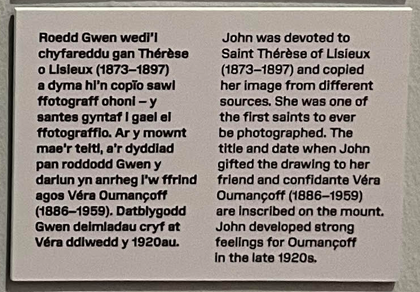
Sources inside the museum tell me that following a complaint, this label is now being replaced with something along the lines of, ‘John, who had romantic relationships with both men and women throughout her life, developed strong feelings for Oumançoff in the late 1920s,’ which makes more sense. However, at the time of my visit the old label remained.
Why does this matter? Why do we need to include details such as her diverse sexuality? For two main reasons: excluding members of the LGBTQ+ community separates them, and it has been shown that less visibility results in greater discrimination and hate speech. This omission, more a discrimination by disinterest than an intended insult I think, shows how little LGBTQ+ people were regarded when planning this exhibition.
In most museums throughout the UK and the world, queer people and their history are not on permanent display, existing mainly as pop-ups during History Month and Pride Month. We can visit, but we can’t stay. Although Amgueddfa Cymru is leading the way with a permanent display at St Fagans, so their omission in John’s exhibition is even more concerning.
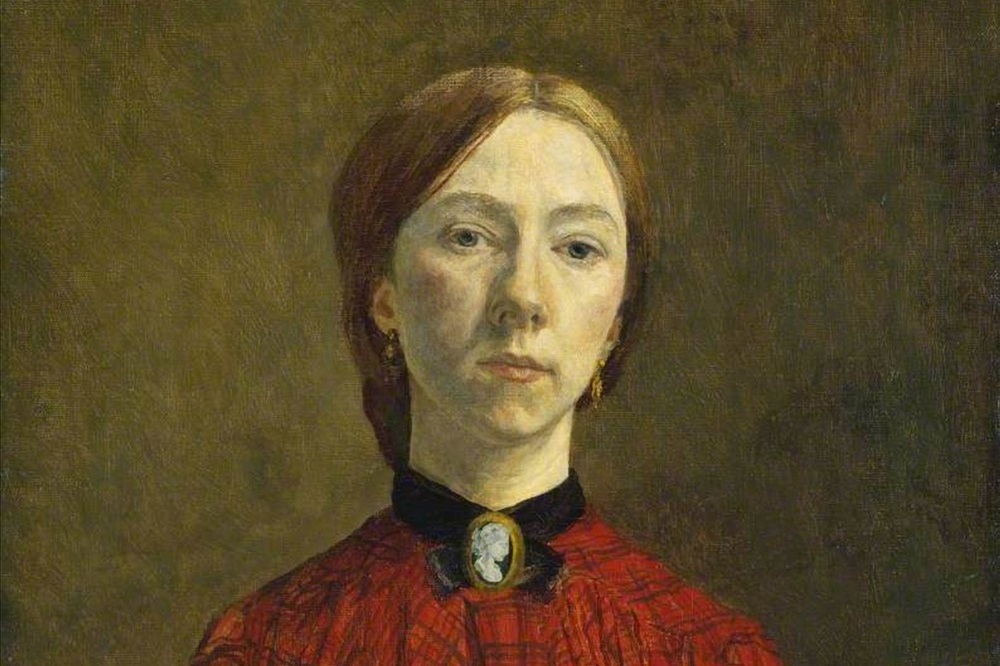
It can also be argued that to be sexually fluid is to view bodies differently, and John painted many nudes. If as claimed, this is mainly about her art, why is her difference not considered?
There are several references in the exhibition labels highlighting the fact that John did indeed look at her subjects differently, such as her ‘effort to undo ingrained ways of seeing and to focus instead on what is unfamiliar.’
‘Inner life’
And, under a section entitled ‘Problems of Painting,’ discussing how John would do multiple portraits of one woman, it ends: ‘These sensitive works suggest an inner life, whose complexity and depth are hard to gauge.’
Perhaps if gauged through the lens of a fluidity of attraction, a different interpretation could be found.
The introductory board tells us that, “Gwen John described herself as “a seer of strange beauties”, casting herself as a visionary with the ability to see beyond surface appearances’ – it is such a shame this exhibition could not do that.
Support our Nation today
For the price of a cup of coffee a month you can help us create an independent, not-for-profit, national news service for the people of Wales, by the people of Wales.



Bit odd all round. It is well known that she was attracted to both sexes but her great love was a man. Not sure why the museum exhibition didn’t originally mention this but this feels a bit like hysteria. I think they are quite right to suggest that we should focus on her art, rather than nocturnal predelictions.
I’d say that much is added to an exhibition by giving some background to the artist: their life, their interests, their influences. As you say, that element of John’s life is well known – it seems weird not to mention something notable which might legitimately inform how we interpret her work. Not sure we should be dismissing people’s sexuality as “nocturnal predilections”… Who we love and form relationships with is a significant and important part of all our lives that influences much of what we do and how we see the world – it’s not just a different choice of… Read more »
Agree. Valid points.
Yawn
Having converted to Catholicism maybe she’d be happier to veil with discretion this aspect of her life.
I was also disappointed, despite the size of the show, at what else was missing. But first, let it be said that this large exhibition is long overdue. Given the boasting that NMGW has a significantly large collection (Gwen kept most of her works and these eventually came to Cardiff) let alone other works and correspondence held at other locations in Wales, it’s astounding that her work is so rarely and meagrely exhibited here. I have known of Gwen’s wider significance for almost half a century and I was especially interested to learn more about her experiments with restricted and… Read more »
How to make a review all about yourself. The museum were 100% correct in saying it’s the art that’s important. You can quibble abour the fact that her sexuality was barely mentioned, but to make that the headline takeaway and to use it to condemn a major exhibition is absurd. Get some perspective, enjoy the art, and remember – not everything is about you.