


The picture-perfect festive walks along the Wales Coast Path

Wales has seen a growing demand for meaningful, slow and restorative travel – especially walks that nurture wellbeing and find calm amid the pace of modern life.
The country is home to a remarkable collection of pilgrimage routes, many linked to the Wales Coast Path – offering travellers a sacred escape steeped in history, cultural heritage and some of the most photogenic coastal landscapes in Britain, making them an ideal way to fill the Twixmas period.
From rugged clifftops and ancient chapels to sweeping beaches, holy wells, Celtic-era churches, wildlife-rich bays and remote coastal viewpoints, these routes invite visitors to discover lesser-travelled places, connect with centuries-old stories and explore Wales’ coastline at a deeper, more reflective pace.
Pilgrimages offer a sacred escape for those seeking spiritual growth or a peaceful journey to less travelled places. They provide a chance to nurture wellbeing and find calm amid the pace of modern life. For some they are a way to explore faith, for others they offer an insight into the heritage and history of holy places.
Wales is home to several pilgrimage routes with many linked to the 1,400km Wales Coast Path that follows its coastline. Wherever you are in Wales a peaceful pilgrimage rich in culture, heritage and natural beauty is close by. Below are some of the best routes along the coast, each taking between three days and two weeks to complete.
Llwybr Cadfan
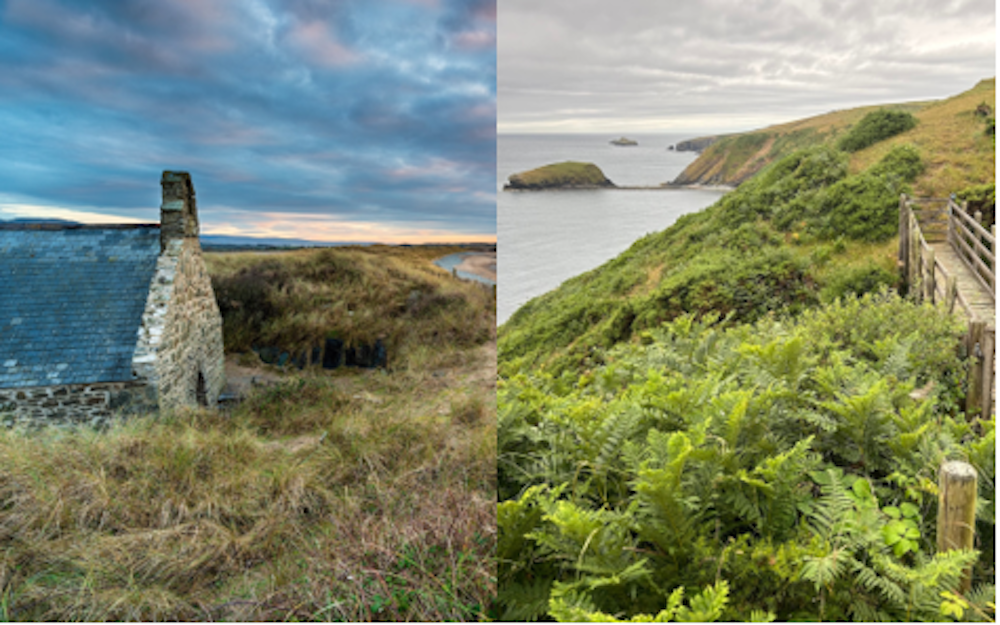
Named after 6th century Saint Cadfan, the founder-abbot of Tywyn and Bardsey who reportedly sailed from Brittany to Tywyn with 12 other saints, Llwybr Cadfan stretches over 205 kilometres from the Cardigan Bay seaside town to Ynys Enlli (Bardsey Island), an isle known for its spiritual significance. The 12-day pilgrimage follows in the footsteps of its namesake saint, visiting remote churches and quiet holy places along the way. The route weaves through some of North Wales’ most popular seaside towns, including Criccieth, Aberdaron and Harlech while also exploring quintessential Gwynedd villages such as Chwilog and Llanengan.
Newly launched in September 2024, the route was developed by the Diocese of Bangor and funded by the Church in Wales Evangelism Fund to explore the rich heritage and natural beauty of North West Wales.
Rich in heritage it visits 17 historic churches and six holy wells, passing through areas of outstanding natural beauty in Meirionnydd, Eifionydd, and the Llŷn Peninsula along the way.
North Wales Pilgrim’s Way
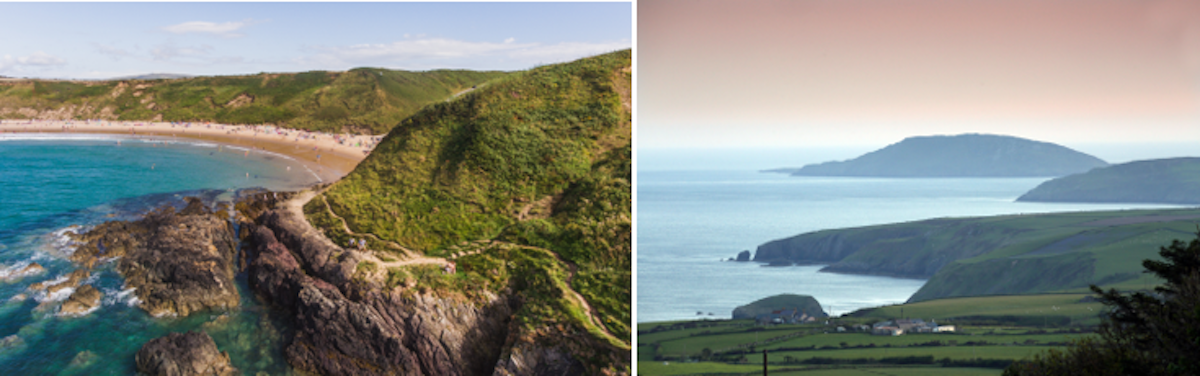
As suggested by its name, this 225-kilometre pilgrimage focuses on the Llŷn Peninsula and Gwynedd and stretches as far as Denbigh and Flint. Beginning in Holywell, this pilgrimage comes to an end at sacred Ynys Enlli, taking an estimated two weeks to complete.
While it’s not named after any particular saint the route visits several holy sites, the first being the large holy water swimming pool in Holywell, where pilgrims can kneel underwater on St Beuno’s stone which is submerged in holy water. The route also passes by prehistoric stone circles, ancient churches and thousand-year-old stone crosses.
The North Wales Pilgrim’s Way crosses diverse landscapes from rural countrysides and tiny stone churches on hills to busier human settlements and ancient roadways, all before what many consider to be the pinnacle of the journey – the boat crossing to Ynys Enlli.
For those looking to walk with a group, there’s an annual pilgrimage starting on May Bank Holiday Saturday each year, with the route being equally popular with those who prefer to walk alone or in pairs or more.
Gower Pilgrimage Way
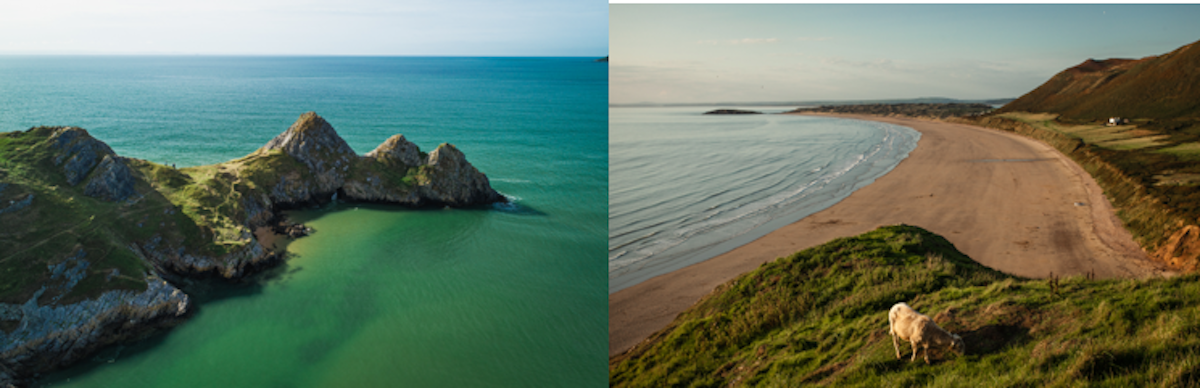
Located in an area that’s generally regarded as one of the most beautiful corners of the UK, the Gower Pilgrimage Way begins in Penclawdd and traces the peninsula for 78 kilometres towards Bishopston. The journey splits into five sections, each taking around a day to complete and linking all 17 of Gower’s historic churches. Many of these churches are rooted in the Celtic period and dedicated to saints such as Illtyd, Cattwg, Rhidian and Madoc, dating as far back as the 6th century.
The Gower Pilgrimage Way also visits several chapels and other Christian sacred sites, including the tidal island of Burry Holms which was likely to be a place of pilgrimage itself with links to St Cenydd.
Each section of the pilgrimage stands at around 16 kilometres long, with a large proportion of it following the Gower section of the Wales Coast Path.
Northern Way of St David, Pembrokeshire
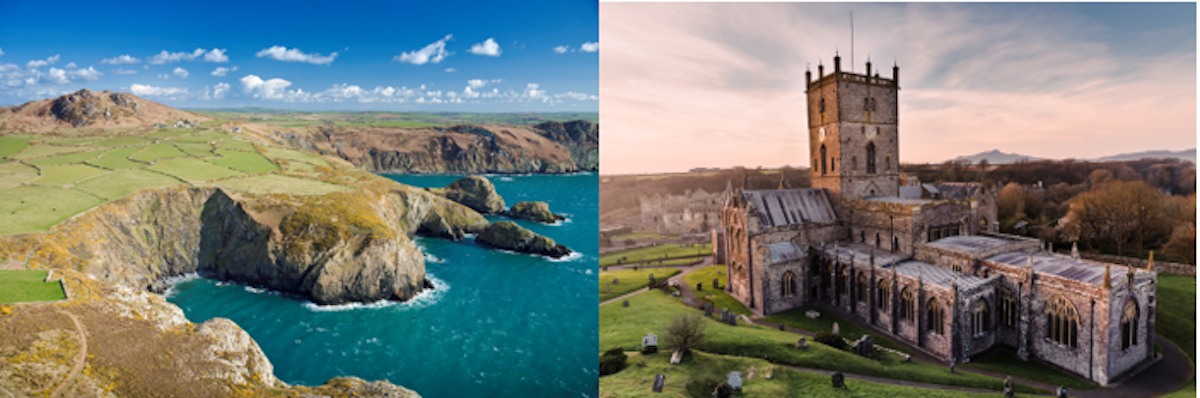
The Northern Way of St David in Pembrokeshire is a shorter alternative for those with limited time who are looking to complete a pilgrimage. At just under 50 kilometres, it can be completed over the course of two to three days. The route was suggested by the Pope back in 1123 when the Crusades meant that pilgrims could no longer travel to Jerusalem and should therefore travel to Santiago in Spain, or St Davids in Wales instead.
The route stretches from Fishguard to Pwll Deri and Porthgain before ending in St Davids, an area that was home to two Archdruids of Wales and has inspired centuries of poets and artists.
Beyond the sweeping views that can be found along this coastal route are also 4000-year-old burial chambers, holy wells and of course the Norman cathedral at St Davids, which is home to the shrine of the patron saint of Wales. The Cathedral will even authorise Pilgrimage Completion Certificates for those who partake in this holy expedition.
Anglesey Saints Way
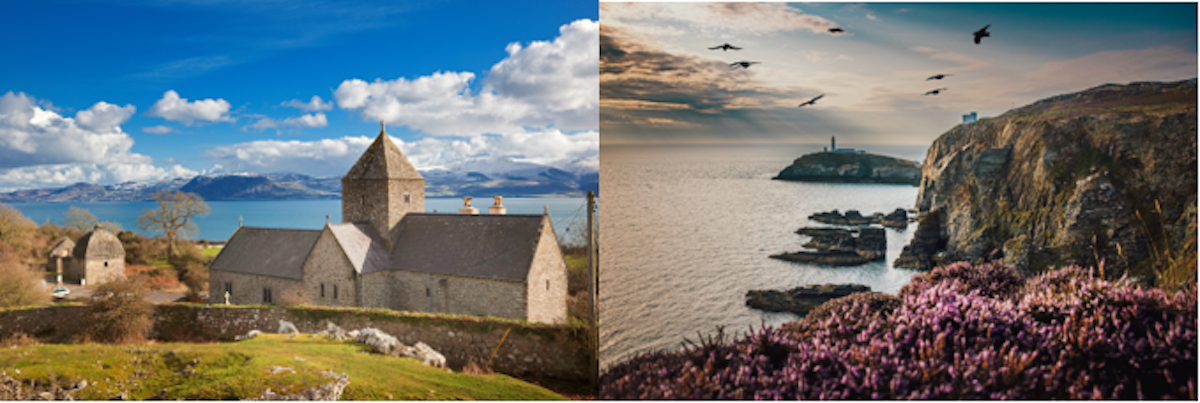
Another shorter pilgrimage route is the Anglesey Saints Way, which follows in the footsteps of St Cybi and St Seiriol who set up monastic communities on the westernmost and easternmost parts of Anglesey, Holyhead and Penmon.
The two saints would meet every day in the middle at the holy wells of Clorach, with Cybi who faced the rising sun in the morning becoming known as Cybi ‘the Tanned’ and Seiriol becoming ‘the Fair’, referencing the weaker evening sun on his face.
Starting at the ancient monastic site of Penmon Priory, this route follows the shoreline of the Menai Strait before turning inland to explore the 11th century Castell Aberlleiniog, medieval church of Llaniestyn and overlooking Puffin Island from the hill fort of Bwrdd Arthur. The pilgrimage crosses the bridge to Holy Island and follows Anglesey’s coast towards the end point of St Cybi’s church in Holyhead.
Support our Nation today
For the price of a cup of coffee a month you can help us create an independent, not-for-profit, national news service for the people of Wales, by the people of Wales.


