


The quiet miracle of our Senedd: a nation’s long vigil fulfilled
Antony David Davies
O Gymry, stand with me
Stand with me here, O Gymry.
Stand on this land that carries more memory than any man could hold.
Stand beneath the long shadow of Cader Idris, by stones worn smooth by rain, hymn, and sorrow.
Hear me now: this earth remembers.
Close your eyes.
Hear hoofbeats at Machynlleth, where Glyndŵr once raised a parliament in the morning mist.
Hear the quiet breath of Hywel Dda’s laws, which sought not the whip but a fair measure for every soul.
Hear the chapel voices rising in cold vestries, miners and mothers gathered in shawls to sing their hopes into wooden rafters.
—
Do not forget, O Gymry
There were days when we were governed from distant courts, by voices that never heard our tongue or trod our hills.
Days when London’s hand lay heavy, and Wales was expected to fade — a province without purpose, a people without a promise.
But we were stranger, stronger than that.
We kept our nation alive not by sword alone, but by hymn and hearth and stubborn memory.
Calon Lân
Remember the miner at Penrhys who sang Calon Lân deep beneath the earth.
Remember the farmer in Dyffryn Banw reading Y Cymro by candlelight.
Remember the preacher in Bala, thundering that every Welsh soul mattered as much as any lord in London.
They kept alive the ember Glyndŵr once fanned to flame.
They taught their children to whisper we are Welsh, even when the world told them to forget.
—
And so, by miracle and patience, it came
Then came Michael D. Jones, dreaming of a Wales beyond oceans.
Then came Gwynfor Evans, calm as a prophet, carrying our fragile hopes into Westminster to say: we are here.
And at last, by the narrowest breath in 1997, we took into our hands what was always ours by right.
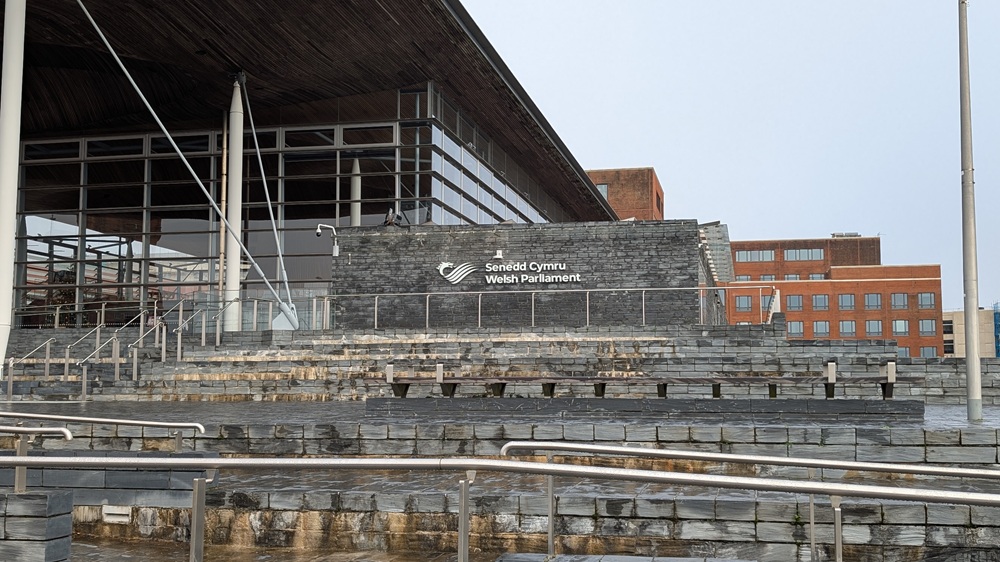
A Senedd, rising from the very soil of Cymru — not ruled from afar, not dictated by strangers, but accountable only to us.
—
Guard it well, O Gymry
Is it perfect?
No.
No parliament forged by human hands ever is.
It will falter. It will disappoint. It will sometimes shame us.
But that is our privilege: to raise our voices, to mend what fails, to hold it to account.
Because that is a right our forebears never knew.
Be thankful — not with blind praise, but with fierce resolve to shape it worthy of the prayers that carried it here.
—
For whom do we guard it?
For the quarryman who sang.
For the mother who wept.
For the preacher who roared of justice.
For Glyndŵr, who dreamed of a Senedd before the world had a name for it.
For the chapel congregations who lifted hymns against despair.
For Gwynfor, who carried our hopes through the doors of empire.
For the men of Harlech, who stood firm behind battered walls and sang defiance into the teeth of siege.
And above all —
for the children not yet born, that they may one day stand on this soil and call themselves Cymry,
unafraid, unashamed, unbowed.
Promise
Byddwn barod i sefyll gyda’n gilydd
So hear me now, O Gymry.
Guard it well.
Stand watch over it.
Hold it to its promise.
Pass it on stronger than you found it.
—
For we are still here
Yma o hyd — despite everything, we are still here.
Let this Senedd stand as proof, in our time and for all time,
that Wales — small, stubborn, singing Wales —
refused to vanish into silence.
Antony David Davies FRSA is a historian of Welsh upland communities, author of Old Llyfnant Farming Families, with deep family roots in Montgomeryshire.
Support our Nation today
For the price of a cup of coffee a month you can help us create an independent, not-for-profit, national news service for the people of Wales, by the people of Wales.



Well written and dear to the heart. Our trodden voice heard again and hopefully from that voice a vibrant, independent nation will be forged.
It’s a beautiful thing.
More poignant now, when we have those who have the hatred for Wales to remove it.
Fe ddaw ein dydd!
Tiocfaidh ár lá
Something of an exaggeration as most people aren’t aware of what the Sendedd can and can’t do, and still dismiss it as a “talking shop.”
Because it is. It is nothing but.