Theatre: Gododdin Remembered
Nation.Cymru Staff
One of the landmark productions in Welsh theatre is being celebrated next weekend with an event to celebrate Brith Gof’s Gododdin.
Performers from the theatre company along with members of industrial band Test Department will launch a new box set of the music from the production.
Jon Gower met theatre historian Heike Roms to consider both the theatrical and musical legacy of this era-defining work.
Heike, this was theatre-making on a literally industrial scale…
In Wales it was a marker of a certain kind of theatre-making.I t had a huge impact on theatre-making and on people’s ambitions, theatre-makers such as Marc Rees and Eddie Ladd. It’s also very well known internationally because it was truly site-specific, so every production was made for the spaces it visited.
How did it come about?
Brith Gof was doing a whole series about war, The Disasters of War influenced by the drawings of the Spanish artist Goya, so there had been smaller scale shows which explored violence and war. The director Mike Pearson had come across Test Department when they did an album with striking miners. So he just wrote to them, a sort of fan letter to say he admired the work they did with the south Wales miners and explain they were doing this series of projects and ask whether they’d be interested in collaborating. They said yes and worked on what was the tenth project in the series, choosing Gododdin. It is one of the fundamental texts in the Welsh language, about war and sacrifice and it resonated a lot with what they saw going on in south Wales under Thatcherism, the hollowing out of industrial history. For Brith Gof the suppression of the language played a big role as well and the defeat of the Gododdin by the Angles was an interesting metaphor to explore.
What accounts for the decision to work at scale – and at such scale?
Previously their work had been places other than theatre auditoria, such as chapels and community centres, which was culturally very important to Brith Gof – they wanted to take work to communities, so it was already site-specific theatre but not at that scale.
I think Mike Pearson said they approached Cliff McLucas who they’d worked with on a big processional piece, where they did something on the anniversary of the translation of the bible into Welsh. Cliff had made these big street processions with enormous banners celebrating the Welsh language. I remember Cliff saying how unusual it was in that period to see the language in public and out of that came an interest in working at scale.
It wasn’t always intended as such a big work…
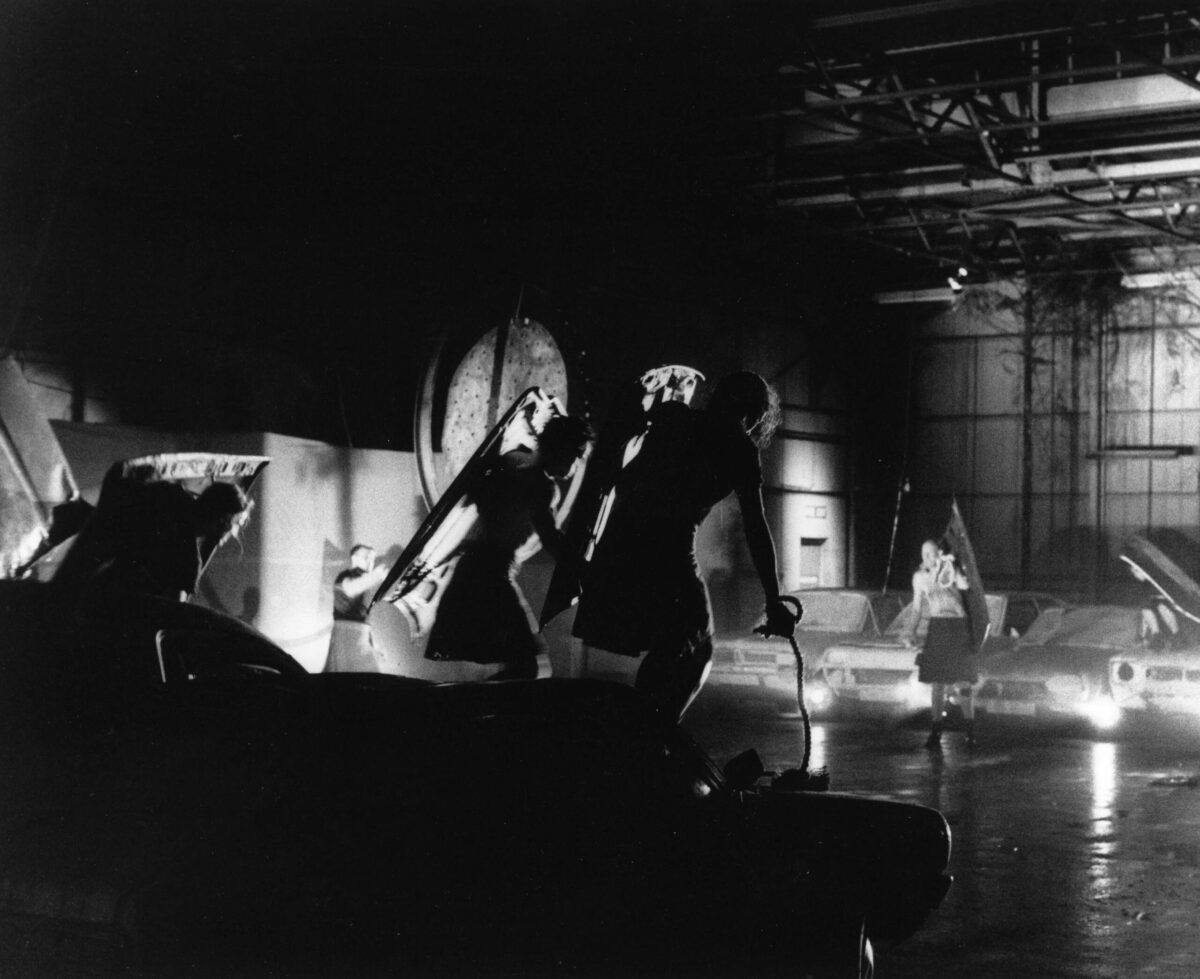
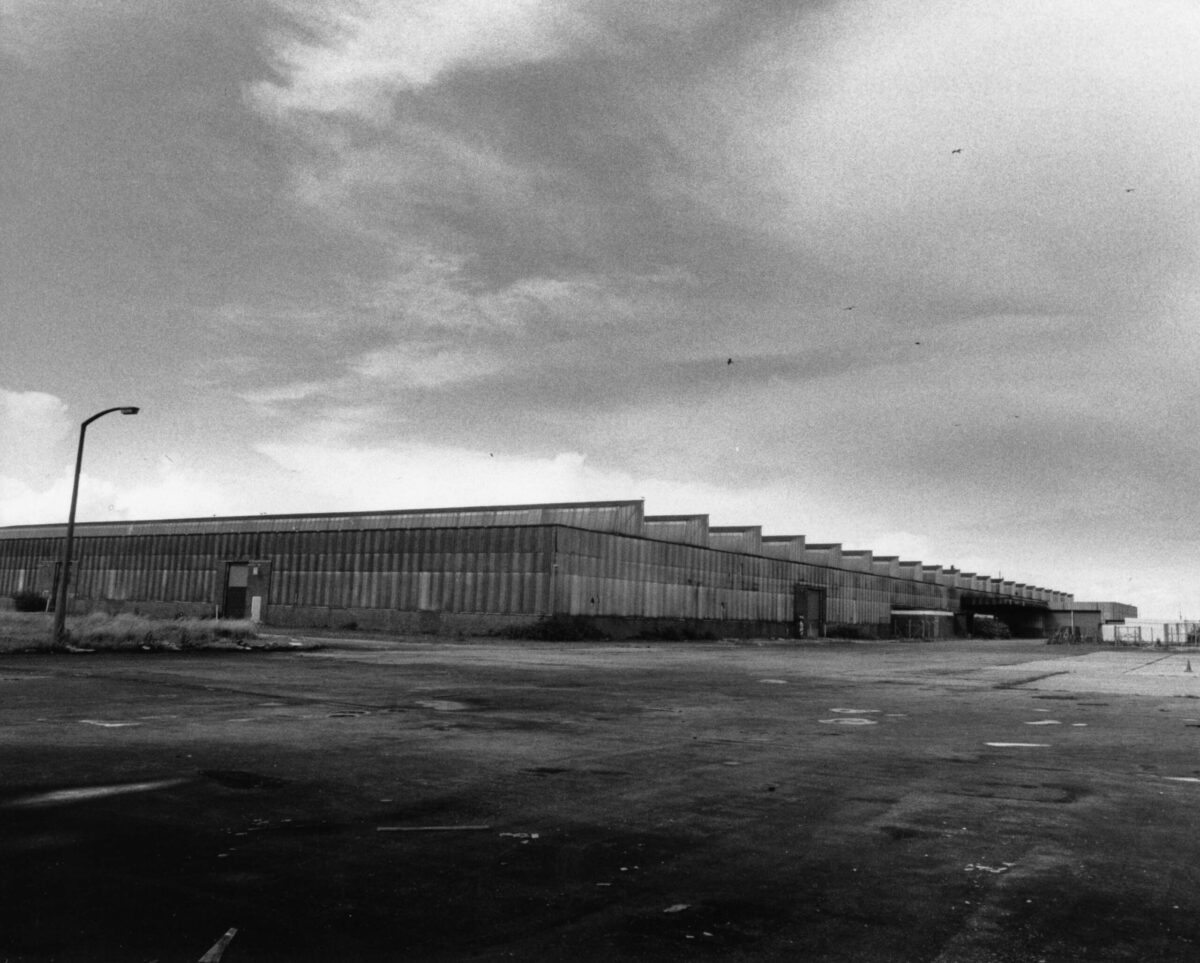
The original idea was for a series of dioramas, of little scenes telling the story of how the war band called Y Gododdin came together, then there was lots of drinking mead, berserking, getting ready for battle, painting themselves in blue before going off to be slaughtered. But then Cliff, I think, decided to turn this whole space into a set. It was the first time they’d worked in a post-industrial space, the old Cardiff Rover car factory which was empty at that point.
The sense of what was happening to industry and to industrial heritage was deepened by the abandoned, wrecked cars which were covered in gauze, painted white and scattered around the set…
Cliff McLucas built a simply enormous set. It was basically a massive circle of sand which gradually over the course of the piece was submerged in water so that, at the end, the warriors are all falling into this lake. There were also trees set in a sort of abstract landscape.
Test Department would have been helped the martial meter of the poem, which can sound like marching feet but they also created the crashing chaos of the battlefield.
Test Department were one of the industrial bands at the time, so they were already working a lot with metal percussion – smashing and banging was their thing. What I really love about the Gododdin L.P is that you see them coming together with composer John Hardy’s trumpet playing and actor Lis Hughes Jones’ beautiful singing and poetry and a more lyrical sense coming in and the incredible energy of the percussion and expression of defiance and anger that Test Department brought in.
In the performance Lis Hughes Jones embodies the poet Aneirin, who was the last man standing, a survivor of the battle who lived to tell the tale and tell it in verse. The production had a definite sense of elegy, of hollowing out…
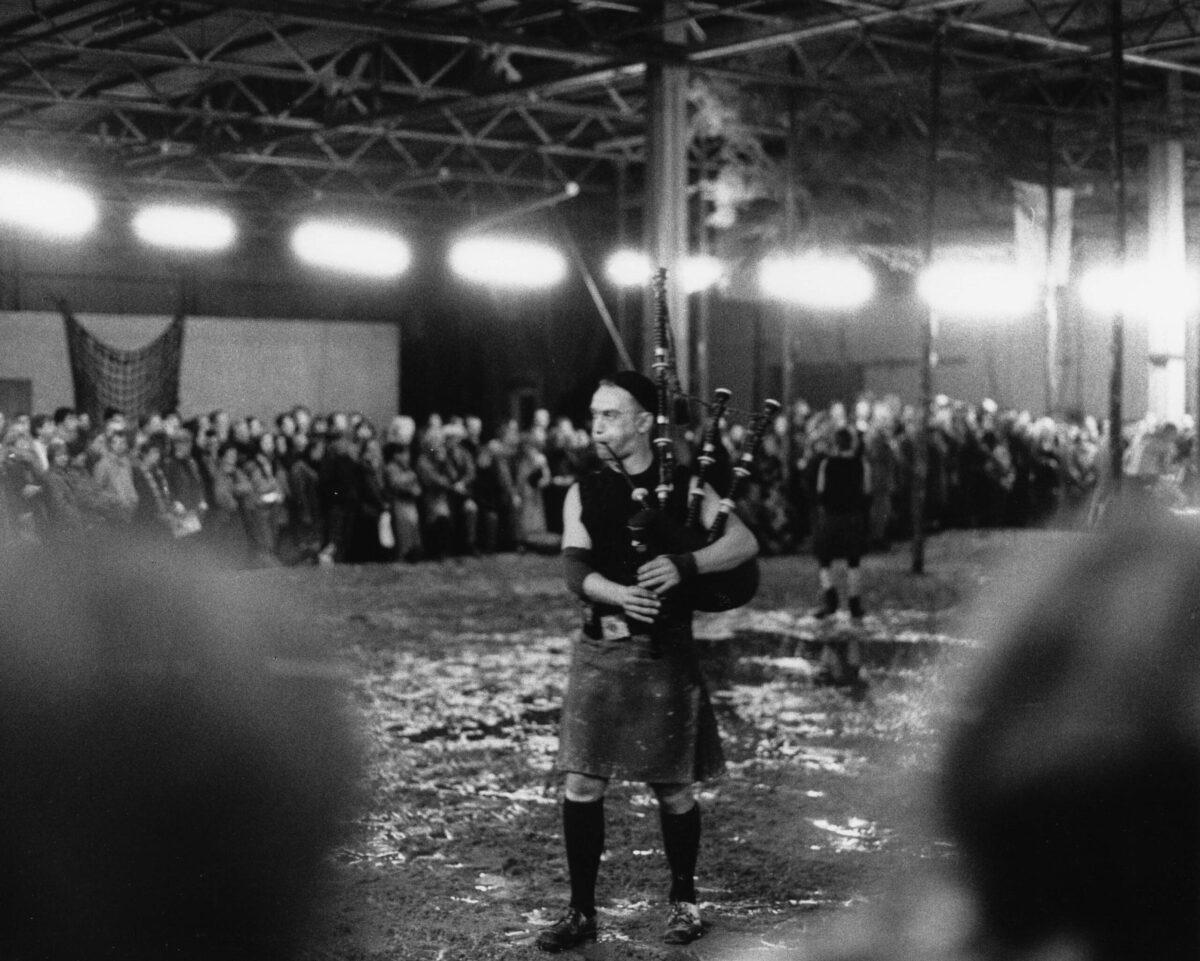
They decided not to represent the Angles, so the performers, eight of them I think, only played The Gododdin. It was the audience surrounding them who became the enemies. At one point the performers were running at the audience banging oil drums. I think the decision not to have the victors was really important because the poem is an elegy for the fallen. The ending was very poignant and beautiful. Test Department had a Scottish bagpiper who came in playing as the dead warriors in the water are being carried out by their comrades. Lis was elevated, looking onto the scene: throughout the piece she embodied the witness and was the voice of Aneirin, looking at this unfolding battle, bringing in the poem all the time. They had a mixed gender group of performers, so it wasn’t just men, even though the piece was masculine – about war with a very masculine energy.
The original album is now being re-released but with a lot of bonus material…
Test Department’s album of the production on vinyl and CD became a bit of cult record, it’s not easy to find so they were invited to rerelease it on the Lexer Music label. They’re releasing it as a 4 disc boxed set which includes the original recording but also a remix and a live bootleg recording of one of the performances in Italy.
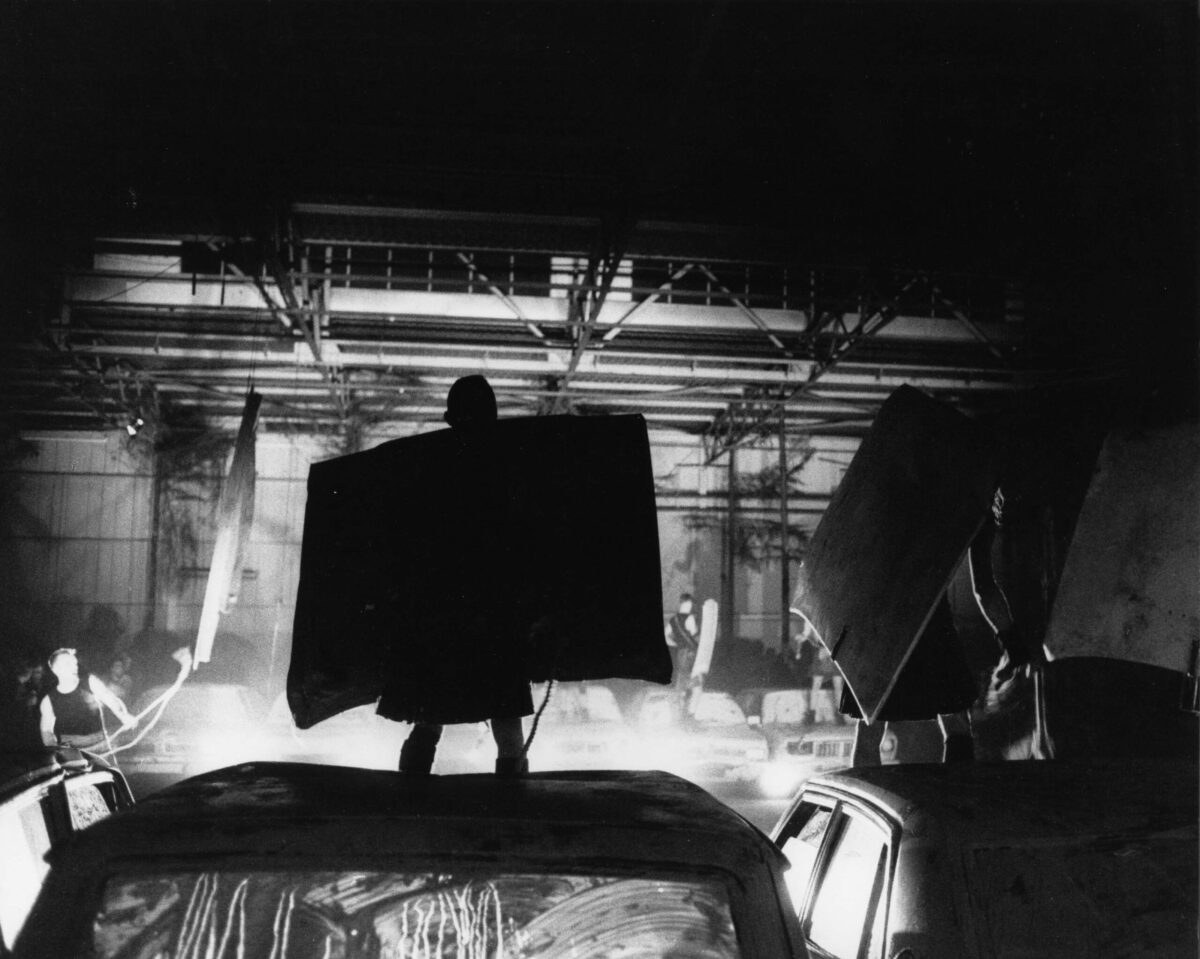
The production travelled widely, despite its scale…
The Gododdin toured four European countries – playing in an old crane factory in Hamburg, Germany, an ice rink in the Netherlands, a quarry in Italy and a theatre, the Tramway in Scotland.
Your personal experience of the production has had a profound, long-lasting impact…
I first saw it in Hamburg, so the whole reason I’m in Wales is because of Gododdin. It sounds a bit corny but it literally changed people’s lives.
The event to mark the relaunch of the Gododdin soundtrack will reunite the artists who created it for a celebration of a landmark in Welsh performance and music history as part of Chapter’s Experimentica ’26 season. It’s at 11.00 on Saturday 24th October and you can buy tickets here.
Support our Nation today
For the price of a cup of coffee a month you can help us create an independent, not-for-profit, national news service for the people of Wales, by the people of Wales.
Get more trusted Welsh news
Choose Nation.Cymru as a preferred source in Google News to see more of our journalism.