

Watch: Trailer released for new ITV drama ‘Gone’ starring Eve Myles
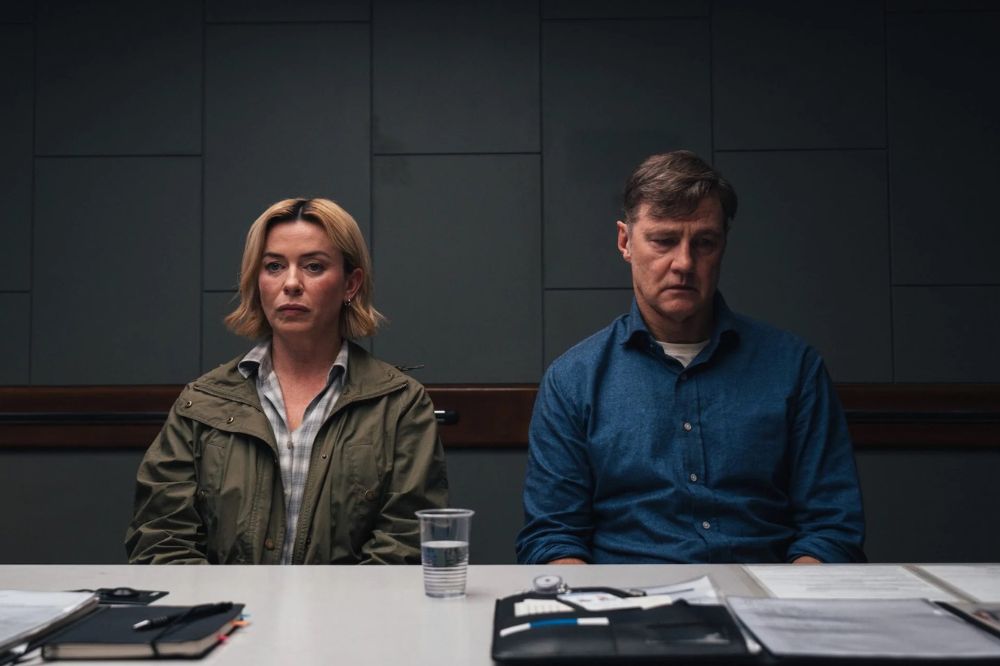
Eve Myles is set to grip audiences in a new ITV drama series starting this weekend, inspired by the true story of a detective who solved the cold case murder of a teenage girl in the 1980s.
Set against the backdrop of a prestigious private school, a foreboding forest and the quiet sprawl of Bristol, this chilling mystery centres on local headmaster Michael Polly, played by David Morrissey, who becomes the prime suspect in his wife Sarah’s disappearance.
Is he hiding something, or is there more to this case than meets the eye?
As the hours roll on, he reports her disappearance to DS Annie Cassidy (Myles), a no-nonsense detective who is immediately perplexed by the apparent stoicism of the headmaster.
As the case escalates with the emergence of puzzling evidence, Annie is assigned the role of Family Liaison Officer.
News of the disappearance spreads despite Michael’s concerted efforts to contain it; his commitment to the rugby team he coaches, remains unwavering.
An awful discovery soon catapults the investigation into new territory. Annie finds herself at odds with boss Ivan as she pushes beyond the confines of her role. The stricken Polly family is riven with mistrust and hostility.
Meanwhile, we see a historic case continue to haunt Annie, her sense of failure deepening as old friend Carol seems to lose faith in her. We also see Annie furtively rekindling things with her ex, Craig, though their history weighs heavily between them. At the school, concerned school parents begin to fear for the safety of their children.
Eve Myles discussed Gone in an interview with ITV ahead of the first episode.
Can you tell us the story of Gone?
The story is a deep psychological thriller set in and around a prestigious private school in Bristol, as well as the surrounding countryside and forests. We follow my character Annie Cassidy, who is quickly involved in a missing person’s case that turns out to be a murder. It’ s a very deep, nuanced series about what makes us
human.
What kind of a show is Gone and what makes it stand out?
Gone is a thriller. I’m a detective in it, so there’s a huge police presence, but it’s not your usual procedure show. There’s no blue lights, big action sequences or events.
It’s about the people and the characters and what lies beneath them, what makes them do what they do. What trauma have they experienced? What was their childhood like, and how does this define us as adults – what we do as a result of that.
It is a deep seated mystery. It’s not your usual procedural drama. I know you’ve heard that many, many times, probably, but it genuinely isn’t because this is about the people. Of course there’s a crime, but it’s about what lies underneath the crime.
The show really leans into the drama that happens within the house, within somebody’s life who’s also not only lost a wife and a mother under really horrendous circumstances, but is actually the number one suspect.
Does the series show the family dynamics that happen as a result of a crime – which hasn’t really been shown before?
My character Annie takes the new position as someone that is very unwelcomed.
She’s almost sidetracked and put into the perimeters of the case, even though she was the first at the scene, she’s just pushed aside. But, she uses that to her advantage. She’s in and amongst the suspect and what happens is an unlikely friendship or an unlikely relationship between Michael Polly and Annie Cassidy that
neither of them expect, and it’s a really unique relationship. It becomes a confession box or a therapy room, but through the series you forget which one is the therapist and which one’s the client.
What was your first impression when reading the scripts?
My first impression when I read the scripts was one of intrigue and excitement because of the family liaison side of it, which is something that is not ignored, but hasn’t been explored as much as we’ve done in this series. That really got me excited and I wanted to know more about it and how difficult and complex it is,
because, not only is Annie the family liaison officer, she never clocks off as the detective, so she’s got two hats on throughout the entire thing. Also, she has her own private stuff going on, which then bleeds into the main story.
Yes, you feel that it’s pacey, but you are kept guessing…
All you can do is play what’s on the page. Especially with a thriller, if you do know the outcome, subconsciously you play it. With this, I couldn’t and it was a thrilling process!. There’s a truthfulness in that.
The show has a thorn running through it where it is really bedded in truth. It doesn’t veer off track into an action thriller or horror, or anything. It’s truthful to its genre and we’ve really dug deep into it and made it as character driven as possible.
Can you just tell us a little bit more about Annie, and where we first meet her? What was her story, and how does it kind of develop?
We first meet Annie trying to rekindle her marriage that seems to be on the route to being fixed. She’s a woman in her forties. She’s happy in her job, but very lonely in her life. Her job actually is her life, it’s everything she has and everything she thinks she needs at that point.
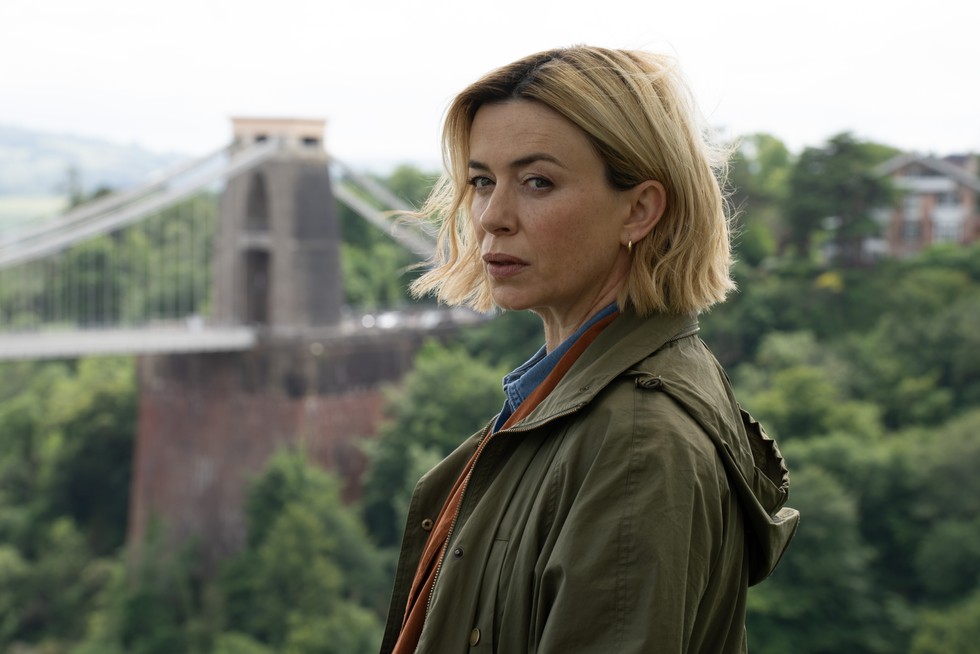
Very quickly we find that Annie is working across a possible murder: Sarah Polly, a woman that has been missing for 24 hours. Annie is assigned to the family as the family liaison officer (the FLO). We’ve also got a series about what happens underneath that story, where we delve into trauma, controlling and cohesive behavior and abuse. That’s the monster that this wonderful woman struggles with on a daily basis, because she’s a fixer and she feels that she can fix everything and anything and the world doesn’t work like that. You will travel with
her and go through that process with her. It’s been a wonderful, difficult, frightening role that I’ve been blessed to play. So hopefully I’ve done it a bit of justice.
You said she’s a fixer, but she needs to work on herself, doesn’t she?
She is a fixer, but like most women who have experienced domestic violence, she tends to forget about herself and focuses on making sure that everybody else around her is okay and looked after. She comes last. That’s due to the abuse andcontrolling behaviour – being told that you’re not important, that you come last,
that everyone else comes before you, and that you don’t really matter.
We’ve delved into these issues in the series and tried to be as truthful and respectful as possible. They run throughout the entire show and bleed into her work and her relationship with Michael Polly, possibly the first man she’s been in a room with for a very long time where she’s felt both safe and unsafe.
A lot of research went into this. I was very lucky to have many phone calls with organisations and to speak to people who have been in those circumstances firsthand. So we’ve been as respectful and honest as possible, without shying away from anything that’s difficult to watch or see. We’ve leaned into it and told the truth.
Hopefully, it’ s been done very well.
What attracted you to this series?
What attracted me to this series was, firstly, the team behind it – from the writer to the production company, to the director, and also the opportunity to work with David. I instantly knew that the people captaining the ship were leading incredible creatives and had a history of shows I’ m a huge fan of. Then I read the scripts and I was instantly hooked.
If I get scared about something, I know it’s absolutely for me and that it’ s the next thing I should do. If I read something or get involved in something and feel comfortable, then I’ve already done it, so it’s time to move on. There are issues in this particular piece that I felt I wanted to give voice to. The tone and vision Richard
Laxton created was intoxicating. Everything came together like a chemistry set, hopefully we’ve created a story people really invest in.
You touched on working with organisations, but what other research did you do to prepare for the role?
I have two very good friends who are detectives who I’ve really annoyed throughout this process with messages back and forth. They’ve been a constant support, helping me with details, because George has supplied everything else in the script.
We’ve also got consultants on the floor with us. Richard Laxton always has the answer for me, along with Mark Hedges, who has been an amazing producer and has put me in touch with a lot of people.
So, all in all, it comes together, and what you can use is great – but there’s a lot of stuff you can’t use. 24 Hours in Police Custody also has a lot to answer for. I love it, and I’ve watched a lot of it.
It’ s addictive because it has a very similar tone to the series, in a way. It’s not about explosions, car crashes, or five o’clock raids, but about a terrible crime and the people affected by it – the people who’ve done it and the people directly hit by it.
George Kay and Richard Laxton have really collaborated on that, and it’s a fascinating psychological watch. .
It’s such a good program to watch when you’re doing something like this because it’s really not about the big stuff. It’s about how you deal with this person, how you get inside this person, and how you get them to trust you. You’re a psychologist, a therapist, a police officer, a wife, a sister, a best friend – you could even be a possible lover – all while asking: did this person do it or did they not, and how do I get that answer as quickly as possible.
It’s a human story, isn’t it? It’s not guns blazing. It’s not police sirens turning up..
It’s about getting inside somebody – getting inside their life, getting inside them.
This show, again, is very much like a game. It’s like a card game: who’s going to throw down the ace, who’
s going to put down the joker, who’s going to play a full house; especially between Annie and Michael. It’
s a dance of power and control, and the whole thing is a game of chess. Who makes the next move? Who’s going to take that person out? It’s a really deep-seated, psychological, delicious thriller.
It is a murder mystery, but underneath all of that, it’s a story about childhood trauma. It’s a story about how elite situations and elite education can affect you for the rest of your life, and it looks at the ways those experiences shape you long-term. There’s a class theme running through this, and we delve deeply into
domestic violence, coercive and controlling behaviour, masculinity, femininity, and relationships between fathers and daughters. It also explores relationships between strangers who are brought together and discover something within themselves they didn’t know existed.
I think there’s something for everyone to take from the show.
There’s a simple thing, but it’s a very difficult thing thematically in this show, and it’s about how we connect with each other; how we talk, what we say, how we say it, and what we reveal about ourselves. That’s really difficult to do in life.
As an adult, it’ s very hard to find someone you can be completely honest and truthful
with, to reveal something buried deep within you that hurts so much – your flaws or weaknesses. A lot of the time, when you share that, it actually becomes your strength because it’ s unique to you. It’s a story of grief and survival. And that’s your Michael Polly and that’s your Annie Cassidy.
Gone launches Sunday 8 March at 9pm on ITV1, with episodes available early on ITVX
Support our Nation today
For the price of a cup of coffee a month you can help us create an independent, not-for-profit, national news service for the people of Wales, by the people of Wales.


